
Have you completed your doctoral degree or are you in your first position as a postdoctoral researcher at an organizational unit at FAU?
If so, you are probably in what is known as the “early postdoc phase” that generally lasts two years.
During this period, you should decide whether you intend to pursue a long-term academic career at university. When making your decision, you ought to consider the framework conditions stipulated in the Fixed-Term Research Contracts Act (Wissenschaftszeitvertragsgesetz).
Your first contract as a postdoctoral researcher
When you start your postdoctoral research at the University, you are generally given a new employment contract after completing your doctoral degree.
This Check list for discussion after completing a doctoral degree (pdf)can act as a guide for the initial meeting with your supervisor or upon extending your contract.
Becoming a professor: habilitation, FAUngl or W1 professorship
At FAU there are a number of different paths leading to a professorship.
Habilitation
Would you like to complete a habilitation at FAU? At FAU, it is the faculties that are responsible for habilitations. The FAU Habilitation regulations apply to all faculties, and you can refer to them for information on all the steps required to complete a habilitation at FAU.
We would recommend that you get in touch with the relevant point of contact at your faculty.
- Research at the Faculty of Humanities, Social Sciences, and Theology
- School of Law
- School of Business, Economics and Society
- Early career researchers at the Faculty of Medicine
- Research at the Faculty of Sciences
- Doctoral degrees and habilitations at the Faculty of Engineering
Head of junior research group
Taking on the position of head of a junior research group may be a possible step on the way towards becoming a professor. In Bavaria and other federal states this can be considered equivalent to a habilitation and allow you to gain your postdoctoral teaching qualification and become appointed to a full professorship.
W1 professorship
A W1 professorship is a possible qualification phase in your academic career following on from a doctoral degree. W1 professors cover the tasks of a professorship and thereby gain the experience and qualifications they need for appointment to a full professorship.
Postdoctoral teaching qualification (Lehrbefähigung) and right to teach (Lehrberechtigung/Lehrbefugnis)
After completing a habilitation, acting as the head of a junior research group or holding a W1 professorship, early career researchers are granted a postdoctoral teaching qualification (Lehrbefähigung), known as Facultas Docendi, but according to the Bavarian Law on Academic Personnel of Higher Education Institutions they are not yet authorized to teach as a university lecturer, and are therefore not entitled to be referred to as a Privatdozent/Privatdozentin (PD).
The authorization to teach (Lehrbefugnis/Lehrberechtigung), also known as Venia Legendi, is granted by the University. At FAU, this process can be initiated via Human Resources. Only once this authorization has been granted can those who have completed their habilitation teach independently, lead scientific research, conduct examinations and use the title Privatdozent/Privatdozentin (PD).
Akademische Räte auf Zeit (fixed-term public servants)
A number of chairs employ postdoctoral researchers as an Akademischer Rat/Akademische Rätin or Akademischer Oberrat/Akademische Oberrätin for a fixed term.
A fixed-term public service contract as Akademische Rätin/Akademischer Rat is initially restricted to three years.
A doctoral degree or the Second State Examination (Zweite Staatsprüfung) must be obtained to qualify for a fixed-term appointment as Akademische Rätin/Akademischer Rat. Exceptions apply for engineering subjects and for Catholic and Protestant Theology.
Plan B
No matter what your current research project is, you should always bear a “plan B” in mind in case your academic career does not work out the way you planned.
Are you unsure what a “plan B” alongside your academic career could look like?
- We offer a number of different options and support.
- Or you could attend a coaching session. We are happy to arrange an appointment for you!
Contact
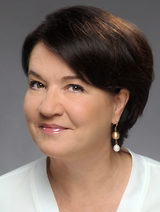
Dr. Silke Schnurbusch
Postdoc support, FAUnext, Coaching
Contact
Bleiben Sie auf dem Laufenden
Infos über interessante Ausschreibungen, Stipendien, Preise und Veranstaltungen finden Sie in unserem im Young-Academics-Blog, auf LinkedIn und im Newsletter.