

FAU’s two main sites, the cities of Erlangen and Nuremberg, are located at the heart of the Nuremberg Metropolitan Region. Both Erlangen, a bicycle-friendly city with 100,000 inhabitants, former home of the Huguenots as well as a key location for Siemens, and Nuremberg, a city with a population of half a million and a metropolitan flair, have their own unique charms. The opera, theater, cabaret and museums, various sporting and leisure activities along with a lively pub scene and night life, offer plenty of opportunities to relax after a day in the lecture theater, lab or library. The mixture of academia, innovative companies, art and culture makes the region the perfect place for creative minds, keen athletes and nature lovers.
Arts and culture
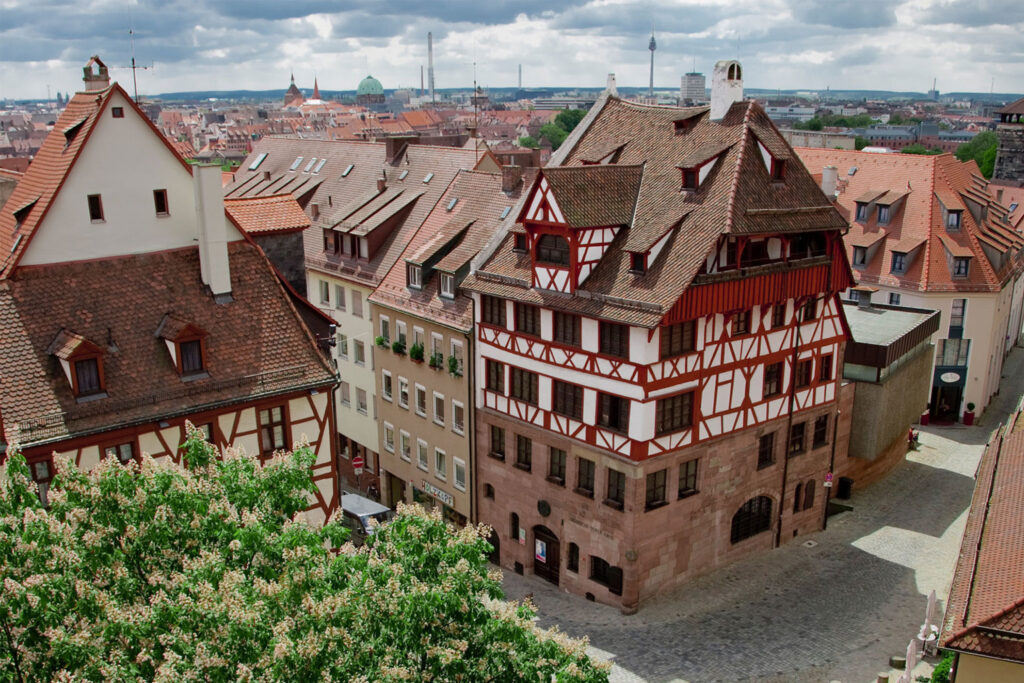
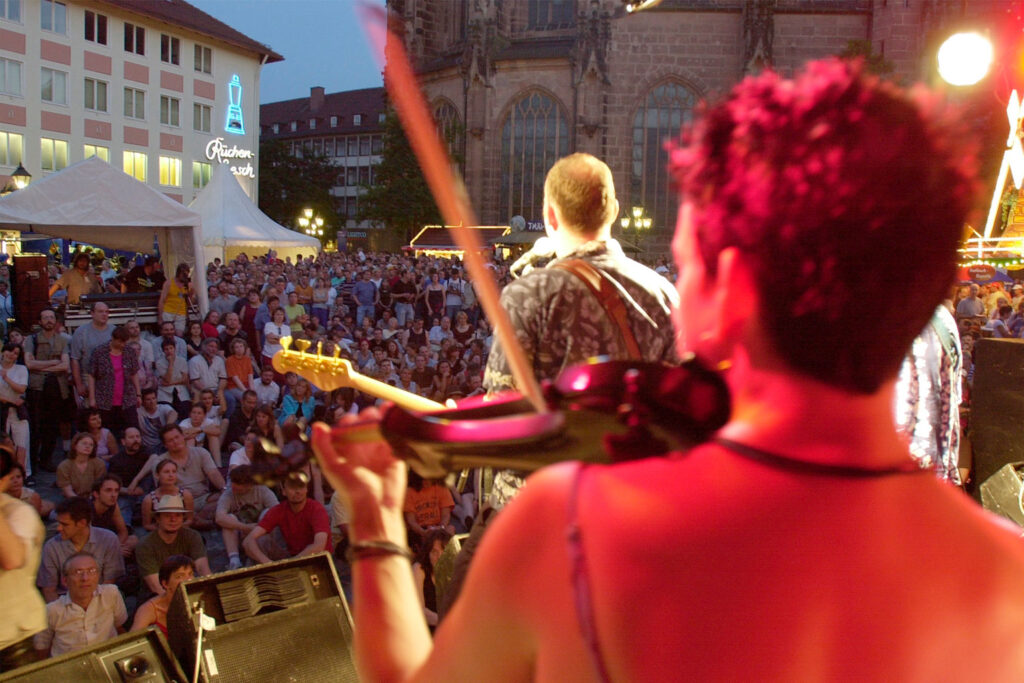
The cultural and art scene in Nuremberg and Erlangen leave nothing to be desired. There are many museums and a lively music scene featuring everything from the Bardentreffen world music festival and Rock im Park to open air classical concerts by the Nürnberger Philharmoniker orchestra and opera performed by the Nürnberger Staatstheater. This is complemented by by a vibrant event culture that not only provides initial insights into cultural life, but also surprising encounters with unexpected treasures.
Nuremberg cultural ticket for students
The city of Nuremberg offers annual cultural tickets to students that provide free entry into numerous museums and exhibitions.
Several of the region’s museums are located in Nuremberg. One of the most interesting museums is Albrecht Dürer’s house, which gives visitors an insight into the life and work of one of Nuremberg’s most famous citizens. Nuremberg is also home to the Germanisches Nationalmuseum (German National Museum), the largest museum of German art and culture.
Modern art and contemporary design can be found in the Neues Museum (New Museum), a striking modern building which is flooded with light and creates a stunning contrast to the neighboring Handwerkerhof (craftsman’s yard) and old city wall.
Industrial history is brought to life in the Museum Industriekultur (Museum for Industrial Culture), and the DB Museum, which shows the history of the German railway company Deutsche Bahn covering everything from the time when the first German railway was laid between Nuremberg and Fürth to the latest generation of high-speed ICE trains. Nuremberg’s role in the toy-making industry is documented in the Spielzeugmuseum (Toy Museum), while the permanent exhibition at the Castle allows visitors to look back at Nuremberg’s past as an imperial city.
The darkest chapter in Nuremberg’s history is remembered at the Documentation Center at the Nazi Party Rally Grounds in the permanent exhibition which deals with the causes, context and consequences of the National Socialist reign of terror. The period which followed is documented in the Memorium Nuremberg Trials in Nuremberg’s Palace of Justice – the place where world history was written between November 1945 and October 1946.
The festivals held range from the Internationalen Festival für Spiritual Musik (ION), and the open air event Rock im Park to the Bardentreffen world music festival, which transforms Nuremberg city center into a colorful venue for musicians from all over the world for a whole weekend – free of charge.
Both the Klassik Open Air concerts held in the summer by the Nürnberger Sinfonie orchestra attract fans of classical music for a picnic at Luitpoldhain park. Concerts, opera, drama and ballet can be found at Staatstheater Nürnberg (Nuremberg State Theater), the center of the city’s theater scene, as well as many smaller venues.
One of the theater season’s particular highlights is the annual international theater festival “ARENA… of the young Arts”, a six-day event which takes place in Erlangen with a huge variety of performance art, dance and physical theater. Theater Erlangen has an extremely varied program every year.
Erlangen is also one of the stages for the annual “Fränkischer Sommer” music festival which involves many of the towns and districts in Middle Franconia. Among the annual highlights in Erlangen are the International Comic Salon, the international Figurentheater-Festival (puppet theater festival) and the Poetenfest (poetry festival).
Comödie in Fürth is the place to go in the region for comedy. As the name suggests, this place is all about having a good laugh.
There’s always something going on in the region, even away from all the large music and theater festivals. This is because of the numerous large and small clubs, stages and concert venues it offers.
There are many other events in the region that ensure that there is something to see and do throughout the entire year. The Blaue Nacht (Blue Night) in Nuremberg in May is the cultural event of the year. Theaters, museums and other art institutions open their doors and give insights into Nuremberg’s varied arts and culture scene.
Also in May and September is Nuremberg’s Trempelmarkt, a popular flea market which is the largest of its kind in Germany. Its equivalent in Fürth is the “Grafflmarkt”, which takes place in June and, although smaller, the ambiance is just as great.
Bergkirchweih, also affectionately known as “der Berch” – the largest beer festival in Franconia and the nicest in Germany according to some – starts in Erlangen on the Thursday before Pentecost. The festival takes place above the cellars where Erlangen’s breweries used to store the beer. Seats under old linden, chestnut and oak trees transform part of the Burgberg hill into the largest beer garden in Europe.
Another event which is just as much a fixed part of Erlangen’s social calendar is the Schlossgartenfest, the University’s garden party, which traditionally takes place on the last Saturday in June. Against the backdrop of the Erlangen Schloss and the orangery, lit up by thousands of lights and accompanied by a spectacular firework display, it is one of the largest and most beautiful garden parties in Europe.
The volume steadily increases over the course of the summer, for example at the Norisring Rennen, the DTM series’ only city track, in south west Nuremberg.
In the fall, when the nights grow longer, the focus turns to science in the cities of Nuremberg, Fürth and Erlangen. Once every two years, the Long Night of Sciences gives visitors a chance to go behind the scenes at some of the larger public and private research institutions in the area. The six universities in the region as well as companies that perform research and institutions with close connections to science open their labs and lecture halls to visitors.
As Christmas approaches, the stalls are opened at Nuremberg’s Christmas market. In the wooden stalls of the “little town made of wood and cloth”, you can find traditional, often handmade Christmas decorations and sweet treats such as gingerbread and “Spekulatius” cookies.
Leisure and sports
The Erlangen-Nuremberg region offers an extremely wide range of leisure activities. The city centers and the beautiful countryside surrounding them offer several opportunities to discover something new while strolling around town or participating in sporting activities. The “Fränkische Schweiz” is a haven for climbers and walkers and offers everything you need right at your doorstep. The lakes of the “Fränkische Seenland” and the University’s water sports center are just the right thing for water sports enthusiasts. Students and enrolled doctoral candidates can make use of the cultural attractions on offer – theaters, the opera, concerts, festivals and museums – at particularly attractive prices. In addition to all these possibilities, FAU and the cities of Nuremberg and Erlangen offer a huge range of sporting activities:
Each semester, FAU’s University sports organizes a large number of courses in Erlangen and Nuremberg that you can take part in for a small fee.
Erlangen is a very vibrant student city with lively nightlife. But Nuremberg also has a lot to offer in terms of pubs, beer gardens, cinemas, bars, and restaurants, so that there really is something for everyone.
Students and staff at FAU can join various groups and ensembles. The Akademische Chor (choir), Universitätsorchester Erlangen (symphony orchestra), Big Band, Brass Ensemble and other musical groups practice every week in the Orangery in the Schlossgarten.
Each semester, the adult education centers in Erlangen, Fürth and Nuremberg offer a vast array of courses such as language courses, cookery classes, or certain sports. In addition, they also offer various courses for specific target groups or courses that teach skills that can be useful for your job or career.
It’s not only the University that offers leisure activities for students. There are many clubs and societies that offer a range of leisure activities.
The Catholic student community (Katholische Hochschulgemeinde), the Protestant student community (Evangelische Studierendengemeinde) and the Muslim student community (Muslimische Studierende Gemeinde) organize a number of events for students each semester such as film nights, football matches, trips and much more.