
Friedrich-Alexander-Universität Erlangen-Nürnberg (FAU) regards sustainability as a core responsibility in research, teaching, and institutional practice. As one of Germany’s leading research universities, it recognizes its responsibility to develop solutions to the ecological, social, and economic challenges of our time.
FAU pursues a holistic approach that encompasses research, teaching, outreach, and its own institutional operations. Through interdisciplinary research, innovative teaching formats, and dialogue with society, industry, and policymakers, the university makes valuable contributions to sustainable development. At the same time, FAU is working to make its own structures and processes more resource-efficient and future-oriented. By doing so, FAU aims to generate knowledge and innovations that help create a sustainable future for generations to come.
Sustainability Strategy
In 2025, FAU adopted a comprehensive sustainability strategy to institutionalize its commitment to sustainable development and systematically advance it. The strategy consolidates goals and measures across its key areas of action, providing a binding framework for sustainable practice. Its aim is to integrate sustainability across all areas over the long term and to make a measurable contribution to an environmentally sound, socially just, and economically responsible future.
On the german website of the Green Office you can find the stratgy as a PDF-Download

Sustainability Report
In June 2023, FAU published its first Sustainability Report documenting its progress, success and challenges in the area of sustainability. This report is aimed at increasing transparency and allows the University to evaluate its performance and to continually improve its strategies. The report gives details on energy consumption, CO2 emissions, social initiatives and other relevant figures.
The online (accessible) version of the FAU Sustainability Report 2022/23 is now available.
Sustainable Development Goals (SDGs) at FAU
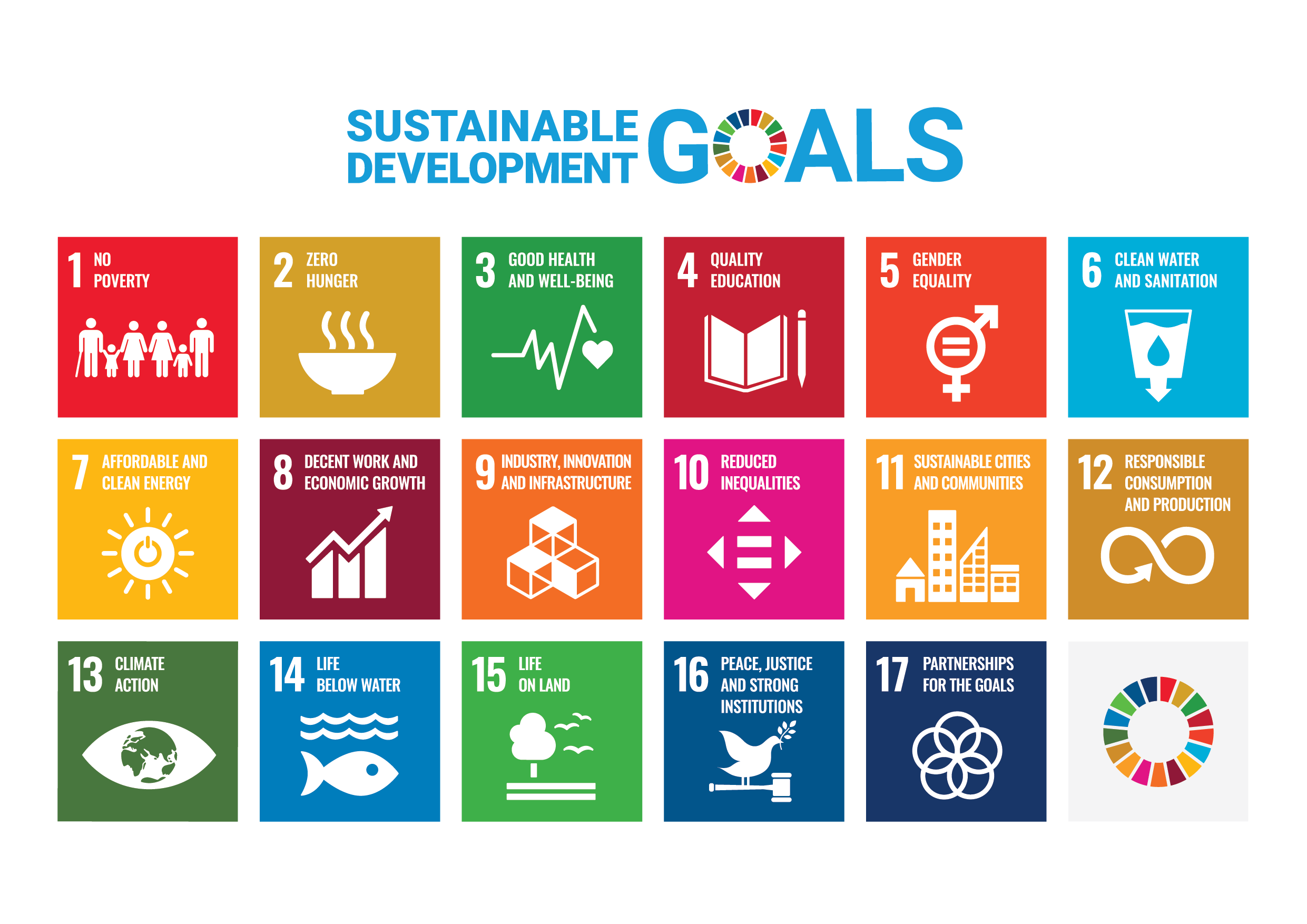
FAU is guided by the Sustainable Development Goals (SDGs) of the United Nations and integrates these into its mission and activities. We believe it is important to take a holistic approach towards sustainability, considering all three dimensions of “economic”, “environmental” and “social” sustainability.
Climate and energy research at FAU
FAU has a valuable contribution to make to tackling climate change, as our expertise in the area of energy research is second to none. Scientists, engineers and economists are working across the faculties to develop innovative methods and processes for an integrated energy system, for example in the areas of photovoltaics and hydrogen economy, geothermal systems, e-mobility, materials research and energy systems analysis. The hub for this interdisciplinary research is Energie Campus Nürnberg.
Sustainability Committee
The Sustainability committee was established to strengthen the connection between the cross-sectional topic of sustainability and our strategic P E R O fields of action. This central steering committee assumes a leading role in developing our sustainability strategy and measures for sustainable development at FAU. The committee takes a holistic approach towards sustainability in order to guarantee efficient decision-making and implementation processes.
Sustainability Officer in the Executive Board
The decision to appoint a Sustainability Officer to the Executive Board underlines just how important the topic is to FAU. This position strengthens the connection between the sustainable initiatives and the Executive Board by forming a direct interface for strategic decisions and measures. The Sustainability Officer works closely together with the Sustainability Committee and supports the implementation of sustainable measures at the highest level of University management.
Green Office
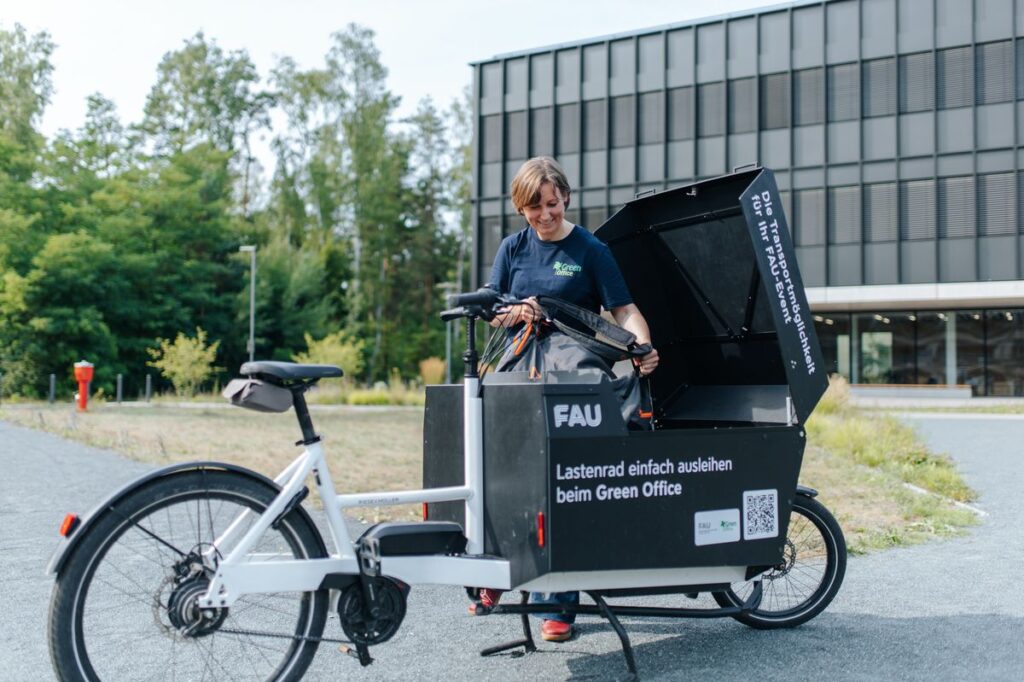
The Green Office was established in 2020 as a central coordinating body. It acts as a hub for decentralized sustainability projects at FAU. The Green Office plays a decisive role in merging various initiatives, sharing best practices and raising awareness for sustainable action among students, staff and other University members.
Establishing these organizational structures underlines FAU’s commitment to sustainability and creates effective mechanisms for the coordination, implementation and monitoring of sustainable initiatives at the University. These structures allow FAU to successfully pursue its objectives regarding sustainability, strengthening the links between the various stakeholders and levels.