
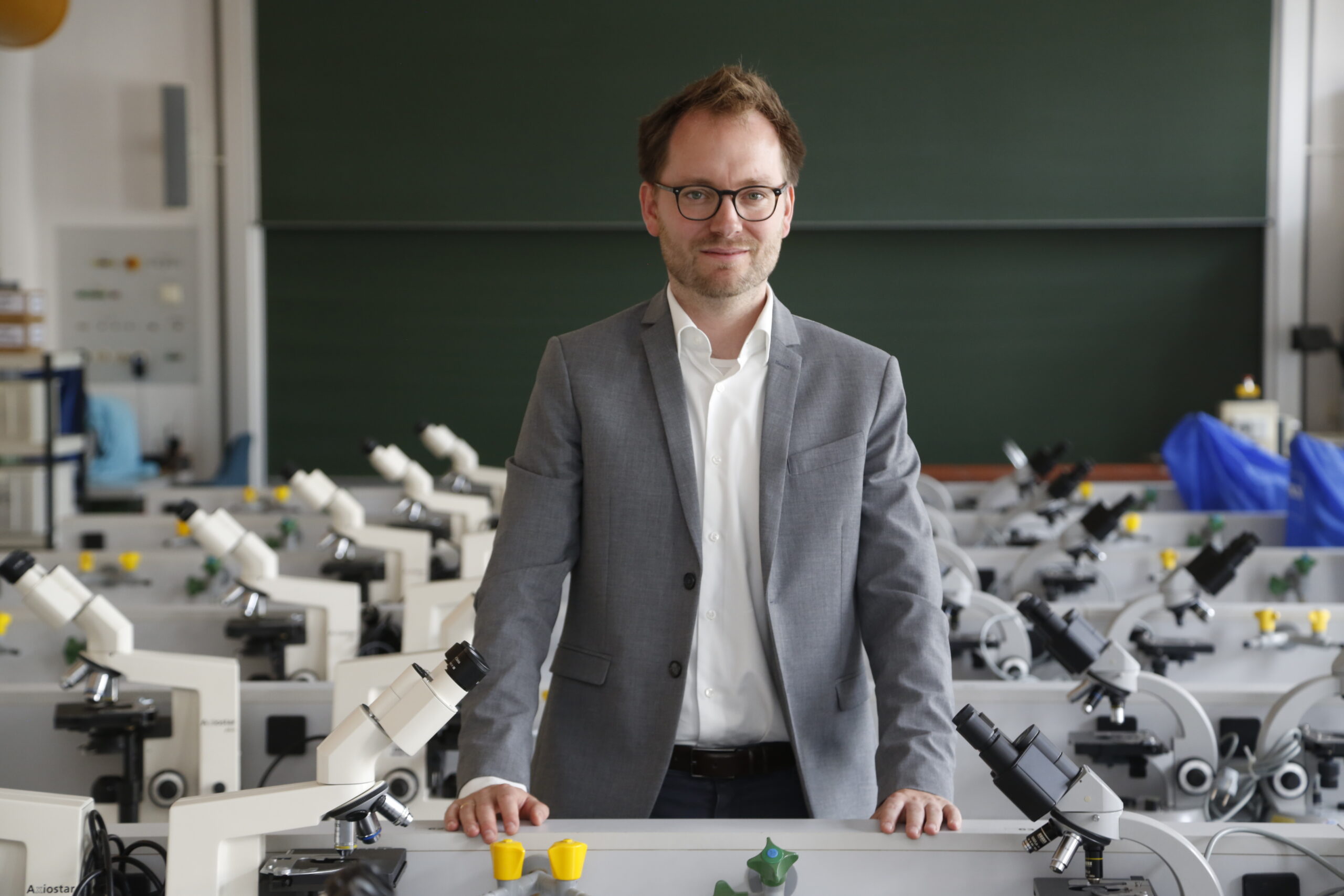
FAU medical researcher who investigates T cells as the key to improved immunizations and cancer therapy has been nominated for a Heisenberg professorship in recognition of his work.
T cells resemble a special forces unit in the police. They are specialists when it comes to fighting certain diseases such as infections or cancer. Prof. Dr. Kilian Schober from Friedrich-Alexander-Universität Erlangen-Nürnberg (FAU) and his team are investigating the receptors on T cells and the key role they play in our adaptive immune system. His aim is to gain an improved understanding of the biology of these cells and to use this to develop medical applications. In recognition of his research achievements, the early career researcher has now been awarded a Heisenberg professorship. The German Research Foundation (DFG) is providing the project with over 500,000 euros in funding over five years.
How the body’s own special forces unit works
“We want to make a contribution to helping patients by gaining a better understanding of immune biology,” explains Killian Schober. The human body contains up to one hundred million T cells, all of which have unique receptors. In the case of autoimmune diseases such as multiple sclerosis, however, they can turn against the body itself. At the same time, T cells can be trained through immunization and used in a targeted manner during immunotherapy. Schober would like to focus on areas that are not yet well understood, such as the behavior of T cells in human tissue.
Gaining an understanding of T cells
Kilian Schober’s working group at the Institute of Microbiology – Clinical Microbiology, Immunology and Hygiene conducts research into infectious, tumor and autoimmune diseases, investigating potential therapies such as immunizations and cell therapies. The common denominator of their research is gaining an understanding of how T cells recognize their target and what then happens in the body. In order to gain a better understanding of their behavior, the researchers use the genetic scissors CRISPR/Cas9 to alter the receptors in a targeted manner and observe what subsequently happens to the cells in the laboratory. These experiments help to decipher the complex recognition mechanisms in immune cells.
The research focuses in particular on how T cells react after immunizations, for example against SARS-CoV-2 or yellow fever. Unlike natural diseases, with an immunization, researchers can control exactly when the immune system is stimulated. This creates an ideal model system for studying the immune response.
Collaboration with various partners
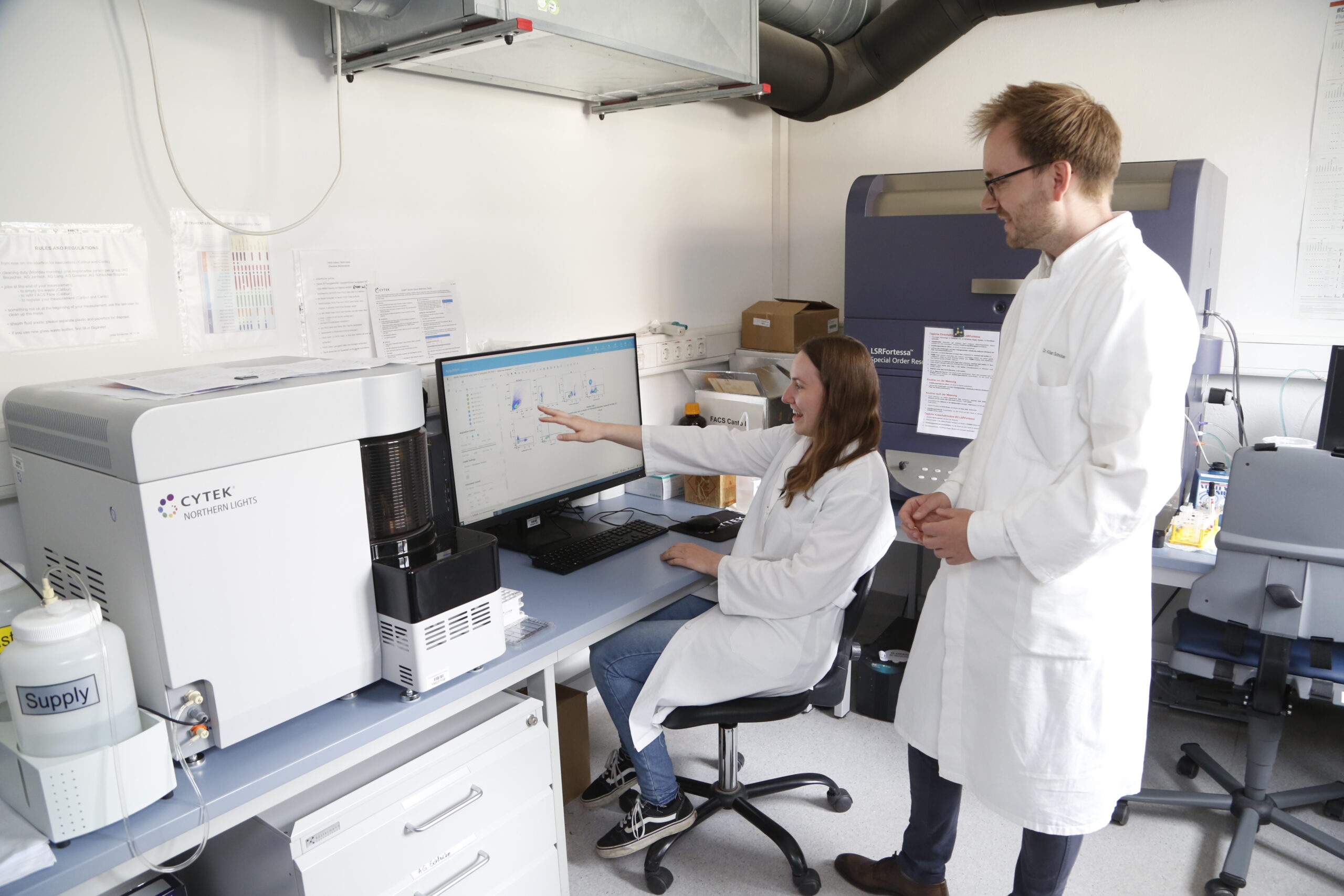
In order to be able to develop therapies for as many people as possible, the working group is working with various partners including the Computational Health Center at the Helmholtz Center in Munich. Together, they are setting up an antigen library. They hope to use artificial intelligence to predict which type of T cell recognizes which target. Schober’s team is providing the Helmholtz Center with the training data they require.
Currently, his working group is predominantly conducting observation studies for which they are receiving blood, cerebrospinal fluid and tissue samples from local clinical partners at Uniklinikum Erlangen. In future, however, Schober could imagine conducting clinical studies as well.
Funding for top researchers
With the Heisenberg professorships, the DFG funds outstanding early career researchers who meet all the requirements for appointment to a permanent professorship. High performers are usually offered a permanent professorship after five years. The intention is to provide the researchers with reliable prospects for the future.
Further information:
Prof. Dr. Kilian Schober
Professorship for T Cell Immunology (Heisenberg Professorship)
kilian.schober@uk-erlangen.de