
DFG funding for research into brain plasticity
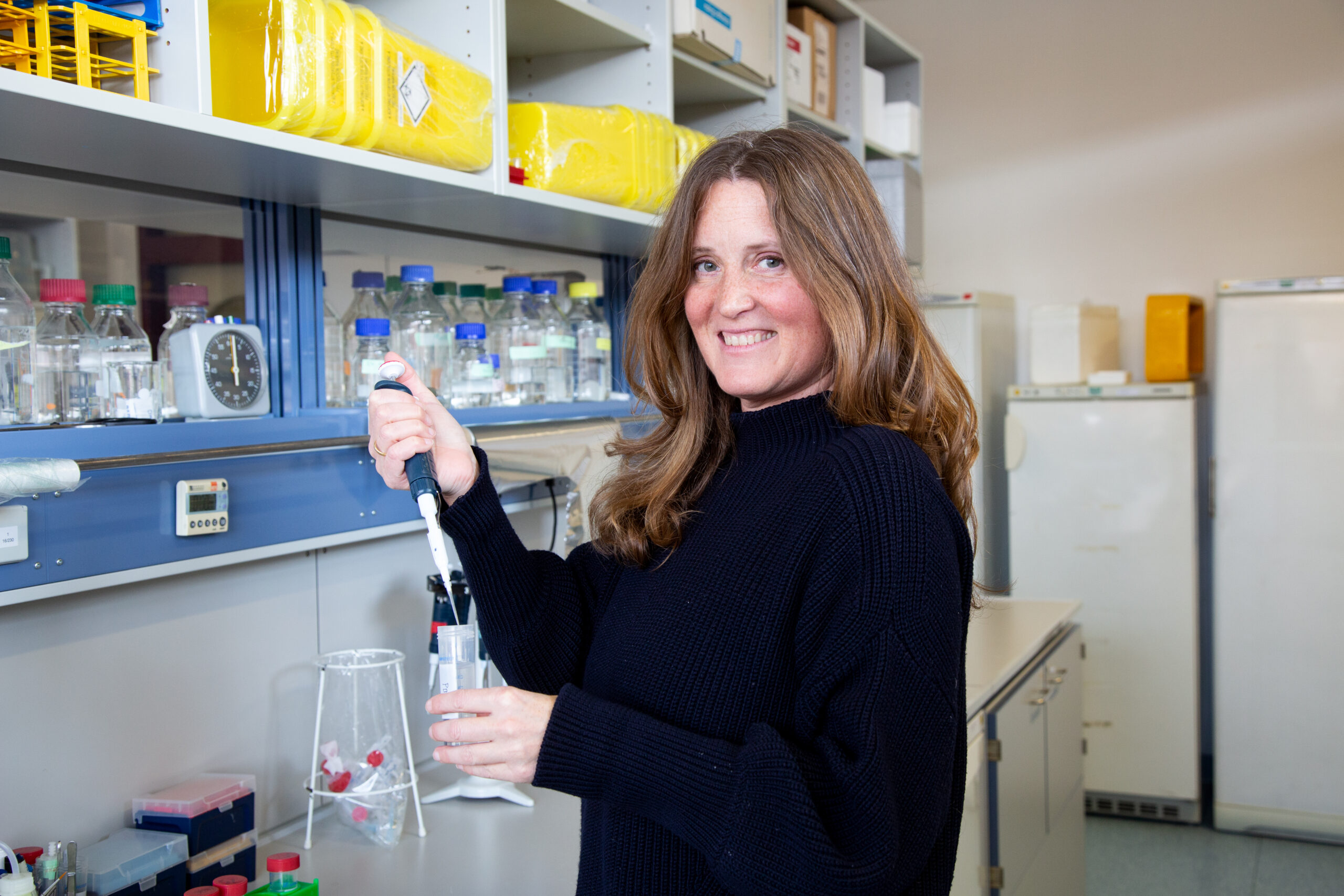
A great success for FAU: The German Research Foundation (DFG) has awarded Heisenberg funding to Prof. Dr. Ruth Beckervordersandforth, Professorship for Molecular Neuropathology at Friedrich-Alexander-Universität Erlangen-Nürnberg (FAU).
With her research, Professor Beckervordersandforth would like to identify cellular and molecular mechanisms which allow astrocytes to control and improve the plasticity of the adult brain. Her work has the following title: “Der Einfluss von Astrozytendiversität und -dynamik auf hippokampale Plastizität” (“The influence of astrocyte diversity and dynamics on hippocampal plasticity”). The DFG is funding the project for a duration of five years.
What does this Heisenberg funding mean to you?
Receiving funding from the Heisenberg program marks the end of my long journey through the professorship application process and truly reflects the DFG’s core mission of supporting scientists on their path to becoming professors. For me personally, it fulfilled my desire to continue my research here at FAU. During the last 12 years that I have been here, I have been able to build up a wonderful network of collaborators and friends at FAU with whom I really wanted to continue working. Our connections to neurosurgery mean I have a great opportunity to use a more translational approach with my research, which has had a more fundamental approach up to now.
You examine astrocytes, which support and regulate the function of nerve cells in the brain. What is the challenge here for your research?
Research in neuroscience has been focusing on nerve cells for several decades now. But they only form half of the brain. The other half is made up from cells called glial cells, to which astrocytes belong. Research into astrocytes is significantly underrepresented and has only become popular during the last few years. The challenge with research into astrocytes lies in the fact that many things are still unknown, fewer genetic tools exist and that we have to develop and establish experimental structures. But that’s exactly what makes it appealing – we are right in the middle of the development of a very exciting field.
What makes research into brain plasticity so important?
Brain plasticity is the brain’s ability to adapt to the environment and the surroundings. This ability reaches a peak during the brain’s development and continues to decline during a person’s lifetime. Plasticity also refers to the brain’s ability to react to injury or illness. Mechanisms that improve plasticity could also potentially offer protection from illness or improvements in patients’ medical condition.
What results would you like to achieve?
Complex organs such as the brain benefit from a holistic approach: How do the various cell types, that is, neurons and glial cells, work together? I hope that our research makes a contribution to improving our understanding of the role of astrocytes in brain physiology and pathology to ultimately enable us to develop new astrocyte-based approaches to therapy.
In another interview, Dr. Beckervordersandforth reports about how she came to FAU.
Go to interviewAbout Heisenberg funding
The Heisenberg program, offered by the DFG, supports outstanding scientists by preparing them for academic leadership roles while allowing them to continue their high-profile research projects. Named after physicist Werner Heisenberg from Würzburg, the program honors the founder of quantum physics, who was awarded the Nobel Prize in 1932 for his groundbreaking research.
More information:
Prof. Dr. Ruth Beckervordersandforth
Professorship for Molecular Neuropathology
Phone: + 49 9131 85-26206
ruth.beckervordersandforth@fau.de