
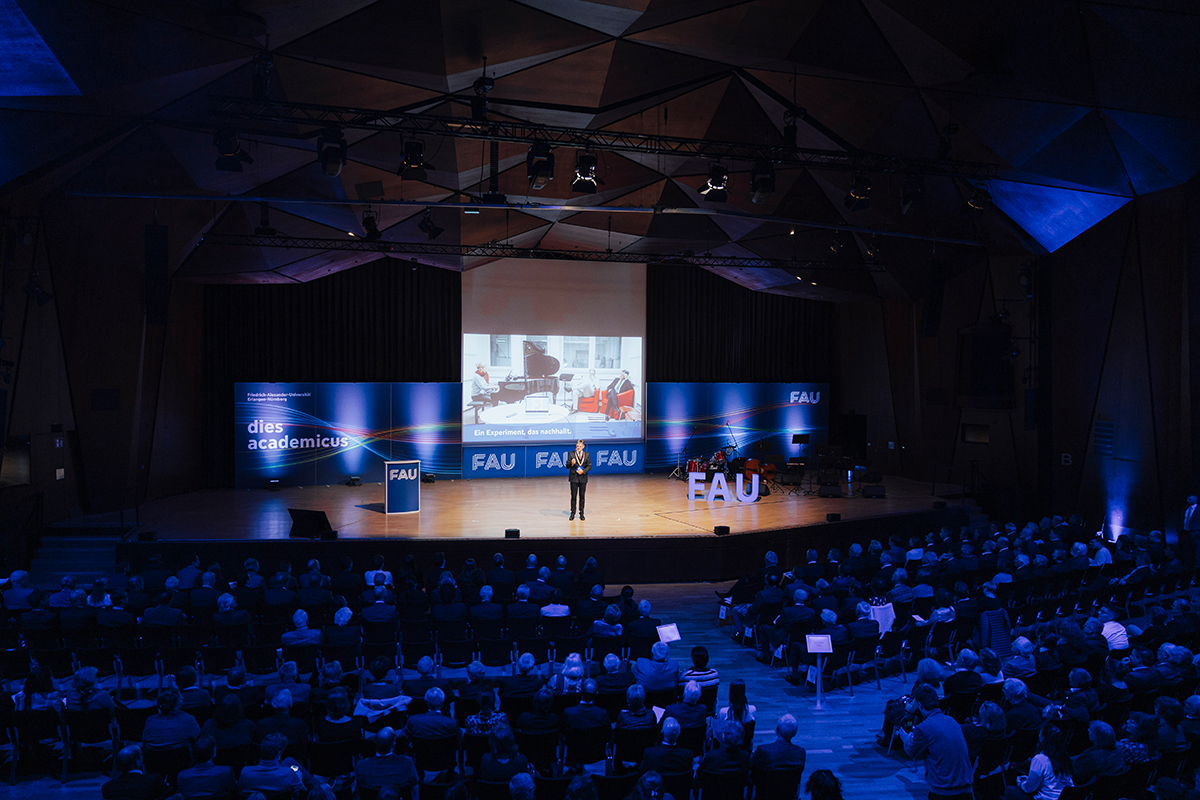
Appeal to policymakers: “We need a special program to renovate Bavarian universities”
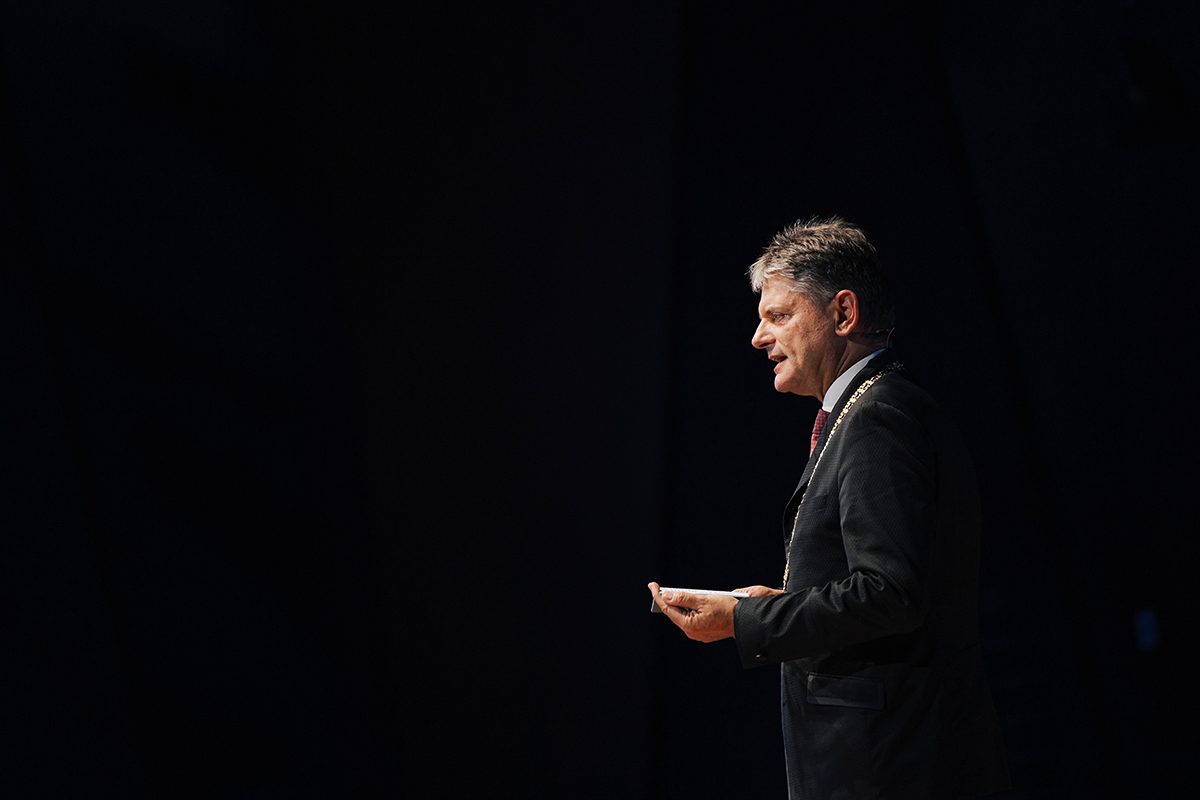
“The vibrant, distinctive melody of FAU arises from the diversity of voices: the voices of all those who, with passion, curiosity, and skill enliven our university every day.” With this metaphor, Prof. Dr. Joachim Hornegger, President of Friedrich-Alexander-Universität Erlangen-Nürnberg (FAU), once again underscores at the Dies academicus 2025 celebration what sets the university apart: the diversity of perspectives, collaboration, and the interdisciplinary approach that make a strong university possible in the first place. To researchers and teachers, students and staff, friends and alumni – the FAU President extends his thanks to all of them on this 282nd birthday of FAU.
2025 has been a successful year with FAU focusing on four goals: overcoming disciplinary boundaries, strengthening innovative capacity, fostering talent, and making an impact. Despite dwindling resources and increasing competition, FAU’s strength lies in “increasing what sustains us, rather than counting what is missing” – and in initiating innovations to meet challenges.
Clusters of Excellence, record third-party funding, and a high-tech hotspot
FAU has overcome disciplinary boundaries with its newly acquired Cluster of Excellence, Transforming Human Rights: Legal scholars, geographers, political scientists, and historians are working closely together in Germany’s only legal Cluster of Excellence, rethinking human rights – at a time when they are under pressure worldwide.
Hornegger sees the university’s innovative strength confirmed by the latest figures: Between 2015 and 2024, FAU’s third-party funding volume rose from 180 to 300 million euros – an increase of 67 percent. Yet despite this encouraging figure, Hornegger cannot avoid issuing a word of caution to policymakers: “The mission of a public university cannot be to survive on third-party funding. We need stronger basic funding so that research can once again be what it is meant to be: the search for new knowledge – not a substitute for missing resources. Alongside all the positive initiatives currently underway – which the minister is always happy to highlight – we need a special program to renovate Bavarian universities. Only then can we secure the foundation on which excellence can truly flourish.”
Of course, despite challenging building conditions, there are still many more reasons to celebrate the 282nd anniversary in style: With federal funding for the ZOHO Factory, a high-tech hotspot is being created right in the heart of northern Bavaria. The ZOLLHOF, originally established by FAU , is thus further strengthened in its role as a startup center with supraregional impact.
Developing talent – from the Children’s University to the ERC Grant
The fact that talent development is a top priority at FAU is evident not least in the decision of 5,200 first-year students to enroll at FAU for the winter semester 2025/2026 despite the missing graduating class – and in the fact that the total number of students remains stable and high at 39,810: “Although our building infrastructure may not be ideal in some places, our intellectual substance – the substance of our minds, our ideas, our community – is outstanding,” Hornegger says with pride.
Talented students become successful researchers: This year, FAU was able to secure five ERC Grants – funding from the European Research Council. They were awarded to Carlos Bassani, Sjoerd Harder, Maria Chekhova, and Adrian Meier, as well as to Vincent Christlein, who even succeeded in obtaining one of the rare Synergy Grants. Systematic talent development pays off – and it starts early: “From the Children’s University to ‘Jugend forscht’ to our graduate programs: We support people on their path into science – from their first experiences with magnetism to the lecture hall to being appointed to a professorship.”
Science communication makes an impact
In Hornegger’s view, the work of a university must not remain behind closed doors: Making an impact also means being visible in society. In Hornegger’s eyes, a striking example was the recent Long Night of Science, which drew tens of thousands of visitors who came to experience research up close and engage in conversation with FAU’s scientists: “This night showed how curiosity, knowledge, and enthusiasm come together at FAU – how science sounds when it reaches people.”
Congratulations from policymakers: FAU as an powerful leader of innovation in Bavaria
On behalf of policymakers, Markus Blume, Bavarian State Minister for Science and the Arts, and Bavaria’s Interior Minister Joachim Herrmann extend their congratulations to FAU.
In his video message, Blume emphasizes three key points that, in his view, define northern Bavaria’s largest university. First, the minister is pleased that it was possible to bring a Cluster of Excellence to FAU. The topic of human rights is a perfect fit for FAU and makes one thing clear: “FAU makes an impact.” This is especially true when it comes to excellence in research and teaching.
Second, FAU is a powerful leader of innovation in northern Bavaria. The fact that ZOLLHOF prevailed in the tough national competition for funding for the Start-up Factory ensures that FAU can continue to advance transfer and start-ups in the region.
Finally, FAU is his biggest construction site – in a positive way: “The Free State of Bavaria is investing over two billion euros at the various FAU locations, because we know that we are moving into the next level here.” Wherever you look, there are new buildings or renovations being initiated – from the Himbeerpalast to Henkestraße. Blume adds: “One thing I know: All the money, all the commitment from the university leadership, the researchers, the students, the State Ministry for Science and the Arts – and by the way, also the money from Bavarian taxpayers: It is wonderfully invested at FAU.”
Interior Minister Joachim Herrmann also extends his congratulations: “282 years of FAU have become a success story that the founder could never have imagined. The university has become one of the shining beacons in science and research – not only in the region, but in Germany.” At the same time, Herrmann also emphasizes the state government’s multi-billion-euro investment in the structural development of FAU.
As the minister responsible for the state constitution, it is especially important to Herrmann on this university anniversary to emphasize how vital it is to stand up for the freedom of research and teaching: “A few years ago, people would have found it strange to even talk about this. But if we look at developments in a country that, just a few years ago, was considered the very symbol of freedom, it becomes clear how necessary it is to keep these fundamental values and rights in mind. Freedom of research and teaching is one of the foundations of the success story of the Federal Republic of Germany. And it is important that we stand up for it without reservation, especially in today’s world.”
These fundamental values also include tolerance and mutual respect, the interior minister further emphasizes. This is especially important in the context of the conflict in the Middle East. That is why, over the past year, he has made a point of meeting Palestinian students for discussions too. At the same time, he announced the news that, thanks to FAU and the university hospital relinquishing a plot of land, the Jewish community in Erlangen will be able to build a small synagogue. “We embody this openness to the world, we stand for peaceful coexistence among people, in order to enable a strong future for all of humanity. FAU contributes to this.”
Sports in the context of power, image and geopolitics
In his presentation “Das Runde muss ins Eckige. Spielfelder der Legitimation im Nahen Osten” (The ball has to go in the net. Playing fields of legitimization in the Middle East), keynote speaker Prof. Dr. Thomas Demmelhuber, Chair of Middle East Politics and Society at FAU illustrates the political and social dimensions of sport in the context of power, image and geopolitics. He demonstrates how sport is used, on the one hand, to maintain an image, to consolidate power relationships, as a window for a flourishing future and to exert influence on an international level. On the other, sport itself also changes: It becomes a stage, where states not only present themselves, but also renegotiate the rules and values of sport.
Speech by FAU students: Community as an opportunity
On behalf of the student body, Michael Ruppert and Ann-Sophie Scholl offer their congratulations. They report on what mattered most to students in 2025 – and they, too, address the difficult building situation: “In many buildings, it literally rains inside, ventilation systems fail, walls are damp, lecture halls have to be closed due to pollutants or technical defects – and in the Faculty of Engineering, a dripstone cave is currently forming in the underground garage,” says student representative Michael Ruppert. But it is also important to them that everyone pulls together: “Where there are challenges, there are also opportunities – and they lie in working together,” adds Ann-Sophie Scholl. FAU students are especially pleased that their university, as part of FrankenFürDasLeben, has called for action against blood cancer and that a successful joint campaign was launched.
2025 FAU Innovators
Once again, FAU used its anniversary celebrations as an opportunity to shine the spotlight on its particularly creative thinkers: the FAU innovators. They are being recognized as role models for their innovative strength.
Precisely locating objects and devices.
Dr. Johanna Geiß was honored in the “Research” category in 2025. In her doctoral research, she investigated why sensors in cars sometimes recognize obstructions incorrectly and how these errors could be rectified, for instance in garages. She received the Hightech Award Bavaria in the “Graduate Award” category for her doctoral thesis.
Previously, also at FAU, she studied medical engineering for her Bachelor’s degree and later completed a Master’s degree in electrical engineering. She founded Pelora with her colleagues after her doctoral thesis – a start-up based at the Chair of Microwaves and Photonics. Pelora is developing an infrastructure that can convert Bluetooth signals from standard devices into precise position data. Warehouses, supermarkets, barns – the possible applications are diverse. The device could also potentially be used to analyze customer behavior anonymously in supermarkets.
Working jet prototypes built in a basement
Ediz Osman was honored in the “Students” category in 2025. The 21-year-old is studying at FAU and has been building model airplanes since childhood. He is currently working on an environmentally friendly VTOL jet, short for “Vertical Take-Off and Landing.”
He entered the “Jugend forscht” competition with a prototype that he designed himself and advanced through all stages of the competition. First, he won the regional and state championships in Bavaria and ultimately won the national finals in the technology category.
What’s special about his project: The engines of his VTOL models can swivel 90 degrees, allowing the machine to both hover like a helicopter and fly like a jet. He 3D-printed, wired, and tested everything in his parents’ basement. VTOL jets don’t need a runway for takeoff and landing, which means they can reach any destination within their range, independent of airports.
At FAU, he is now expanding his theoretical foundation.
Humor and attitude even when it comes to serious topics.
Screenwriter Jana Forkel is honored in the “Alumni” category in 2025. In April 2025, she won the Grimme Award for the screenplay of the German series “Angemessen Angry” (“Appropriately Angry”). The Grimme Award is the most prestigious honor for television programs in Germany. Forkel has received it twice: in the categories “Fiction” and “Audience Award.”
At FAU, she studied Theater and Media Studies as well as English and American Studies. She was quickly drawn to “funklust,” the campus media at FAU. “Appropriately Angry” tells the story of sexualized violence against women, a difficult topic that Forkel and her co-author Elsa van Damke deliberately approached differently. The humor, she says, is not a cheap gag, but a kind of declaration of solidarity.
Accolades for FAU members and supporters
Before the Dies academicus, the University honors high achievers, academic achievements and services in teaching at FAU every year. A list of all award winners is available on our website:
The FAU AwardsMore information on the event:
Dies websiteA recording of the event is available via FAU’s video portal, www.fau.tv, from Wednesday, November 12, and will be broadcast on Tuesday, November 11 at 8.15 pm and Saturday, November 15 at 10 pm on Franken Fernsehen.
 1/24
1/24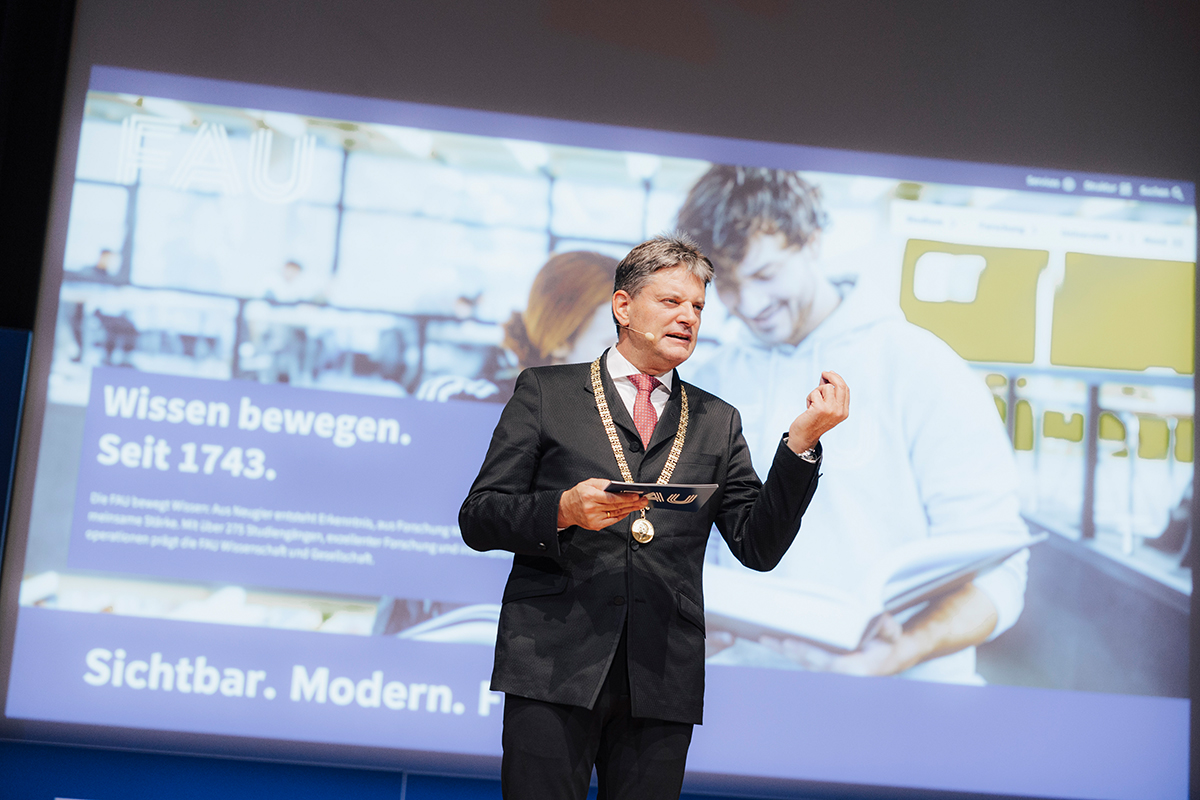 2/24
2/24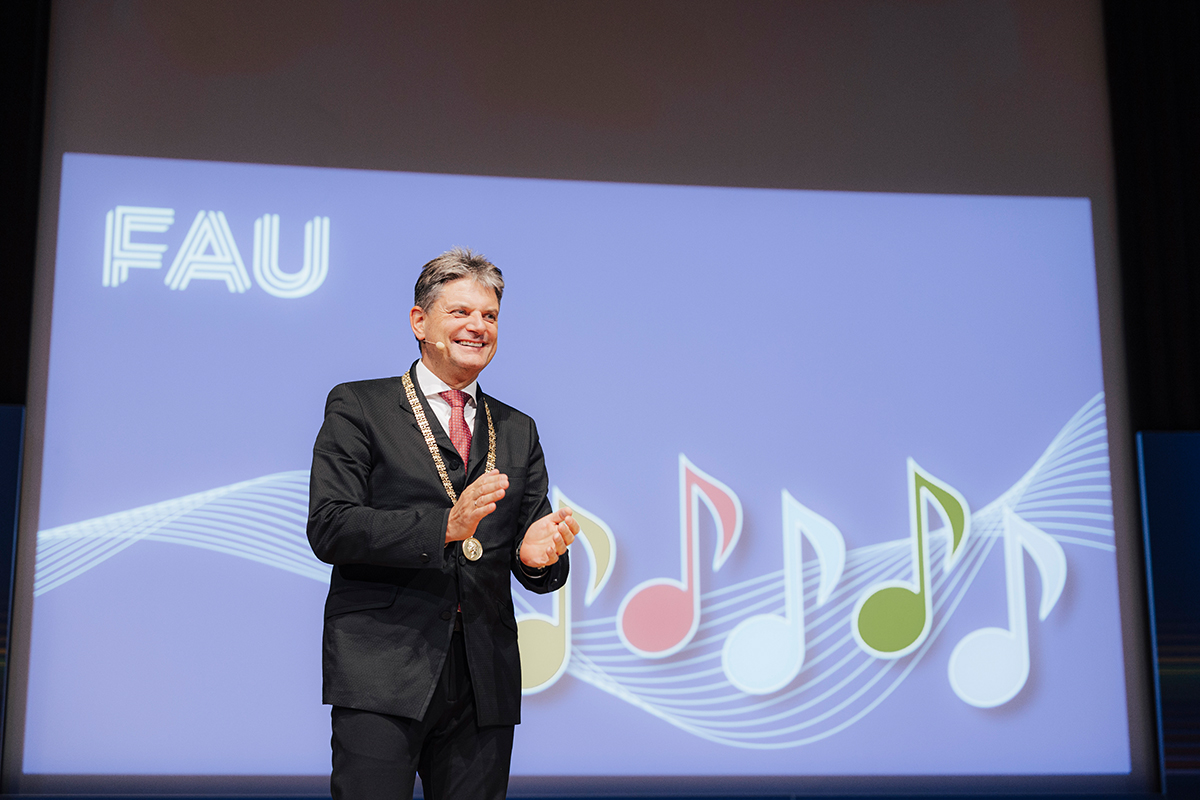 3/24
3/24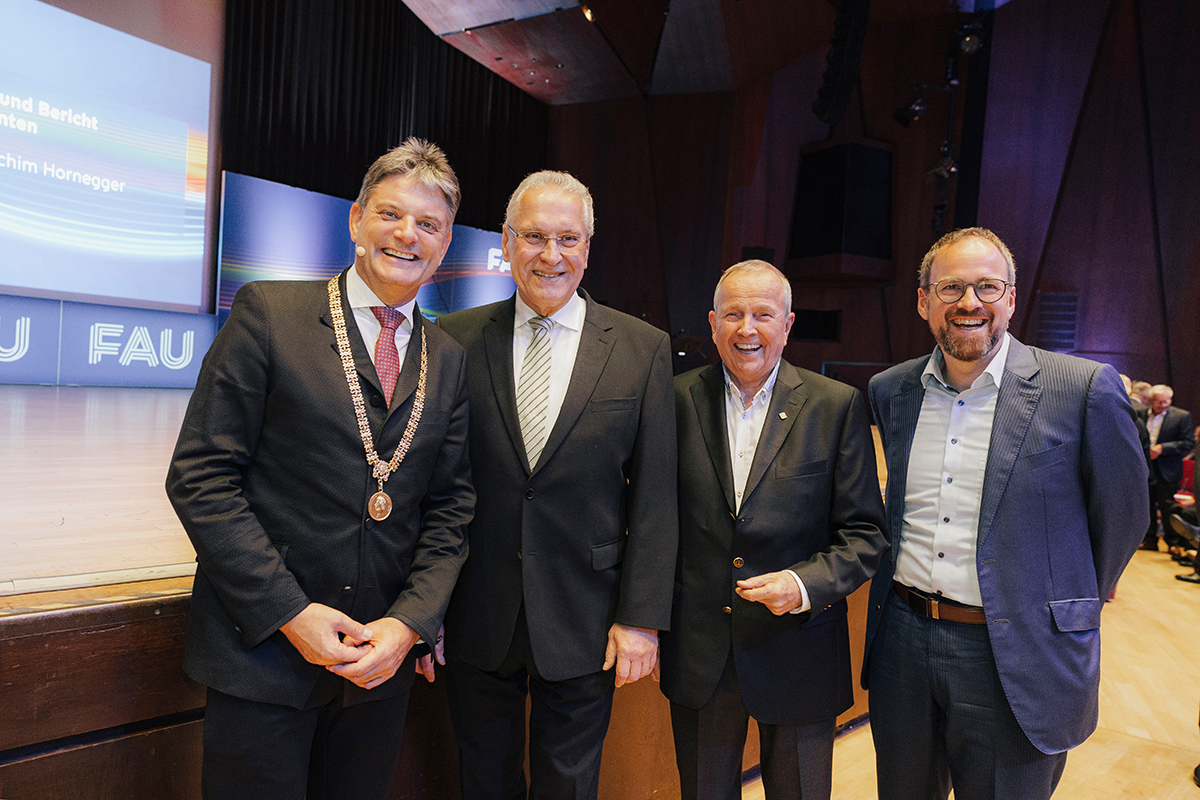 4/24
4/24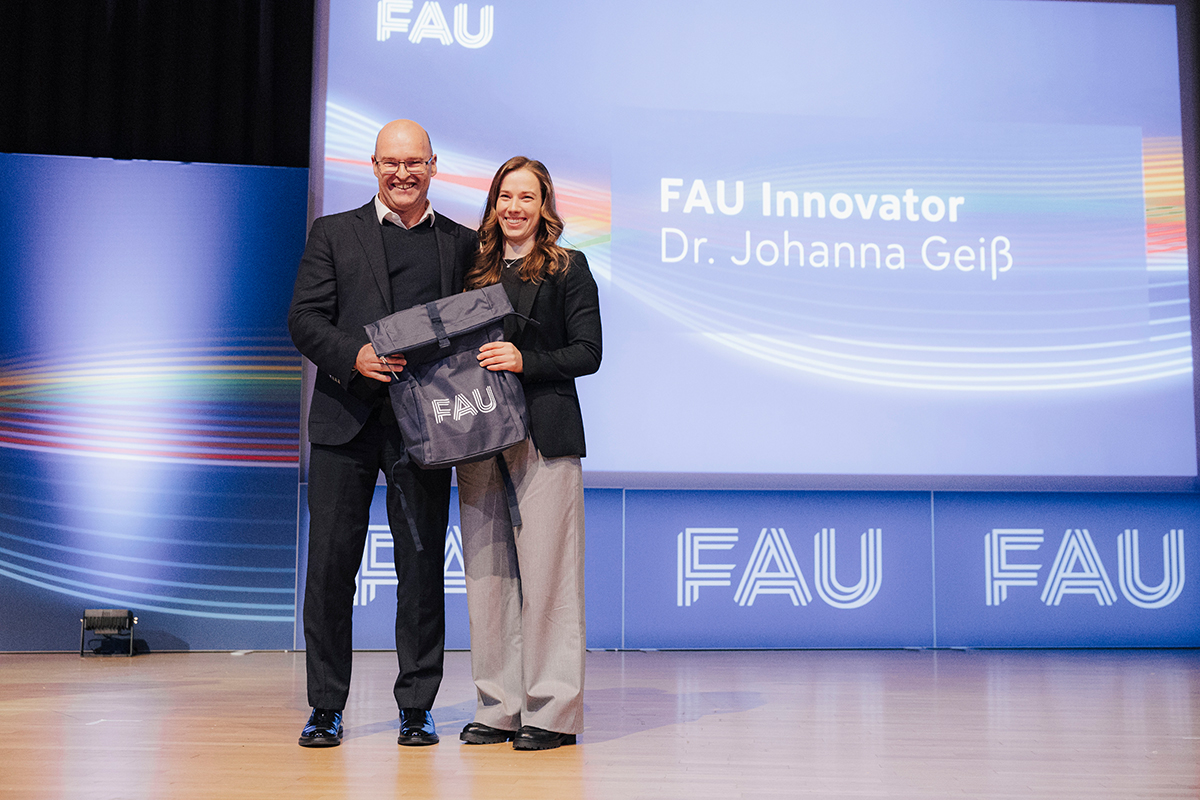 5/24
5/24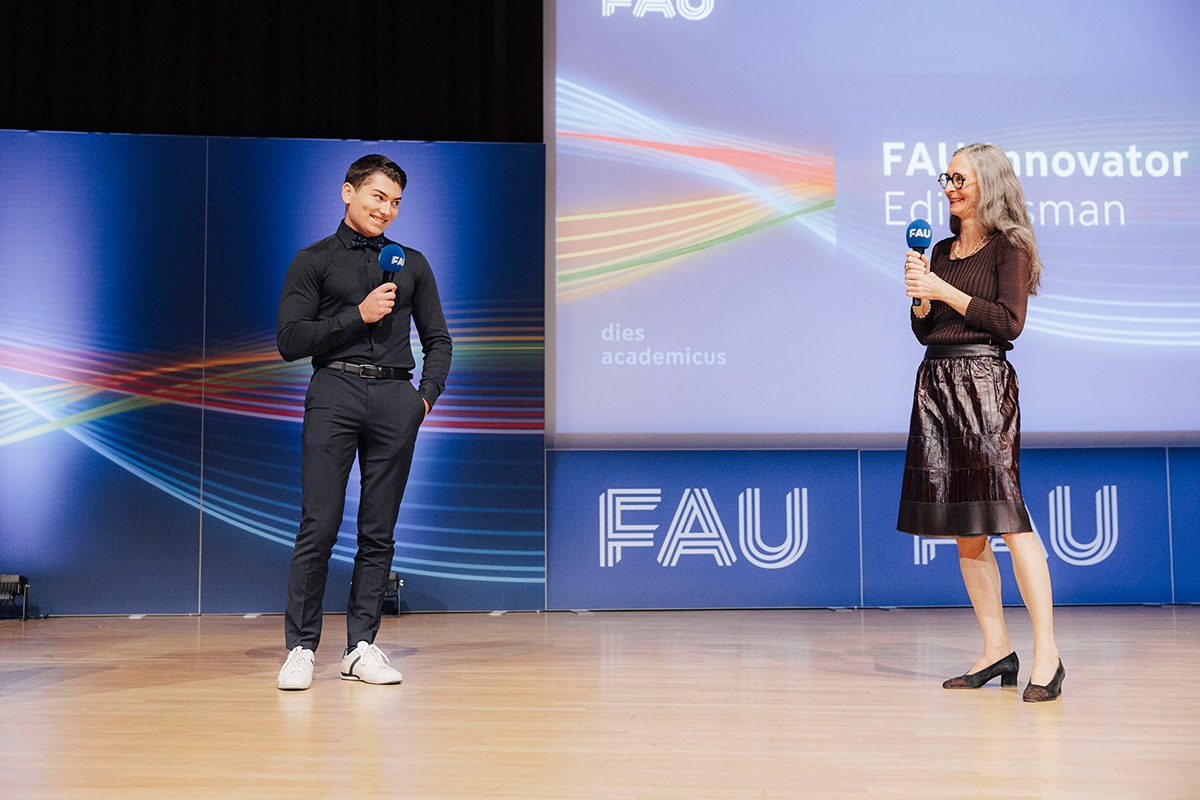 6/24
6/24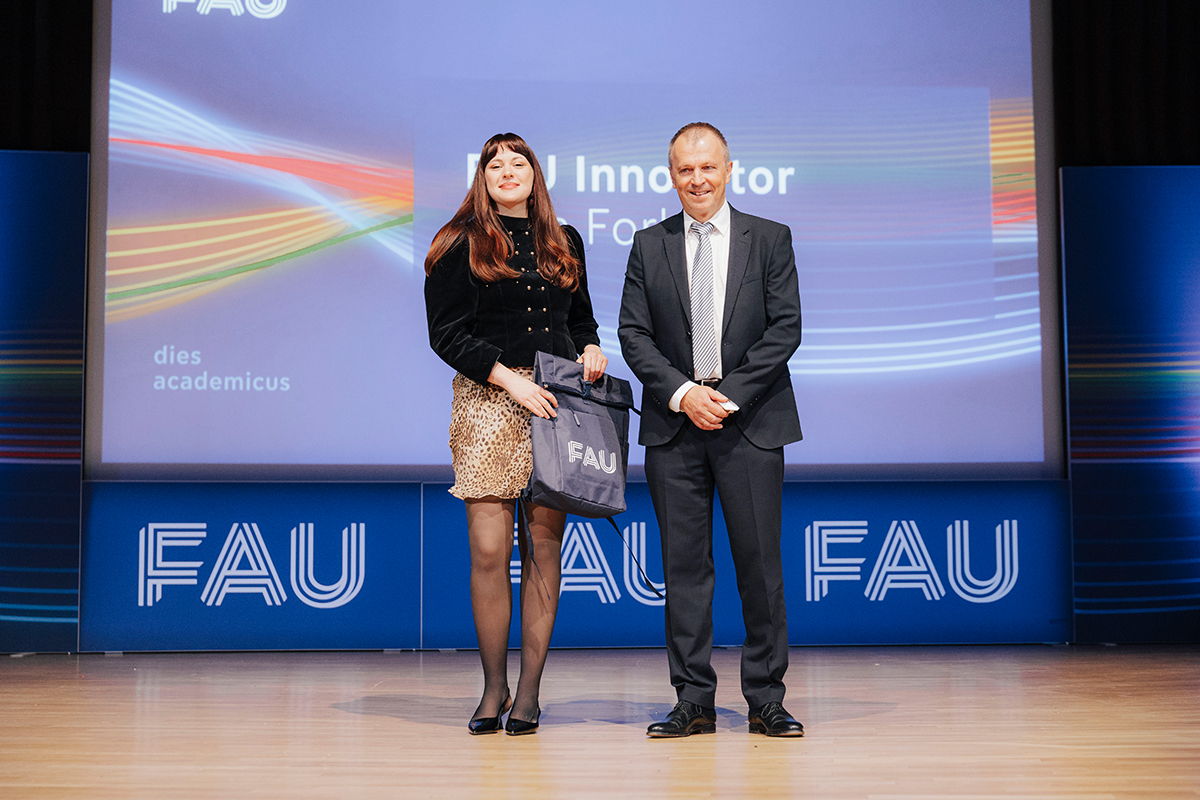 7/24
7/24 8/24
8/24 9/24
9/24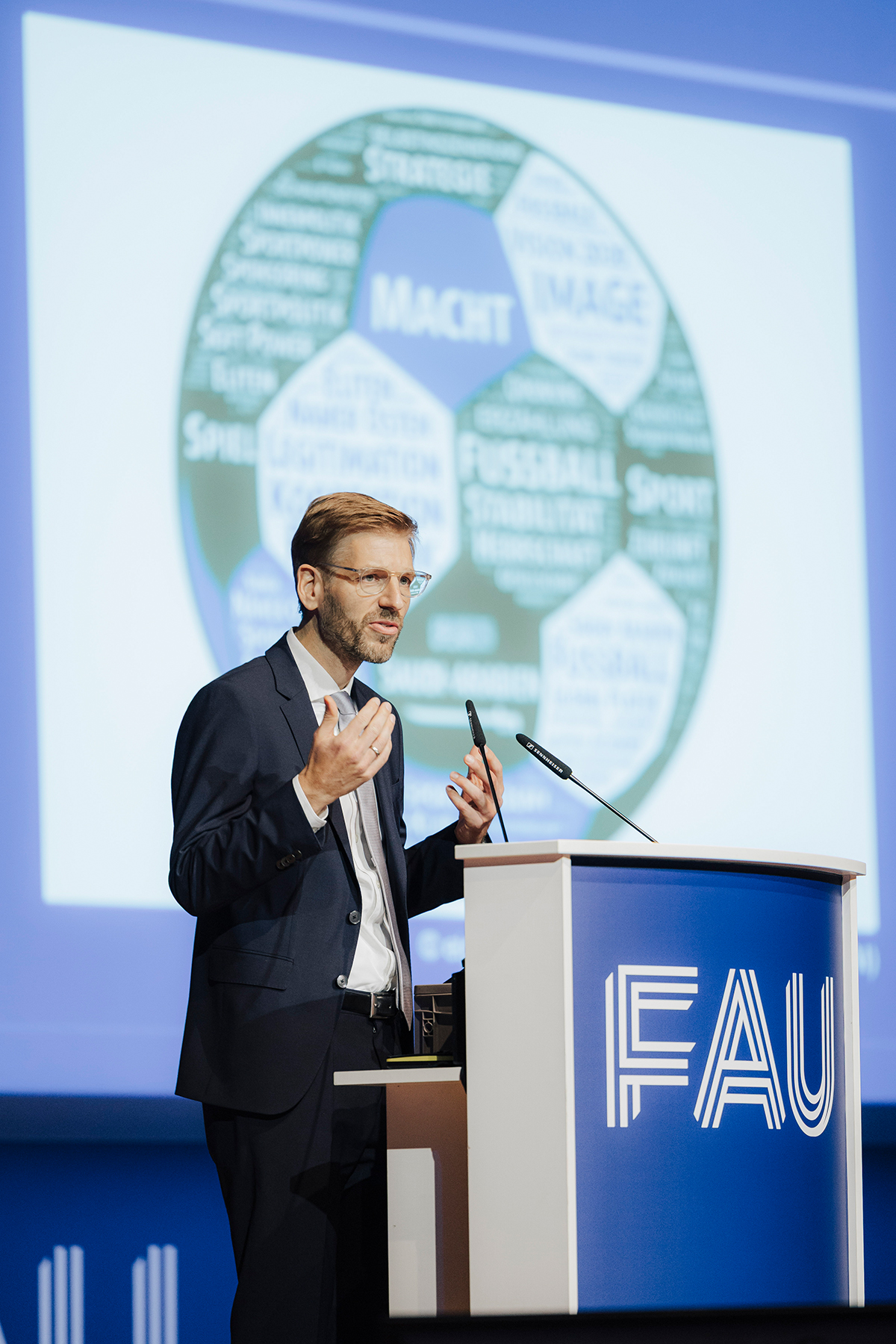 10/24
10/24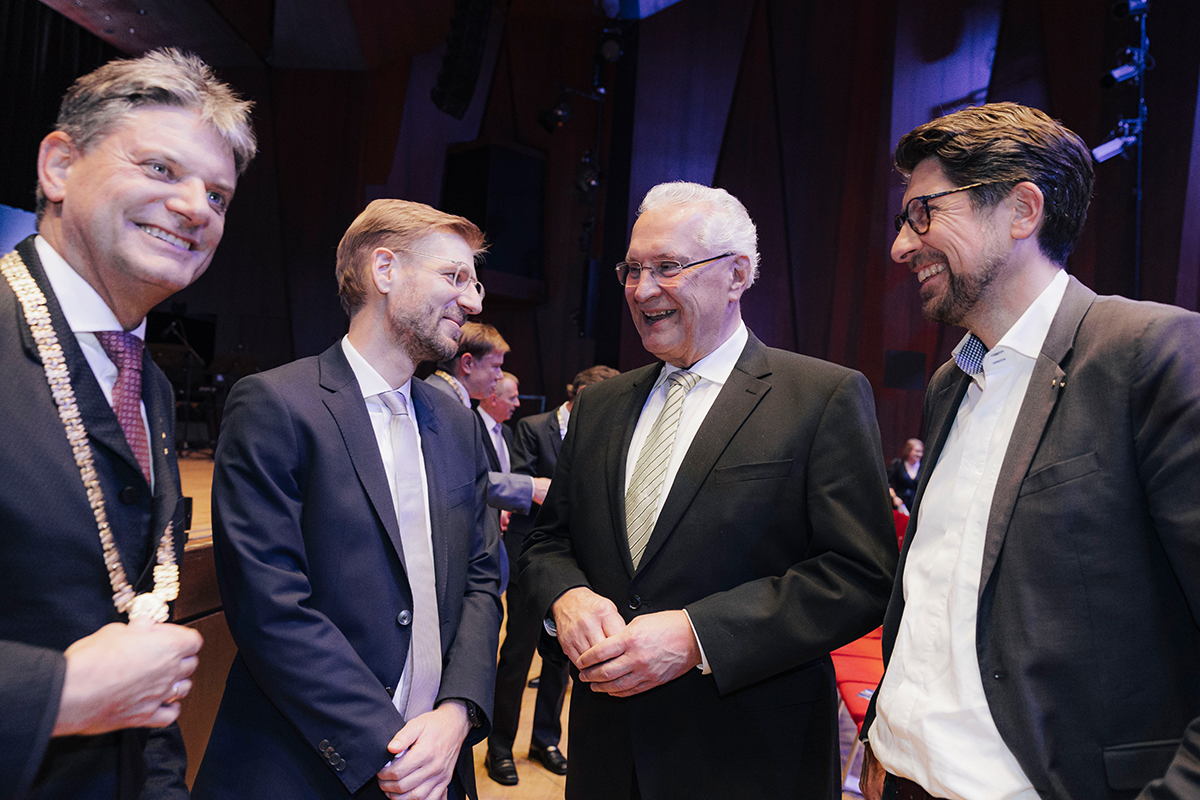 11/24
11/24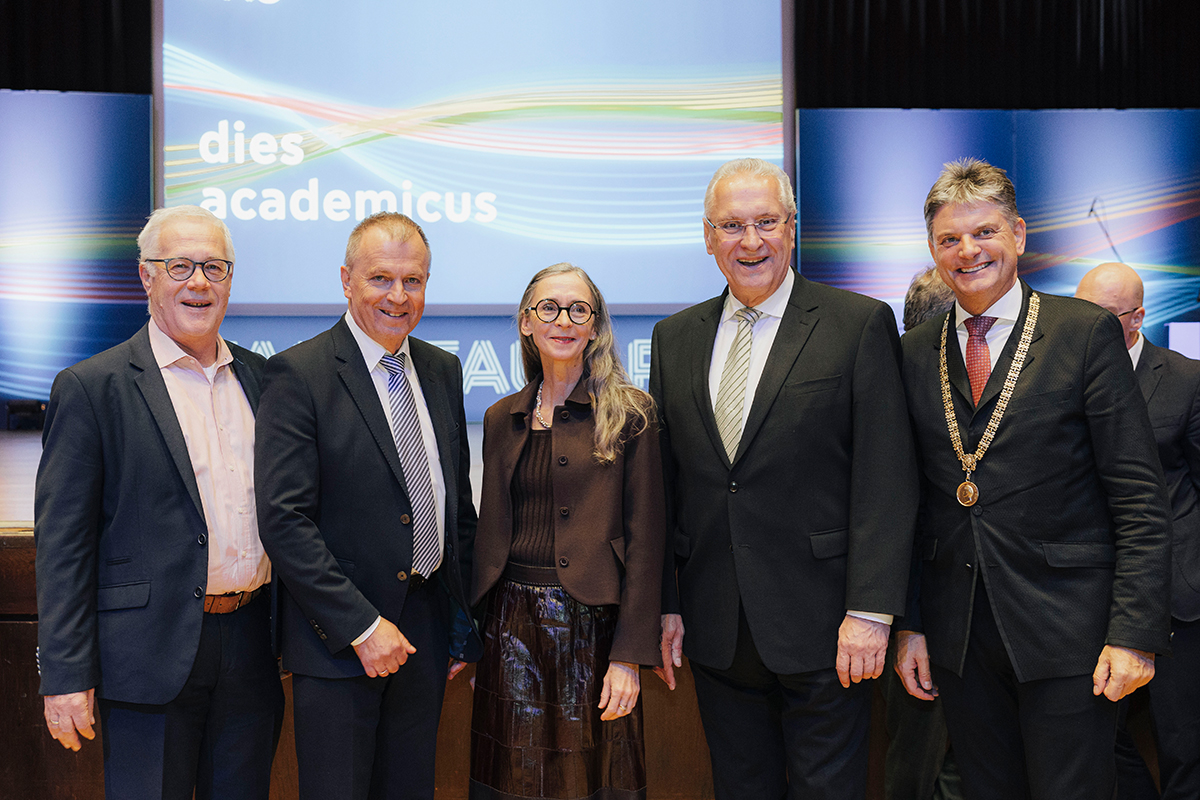 12/24
12/24 13/24
13/24 14/24
14/24 15/24
15/24 16/24
16/24 17/24
17/24 18/24
18/24 19/24
19/24 20/24
20/24 21/24
21/24 22/24
22/24 23/24
23/24 24/24
24/24Further information:
FAU Press Office
presse@fau.de