
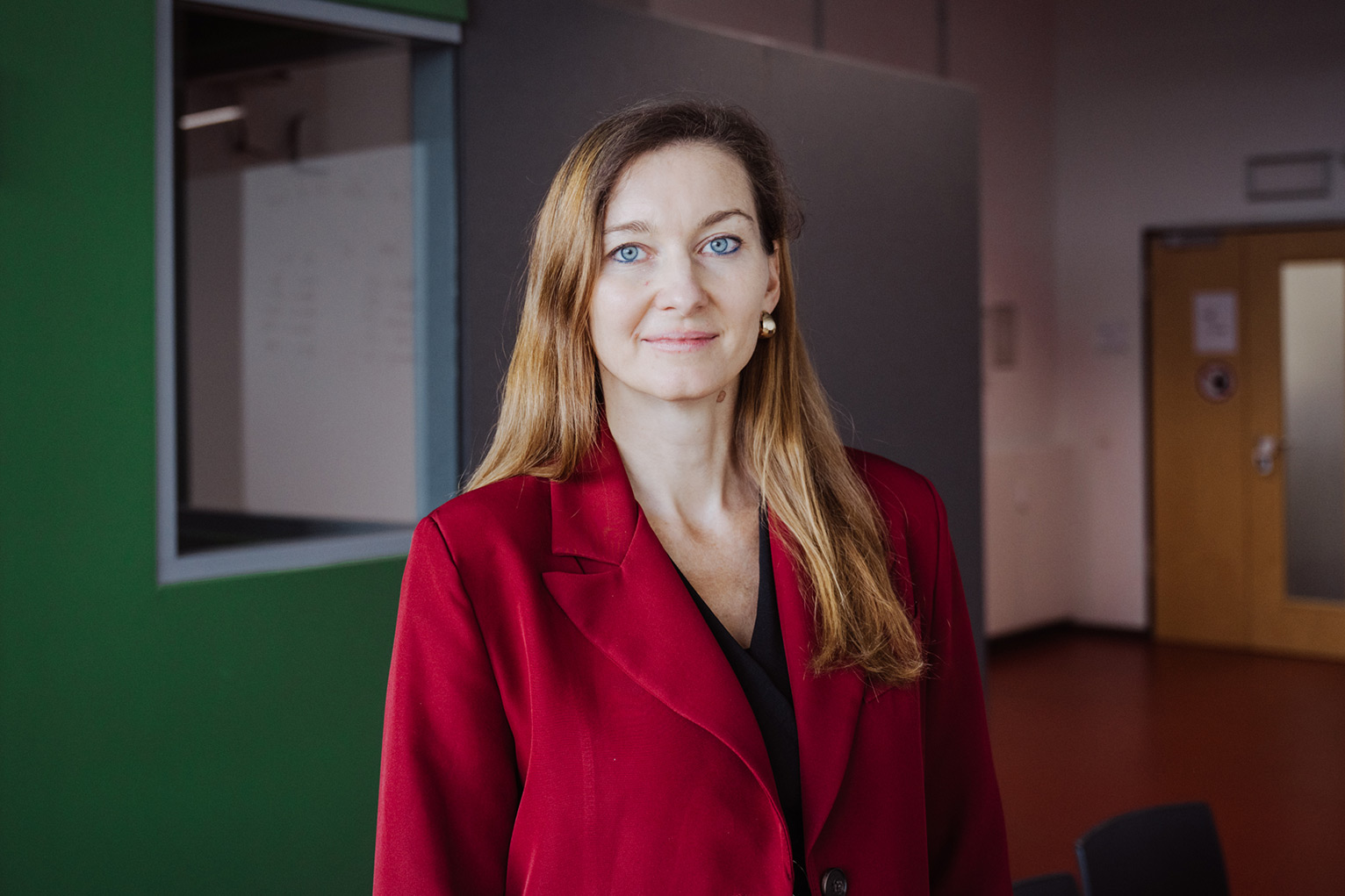
Since the beginning of 2025, Maria Hammer has been heading the administrative office of the Energie Campus Nürnberg (EnCN) and the Nuremberg Campus of Technology (NCT).
How can we contribute to the development of sustainable energy? For Maria Hammer, this question is critical. Together with a strong, cross-university network, she drives forward projects that accelerate the technological transformation of the energy transition. Her path to a position of responsibility began as early as third grade in the rural Upper Palatinate. It was there that Maria Hammer discovered her enthusiasm for electrical circuits and tinkering. Later, she chose physics and biology as advanced courses, laying the foundation for her current career path.
Preparing for the energy transition
“I thought that physics would provide clear answers to solving the problems of climate change and environmental pollution,” Maria Hammer explains today as she describes the background to her decision to study nanostructure engineering in Würzburg and to see her studies through.
With a focus on energy technology, electronics and photonics, she was already preparing for the energy transition back then, and in both her diploma and doctoral theses she investigated organic and inorganic semiconductors that play a crucial role in solar cells. As a scientist at the University of Oldenburg and later at FAU, she gradually shifted from cutting-edge research toward science and technology management of the energy transition, until she reluctantly gave up her own research at the beginning of 2025. At EnCN, Maria Hammer is working to help shape an energy future that will make our world more sustainable.
The campus is paving the way, for example, for research on organic solar modules, which can be produced much more easily and cheaply than conventional silicon cells – and which, with an efficiency of 14.5 percent, brought the world record in this field to Nuremberg. Work on storage systems is also especially important to Maria Hammer – they are intended to make solar energy, which is particularly abundant in summer, available for times with less energy.
Roland Knauer
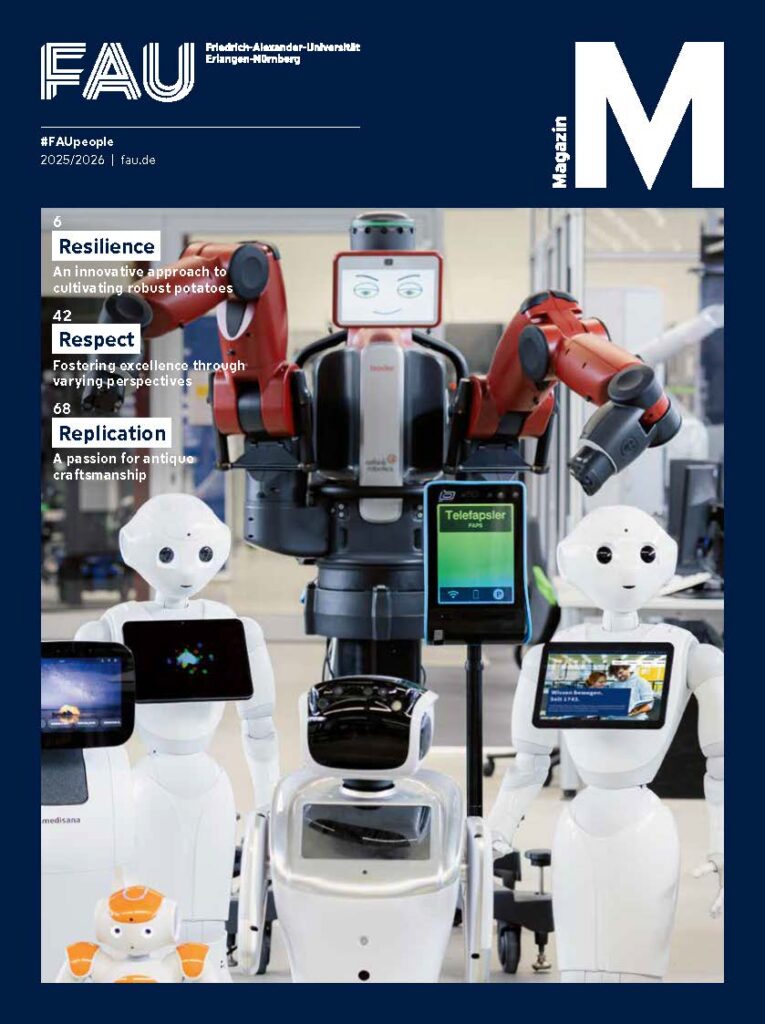
This article is part of the FAU Magazine
The third issue of the FAU Magazine #People is once again all about the people who make our FAU one of the best universities in the world. The examples in this issue show how lively and diverse our research is, the commitment of our students, and the work in the scientific support areas.
Highlight is certainly the new research cluster “Transforming Human Rights.” Or you can follow our scientists into laboratories and workshops, where they make potatoes climate-resistant, teach robots social behavior, or reconstruct ancient ships and cannons. At FAU, students are developing vertical take-off aircraft or impressing with outstanding performances at the Paralympics. And let’s not forget the people who work at our university or remain closely connected as FAU alumni. Visit the Children’s University with them or watch a TV series with an FAU alumna and Grimme Award winner.
- File Name
- FAU_Magazine_2025_2026
- File Size
- 3 MB
- File Type