
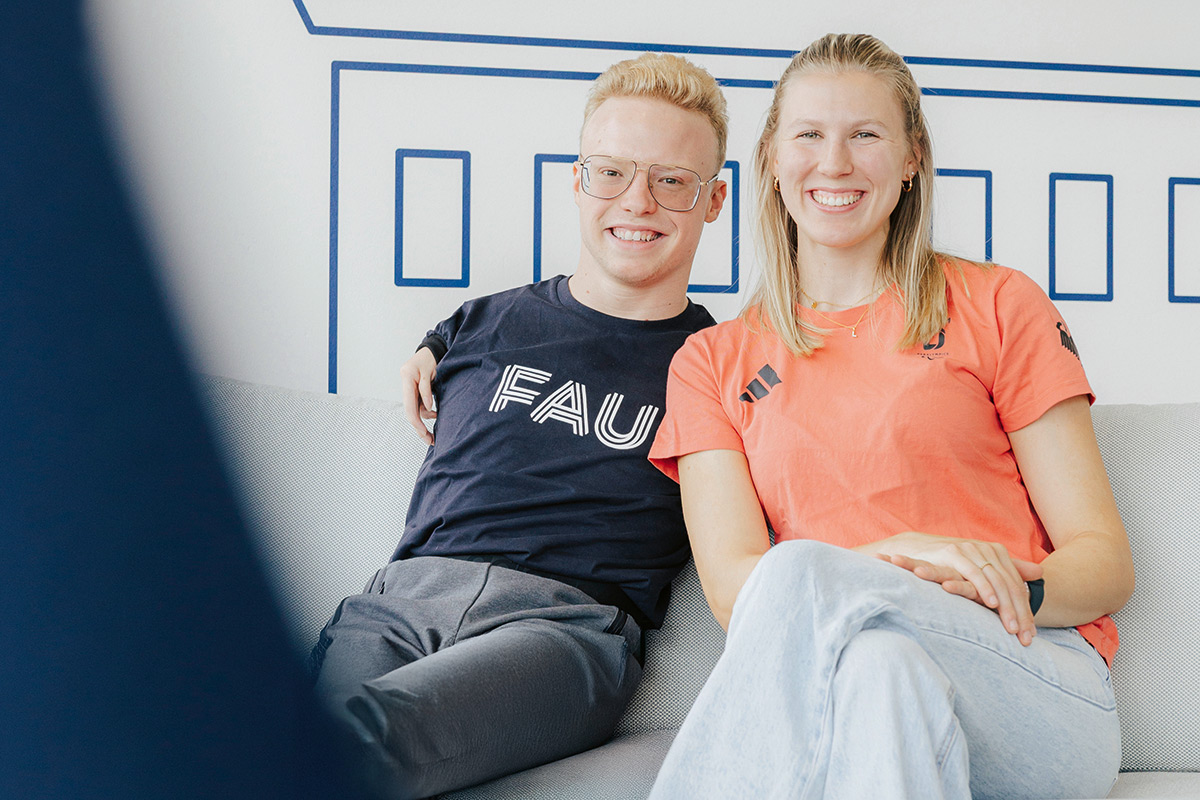
They are studying full-time and competing in sport at the highest level: Lilly Sellak and Josia Topf share what life looks like between medals and module exams – and what hurdles there are to combining sport and study.
Law, medicine – and sport at the highest level. How do you manage to juggle all that?
Lilly Sellak: Time management. Absolutely. You have to set priorities and be very well organized. I love sport, but I also love my studies. And if you want both, it works – but with compromises. With medicine, it’s especially difficult. I’m really only allowed to miss class once during the whole semester. At the same time, I’m regularly at competitions or training camps. I constantly have to explain why I’m absent so that I’m allowed to make up the dates. One time, I traveled eight hours from training camp to an exam, took the exam the next morning, and then had to go straight back to training – with just three minutes to change clothes.
Josia Topf: There are days when everything goes according to plan, and then there are the others. When you’re just hoping the pieces fall into place. We train twenty to thirty hours a week, and at training camp it quickly becomes forty. Preparing for an exam during that time is difficult.
Is there even any room left for relaxation?
Lilly Sellak: During the semester? Hardly at all. I’m often on the go nonstop. But during semester break, I can catch my breath a bit. I spend as much time as possible with my family and friends then. That gives me support.
Josia Topf: In law, there are a lot of written assignments, so my months without lectures aren’t really free either. Just one day after the Paralympics, I was back working on an assignment. Of course, I still have training. There’s hardly any room left for anything else, like seeing my friends. I have a calendar where my friends can sign up. Still, half of the meetups get canceled.
”You have to set priorities and be very well organized. I love sports, but I also love my studies. And if you want both, it works – but with compromises.”
Lilly Sellak
How did you get into your sport?
Josia Topf: My father taught me to swim when I was six. He was very clear that I had to be able to swim like any other child, whether disabled or not. In the water, I don’t feel my disability – I’m just myself. I’m also a very competitive person and really wanted to be part of a club. That’s how I ended up swimming.
Lilly Sellak: When I was sixteen, I had an accident on my way to school. Since then, I’ve been paralyzed from the waist down and rely on a wheelchair. At that point, the chances that I would ever walk again were zero. Sports have always played a big role in my life, and it was clear to me from the start: A life without sports is not an option. I first came into contact with wheelchair basketball while I was still in the clinic. That’s because the local wheelchair basketball club trains there to connect newly injured people with those who have been injured for a while. That helped me a lot. Two days after I was discharged, I went to a tryout.
Did you already know before your accident that you wanted to study medicine?
Lilly Sellak: That actually only came afterward. During rehab, I had the opportunity to get to know everyday life in the clinic and see behind the scenes. I quickly realized how much it interested me.
And what made you choose to study law, Josia?
Josia Topf: It was clear to me that I had to do something where I could use my head. I’ve always enjoyed debating, so law was a natural fit. I also like that I don’t have to commit to a specific career path.
Have the Paralympics been the highlight of your sports career so far?
Lilly Sellak: Definitely. The Paralympics have been my biggest international tournament so far. There was so much going on – it was just incredible. My family was there, my friends. I love thinking back on it and looking at the pictures.
Josia Topf: I can’t even find the right words. If you weren’t there, you can’t really understand what we saw and felt. It was loud, intense, emotional. The arena was shaking – we could barely hear our coaches. It was like a short trip into another reality. What moved me most was the sense of community among the athletes, across nations.
How did you feel about the media coverage?
Josia Topf: Paris was a whole new level. The French really embraced the Paralympics. What I find unfortunate is that the attention is already fading again, or is only focusing on individuals like Lilly and me. There would be so many ways to give Paralympic sports as a whole a stronger presence in the media.
Lilly Sellak: Especially during the Paralympics, there was a huge amount of media coverage. Just the fact that the Paralympic symbol was included in commercials: many people aren’t even aware, for example, that we don’t use the rings as our symbol. There were also significantly more livestreams. But of course, there’s still a long way to go before we reach equality with the Olympic Games. We athletes have to do our part, be visible, and show ourselves.
For example, at events.
You can find videos with Lilly Sellak and Josia Topf here:
Miriam Weigand
This article is part of the FAU Magazine
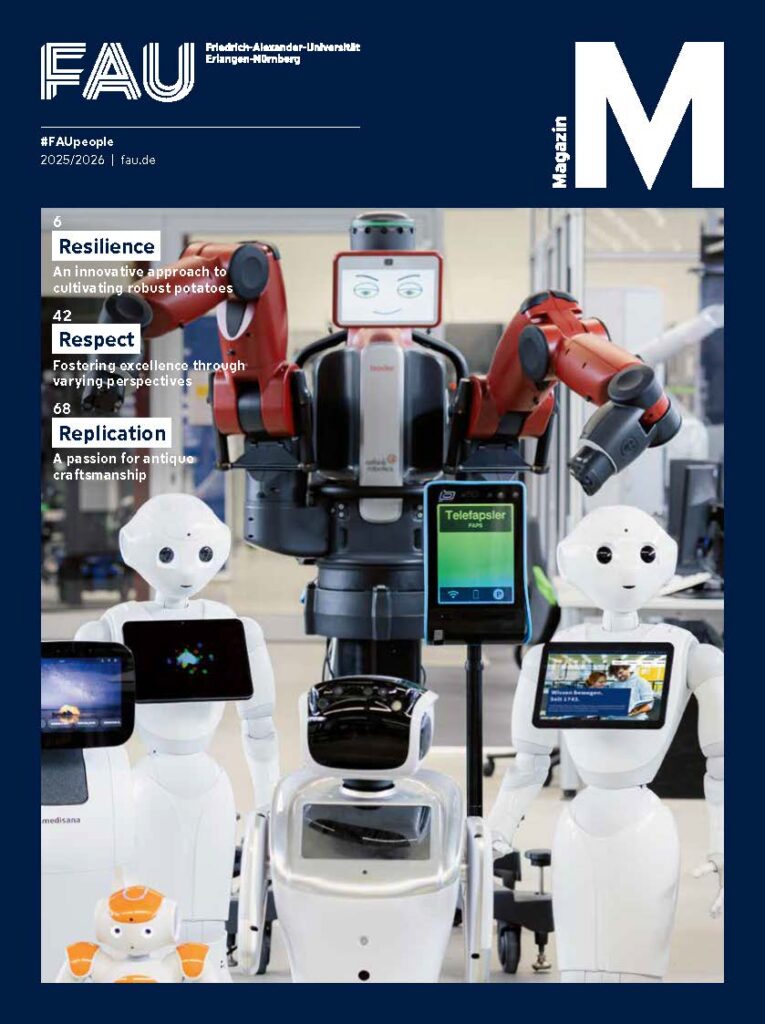
The third issue of the FAU Magazine #People is once again all about the people who make our FAU one of the best universities in the world. The examples in this issue show how lively and diverse our research is, the commitment of our students, and the work in the scientific support areas.
Highlight is certainly the new research cluster “Transforming Human Rights.” Or you can follow our scientists into laboratories and workshops, where they make potatoes climate-resistant, teach robots social behavior, or reconstruct ancient ships and cannons. At FAU, students are developing vertical take-off aircraft or impressing with outstanding performances at the Paralympics. And let’s not forget the people who work at our university or remain closely connected as FAU alumni. Visit the Children’s University with them or watch a TV series with an FAU alumna and Grimme Award winner.
- File Name
- FAU_Magazine_2025_2026
- File Size
- 3 MB
- File Type