
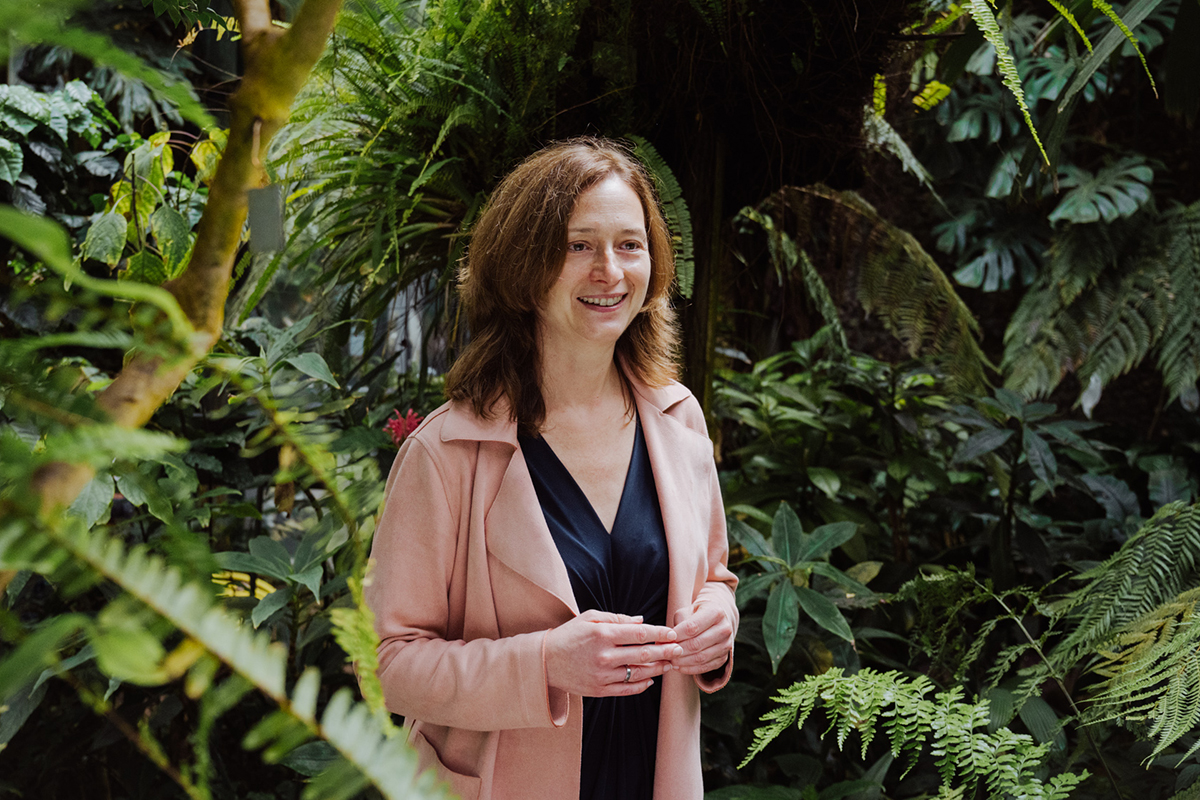
Silke Jansen wants to take a new look at wealth and philanthropy. Her international project is being supported with 1.5 million euros from the Volkswagen Foundation.
Not everyone will be familiar with Douglas Tompkins. People are more likely to know the clothing brands “The North Face” and “Esprit,” with which he made billions. The American, who died in 2015, stands not only for successful entrepreneurship, but also for his special commitment to nature conservation: After selling his companies, Tompkins began acquiring hundreds of thousands of hectares of grassland, rainforest, and coastal areas in South America to turn them into national parks.
“Basically, that sounds good, but there are also reservations and resistance to projects by philanthropists like Tompkins,” says Silke Jansen. Conservation projects have a strong impact on the people living there, because, for example, they may have to be relocated or nomadic groups can no longer move about freely. “In the Global North, we like to cling to a romantic notion: Nature is where there are no people. Those affected locally may see things very differently.”
Conversations with stakeholders and those affected
The professor of Romance linguistics and chair of the Bavarian University Center for Latin America BAYLAT (see info box) wants to shed light on these different perspectives together with a research consortium. She launched the project “Nature’s Wealth or Nature for the Wealthy? Philanthropism and Ecotourism in the Global South,” which is being funded by the Volkswagen Foundation with 1.5 million euros. “Inequality research mostly focuses on poverty,” she says. “Discourses about wealth and the question of what it means to do good are rarely examined.” The project is international and interdisciplinary: In addition to linguist Silke Jansen, researchers from geography, sociology, economics, and tourism studies from Austria, Chile, Tanzania, and Ecuador are involved. In regions where conservation philanthropists and luxury tourism providers are active, they will speak with various social groups – with the philanthropists themselves, with foundations, associations, politicians, travelers, and of course with the local people. Some of the contacts with research partners were established through BAYLAT (Bavarian University Center for Latin America).
Text analysis: How is philanthropy constructed linguistically?
However, a significant part of the project will be carried out in Erlangen: Over the next four years, Silke Jansen, together with project collaborator Erika Rosado Valencia, will compile and analyze a corpus of publicly accessible texts dealing with the topics of philanthropy and luxury tourism. “The benefactors themselves usually operate in the background, but their NGOs and foundations communicate quite assertively: through websites, social media channels, trade fair appearances, and press releases,” Jansen explains. In addition, the Latin America experts want to examine what images of nature the luxury tourism industry constructs.
Ultimately, the subprojects are intended to create an overall picture that shows what conservation philanthropy and luxury tourism are all about and how they affect different places at different levels. The topic also touches on the fundamental question of what gigantic sums of money in the hands of individuals can accomplish. “Wealth has the potential to undermine democratic decision-making processes,” says Silke Jansen. “Nevertheless, we do not want to conduct political research – but we do want to take a critical approach.”
Bridge to Latin America
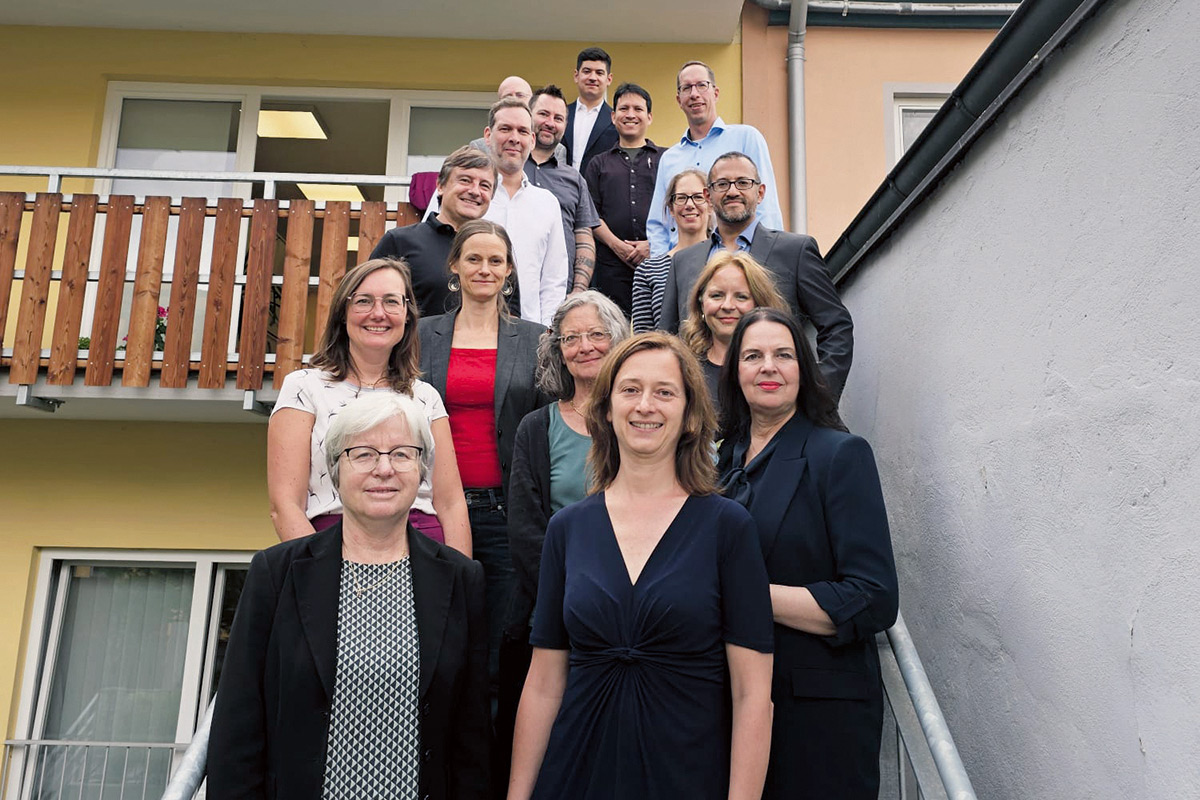
The Bavarian University Center for Latin America (BAYLAT), established in 2009, promotes networking between Bavarian and Latin American universities and research institutions. “We connect people, provide seed funding, and award scholarships to students from Latin American countries,” says Silke Jansen. “All of this is very low-threshold – any academic institution in Bavaria can contact us when it comes to unbureaucratic support.” As chair of the board, Jansen herself is often a guest at Latin American universities – most recently in June 2025 in Santa Clara, Cuba, where she was appointed honorary professor at the Universidad Central “Marta Abreu” de Las Villas (UCLV).
This article is part of the FAU Magazine
The third issue of the FAU Magazine #People is once again all about the people who make our FAU one of the best universities in the world. The examples in this issue show how lively and diverse our research is, the commitment of our students, and the work in the scientific support areas.
Highlight is certainly the new research cluster “Transforming Human Rights.” Or you can follow our scientists into laboratories and workshops, where they make potatoes climate-resistant, teach robots social behavior, or reconstruct ancient ships and cannons. At FAU, students are developing vertical take-off aircraft or impressing with outstanding performances at the Paralympics. And let’s not forget the people who work at our university or remain closely connected as FAU alumni. Visit the Children’s University with them or watch a TV series with an FAU alumna and Grimme Award winner.
- File Name
- FAU_Magazine_2025_2026
- File Size
- 3 MB
- File Type