
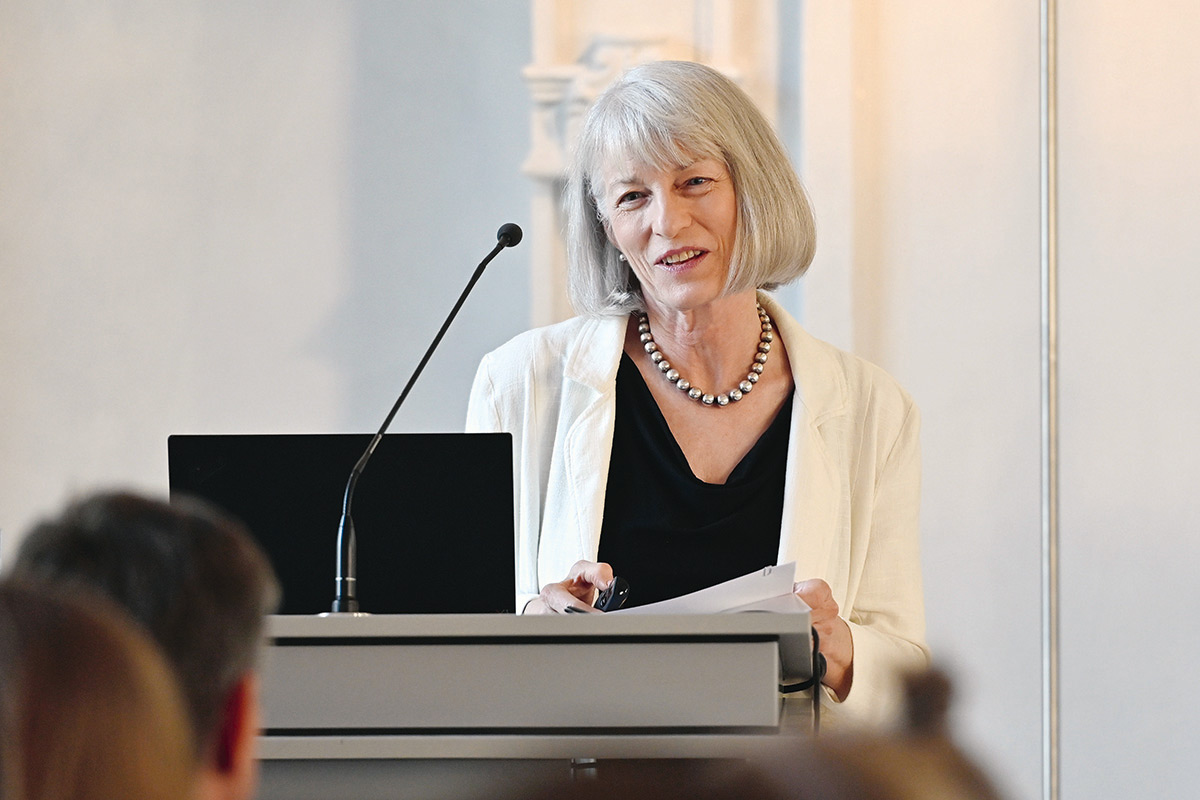
A conversation with Harvard Professor Dr. Kathryn Sikkink. The pioneer of human rights research and honorary doctorate recipient of FAU discusses the Cluster of Excellence “Transforming Human Rights” and the challenges facing human rights research.
You closely observe developments in the field of human rights research worldwide. How do you view the Cluster of Excellence “Transforming Human Rights”?
I find it extremely encouraging that a research cluster of this scale and thematic depth is dedicated to human rights. The cluster will be a place where not only existing questions are addressed, but also new impulses are generated.
To what extent can such a cluster topic provide a counterpoint in light of developments in the US and worldwide?
Especially from the perspective of the US, where academia is increasingly coming under political pressure, it is significant when institutions like FAU commit themselves to strengthening human rights research. The Cluster of Excellence at FAU shows how rights can emerge, be defended, and also be lost.
How great is the danger currently facing human rights research?
It is under pressure, yes. Above all, in places where authoritarian regimes deliberately take action against critical scholarship. But even in democracies, researchers are increasingly coming under attack. Nevertheless, I remain hopeful. Human rights research today is more extensive, more interconnected, and often more resilient than in the past.
To what extent do you see human rights in general as being at risk?
We are experiencing setbacks, for example in the US – including in migration policy – as well as in the treatment of refugees at the EU’s external borders. But: The history of human rights has always been accompanied by challenges and setbacks, and that is why I remain optimistic. As a scholar, I deal with the emergence and enforcement of norms. In my lifetime, I have witnessed many examples of norm violations – such as the genocides in the Balkans and in Rwanda in the 1990s, as well as in Darfur in the early 2000s, or the torture practices of the US during the George W. Bush administration. There just hasn’t been a glorious era of human rights in the past. Human rights have always been contested, and protecting human rights requires constant effort and vigilance – including through research.
Are there examples that give you hope?
There have been many advances that long seemed unlikely – such as the strengthening of women’s rights or the LGBTQ+ community. What gives me hope today, above all, are young people. Students, activists, and scholars all over the world who are deeply committed to human rights, often under difficult circumstances. The willingness of many universities to preserve or create new spaces for human rights research as here in Erlangen and Nuremberg is also a positive sign.
Thomas Tijang
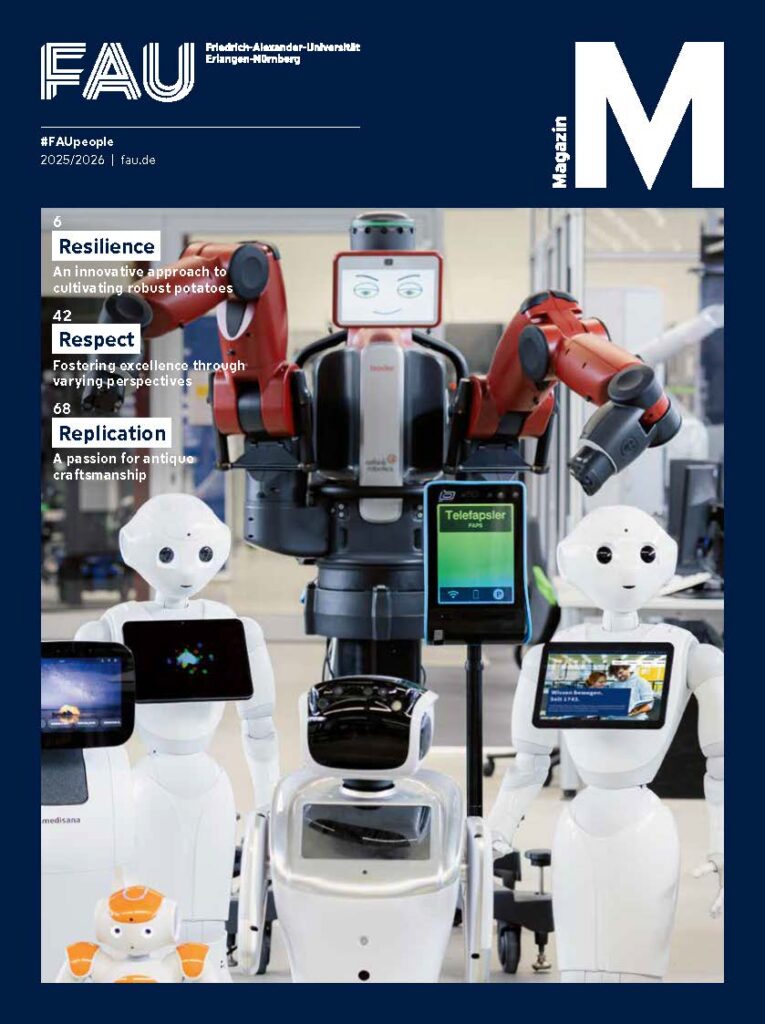
This article is part of the FAU Magazine
The third issue of the FAU Magazine #People is once again all about the people who make our FAU one of the best universities in the world. The examples in this issue show how lively and diverse our research is, the commitment of our students, and the work in the scientific support areas.
Highlight is certainly the new research cluster “Transforming Human Rights.” Or you can follow our scientists into laboratories and workshops, where they make potatoes climate-resistant, teach robots social behavior, or reconstruct ancient ships and cannons. At FAU, students are developing vertical take-off aircraft or impressing with outstanding performances at the Paralympics. And let’s not forget the people who work at our university or remain closely connected as FAU alumni. Visit the Children’s University with them or watch a TV series with an FAU alumna and Grimme Award winner.
- File Name
- FAU_Magazine_2025_2026
- File Size
- 3 MB
- File Type