What do the terms “esoteric” and “alternative” mean? Who uses these terms to describe whom, and how does that affect politics and society? Giovanni Maltese and the CAS-E research group are investigating this.
His office at the university is plain and businesslike. No cross or mandala on the wall suggests that a scholar of religion works here, and no Buddha on the desk hints that the researcher is engaged with “alternative rationalities and esoteric practices from a global perspective.” But both apply to Giovanni Maltese: Since April 2024, he has been Chair of Religious Studies and Intercultural Theology at FAU and, from day one, has brought his expertise to the research group known as CAS-E, which is funded by the German Research Foundation.
“In recent years, German media have reported extensively on spiritually tinged far-right groups, ‘Querdenker,’ and conspiracy narratives,” says Maltese. “Often, the word esoteric comes up, and there is talk of alternative worldviews or religions.” But what exactly do these terms mean, and what are the effects – for example, in society and in the media – when people are labeled this way? “I am interested in how discourses about religion and alternative worldviews influence social and political processes,” explains Maltese. He mainly examines evangelical and Pentecostal-charismatic as well as reformist Islamic and mystical movements, and he focuses a lot on Southeast, since he lived and conducted research in the Philippines for several years during his studies.
Ritual masters from Taiwan in Erlangen
His findings were also of interest to sinologist Michael Lackner, scholar of religion Andreas Nehring, and cultural and social anthropologist Dominik Müller. The CAS-E founders immediately brought their new colleague on board, and in 2025 Maltese succeeded Nehring as director. “At the beginning of our work, we observed that different rituals are practiced around the world to predict, control, or manipulate life events,” says Michael Lackner. “In China there is Feng Shui, in West Africa Vodun, in Israel Kabbalah Ma‘asit, in India Vastu, in the Caribbean Brujas, and in Germany ritual magic.” The list of different methods worldwide is extremely long, but so far has been neither comprehensively documented nor mapped.
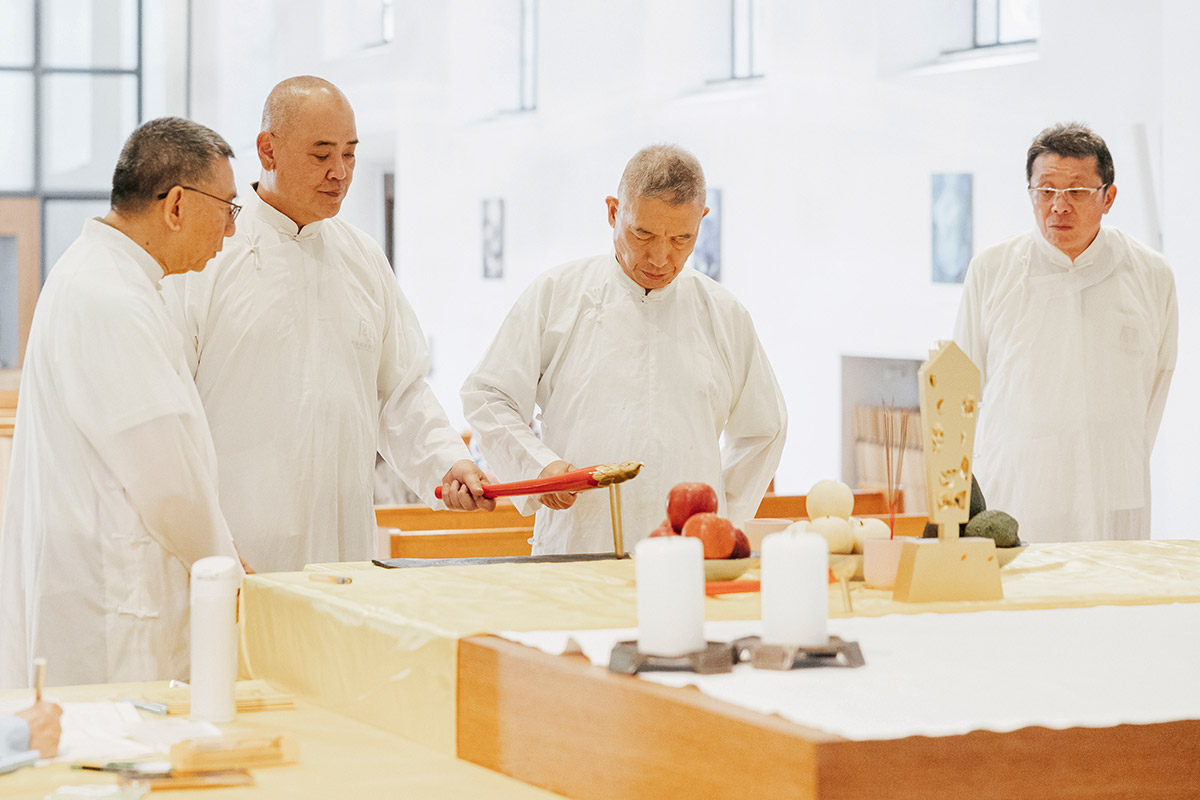
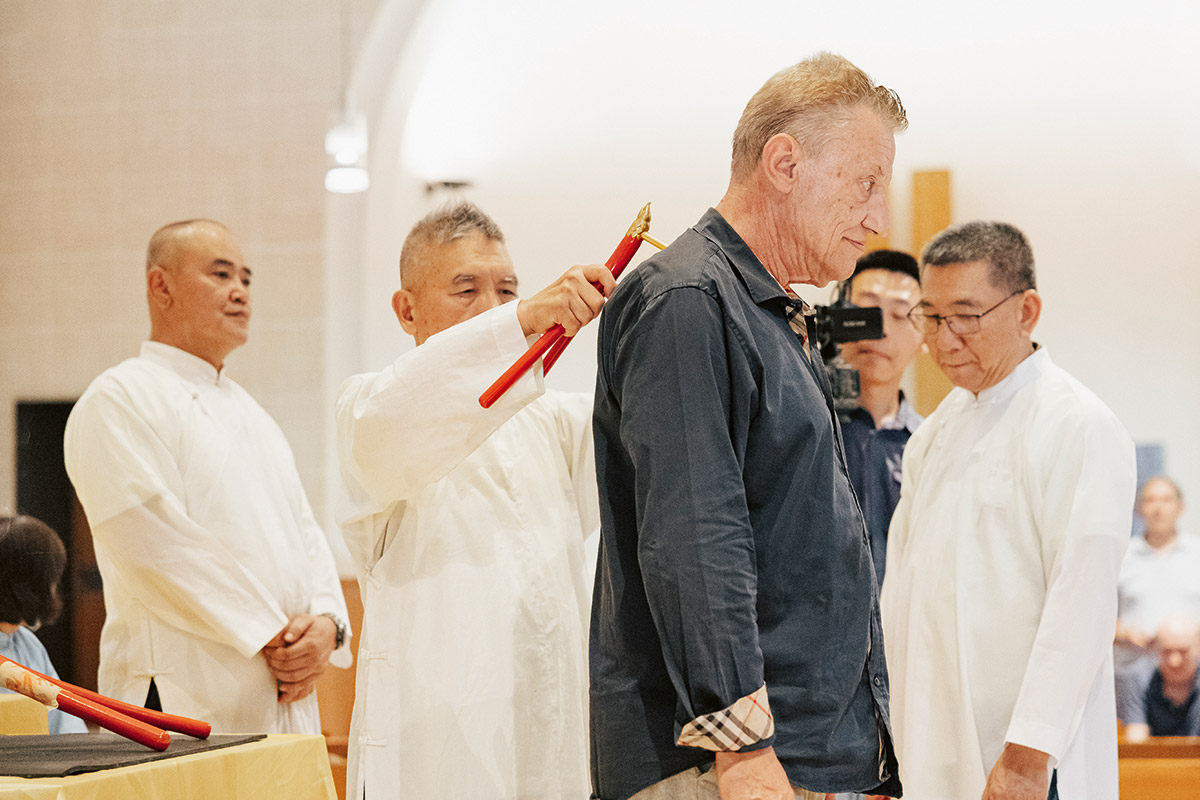
The research group aims to change that with its large-scale interdisciplinary project and, for this purpose, occasionally invites ritual masters from around the world to Erlangen. At the beginning of July, a delegation from Taiwan visited and performed a “Writing with the Phoenix Stylus” ceremony: Three Taoist ritual masters in long white robes invited Michael Lackner to stand between them, held a large red wooden staff over his head, murmured softly to themselves, and finally used a special stylus to draw Chinese characters into a bowl of sand. “This so-called spirit writing is a popular form of divination practiced both in Taoist temples and in temples of Chinese folk religion,” explains Lackner. “With the phoenix stylus, the ritual masters receive messages from a god or spirit and write them down.” Whether such rituals and other practices around the world have something in common, how they can be studied comparatively without contributing to Eurocentric stereotyping, and how we can gain access to the knowledge of practitioners, were long at the center of CAS-E’s work.
How are truth and knowledge debated?
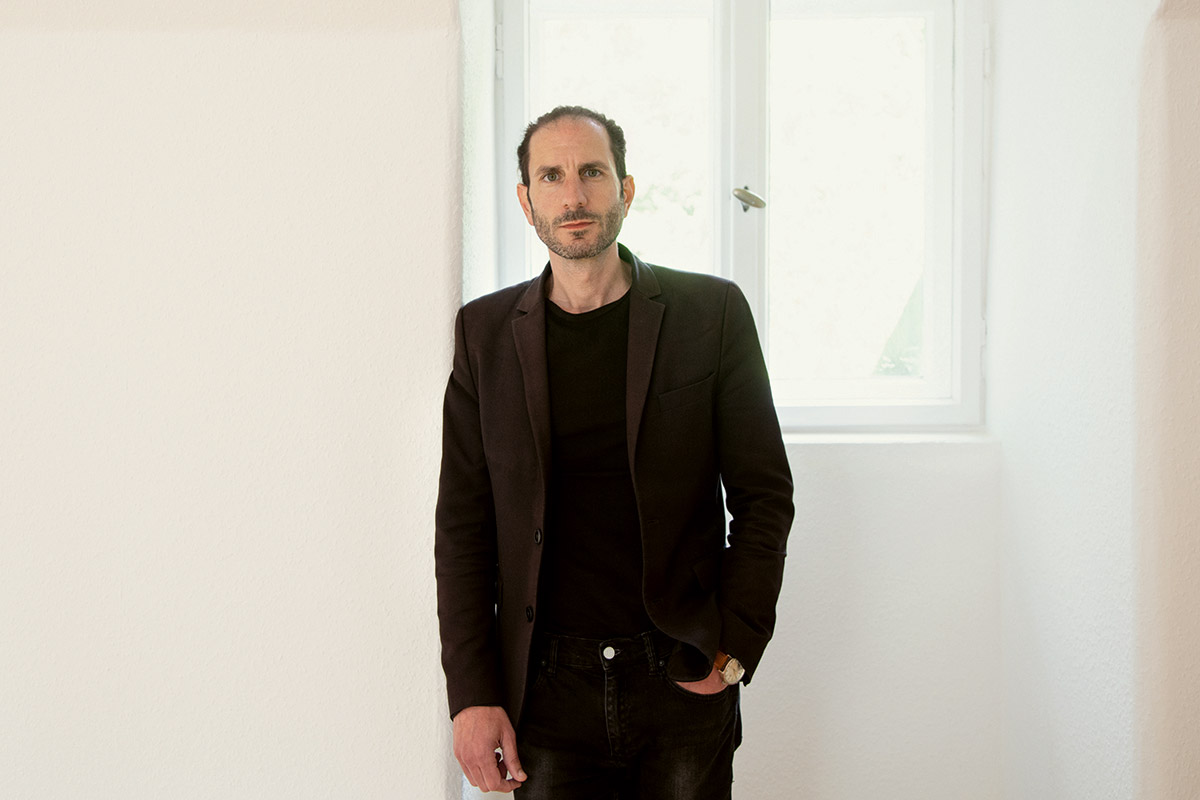
“Our perspective has since evolved,” emphasizes Giovanni Maltese. “Our focus is increasingly shifting to analyzing who labels something as esoteric or alternative, when and where this happens, what interests are behind it, and what social, political, or ideological goals are being pursued. It is also about how knowledge and truth are debated in society.” The new director of CAS-E is tackling these central questions together with researchers from other disciplines. “We want to question the often stereotypical attributions and neither romanticize nor generally disparage them,” he explains. “But of course, we are also taking a close look at why since the coronavirus pandemic esoteric practices have become increasingly intertwined with anti-democratic, inhumane, or far-right ideologies, have gained significant traction, and why conspiracy narratives can reach so many people.”
So, it is a much-discussed and emotionally charged topic that the scholar approaches in a theoretically and methodologically transparent, critical way. After all, his goal is to make a nuanced and responsible contribution to the status of science in times of “alternative” facts.
Elke Zapf
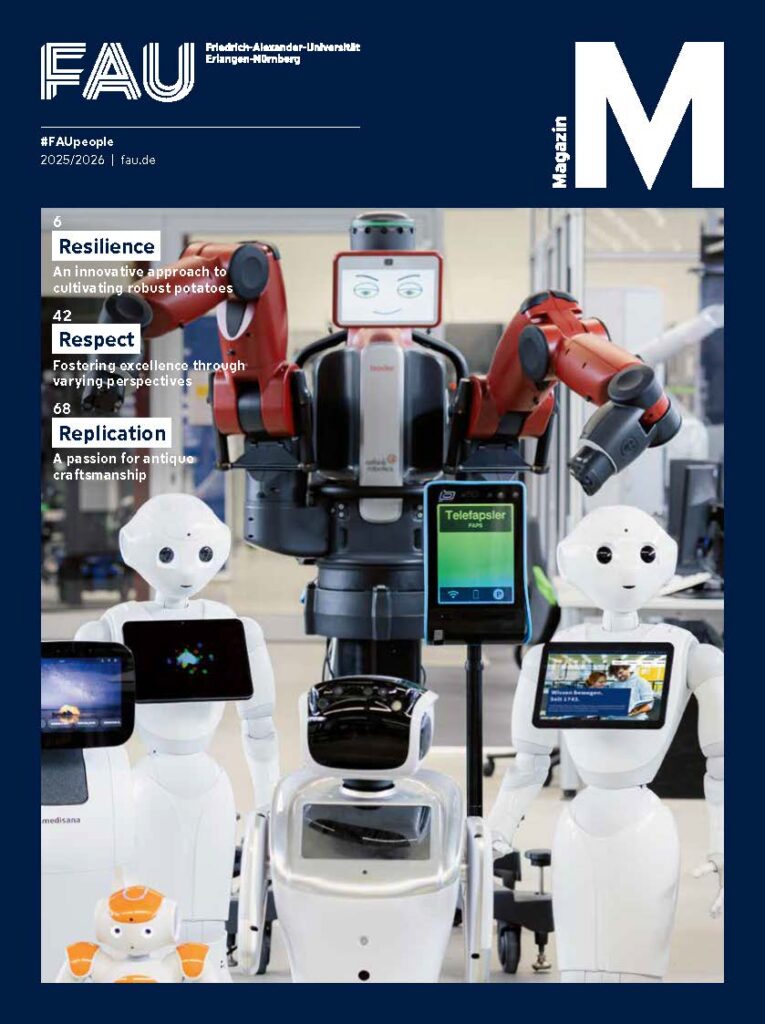
This article is part of the FAU Magazine
The third issue of the FAU Magazine #People is once again all about the people who make our FAU one of the best universities in the world. The examples in this issue show how lively and diverse our research is, the commitment of our students, and the work in the scientific support areas.
Highlight is certainly the new research cluster “Transforming Human Rights.” Or you can follow our scientists into laboratories and workshops, where they make potatoes climate-resistant, teach robots social behavior, or reconstruct ancient ships and cannons. At FAU, students are developing vertical take-off aircraft or impressing with outstanding performances at the Paralympics. And let’s not forget the people who work at our university or remain closely connected as FAU alumni. Visit the Children’s University with them or watch a TV series with an FAU alumna and Grimme Award winner.
- File Name
- FAU_Magazine_2025_2026
- File Size
- 3 MB
- File Type