
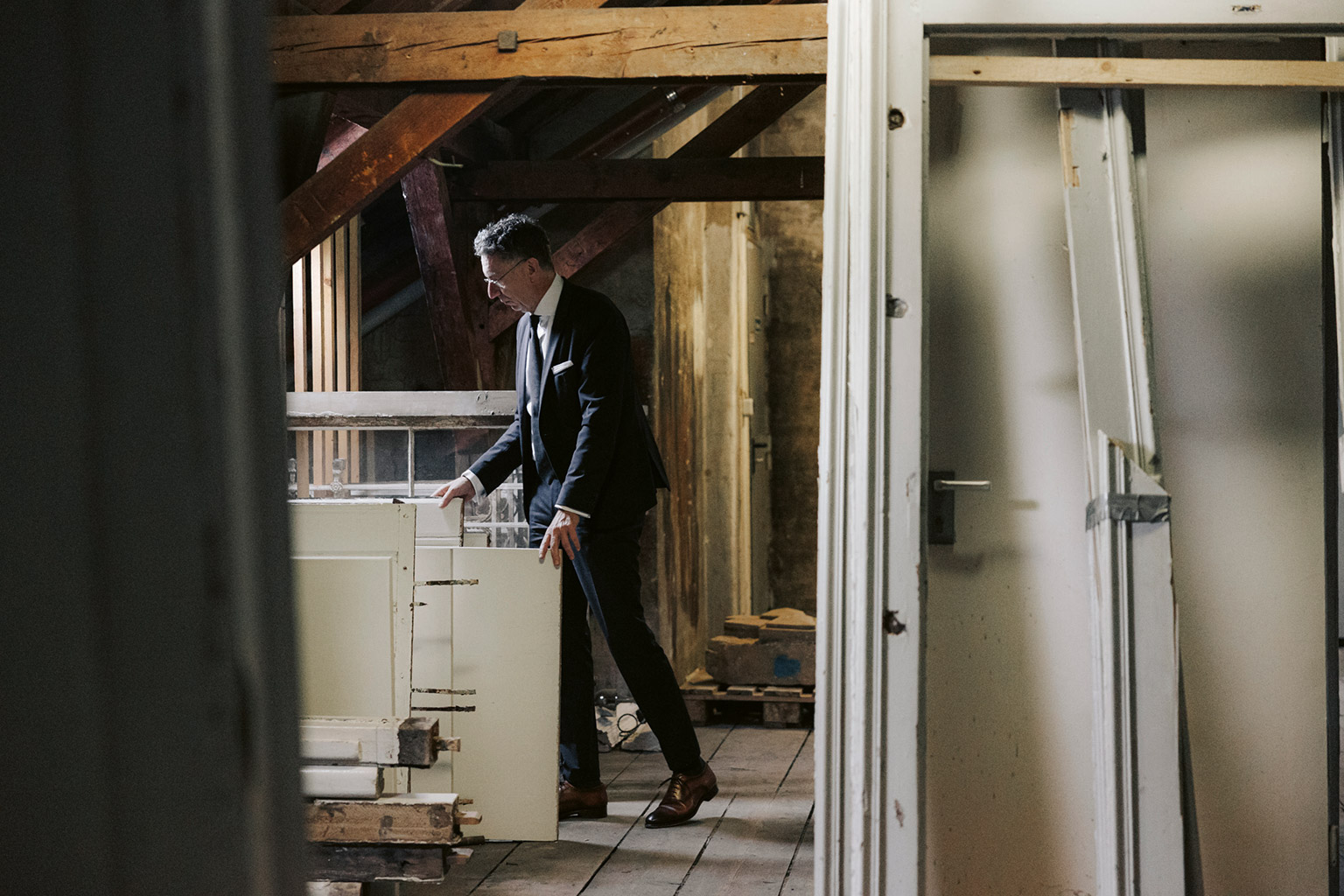
Christoph Safferling has researched the Nazi history of the Federal Ministry of Justice. Now he is dedicating himself to a project right on his doorstep: transforming the former asylum in Erlangen into a memorial site.
As a child, on his way to school, Christoph Safferling walked past the building behind the high wall on Maximiliansplatz every day. “What’s happening behind there?” he wondered at the time. The old house with the strange staircase and all the ivy gave off an eerie feeling to him. Today, several decades later, Safferling teaches at the Chair of Criminal Law, Criminal Procedure, and International Law, just a few hundred meters from that same building. The former asylum in Erlangen known locally as the “Hupfla,” still occupies his thoughts. This time, however, as the head of the steering committee, he aims to transform the site of National Socialist “euthanasia” crimes into a place of remembrance and learning by early 2030.
“Demolition or not, the opportunity to create something meaningful was there and had to be seized.” Prof. Dr. Christoph Safferling
A childhood question becomes a lifelong mission
The criminal law professor has long been engaged with the culture of remembrance. His first investigation was in 2005 with an expert report on the Nuremberg Trials. In 2012, the Federal Ministry of Justice commissioned him to research the agency’s Nazi past. This led to the “Rosenburg File,” a study on the continued employment of former Nazi jurists in the postwar ministry. “For me, it was a response to the fact that I am German and that Germans committed the worst crimes in human history,” Safferling explains his motivation. “This is my personal attempt to deal with it.” The discussion about the former asylum (Hupfla) in Erlangen arose shortly before the demolition of the side wing. But it was only afterward that he decided to become actively involved. “All those involved are willing to create something there. Demolition or not, the opportunity to create something meaningful was there and had to be seized.”
Remembrance, learning, living

In January 2025, the steering committee presented the feasibility study titled “Remembrance, Learning, Living.” For Safferling, remembrance means “silent reflection or mourning in the face of the monstrosity of the crimes.” This remembrance must be given the necessary space both inside and outside the area. When it comes to learning, he envisions something modern: “I can imagine an electronic archive, so that visitors can read up on the biographies.” This should not happen in a traditional, lecture-style format; instead, visitors should be able to reflect together through workshops and discussion groups. “It is important that the building is accessible and that visitors feel the responsibility that ultimately each individual carries in their own life – namely, respect for the dignity of human life in all its wonderful diversity,” he says.
Between negotiation skills and trust
Work in the steering committee requires diplomatic skill. Many stakeholders with different interests need to be brought to the table. “It’s important to include everyone and to have as open and transparent a process as possible,” Safferling emphasizes. There’s no denying that the topic is an emotional burden. “The more you know about the individual fates, the more intense it becomes,” he says. His strategy is to talk about it. The historic building now stands amid modern structures where scientists conduct cutting-edge medical research. For Safferling, it is “like a pinprick”: “It’s a reminder that there are also dangers associated with this field of research.” Thanks to funding from the Free State of Bavaria in the amount of 600,000 euros, the project can now be implemented. As early as fall 2025, the steering committee will set up an office to work purposefully toward the vision of a place that evokes empathy but, above all, highlights the responsibility of each individual. This way, we can ensure that what happened behind the wall is never forgotten.
Memorial trail: Stations of remembrance
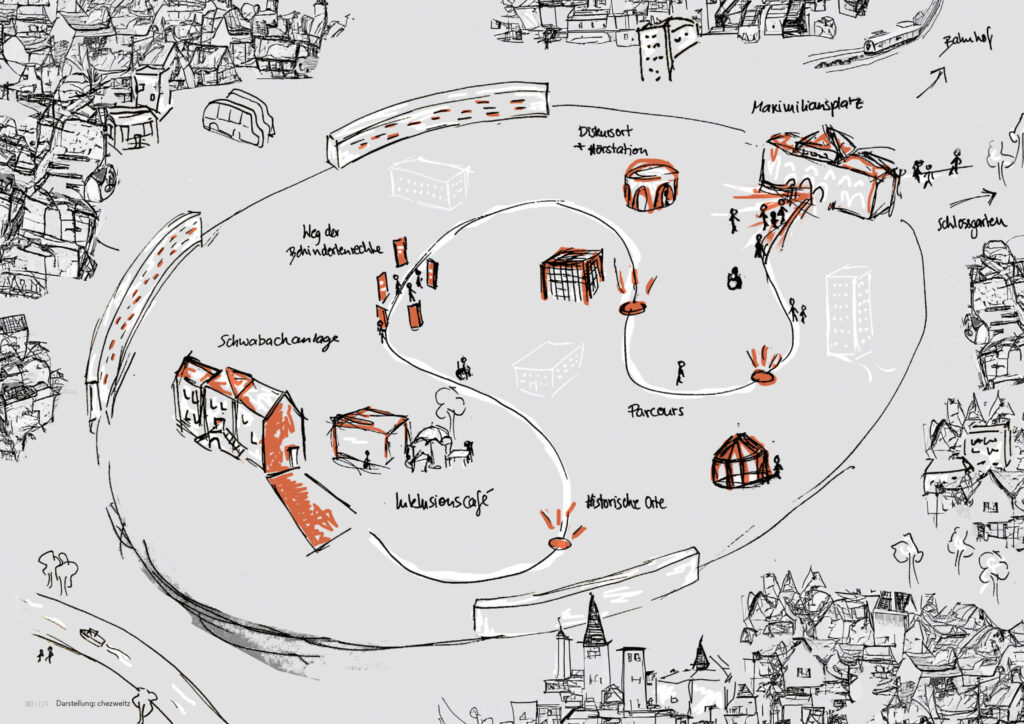
Not only the historic buildings of the former asylum are to become a place of remembrance and learning. A central part of the memorial site is also the outdoor park, which will be transformed into a memorial trail. The aim is to make the crimes associated with the “Hupfla” apparent to people as they walk across the campus grounds – not just through actively seeking out the exhibition. Planned elements of the trail include an inclusive café and various pavilions that invite people to discuss, listen, and congregate. At the same time, they reference the history of the site, which was once equipped with many covered, open pavilions. Along the entire route, memorial stones will commemorate the specific fates of people who fell victim to the Nazi “euthanasia” crimes. The remaining elements of the wall that surrounds the grounds will also be incorporated into the concept as witnesses to the past. And finally, the “Path of Disability Rights” will be integrated into the memorial trail: It makes the UN Convention on the Rights of Persons with Disabilities accessible and sends a clear signal that this is not only a place of remembrance, but also a place relevant to the present.
Lea Maria Kiehlmeier
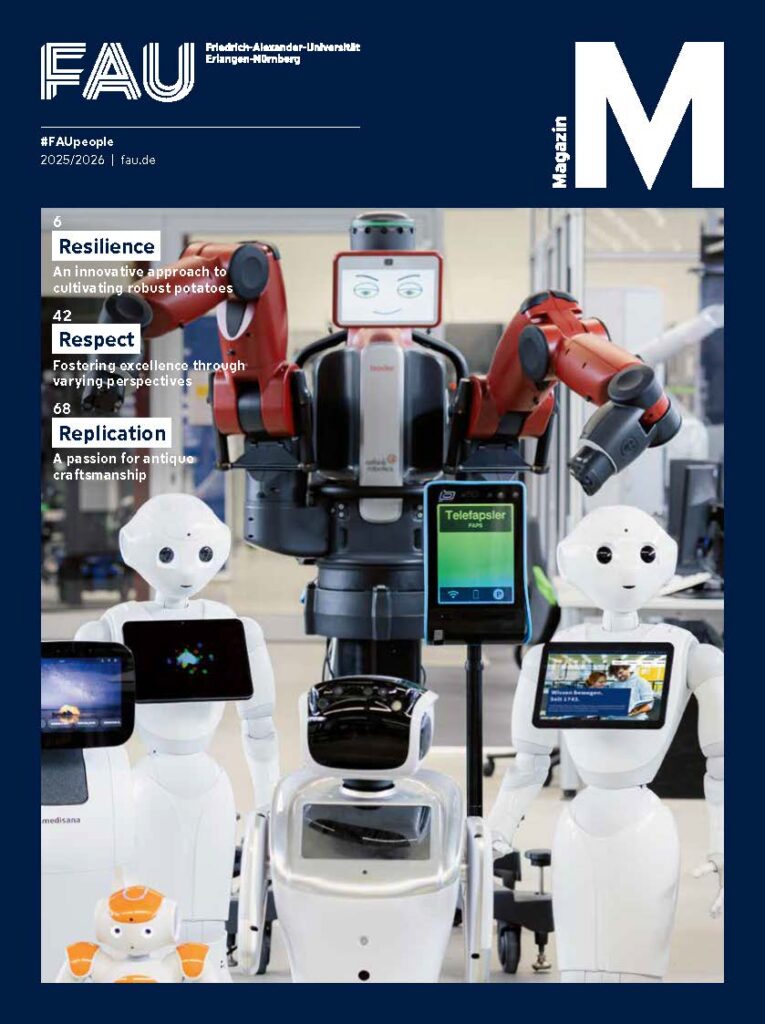
This article is part of the FAU Magazine
The third issue of the FAU Magazine #People is once again all about the people who make our FAU one of the best universities in the world. The examples in this issue show how lively and diverse our research is, the commitment of our students, and the work in the scientific support areas.
Highlight is certainly the new research cluster “Transforming Human Rights.” Or you can follow our scientists into laboratories and workshops, where they make potatoes climate-resistant, teach robots social behavior, or reconstruct ancient ships and cannons. At FAU, students are developing vertical take-off aircraft or impressing with outstanding performances at the Paralympics. And let’s not forget the people who work at our university or remain closely connected as FAU alumni. Visit the Children’s University with them or watch a TV series with an FAU alumna and Grimme Award winner.
- File Name
- FAU_Magazine_2025_2026
- File Size
- 3 MB
- File Type