
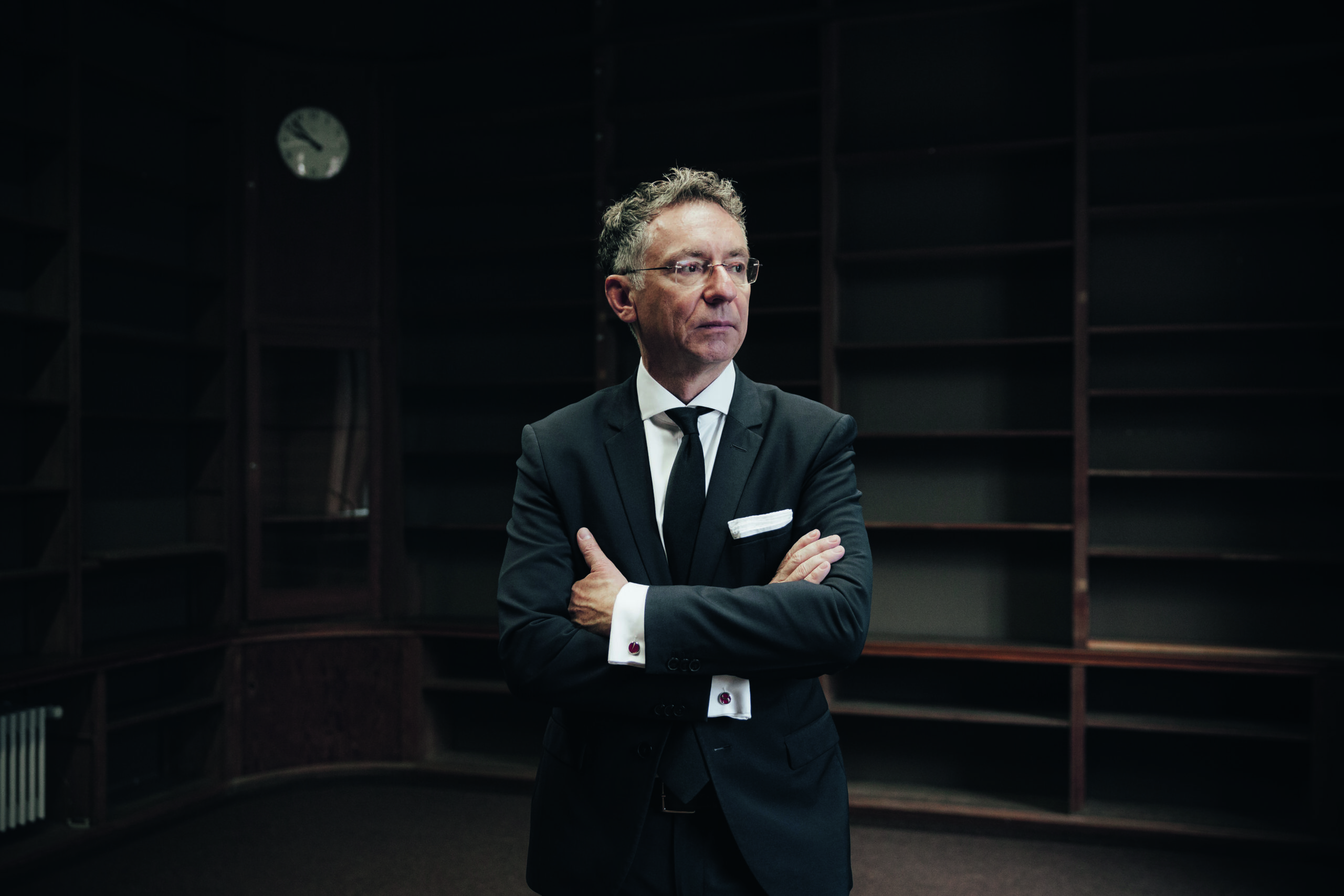
Prof. Safferling about the status quo of international law and its strengths
A new chapter in international law began with the Nuremberg Trials in 1945. And after the collapse of the Soviet Union in 1991 and the definitive end of the Cold War, a rules-based world order seemed possible. However, the reality of the 21st century shows deep cracks. For example, Russia’s attack on Ukraine or the latest escalations of violence in the Middle East are questioning legal frameworks. In his new book, “Ohnmacht des Volkerrechts”, Prof. Dr. Christoph Safferling, Chair of Criminal Law, Criminal Procedure and International Law at Friedrich-Alexander-Universität Erlangen-Nürnberg (FAU), describes this development. His plea: Germany must consistently demand compliance with the standards of international law, because applicable law does not tolerate any compromises.
Prof. Safferling, the title of your book “Ohnmacht des Völkerrechts – Die Rückkehr des Kriegs und der Menschheitsverbrechen” (The impotence of international law – the return of war and crimes against humanity) is quite provocative. What motivated you to write this book?
The effect of the title is quite deliberate. It picks up on the feeling that many people are currently experiencing due to the current state of the world, which is the profound uncertainty that international law does not provide any quick solutions. Conflicts such as those in Ukraine or in Gaza show that law does not automatically ensure peace. In my book, I want to illustrate the reasons behind this and the limits of, but above all, the opportunities for international law. It doesn’t work in the same way as a national penal system with police and public prosecutors. It’s therefore important for me to explain what we can realistically expect and why the situation is not as hopeless as it seems.
The current global political situation is tense. How can international law provide security and ensure the protection of human rights in times like these?
Weapons are doing the talking in many places at the moment. And in these phases, international law cannot bring about immediate peace. Diplomacy has priority, the time for international law only comes afterwards. A new order must be created and responsibilities in and between the states must be clarified before this can happen.
However, international law is by no means ineffective. Even now, crimes are being comprehensively documented, investigations are being carried out and the first warrants for arrest are being issued. This shows that breaches of law are being identified and institutions are ready to deal with them. These processes create the basis for ensuring that those responsible are held accountable and that the rights of victims are strengthened after the end of the conflict.
When heads of state are able to continue governing without consequences even though they have committed crimes against humanity, is seems as if international law has no power to enforce itself in political power structures. How robust is international law at the moment?
In such cases, international criminal law has only limited powers where political structures protect perpetrators. In contrast to national systems, there are no authorities in place that can enforce arrest warrants. Autocrats can hide behind their own state institutions for a long time, even if they have committed the most serious of crimes against humanity. However, this does not mean that international law is ineffective. Its strength comes to the fore once political frameworks are torn down. This allows trials to take place that can delegitimize entire systems, as was the case with the major war criminals in the Nuremberg Trials. It is in moments like these that the full effect of the law unfolds. Until that time, it relies on international cooperation and patience but remains a crucial benchmark.
That is one of the strengths of international law. Can you name any more?
The power of international law unfolds mainly in the long term. It defines rules that bind states to human rights and humanitarian standards. It is particularly effective after large-scale conflicts when documentation and investigations lead to trials in court. These procedures that we now have enable us to clearly identify cases of injustice and to determine who is responsible. And even if being patient is painful, this long-term view is one of the central strengths of international law.
During the last few years, it seems that it has now become commonplace that international law is increasingly being disregarded. What are the reasons for this development in your opinion?
From a historical perspective, a disregard for international law is nothing new. Since the Peace of Westphalia, which brought the 30 Years’ War to an end in 1648, we have repeatedly experienced phases of severe crisis. What’s new is the moral claim, which developed after the Second World War and the Nuremberg Trials. These standards make today’s violations appear more serious. At the same time, the “West” itself has lost credibility in recent decades, for example because of violations of the law in the “war on terror”. This led to double standards that still have an effect today. Those who kept silent or went along with everything at the time shouldn’t be surprised today when these countries are accused of inconsistency.
Further information:
Prof. Dr. Christoph Safferling
Chair of Criminal Law, Criminal Procedure and International Law
christoph.safferling@fau.de