
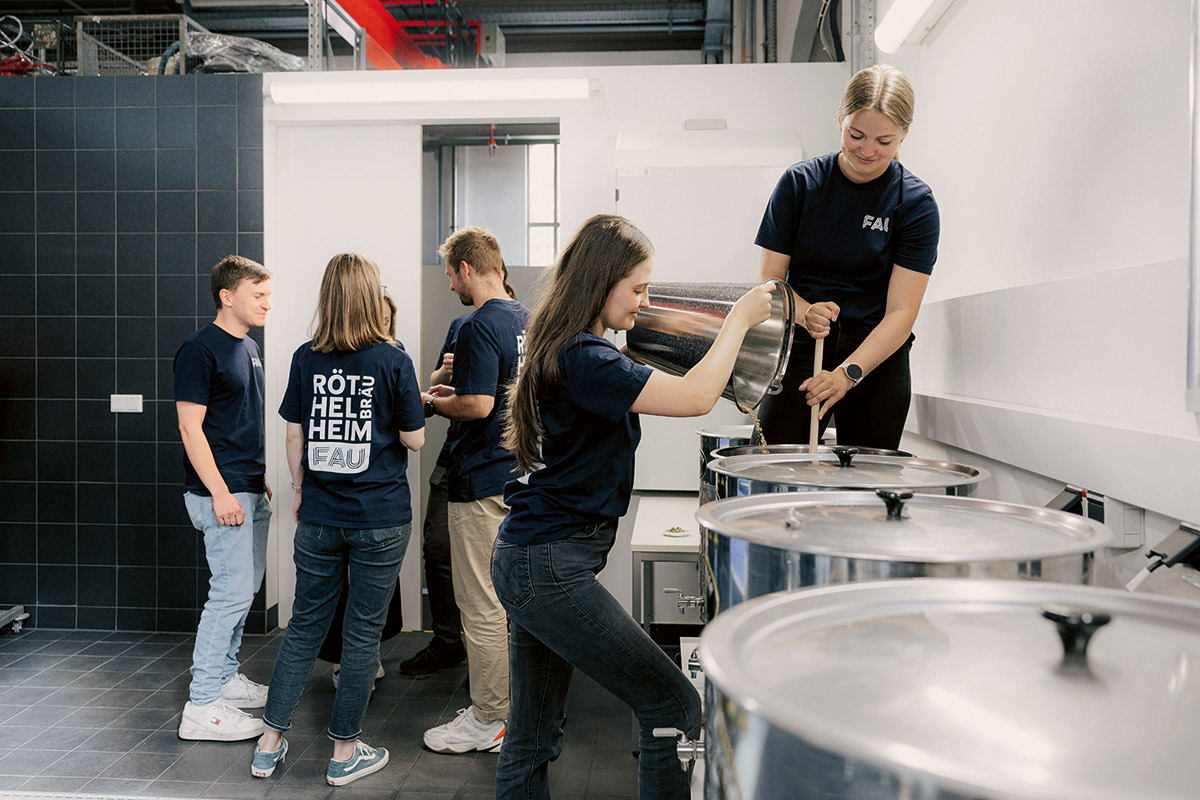
Brewing beer is the perfect way to put the theory of bioprocess engineering into practice, says Kathrin Castiglione. The practical courses at the Chair’s own Röthelheim Brewery are highly sought after – and so is the beer.
Not much can really go wrong. Once the malt is milled and mashed, the fermentation vessels are disinfected, and the hops are boiling, the most important steps are done. After the yeast has been added, it takes time for fermentation, then the beer can be bottled or filled into small kegs. “The most critical point is when students miscalculate the sugar content for bottle fermentation,” says Kathrin Castiglione. “If too much carbon dioxide forms, the tasting can quickly turn into a foam party.”
Stainless-steel brewmasters
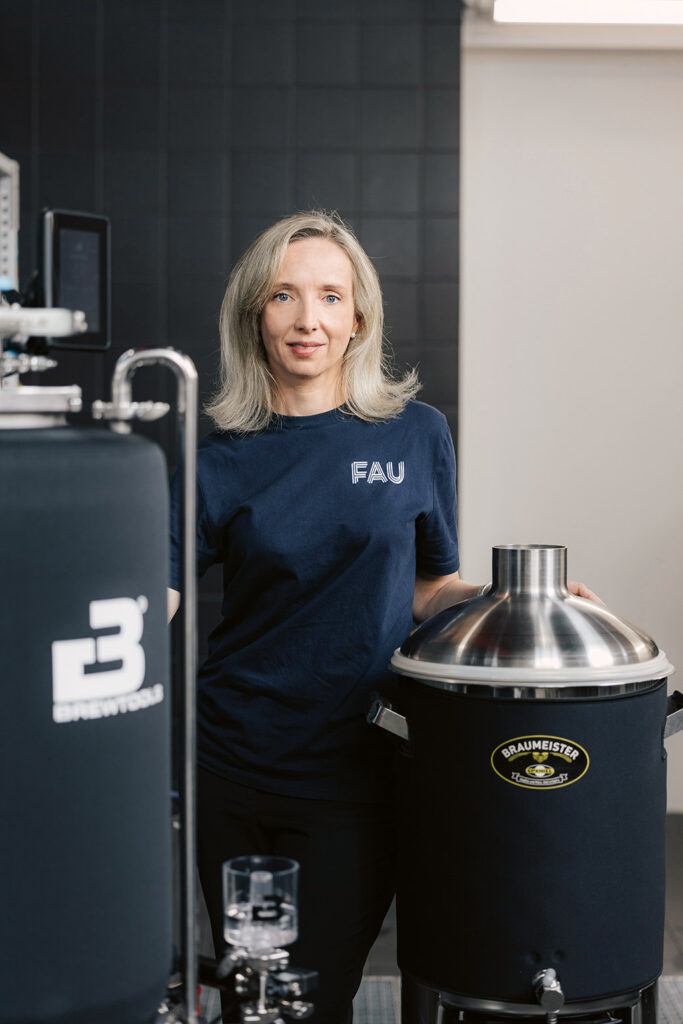
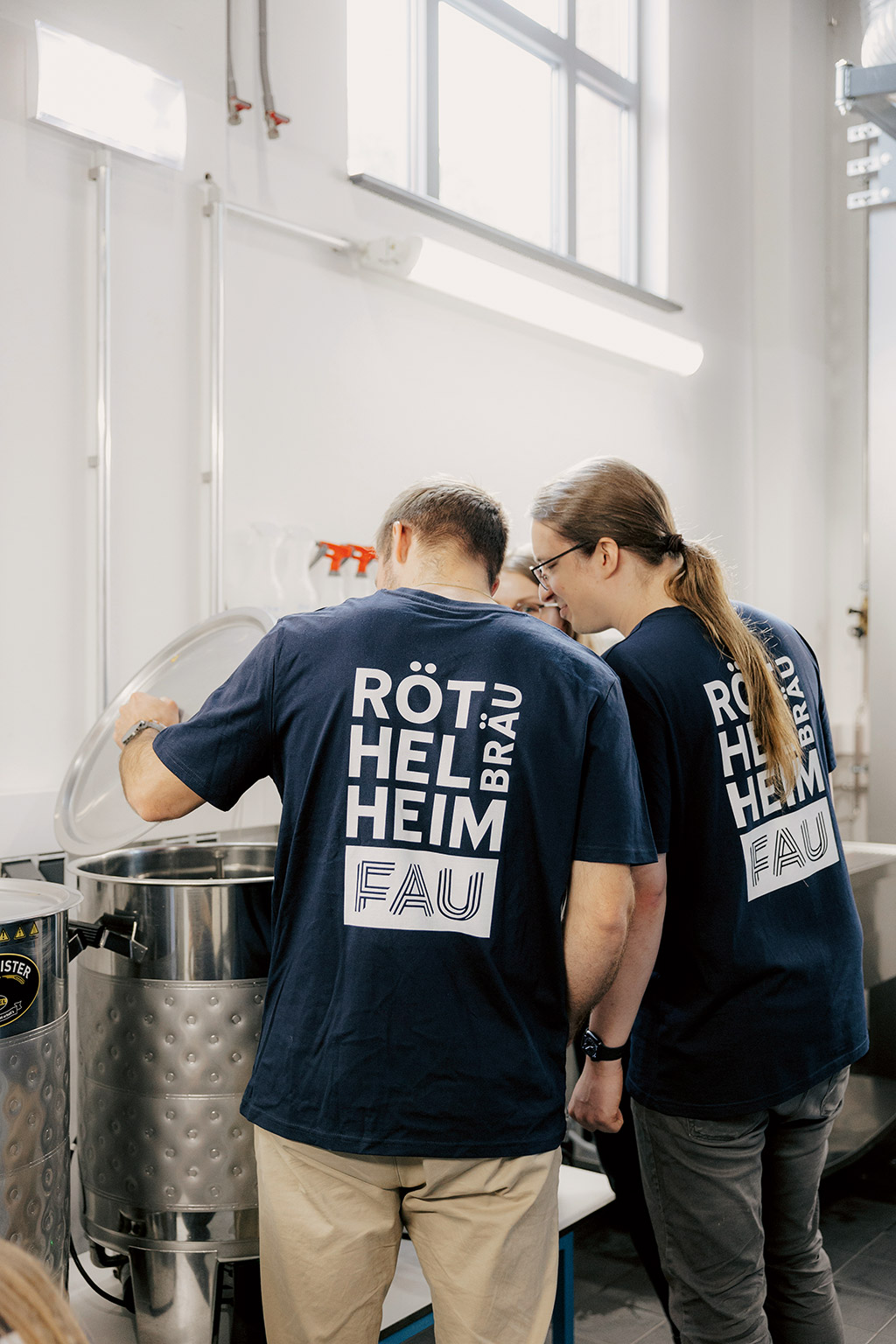
Castiglione holds the Chair of Bioprocess Engineering and offers one of the most sought-after practical courses at FAU: Each semester, 30 to 40 students have the opportunity to brew beer: Helles, Weizen, Bock, Porter, various ales. The handmade specialties, called craft beers, are labeled with the “Röthelheimbräu” brand. In the former riding hall at the brewery location in Erlangen’s Rötelheim, everything needed for brewing beer can be found: Grain mill, hop scale, and the Braumeister brewing units, in which the entire fermentation process takes place and can be monitored on a digital display. Five of these stainless steel containers, each holding 50 liters, allow five different types of beer to be brewed at the same time. The Röthelheim Brewery has existed since 2009, founded by Castiglione’s predecessor Professor Rainer Buchholz. In 2018, Kathrin Castiglione took over the project. “Right at my interview, students asked me if I would continue running the brewery,” she says. “I didn’t have to think long, because brewing beer offers the ideal opportunity to understand bioprocess engineering and put it into practice. And what could be better than not only documenting the result, but also tasting it?”
Hops with a white wine note
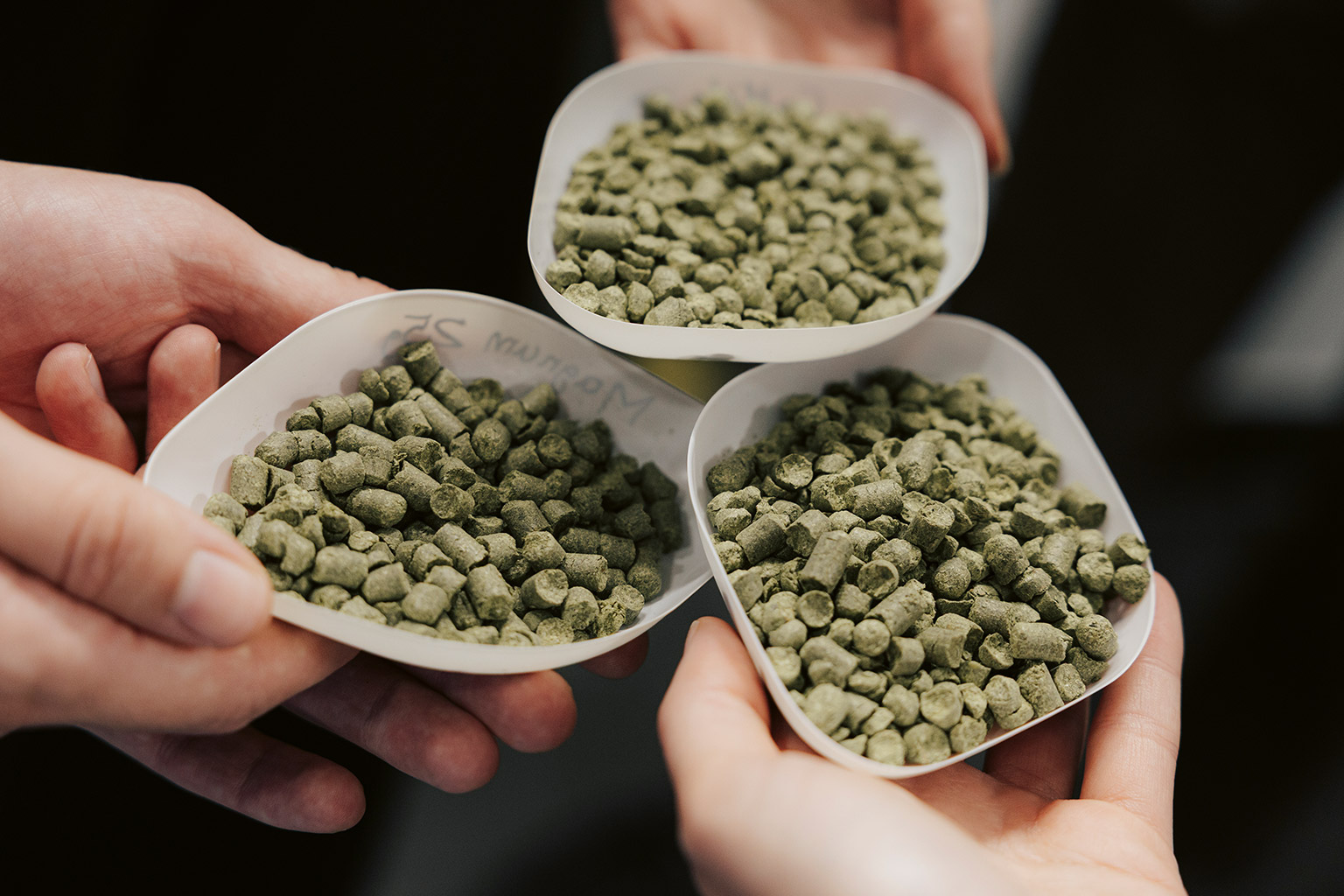
While only beers brewed according to the German Purity Law are made during practical courses, things are a bit freer in the brewing club: The members – students and research associates at the Chair – also experiment with exotic additions, such as coffee extract or orange peel. “Many things can now also be flavored with new hop varieties or special yeasts,” explains Castiglione, whose passion for craft beers has grown with each year at FAU and who is now even considering training to become a beer sommelier. “For example, we brew the ‘Helle Köpfchen’ FAU beer with a New Zealand hop that brings subtle white wine notes. Some hop varieties are reminiscent of grass, others of citrus fruits. My current favorite is ‘Mandarina Bavaria’.”
However, the department’s scientific interest in hop breeding is not limited to flavoring. Two doctoral projects are focused on how the antiviral and antibiotic effects of hops can be used for organic animal feed. Luisa Kober and Marco Dürsch, both passionate members of the brewing club, want to continue the millennia-old tradition of using hops as a medicinal plant. Kober is researching the use of hop compounds as an alternative to conventional antibiotics in poultry farming, in order to curb the spread of resistant germs. Dürsch is testing the antiviral effects of hop extracts in aquaculture, especially against koi herpes virus, which mainly affects farmed carp in this region.
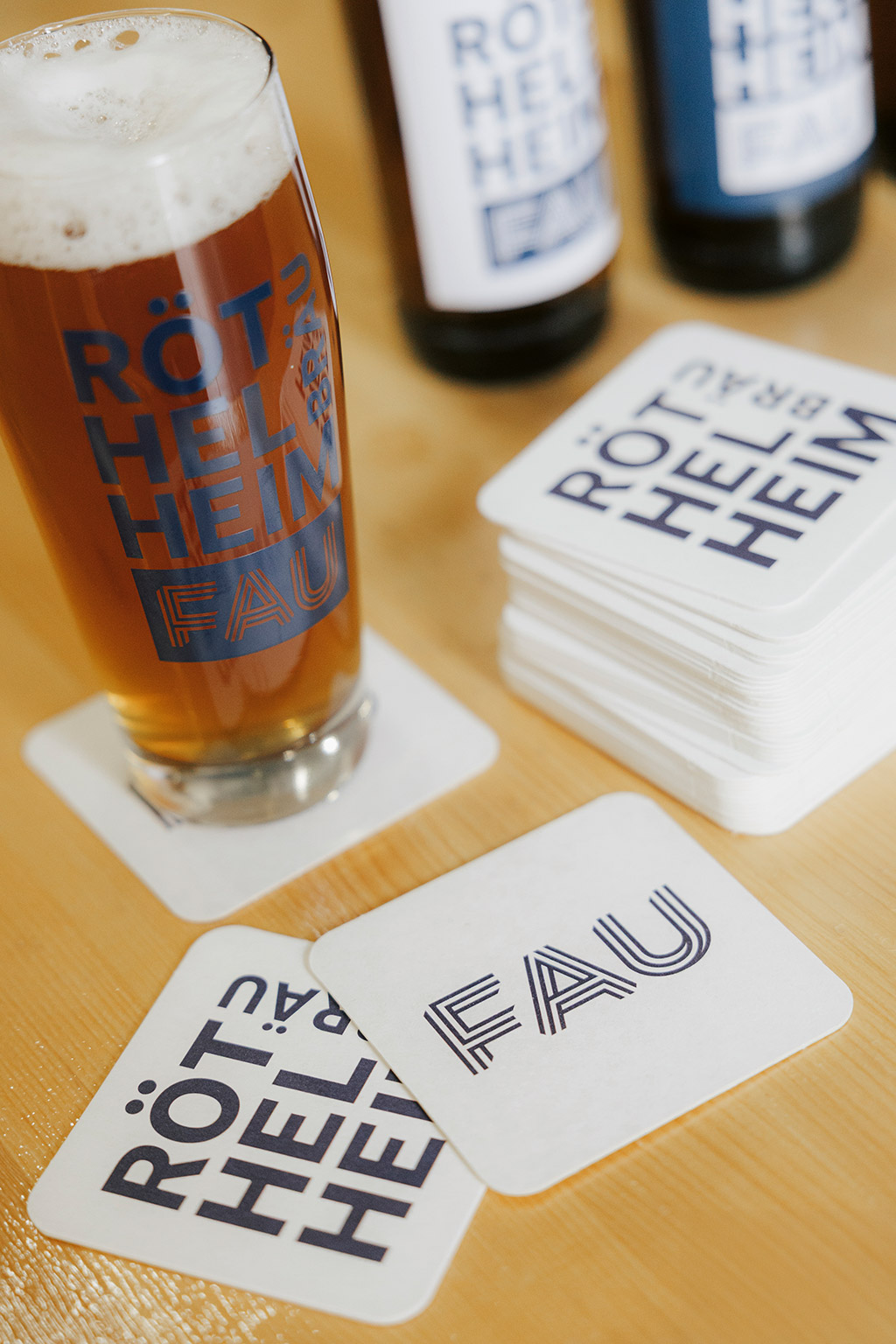
Röthelheim beer sells out quickly
Back to the beer: Around 200 liters are produced with each brew. Since 2024, the Chair has held a license to bottle Röthelheim specialties for beer fans who are not involved in the brewing process. “The limited quantity of bottles and 20-liter kegs are always gone quickly,” says Kathrin Castiglione. Fans have a better chance of getting a taste at events where the brewing club presents its creations, such as summer festivals, Christmas and graduation parties, or the Long Night of Science. And if you prefer something a bit stronger, you can head to the annual Martini gathering on the Erlangen Berg: When the strong beer is called for there, FAU is also represented with a keg.
Tax-free home brew
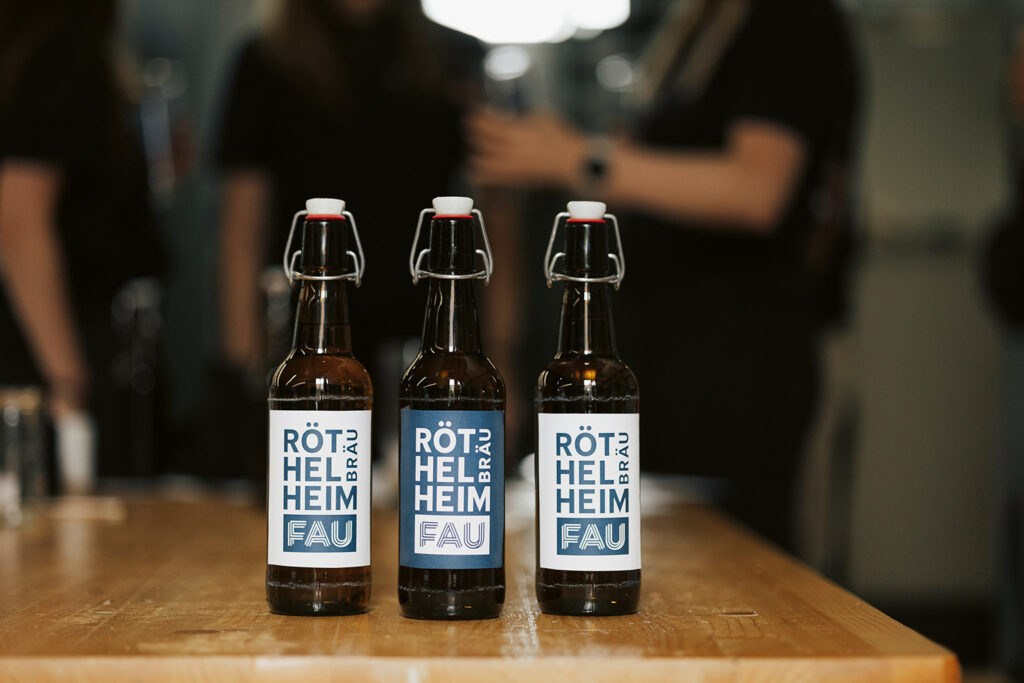
Tax-free home brew Brewing beer at the university has a long tradition in Erlangen. When FAU was founded in 1743, professors were granted a curious privilege: They were allowed to brew their own beer without paying taxes. This was done by an Erlangen brewmaster, who was granted university membership for this purpose. This tax privilege ended in 1814.
Matthias Münch
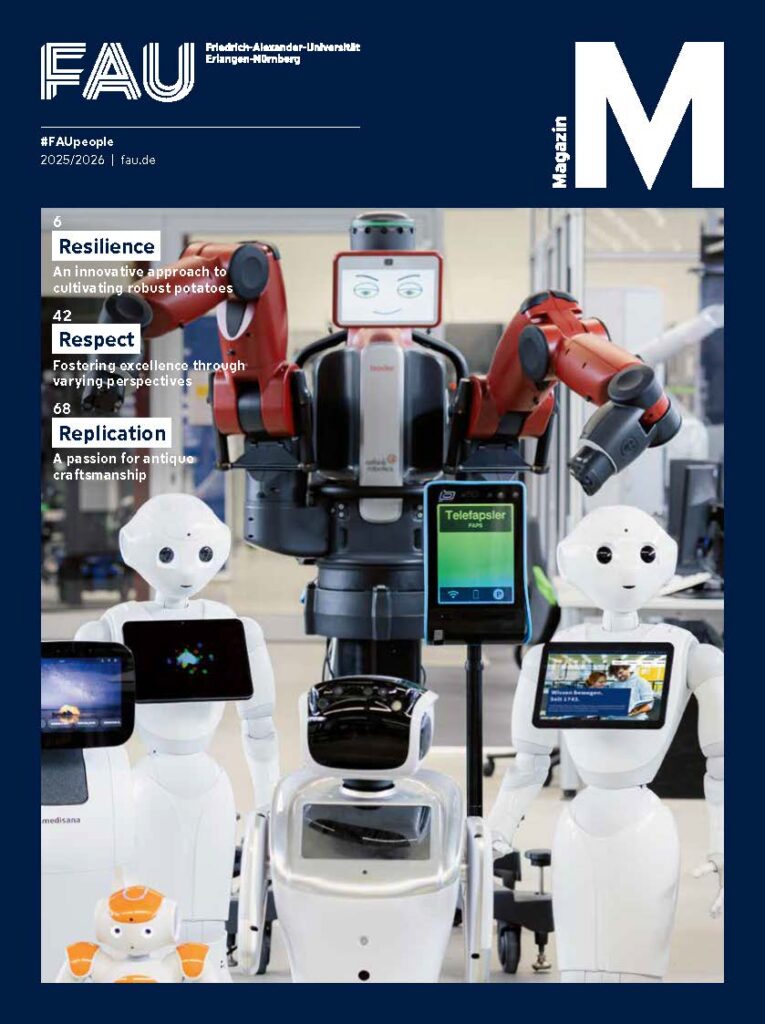
This article is part of the FAU Magazine
The third issue of the FAU Magazine #People is once again all about the people who make our FAU one of the best universities in the world. The examples in this issue show how lively and diverse our research is, the commitment of our students, and the work in the scientific support areas.
Highlight is certainly the new research cluster “Transforming Human Rights.” Or you can follow our scientists into laboratories and workshops, where they make potatoes climate-resistant, teach robots social behavior, or reconstruct ancient ships and cannons. At FAU, students are developing vertical take-off aircraft or impressing with outstanding performances at the Paralympics. And let’s not forget the people who work at our university or remain closely connected as FAU alumni. Visit the Children’s University with them or watch a TV series with an FAU alumna and Grimme Award winner.
- File Name
- FAU_Magazine_2025_2026
- File Size
- 3 MB
- File Type