

A conversation with the president of FAU about dialog, communication, and the attempt to reach 50,000 people.
Anyone who leads a university with 50,000 people does not have an easy time keeping track – let alone maintaining a sense for everything happening within their organization. Between strategy meetings, committee sessions, and representational duties, there is often little room left for personal conversation. But Joachim Hornegger, who has been president of FAU for more than ten years, wants exactly that – to be close to all members of the university. FAU Magazine spoke with him about ways of communication at FAU. And about the art of listening.
Mr Hornegger, the German government and the boards of major corporations are often accused of being too far removed from the people. How do you manage to keep a sense of what people think and need at a university of this size?
You are absolutely right – with 50,000 people, it is not easy. Students, staff, researchers, administration – a university thrives on its diversity. And everyone has different expectations. Of course, it is impossible to meet all of their needs, but I see it as my job to keep my ear to the university. Especially in times when difficult decisions have to be made, it is crucial to keep the conversation going and to sense the mood.
And how do you put that into practice?
That can only work through intensive communication. I want to talk to everyone, from our researchers to our administrative staff. Of course, I can’t walk through all 300 locations and look into every office. But together with our communications team, I have developed formats that enable real exchange.
What are these formats?
FAU Dialog is a particularly successful format. We launched it shortly before our 275th anniversary in 2017. But it proved to be especially valuable during the coronavirus period. People were looking for guidance, wanted to know – who knows what is right and wrong, what should they do? At the FAU Dialog, there is a short introduction from me or a member of the university leadership on a key topic – construction projects, AI, science communication. After that, we have an open discussion. Questions are expressly encouraged, and sometimes there are breakout sessions to explore topics in more depth. Depending on the topic, there are sometimes 300 participants, sometimes 60. We vary the times. It is important to me that as many people as possible have the chance to participate – even though it will never be everyone.
Are there also formats that appeal to smaller groups?
Absolutely – for example, the Random Lunch. We introduced that in 2016. Employees are randomly selected and invited to my office. Usually, six to eight people come, and it is always highly interesting. You might have a secretary, a library inspector, a research associate, and a professor sitting together – people who would otherwise rarely sit at the same table and passionately exchange ideas about FAU. I learn an enormous amount from these meetings, but they also get to know each other. That creates understanding and closeness.
You also want to bring FAU to the top internationally in terms of research. In that case, close contact with professors is especially important…
There are already many natural points of contact, from appointment negotiations to exchanges on proposals and collaborative projects. And many of them follow me on Bluesky and LinkedIn, where I am extremely active. But I have also developed a format for personal conversation there: A Cup with the President. I visit all newly appointed professors at their workplace – with my FAU mug in hand (laughs) – and have them show me what they are working on, where there are challenges, and what they need. These conversations are incredibly enriching for me. Many come from other universities, with different structures and experiences. This fresh perspective brings additional innovation to our FAU.
That sounds like a lot of personal interaction with employees. But how do you get into conversation with the students?
That is certainly the biggest challenge – a heterogeneous community of 40,000 young people, all about 30 years younger than I am. But of course, the students are especially close to my heart. Whenever my schedule allows, I still teach myself – simply to maintain contact. Then there are the conversations with the student representatives. And we also interact at events and sports activities, such as the Run Against Cancer. But yes – I would also like to have a format where I can listen to individual perspectives and not just hear political demands. We used to have a format called Cola and Pizza with prospective students. I would like to revive something like that. An informal meeting where everyone can openly say what’s on their mind. Especially now, when our students have to be so patient – because of construction projects, cost-cutting measures, and everything that goes along with it – this honest feedback is more important than ever.
The formats with our president:
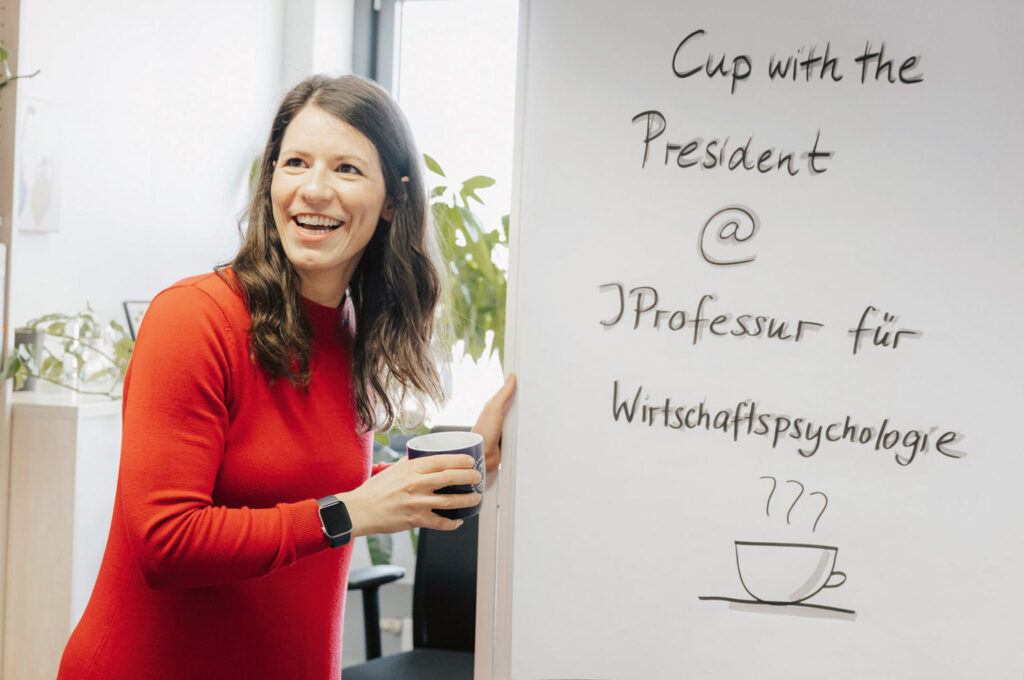
Since the start of the format, Joachim Hornegger has already visited more than 30 newly appointed professors at their workplace. For an hour and a half, the president and the host at the department or institute talk to get to know each other better. Sometimes there is also a tour of the lab. And of course, there are group photos as well as a post about each meeting on FAU News and on LinkedIn. What fascinates the president about these visits is not only the passion with which the newly appointed professors present their work, but also the variety of exciting places he gets to see – from clean rooms to forensic medicine.
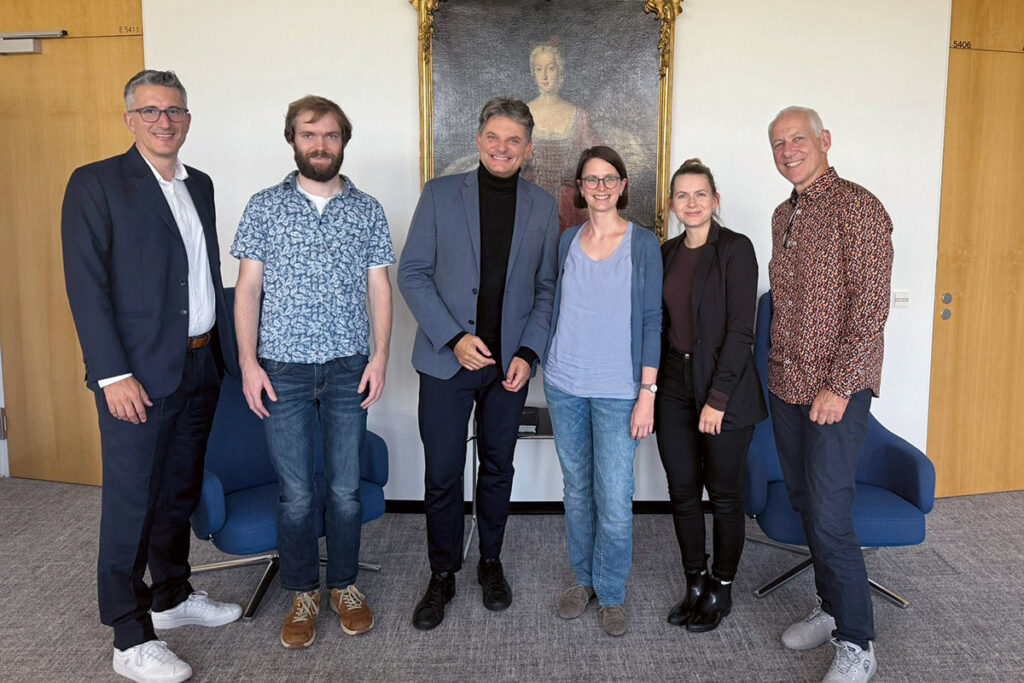
To get to know at least some of the more than 14,000 employees from research, teaching, and administration at FAU better, to exchange ideas with them, and to be accessible to people, Joachim Hornegger invites them to a Random Lunch once per semester. A small group of six to eight people from various areas – from professors to staff at the departments, from administration or technical services to trainees – meets with the FAU president in his office for lunch or coffee and cake.
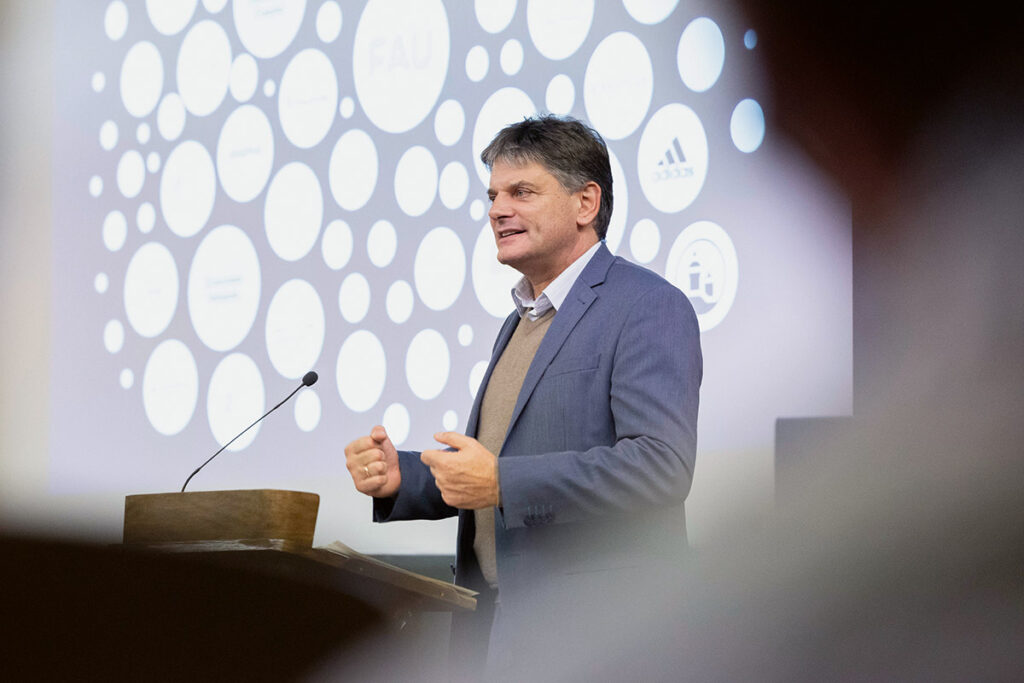
The FAU Dialog offers employees a platform at irregular intervals to help shape FAU’s strategy together. All members of FAU have the possibility to discuss current developments, the University’s strategic approach and future goals with the Executive Board. The topics of the FAU Dialog are diverse – from digital teaching and sustainability to strategic partnerships.
Blandina Mangelkramer
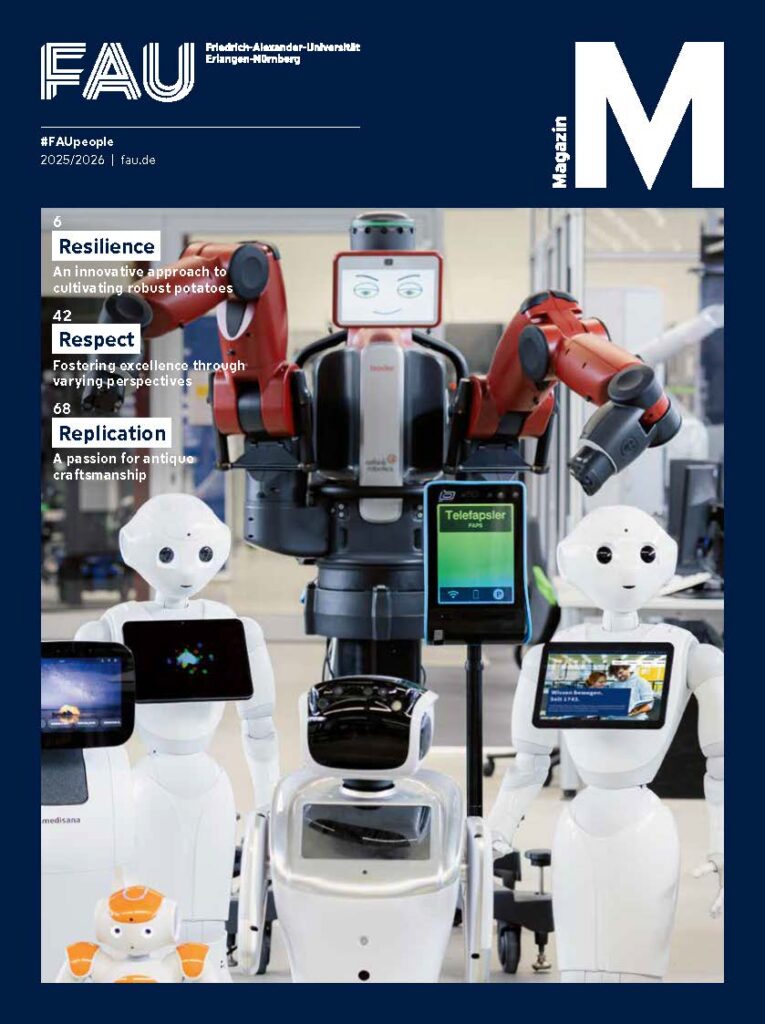
This article is part of the FAU Magazine
The third issue of the FAU Magazine #People is once again all about the people who make our FAU one of the best universities in the world. The examples in this issue show how lively and diverse our research is, the commitment of our students, and the work in the scientific support areas.
Highlight is certainly the new research cluster “Transforming Human Rights.” Or you can follow our scientists into laboratories and workshops, where they make potatoes climate-resistant, teach robots social behavior, or reconstruct ancient ships and cannons. At FAU, students are developing vertical take-off aircraft or impressing with outstanding performances at the Paralympics. And let’s not forget the people who work at our university or remain closely connected as FAU alumni. Visit the Children’s University with them or watch a TV series with an FAU alumna and Grimme Award winner.
- File Name
- FAU_Magazine_2025_2026
- File Size
- 3 MB
- File Type