
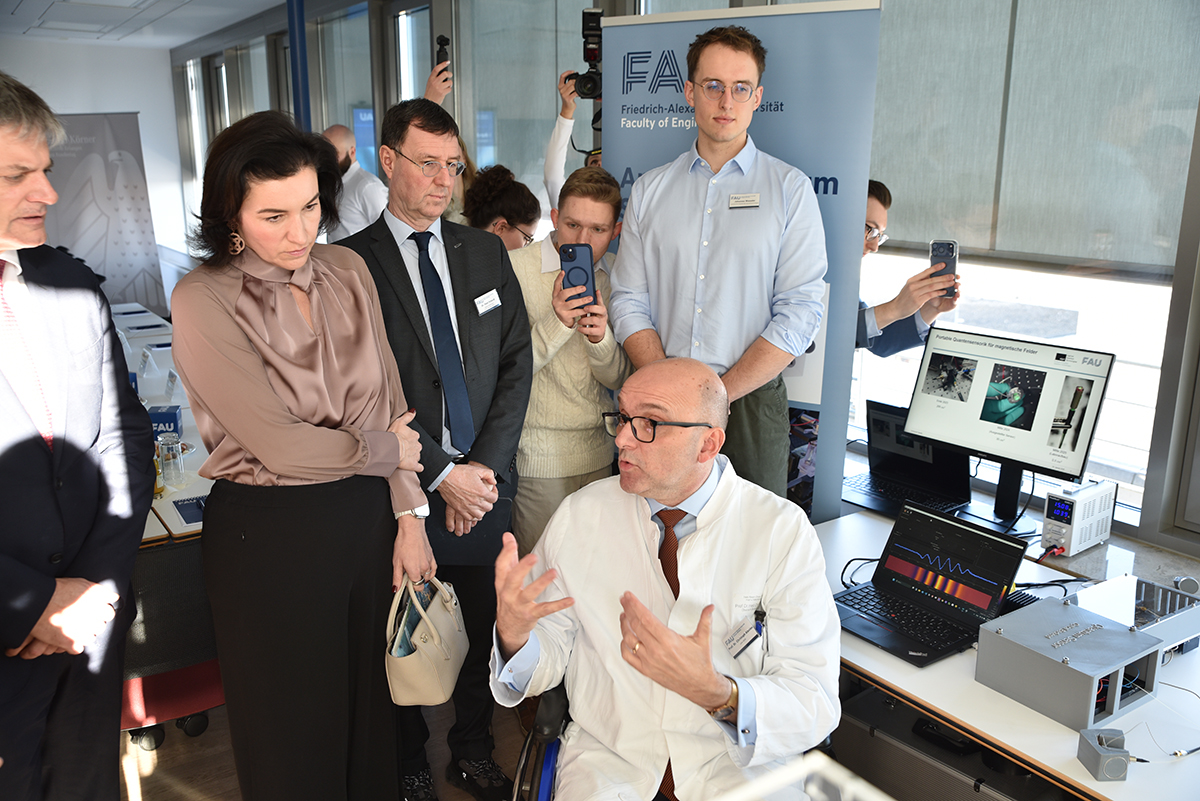
Research minister Dorothee Bär and Bavaria’s Minister of the Interior Dr. Joachim Herrmann visit FAU
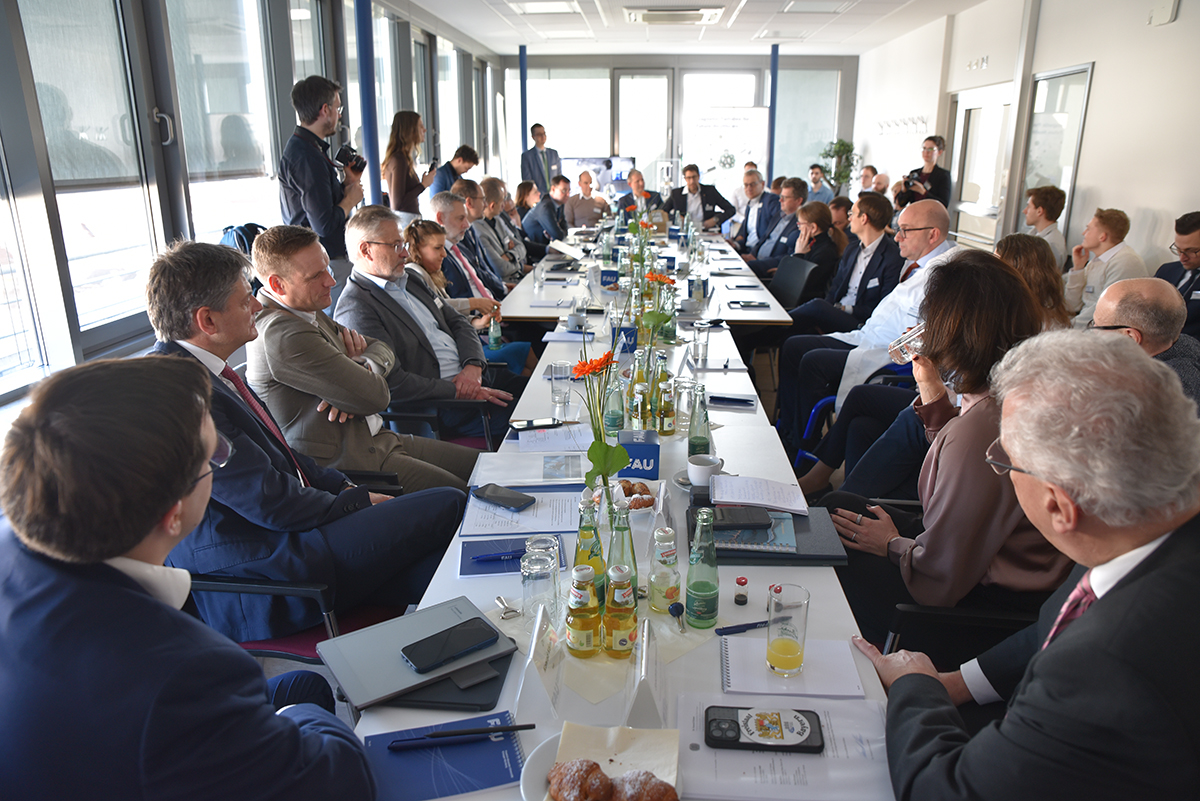
“Medicine of the future” is the motto for the year of science 2026. Nowhere is better placed to give an insight into the medicine of the future than the cutting-edge location for research of Erlangen, home to Friedrich-Alexander-Universität Erlangen-Nürnberg (FAU), Uniklinikum Erlangen, Medical Valley and numerous companies from the medical engineering sector. Dr. Konrad Körner, a member of parliament from Erlangen, FAU President Prof. Dr. Joachim Hornegger and the deputy mayor of Erlangen Jörg Volleth extended a joint invitation to representatives from research and industry to attend a round table discussion at Uniklinikum Erlangen at FAU together with the Minister of Research, Technology and Space Dorothee Bär and Bavaria’s Minister of the Interior Dr. Joachim Herrmann.
The reason for the discussion panel was the High-Tech Agenda Germany, the federal government’s initiative aimed at setting the course for securing Germany’s future as a technological leader. The European Metropolitan Region Nuremberg, where cutting-edge research, innovative developments and medical excellence thrive, is one of the most important and top-performing regions in Germany. Where better to bring leading representatives from research, medicine, industry and politics together in dialog than Erlangen, home to cutting-edge research?
High-tech made at FAU
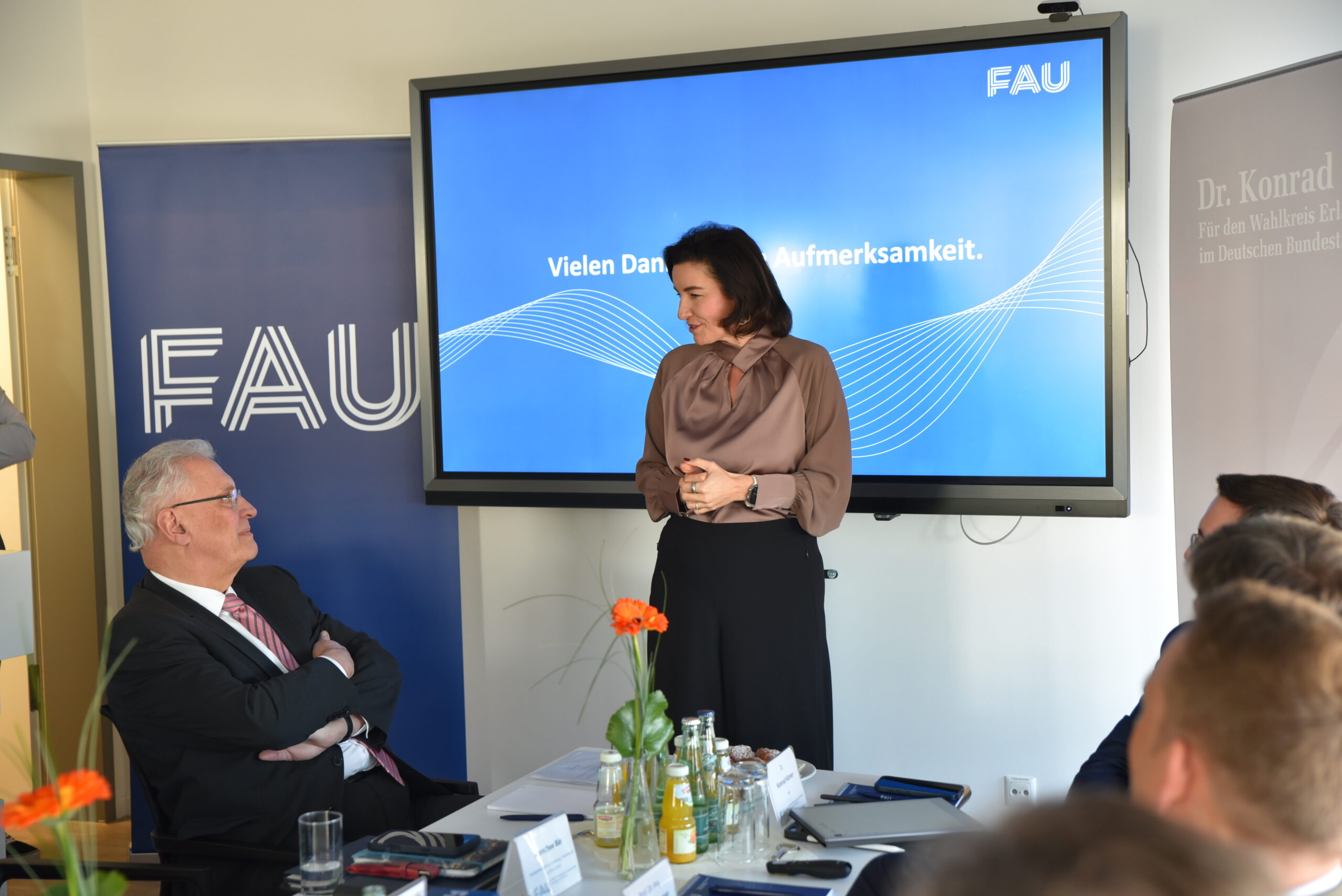
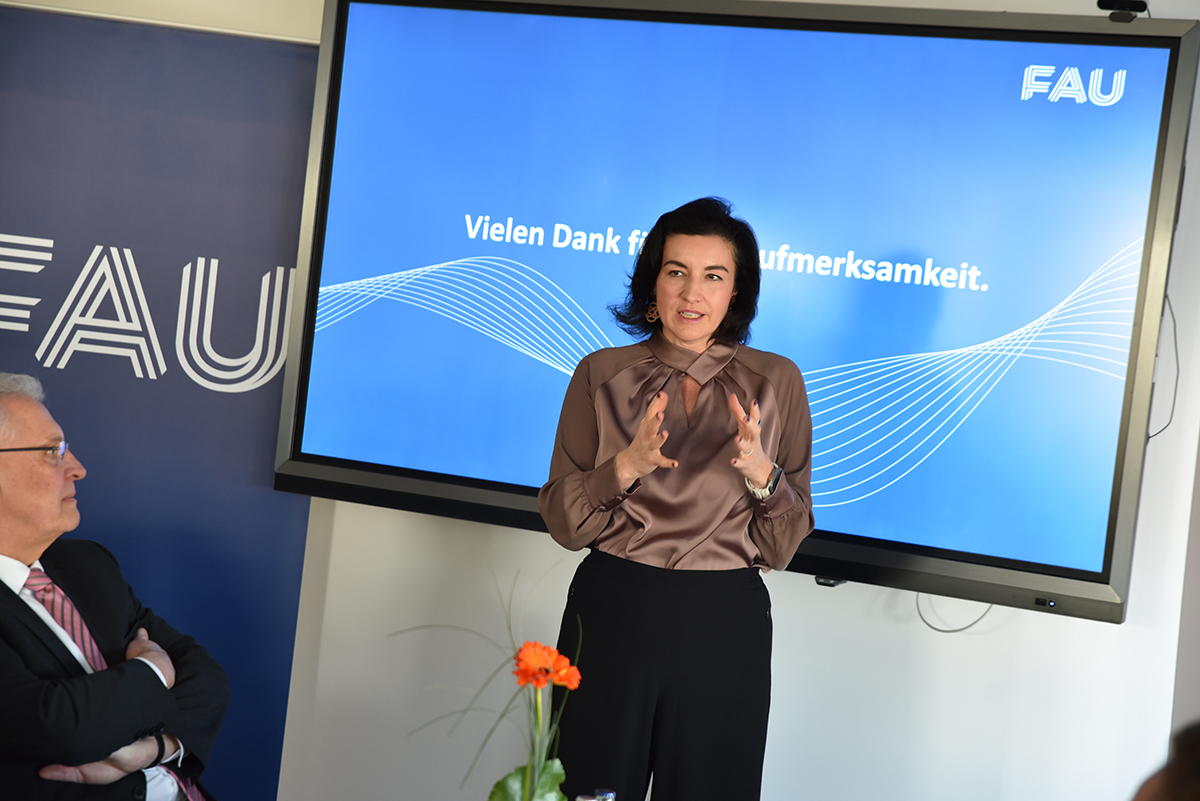
After Prof. Hornegger and Dr. Körner welcomed the participants and Federal Minister of Research Dorothee Bär gave a short opening speech, Erlangen’s deputy mayor Jörg Volleth officially started the event. Two research groups gave a brief presentation.
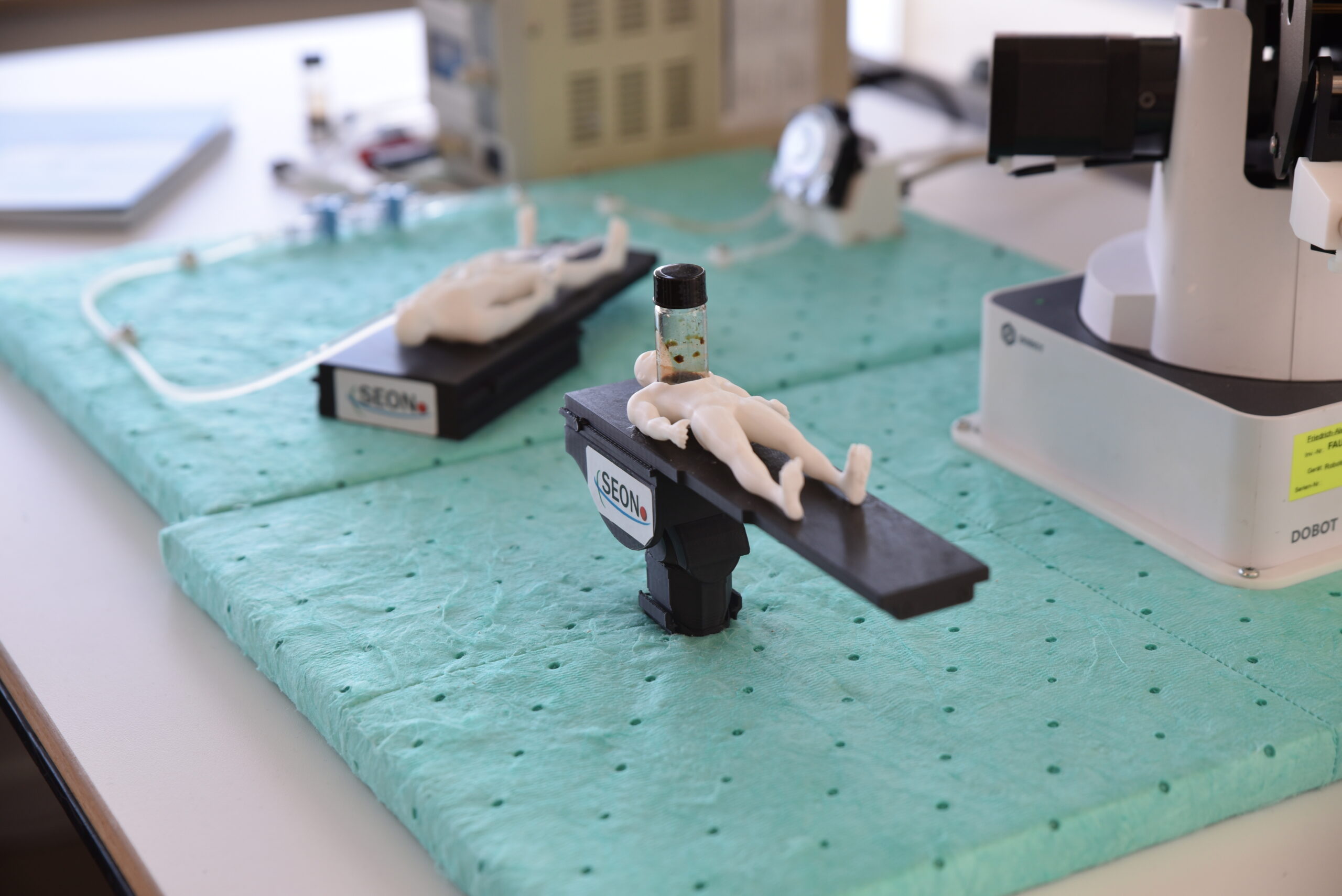
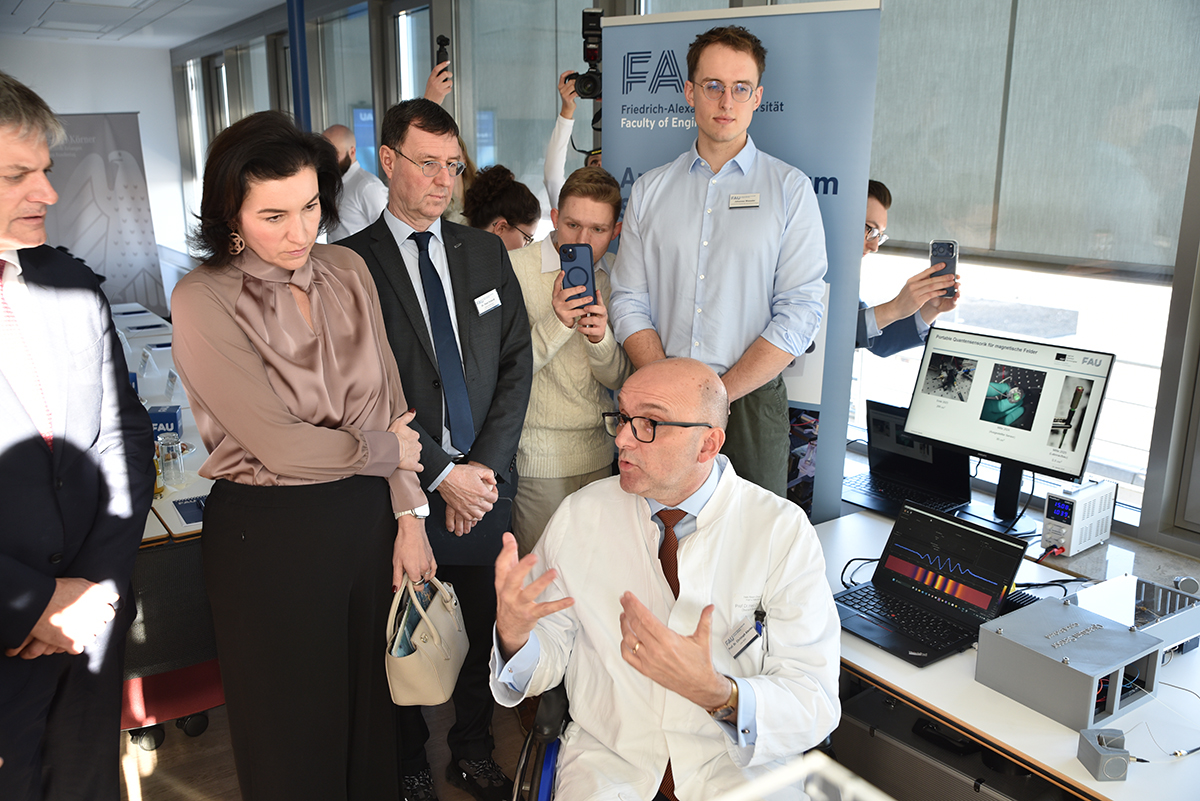
First to speak were Prof. Dr. Sarina Müller-Hübner, Prof. Dr. Roland Nagy and Prof. Dr. Christoph Alexiou. They are aiming to use nano and quantum medicine to make speedier diagnoses and more precise treatments possible, but still affordable. For instance, the latest quantum sensors can be used to differentiate between cancer cells and healthy cells based on their magnetic fields. This method uses special magnetically charged nanoparticles, known as super paramagnetic iron oxide particles. “This technology could also be used in chemotherapy allowing drugs to be administered directly to the tumor by controlling the iron oxide particles,” explains Prof. Alexiou, “ This would improve the effectiveness of treatments and reduce side effects.” The technology may also prove helpful for identifying sepsis.
Next on the program was a presentation by Prof. Dr. Silvia Budday. Silvia Budday and her colleagues Prof. Dr. Oliver Schnell and Dr. Daniel Delev are conducting research into the human brain together with medical experts, neuroscientists, biologists and engineers at FAU. They are investigating our most complex organ using mechanical analysis and developing computer models of our brain that aim to improve methods for diagnosis and treatment. “Measuring mechanical properties before and during surgery enables us to increase the visibility of diseased tissue that would normally be difficult to identify,” explains Prof. Budday. “This allows for the safe and accurate removal of the tissue.” Mechanics-based computer simulations may also be able to predict how diseases are likely to progress in individual cases, leading to a better understanding of the cause of the disease and making it easier to decide on the best possible treatment.
Closing discussion
After the presentations, the experts discussed the challenges and the opportunities that are set to face Germany as a location for research in general and Erlangen in particular over the coming years. The participants in the discussions focused on technological and medical developments and how the region stands in comparison to international competition as well as the question of how Germany can continue to enjoy its international reputation as a leader when it comes to technological excellence and pioneering innovations. During the discussion panel, representatives from research and industry stressed that the research institutes and companies in the Metropolitan Region are already world leaders, but they also highlighted the need for ongoing efforts to maintain this status, and ideally even expand it further in future. This is particularly the case when it comes to support for startups and flagship projects.
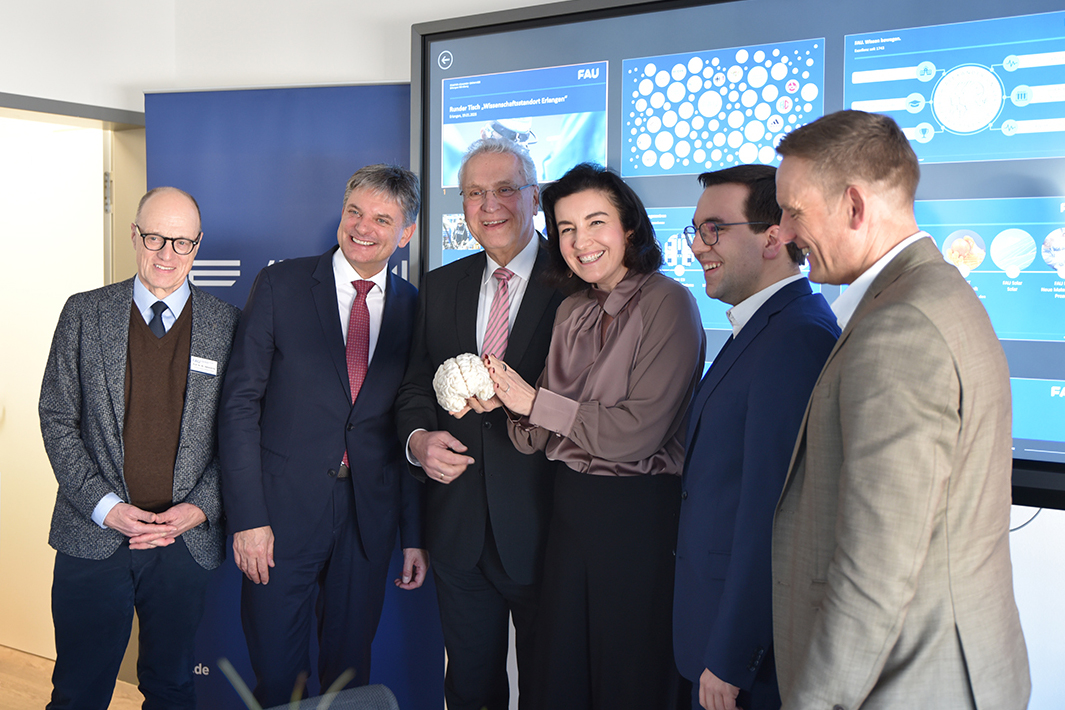
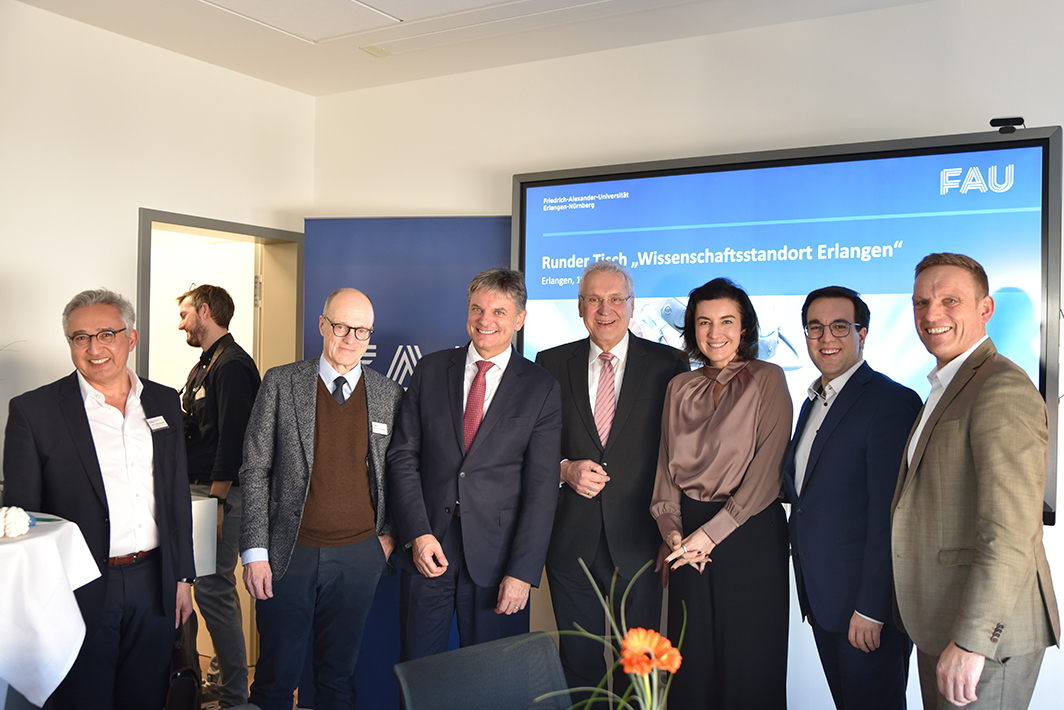
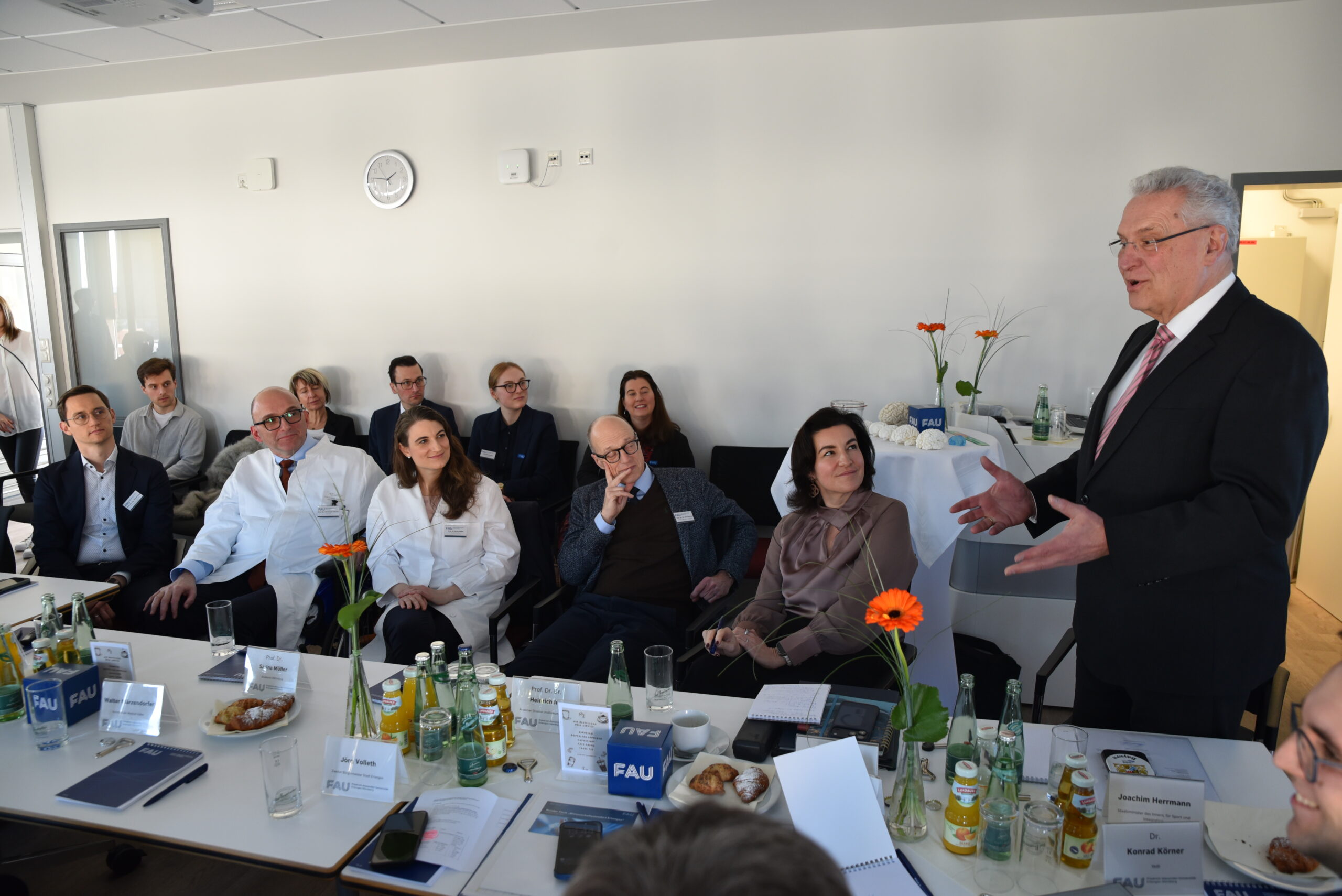
Opinions from politicians and the university:
Federal Minister of Research Dorothee Bär: “Our visit to FAU clearly demonstrated that the medicine of tomorrow is already established here today. Erlangen is home to science and medical engineering that boosts Germany’s position in the development of cutting-edge technology and quickly translates research findings into specific applications for patients. Continued success relies on close and trusting collaboration between the various players involved in excellent science and innovative industry. We want to continue to pursue this path systematically and work together to strengthen Germany as a whole. Biotechnology is one of the six key technologies included in the High-Tech Agenda Germany, with which we intend to make our country one of the top locations for technology across the globe.”
Bavaria’s Minister of the Interior Dr. Joachim Herrmann: “I am very pleased that the Federal Minister of Research has come to Erlangen to experience the key research priorities at FAU at first hand. Thanks to her visit, we will continue to have very good prospects of gaining significant research funding for Bavaria, with internationally outstanding cancer and brain research being carried out here in Erlangen. We hope to continue to pursue these developments in future.”
FAU President Prof. Dr. Joachim Hornegger: “Quantum technologies, artificial intelligence, sustainability or health research – the key technologies included in the high-Tech Agenda Germany are also key priorities at FAU. In line with the motto for the 2026 year of science “medicine of the future”, during the visit of the Minister for Research, Technology and Space we were able to give an impressive demonstration of how innovative ideas and passionate research by our researchers are having a decisive influence on advancing early diagnosis and prevention. I am particularly pleased by the Minister’s enthusiasm for our CAR-T cell therapy with which we succeeded in curing the autoimmune disease lupus – an impressive confirmation of the impact research at FAU has, giving people back their quality of life to a certain extent.”
Dr. Konrad Körner, member of parliament: “Erlangen as a location for cutting-edge research: The smallest city in Germany has a global impact. The presentations demonstrated once more to the Minister of Research how research in Erlangen is paving the way for the medicine of the future. I appreciate this opportunity we had to get together around the round table and strengthen the connections between university and extramural research institutes.”
Erlangen’s deputy mayor Jörg Volleth: Erlangen has always been a strong location for business and research. With FAU Erlangen-Nürnberg, Uniklinikum, Siemens and a growing number of innovative startups, we have the best prerequisites for bringing the objectives of the High-Tech Agenda Germany to life. The round table in the scientific hub of Erlangen offers an opportunity to bring together the various stakeholders and make an impact together. The visit by Dorothee Bär to Erlangen demonstrates that the concerns of local councils and innovation hotspots are being taken seriously and that the success of politics in the future depends on ongoing dialog between the state, regional and local governments.”
Further information:
Communications and Press
Phone: + 49 9131/85-70229
presse@fau.de
- File Name
- Federal Minister of Research Dorothee Bär
- File Size
- 618 KB
- File Type
- JPEG
- File Name
- Group photo 1
- File Size
- 616 KB
- File Type
- JPEG
- File Name
- Group photo 2
- File Size
- 566 KB
- File Type
- JPEG
- File Name
- Minister Bär and Prof. Alexiou
- File Size
- 752 KB
- File Type
- JPEG
- File Name
- Round table
- File Size
- 798 KB
- File Type
- JPEG
- File Name
- Research Minister Bär and Minister of the Interior Herrmann
- File Size
- 381 KB
- File Type
- JPEG