
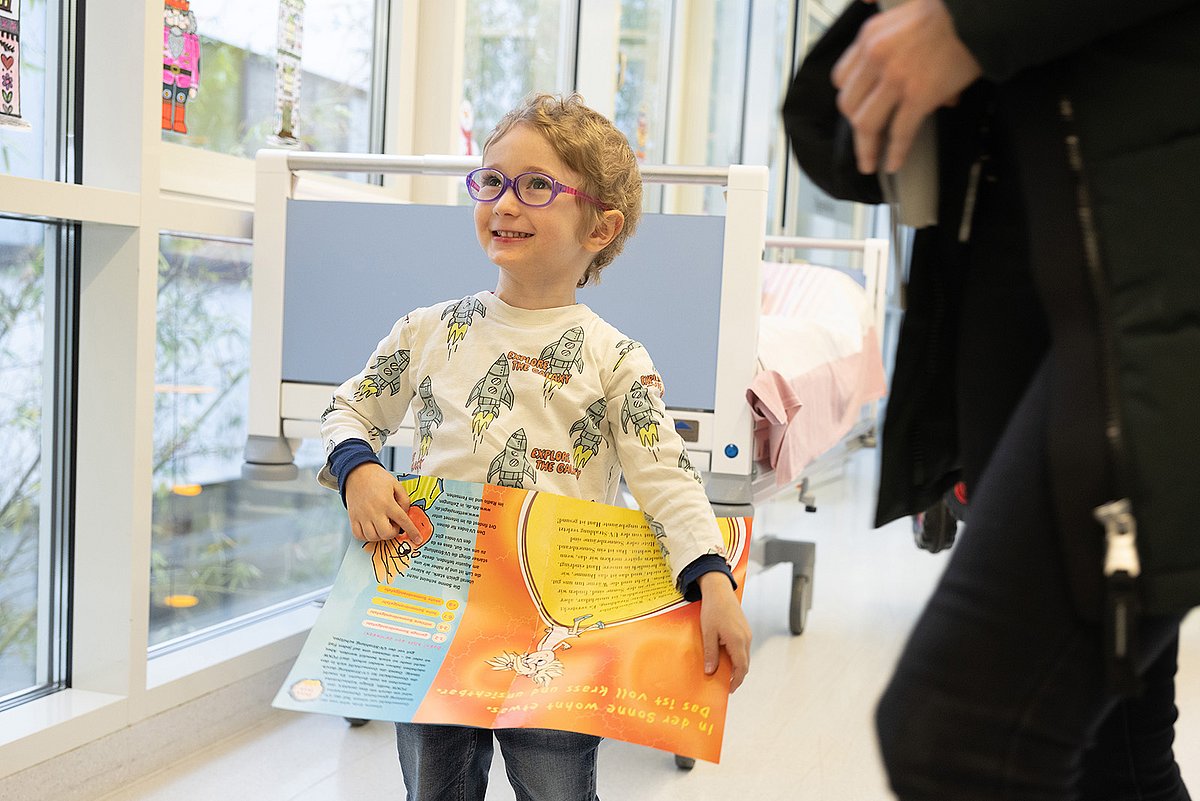
At the age of three, Felix became seriously ill with aplastic anemia – he is only alive today thanks to innumerable blood transfusions and a bone marrow transplant.
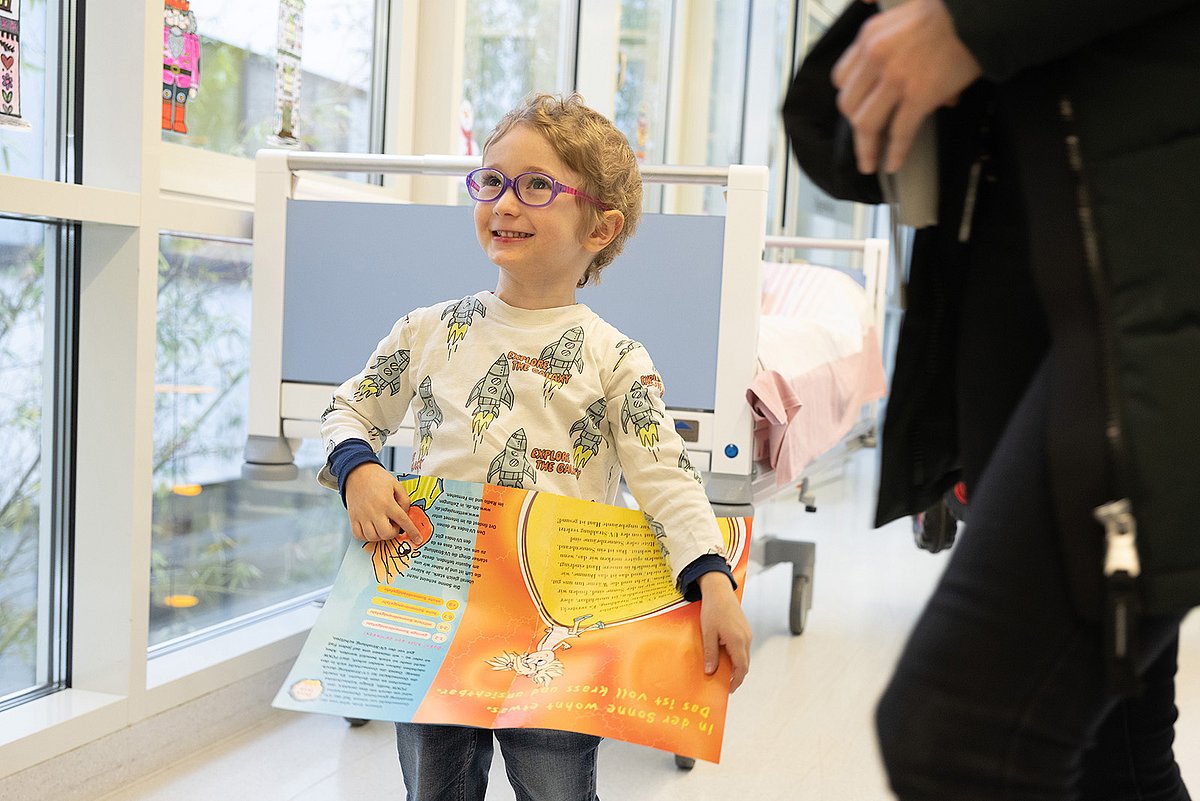
When Felix received the diagnosis severe aplastic anemia (SAA) in fall 2024, life as they knew it suddenly changed beyond all recognition for him and his family. After an autoimmune reaction, the three year old’s bone marrow suddenly stopped working and failed to produce essential blood components. It was soon clear for the doctors treating the little boy in the Pediatric Oncology section (head: Prof. Dr. Markus Metzler) of the Department of Paediatrics and Adolescent Medicine (head: Prof. Dr. Joachim Wölfle) at Uniklinikum Erlangen: Felix requires a bone marrow transplant. Until a suitable donor was found, the little boy from Bubenreuth depended for months on regular blood transfusions, but bottlenecks repeatedly threatened to interrupt blood supplies. Today, more than a year after the initial diagnosis and approximately eight months after the successful transplant, Felix’s blood count is completely back to normal, without requiring any transfusions. The family would now like to encourage more people to give blood and register as a bone marrow or stem cell donor. “The blood and bone marrow donations saved our son’s life,” says Ellen K., Felix’s mother, admitting: “Without this support, Felix would not be with us today. Every donation counts.”
Everything began in autumn 2024, when Felix started to have bruises much more frequently than before. At first, this didn’t seem to be a major cause for concern with a three year old who enjoys playing outside. However, when evidence of hemorrhaging started to show up on his skin, the family from Bubenreuth consulted a pediatrician. He immediately referred them to Uniklinikum Erlangen, where the diagnosis was made. “SAA is an extremely rare disease of the bone marrow,” explains Dr. Nora Naumann-Bartsch, senior physician for hematology and oncology at the Department of Pediatrics at Uniklinikum Erlangen. “We presume that it was caused in Felix’s case by a previous infection. His immune system over-reacted and fought not only the pathogen but also turned against the cells in the bone marrow responsible for blood production.”
No life without blood
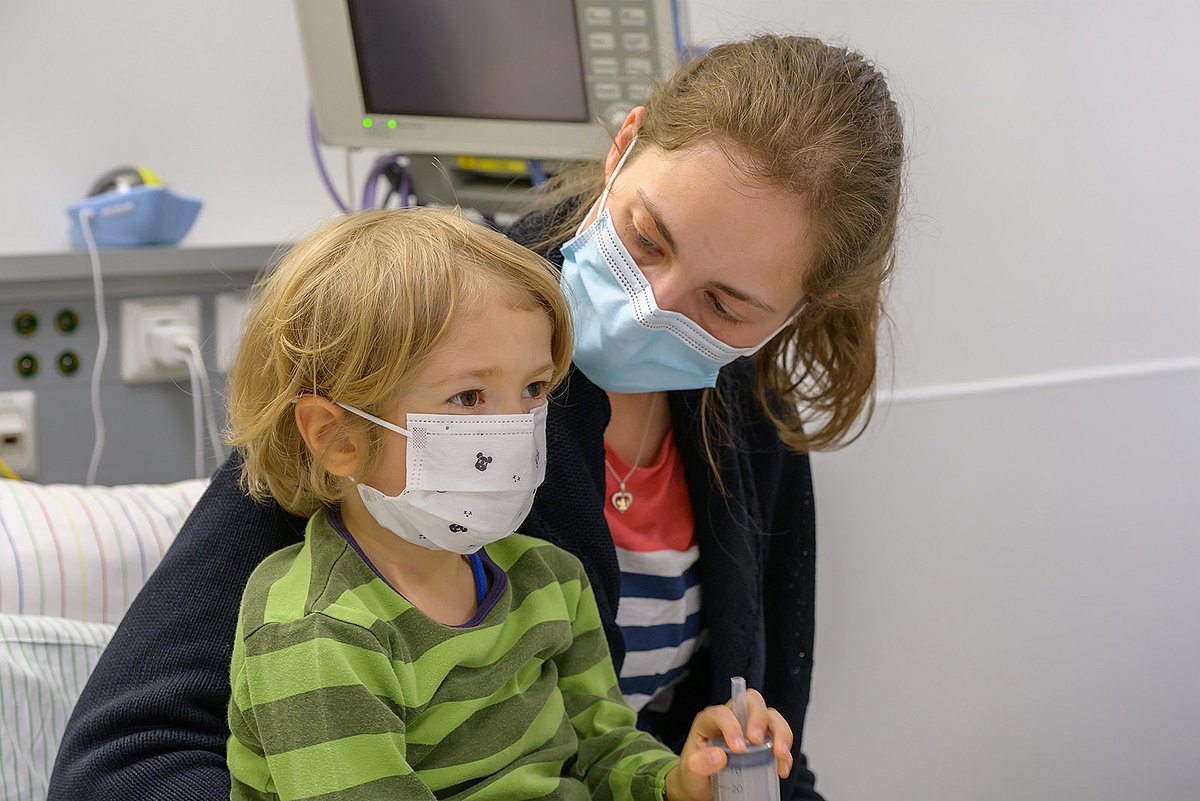
As Felix’s body stopped producing sufficient numbers of blood cells, he became dependent on regular blood transfusions from then on: At least once a week he received thrombocytes (platelets), and erythrocytes (red blood cells) every three weeks. His blood count was checked twice a week, a nerve-wracking procedure for his parents and doctors, hoping that the blood count would be alright and that sufficient blood supplies were still available. “Felix has the rare blood group B. That is unfortunately not always available. The doctors had to use other compatible blood products at times,” reported Ellen K. The fear that Felix would not receive the help he needed in time due to bottlenecks in blood supplies became a constant worry for the family. In addition, the lack of leukocytes (white blood cells) severely weakened the three year old’s immune system. In spite of all the efforts to reduce the risk of infection, Felix kept developing a temperature and had to be admitted to hospital. “There were weeks where we were in the hospital more than we were at home,” remembers the 36 year old mother, who was constantly at her son’s side.
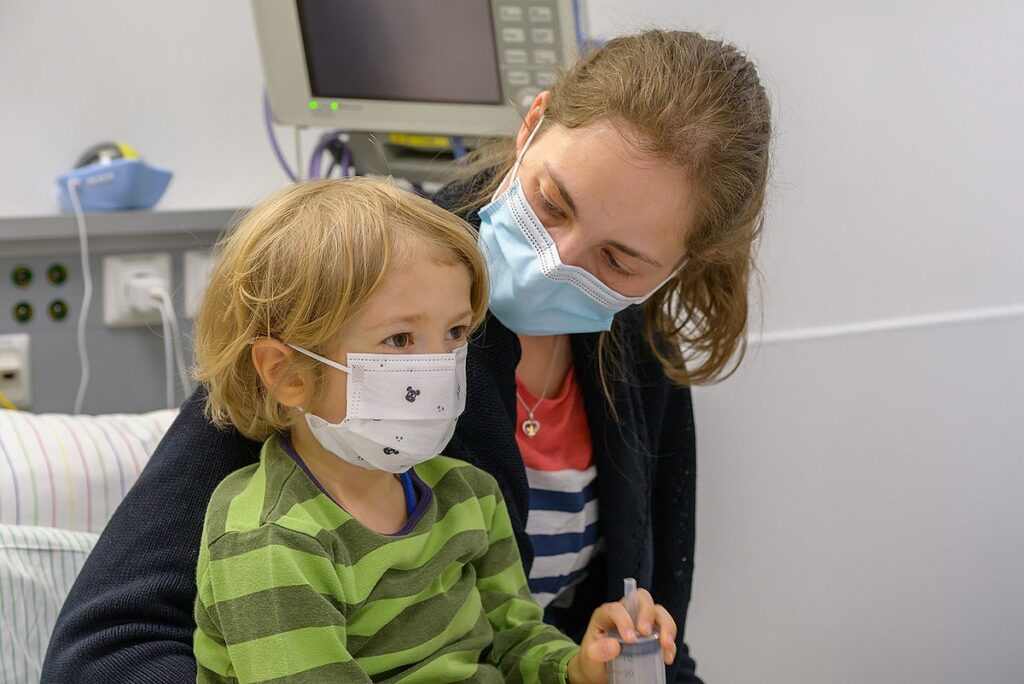
Last chance: Bone marrow transplant
“In a bid to calm the body’s autoimmune reaction, we first of all treated Felix with immunosuppressive drugs,” explains Dr. Naumann-Bartsch. “When treatment failed, however, the final option was a bone marrow transplant.” During this medical intervention, healthy stem cells are extracted from a donor’s bone marrow and transferred to the patient, triggering the patient’s body to start producing its own blood again. The donor’s bone marrow is either transferred during surgery or by extracting stem cells from their blood. In the latter case, a medicine is injected under the skin over a period of several days that causes stem cells from the bone marrow to be released into the bloodstream, from where they can subsequently be harvested. Like with the blood transfusions, Felix’s family was once more dependent on the willingness of strangers’ to help them in their time of need.
It’s a match!
The family was lucky: In spring 2025, a global search of bone marrow donor registries found one person whose tissue characteristics matched Felix’s. Suddenly, everything went very quickly: Felix received intensive chemotherapy roughly one week before the planned appointment. This was necessary to destroy his compromised immune system and his remaining stem cells, to create space for the donor’s stem cells and to prevent them being rejected. The actual transplant was then similar to a blood transfusion. “A bone marrow transplant is a very intense medical intervention that requires a specially trained, interdisciplinary team of experts,” explains Dr. Naumann-Bartsch. “It usually tales four to six weeks before the donor stem cells are integrated into the body and the bone marrow can start doing its job. In the meantime, patients remain extraordinarily susceptible to infections, meaning that they have to be kept in isolation. It is not possible to rule out the body rejecting the transplant during this phase either.”
Finally home again
Felix experienced complications such as a high temperature after the transplant. However, the Pediatric Oncology team in Erlangen were able to bring the situation under control using medication. After approximately five weeks, that Felix spent with his mother in an isolation ward, it finally happened: His blood count showed that his bone marrow was finally producing enough blood components on its own, and the little boy was allowed to return home. “Felix immediately had a burst of energy, he dashed about and enjoyed the usual rough and tumble with his brothers. After that, he had sore muscles for the next two days,” remembers Ellen K, and laughs. After being discharged from the hospital, Felix had to return regularly to the outpatients’ oncology clinic to keep a close eye on his recovery.
Normality in sight
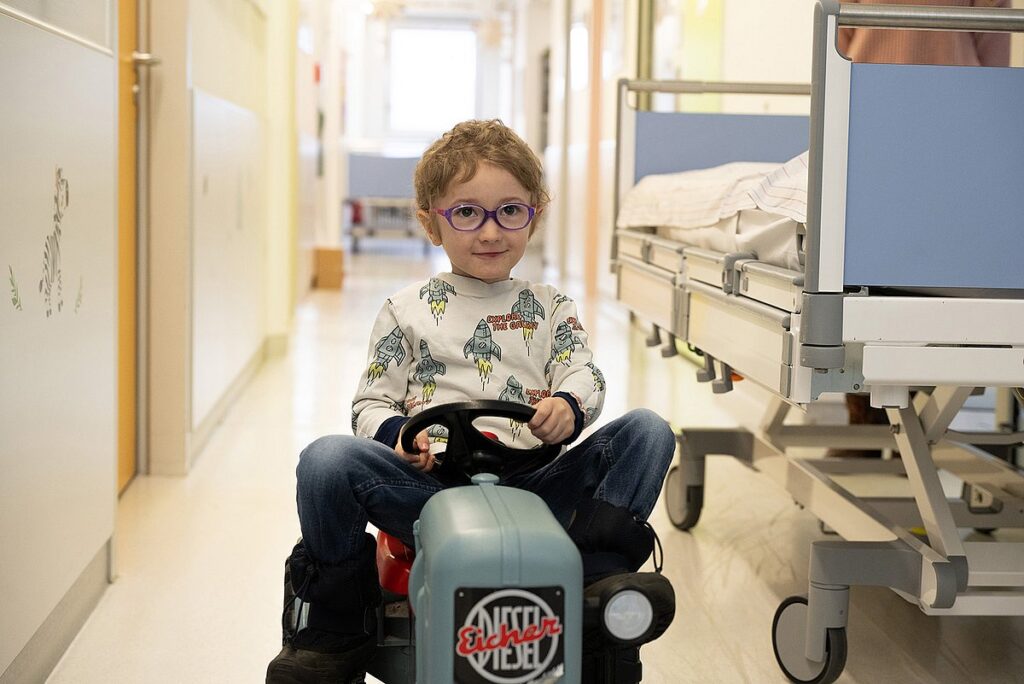
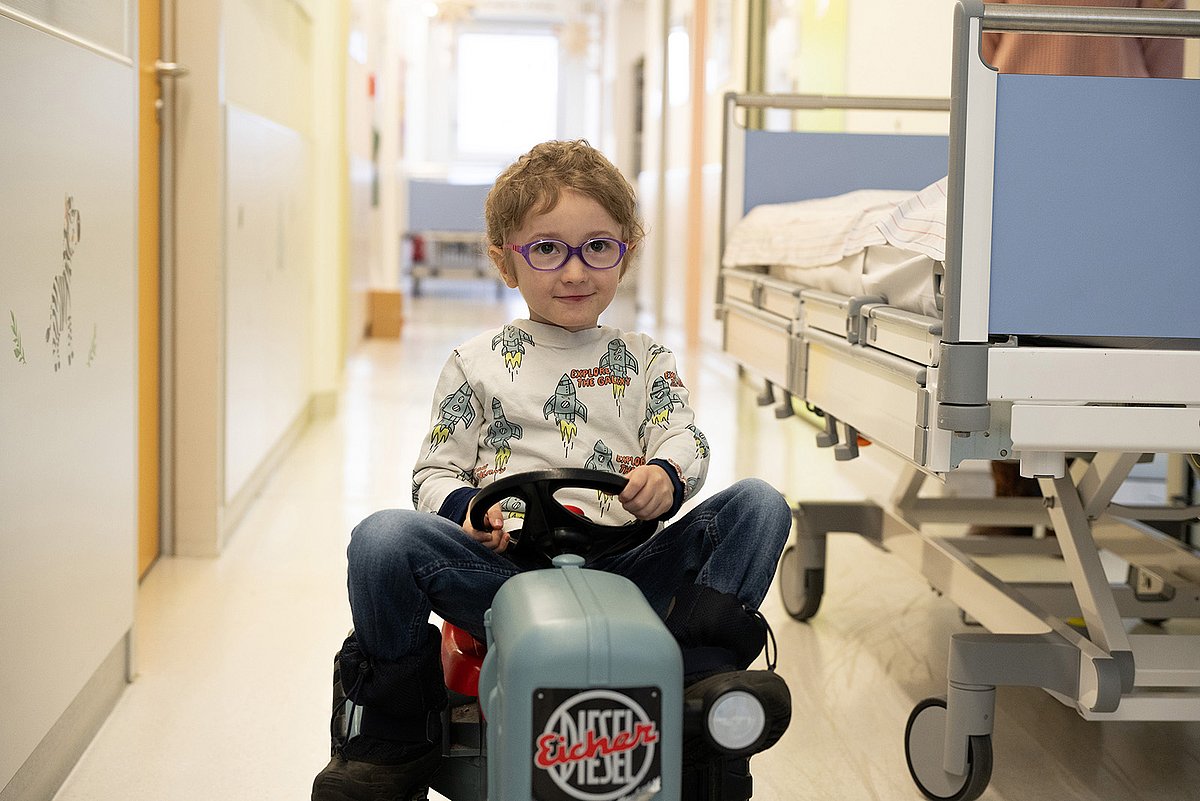
Today, eight months after the bone marrow transplant, life is slowing returning to normal for the family from Bubenreuth. The Hickman line, a central venous catheter used to administer approximately 50 blood product transfusions and drugs to Felix over the last year, is soon to be removed. The time span between check-ups will then also become longer, until they will only be required once a year. In spring 2026, Felix will probably be allowed to return to his kindergarten in the forest and get back to doing what he loves best: playing with children of his own age and running around outside.
A call for action
“The past year was extremely hard for Felix, his two brothers and my husband and I. The disease itself was hard enough. However, the constant worry as to whether sufficient blood reserves were available or whether a matching bone marrow donor would be found made the situation almost unbearable,” says Ellen K. “I would therefore like to call on everyone who is healthy enough to do so to give blood and register in a database for stem cell and bone marrow donors. It doesn’t take a lot of effort, but the benefit for those affected is unmeasurable.”
Further information:
Dr. Nora Naumann-Bartsch
Phone: + 49 9131 85-36076
nora.naumann@uk-erlangen.de
- File Name
- Felix on a tractor
- File Size
- 154 KB
- File Type
- JPEG
- File Name
- Felix chatting
- File Size
- 164 KB
- File Type
- JPEG
- File Name
- Felix and his mother
- File Size
- 157 KB
- File Type
- JPEG