
With over 270 degree programs, FAU is among the 15 largest and leading universities for research in Germany. Over 6,000 employees and more than 39,000 students promote a culture of innovation, diversity and passion.
Get to know our newly-appointed professors who are driving forward research with their fresh ideas and creative approaches. Find out more about the people behind our research projects and their career paths, visions, and motivation for a successful academic future.
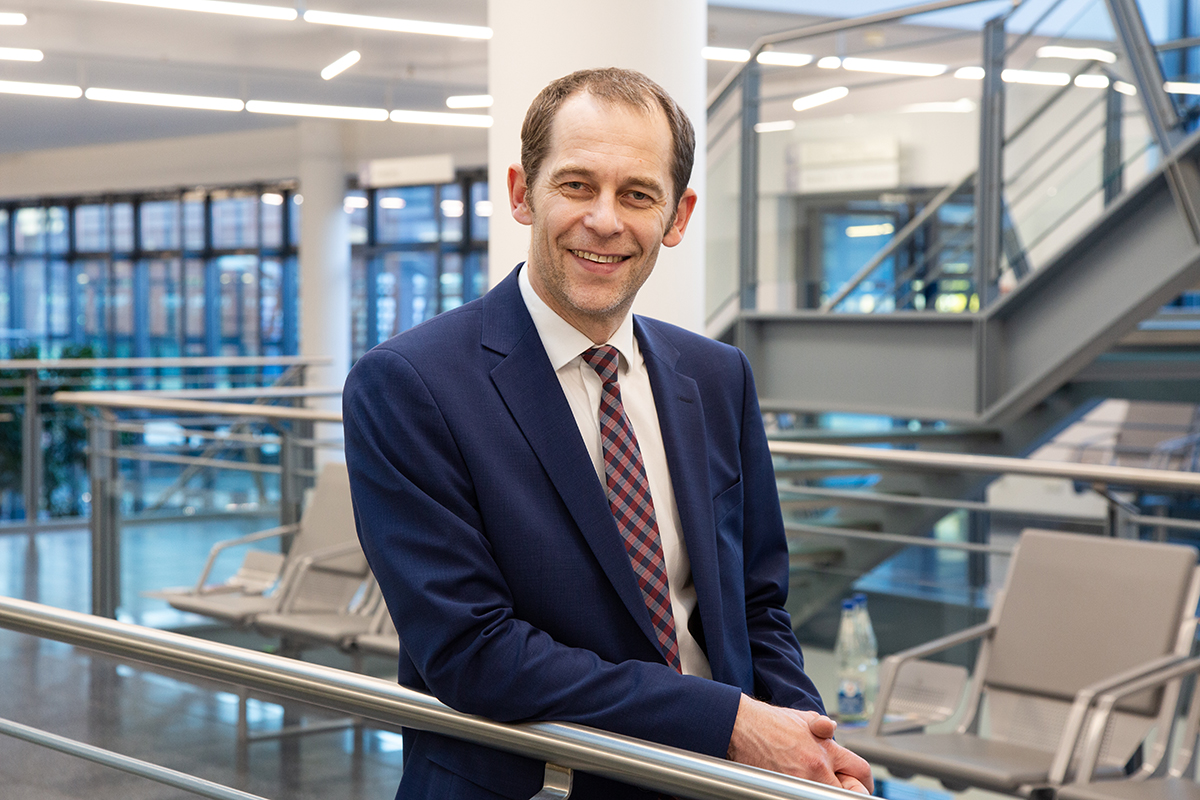
Prof. Dr. Alexander Link – Professorship for Internal Medicine focusing on Gastroenterology
He has always wanted to visit an endoscopy center in Japan – Professor Link introduces himself.
What is your main area of research?
My translational research focus lies in the molecular characterization of inflammatory processes and carcinogenesis in the gastrointestinal tract and in investigating the role of the microbiome in causing, preventing and treating gastrointestinal and hepatological diseases. From a clinical point of view, the focus is on developing new diagnostic biomarkers and microbiome-based therapies – such as fecal microbiota transplantation – and on innovative procedures for interventional endoscopy, in particular for patients with a predisposition for tumor diseases.
Why did you choose this topic?
Gastrointestinal oncology is facing enormous challenges, unlike those faced by nearly any other area, and these are set to peak dramatically in the future due to demographic change. An increased understanding of carcinogenesis, the implementation of innovative prevention and screening strategies, the use of minimally invasive therapeutic procedures and last, but not least, the introduction of revolutionary microbiome-based therapies, are in my opinion central components for effective management of these diseases.
Where were you before coming to FAU?
For the last six years, I have been the head of the Section for Molecular Gastroenterology and Microbiota-associated Diseases in the Department of Gastroenterology, Hepatology and Infectiology at Otto-von-Guericke-Universitätsklinik Magdeburg.
Where did you study and what subjects?
I studied Medicine at Otto-von-Guericke-Universität Magdeburg.
Which events and activities would you like to take part in in Erlangen and the surroundings?
The region is still a new chapter that I am very keen to start exploring. I am looking forward to discovering the rich cultural diversity, the locations steeped in history, and the unique countryside in Franconian Switzerland, whether during hikes, sporting activities or enjoying regional specialties.
What is your most useful tool as a professor?
During my time teaching I have discovered the whiteboard as my most indispensable tool: ideal to pass on knowledge simply, clearly and in an interactive way.
What did you want to be when you were growing up?
Becoming a doctor has actually been my dream since childhood.
Do you have a role model? If so, did they influence your academic or professional career?
What has influenced me most is less a role model and more a “life model”. Like a jigsaw puzzle, it is made up of a number of different pieces: inspirational mentors, meetings with different people, pivotal experiences from working in a clinical setting, teaching and research, but also my private experiences and unexpected coincidences that have broadened my horizons. Each piece has its own color and shape, and together they form the picture that has shaped my academic and professional career to date.
Have you got any hidden talents?
My family claims that I have a talent for finding hidden things – from lost keys to little everyday details. Probably a characteristic that will come into good use in our new surroundings.
Is there something you’ve always wanted to do?
I have always wanted to visit an endoscopy center in Japan to experience at first hand the clinical procedures, cultural features and innovative techniques used there.