
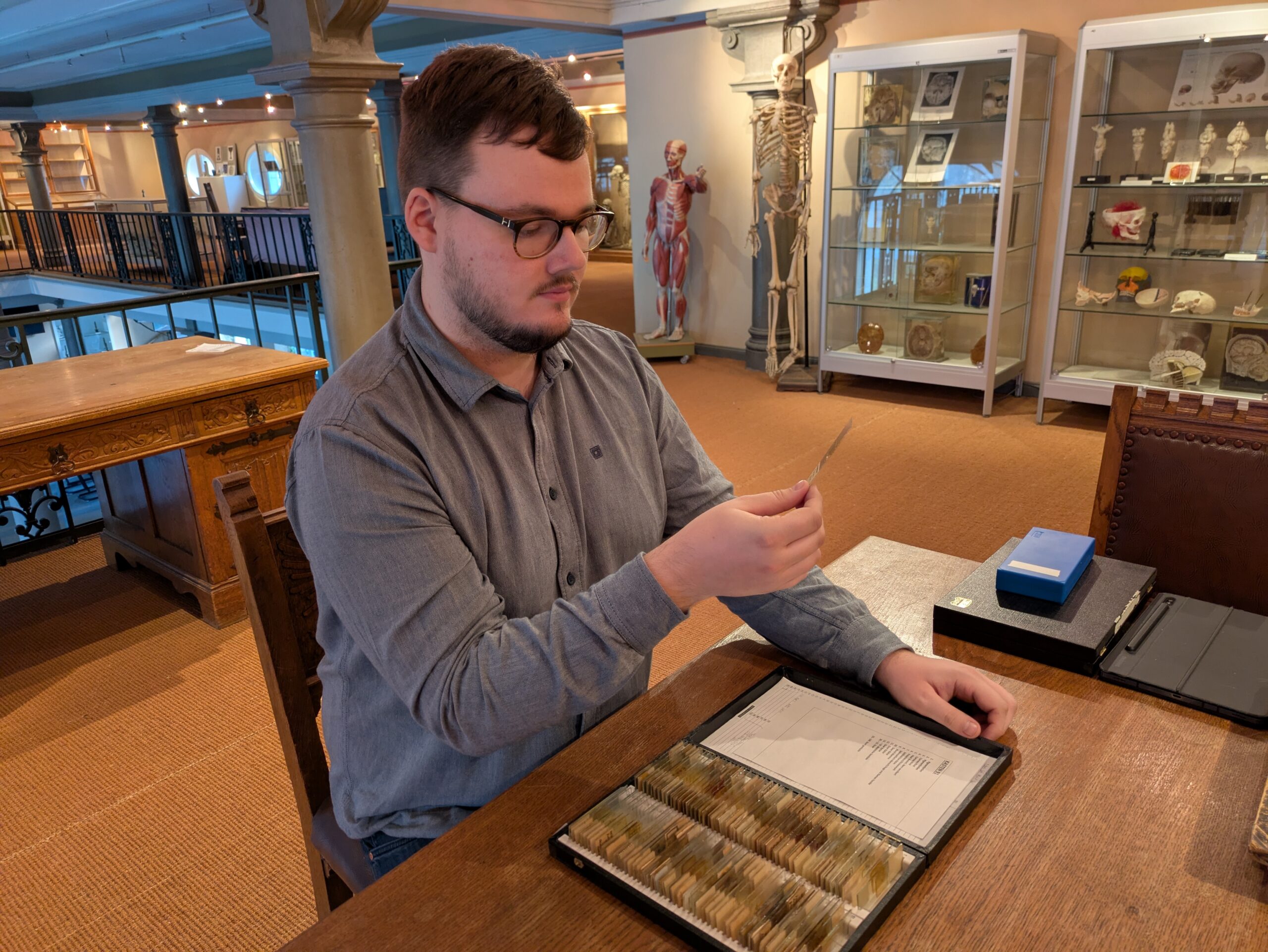
Anatomical specimens from the Nazi era: Doctoral candidate Tim Goldmann investigates chance discovery
Specimens made from the remains of victims of Nazi executions are archived in the collection of the Institute of Anatomy in Erlangen. Tim Goldmann is a doctoral candidate at the Institute of History and Ethics of Medicine at Friedrich-Alexander-Universität Erlangen-Nürnberg (FAU) and was the first person to discover these specimens during his research work at the Institute of Anatomy. The findings have now been published.* FAU has long been committed to exploring how to responsibly address its problematic heritage.
Inventory reveals specimens from National Socialist era
The discovery of specimens made from the remains of victims of Nazi executions in FAU’s Anatomy Collection was a chance find, explains Tim Goldmann: “I was doing research for my doctoral thesis and came across specimens whose labels clearly refer to the Nazi era. I am really working on reconstructing the historical contexts of the Erlangen Anatomy department’s collection of fetuses.”
Goldmann was particularly struck by specimens originating from Munich Stadelheim Prison: “There is evidence of a massive increase in the number of executions here from the mid-1930s onwards, with a total of around 1,000 people executed by 1945.”
Early interest in provenance research
Prepared specimens have always been an essential part of the study of anatomy. As late as the 1960’s, the bodies came from people who died, for instance, in poorhouses or prisons.
Goldmann: “Almost all of these individuals have one thing in common: unlike today, they did not consent during their lifetimes to their bodies being used for teaching and research. It is important to remember that even before the Nazi era, tissue samples from deceased individuals were used for anatomical purposes without their consent. This circumstance raises major moral concerns nowadays.”
Provenance research at FAU
While studying medicine, Goldmann worked as a student assistant for Prof. Dr. Fritz Dross at the Institute of the History and Ethics of Medicine. Together with anatomy lab technician Lisa Stachel and Prof. Michael Scholz, head of the anatomy collection, he began systematically cataloging the specimens in 2020.
People with their own stories
Individual specimens can be linked to specific biographies, such as that of Charlotte Schulz. At the age of 20, she was executed in 1940 for multiple thefts. Particularly controversial: In farewell letters to her mother, she describes abdominal pain and the absence of her period. “She may have been pregnant. Whether this was actually the case can no longer be reconstructed today. She was denied a visit to the doctor.”
After Tim Goldmann was able to prove conclusively, with the help of the Stadelheim execution files, that the remains did indeed belong to the young woman, he wrote to the Arolsen Archives, the world’s largest archive on victims of National Socialism and their stolen belongings. One focus of the archive is the #lostwords project. Here, employees search for relatives of Nazi victims who were executed in Munich Stadelheim in order to return the archived possessions of those who were executed, including those of Charlotte Schulz.
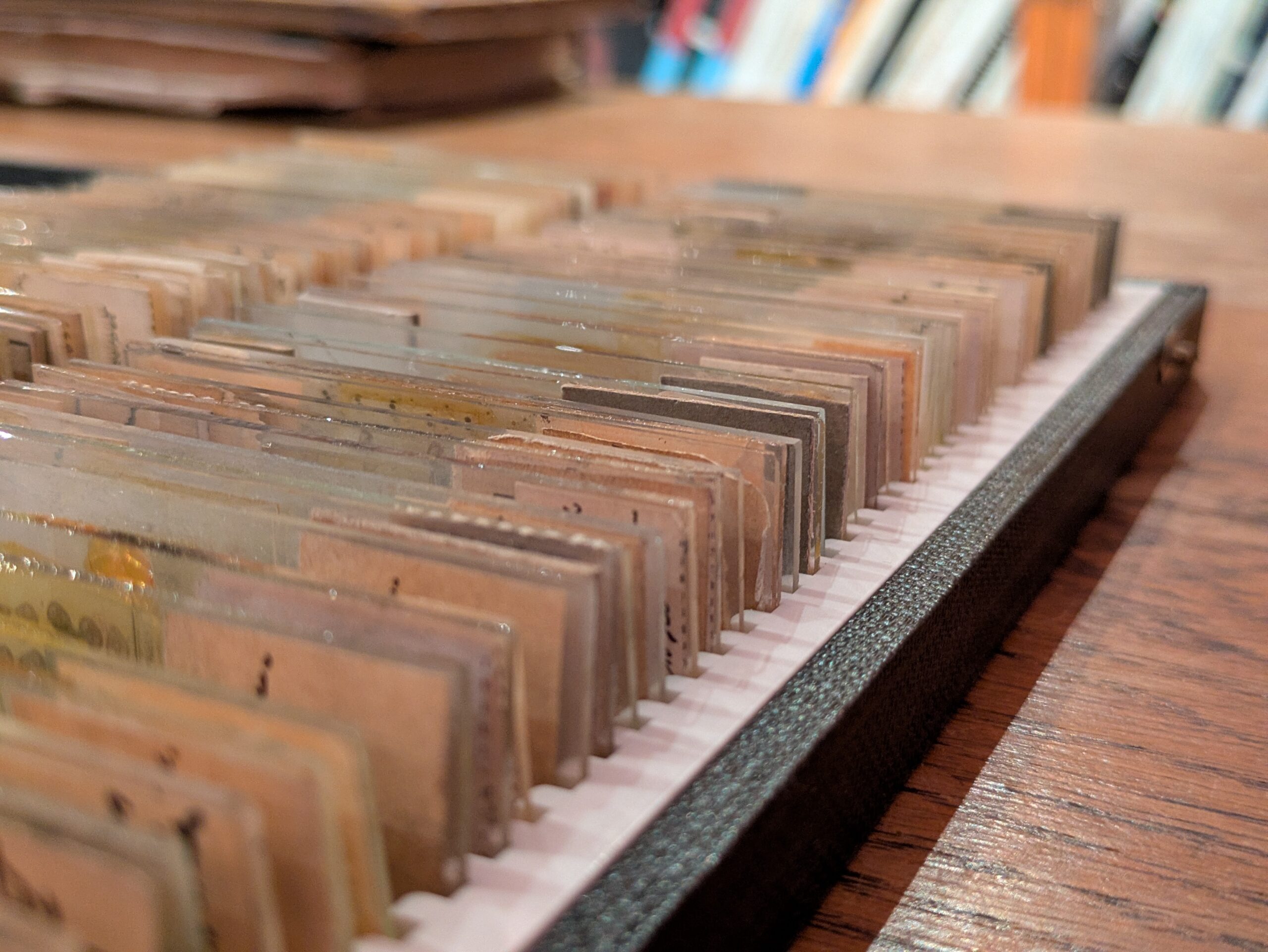
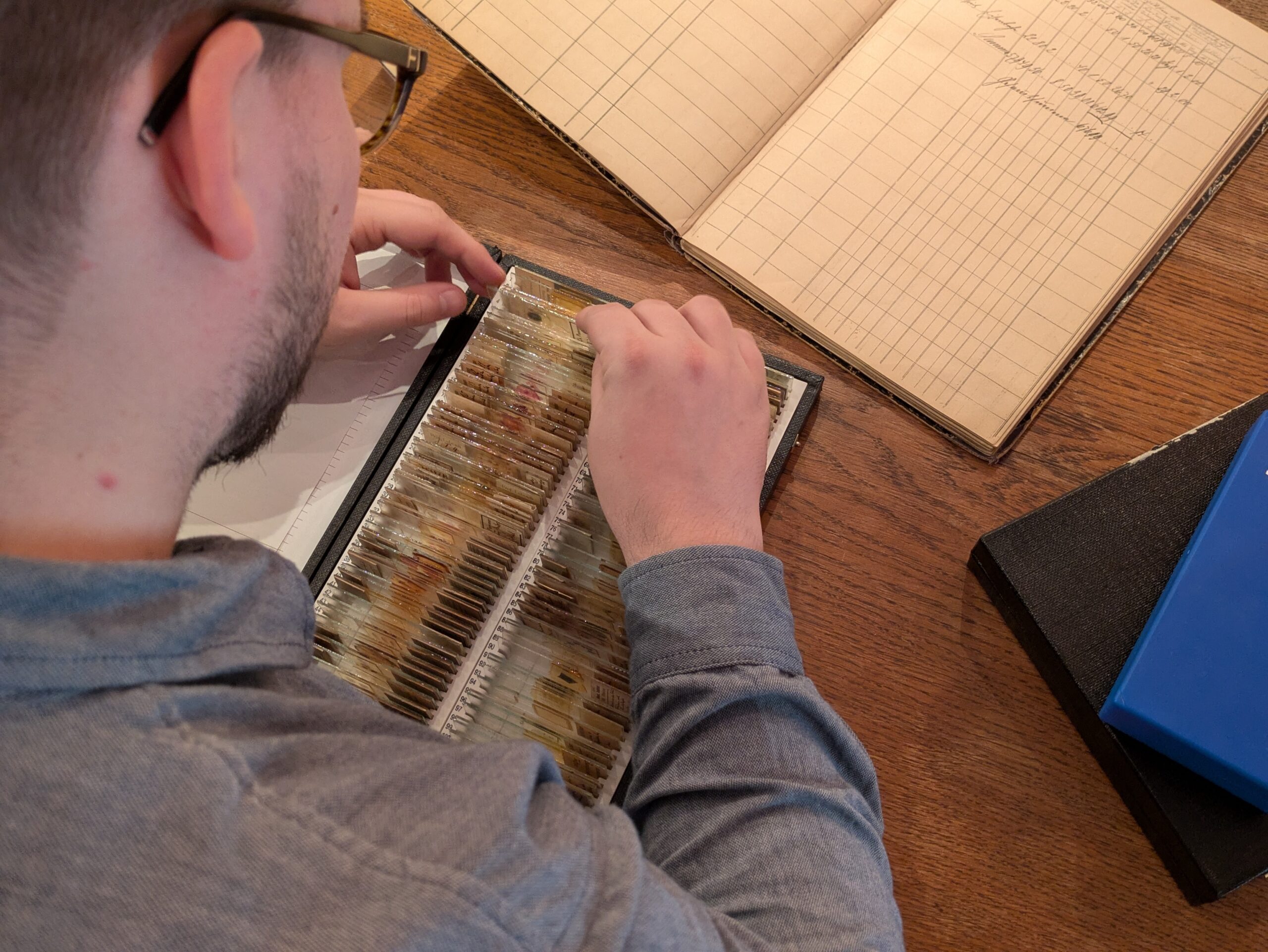
Giving human remains their dignity
Tim Goldmann would like to assign further specimens to specific individuals: “I want to help fill in the gaps in the collection, and raise awareness of the fact that the specimens are the mortal remains of human beings.” Goldmann is being supported by the director of the Institute of Anatomy, Prof. Dr. Friedrich Paulsen.
Tim Goldmann, Lisa Stache, Professor Scholz, and Professor Dross remained in close contact with University Archivist Clemens Wachter the whole time they were working on producing an inventory of the anatomy collection and researching its provenance. He has been researching the history of FAU for more than 25 years.
Wachter: “FAU considers coming to terms with its National Socialist past, including in its collections, to be an ongoing task. For us, provenance research means regarding specimens as testimony to human fates. The University Archive also contains official documents and personal sources that show how persecution affected everyday life at the University. We are making this heritage accessible through collaboration with researchers and digitization. By doing so, we aim to make historical contexts transparent at FAU.”
FAU confronting its own past
FAU is committed to an academic culture of remembrance. Based on this responsibility, Collections and Museums at FAU has long been concerned with the question of how to deal appropriately with sensitive objects, in other words human remains. Since 2019, the Working Group on Remembrance Culture has been advising the Executive Board on historical issues.
In addition, FAU is dedicated to commemorating, remembering, and researching its own history in workshops, further research projects, and publications.
DOI: https://doi.org/10.1016/j.aanat.2025.152777
Further information:
Tim Simon Goldmann
Institute of the History of Medicine and Medical Ethics
tim.s.goldmann@fau.de)