
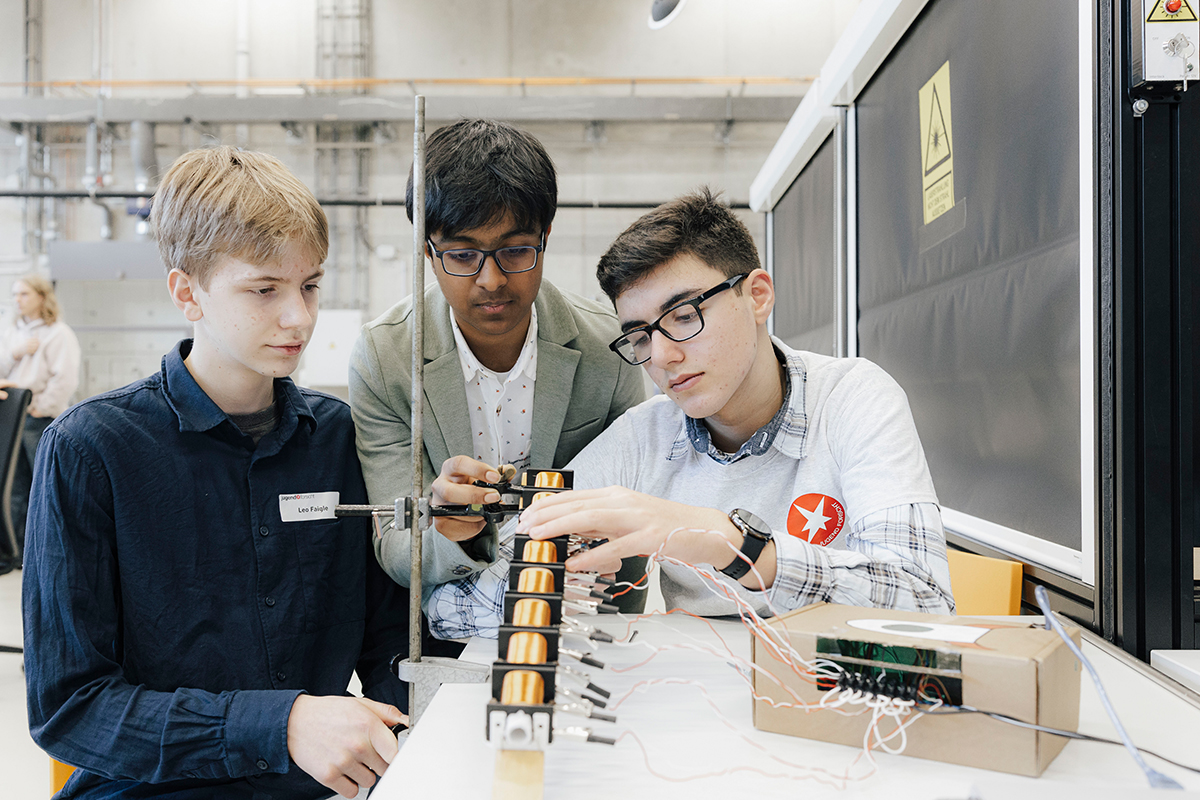
High-school students present their own research projects at FAU at the Jugend forscht Erlangen regional competition
Jugend forscht is the best-known competition for young talent in STEM subjects. At the competition, young people present scientific projects and successful participants in the regional competitions then compete at the state and federal levels. The Erlangen regional competition took place again this year at Friedrich-Alexander-Universität Erlangen-Nürnberg (FAU).
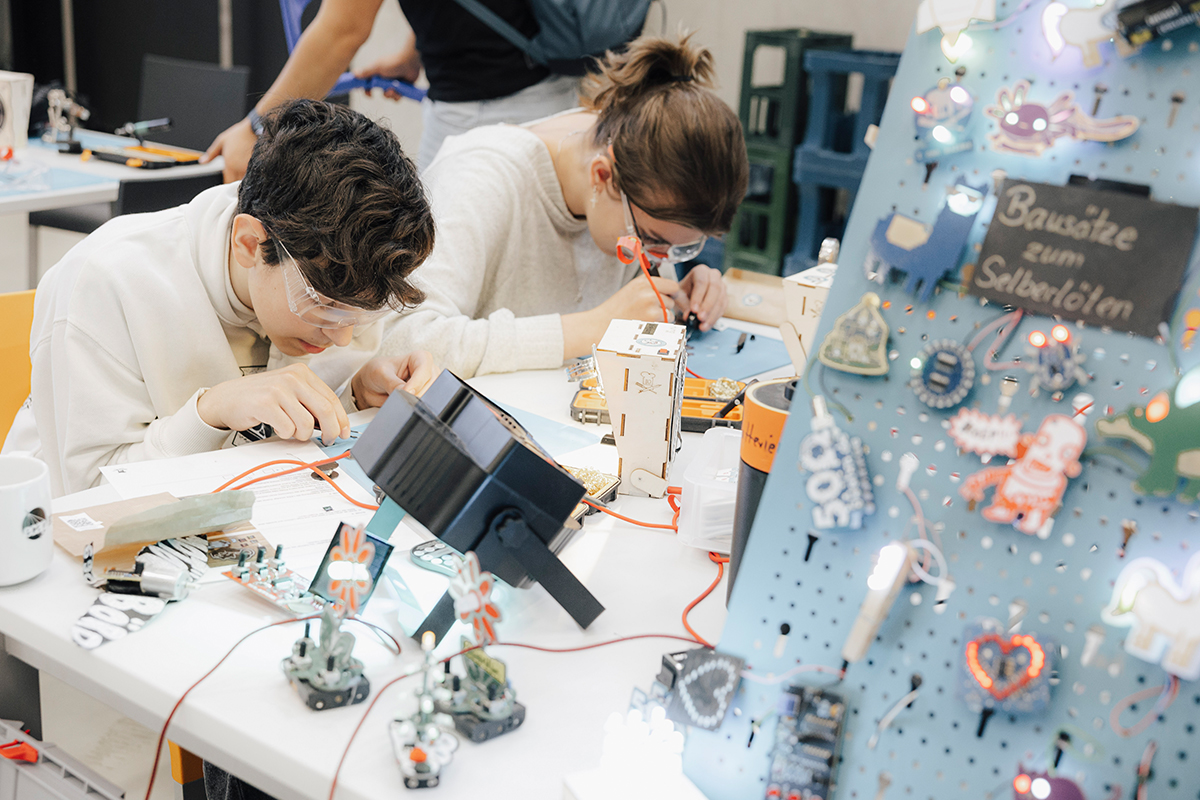
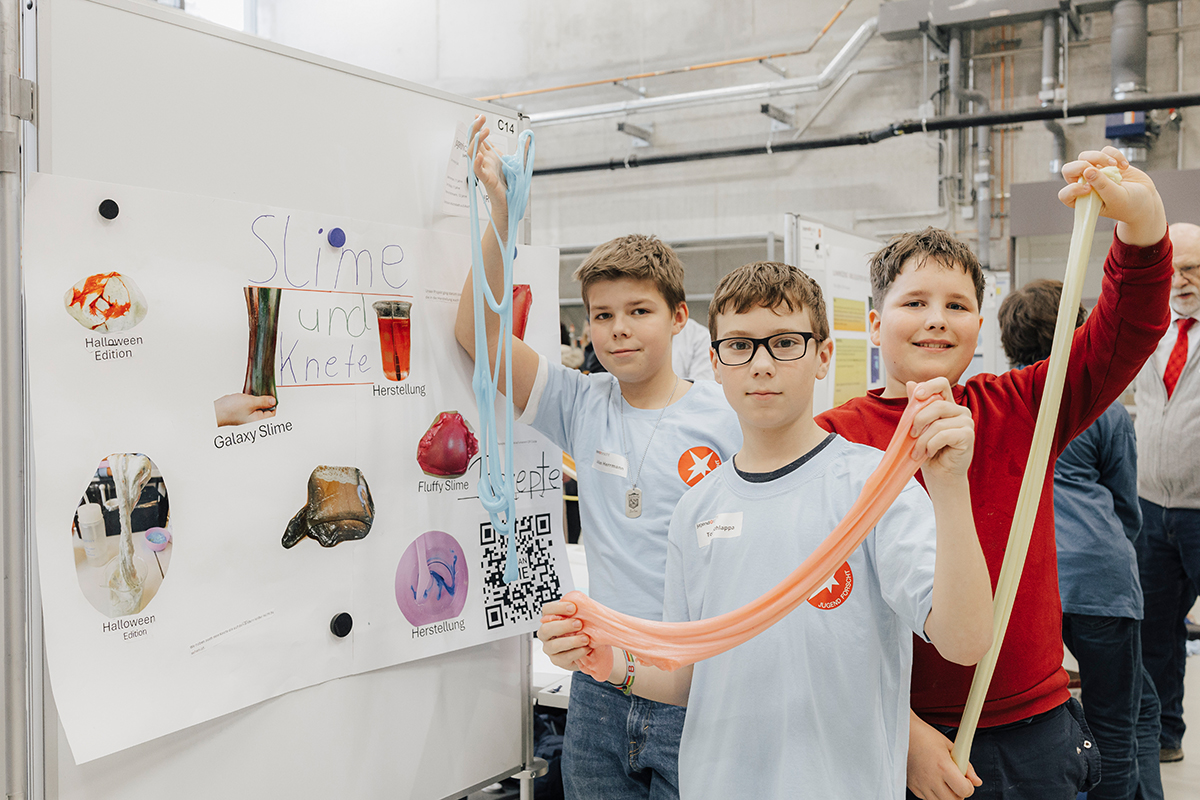
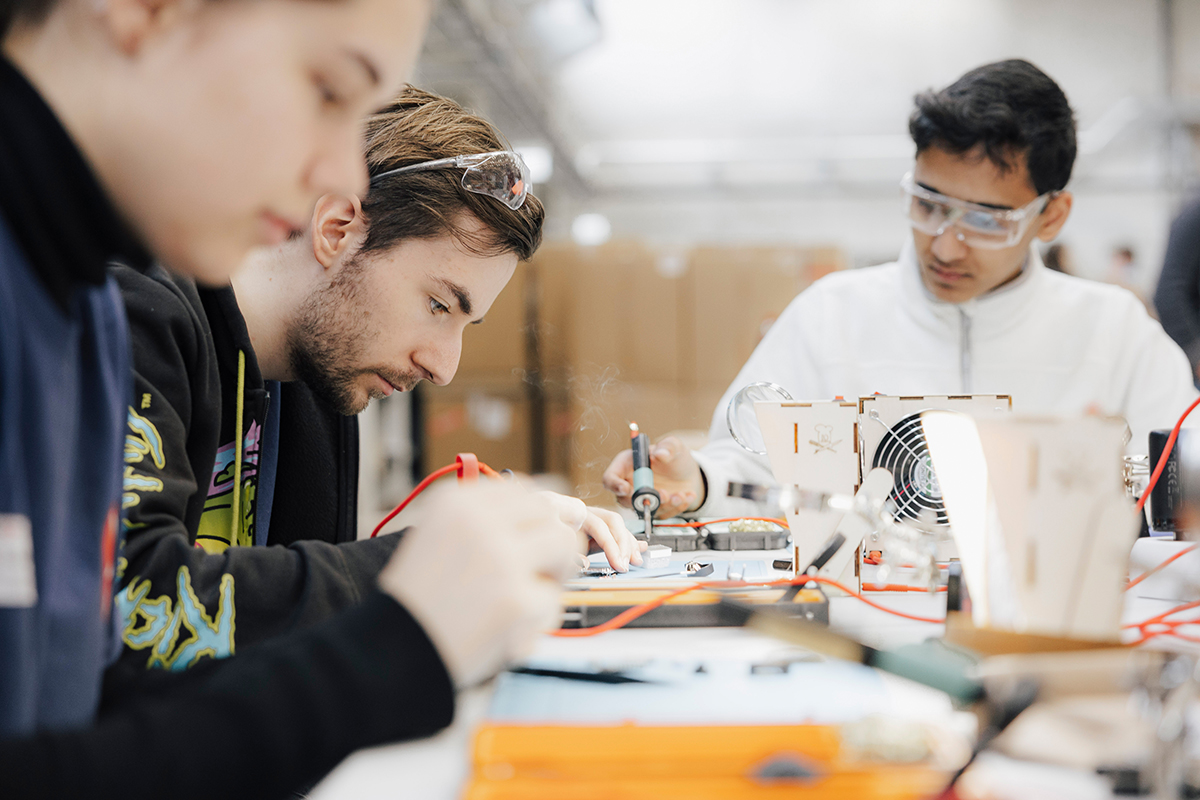
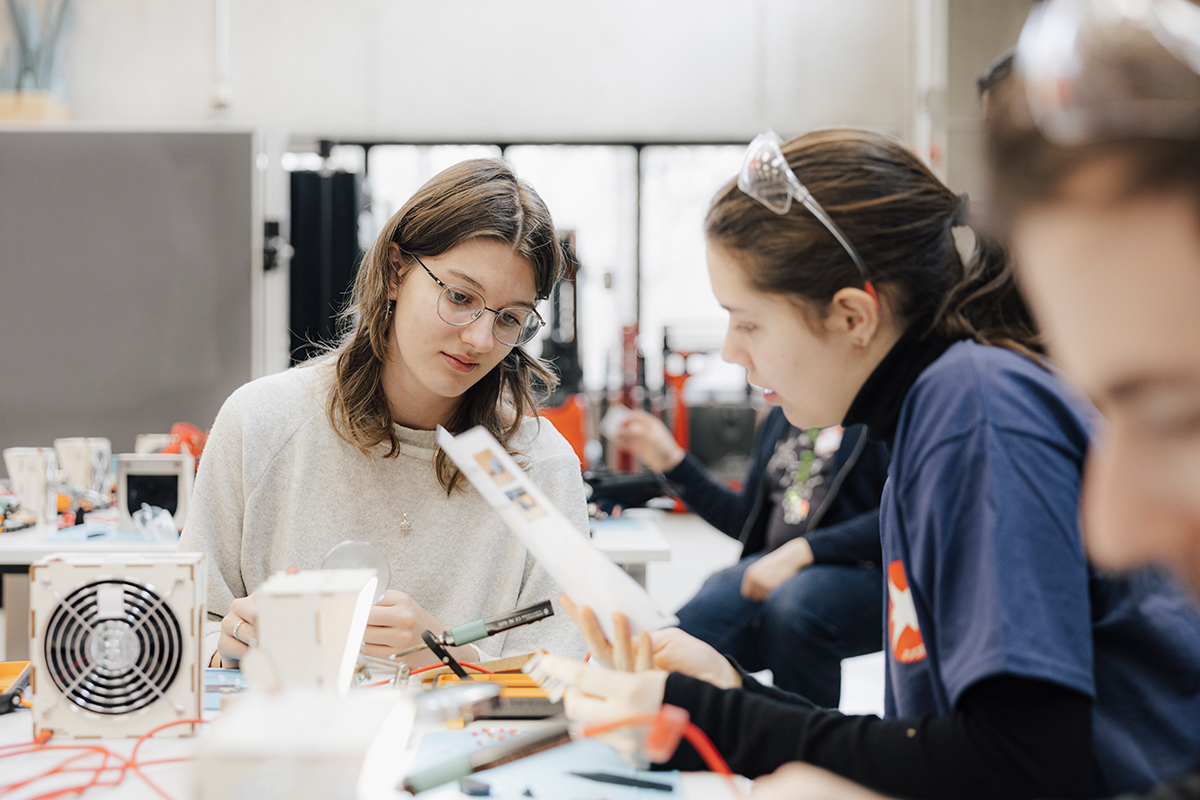
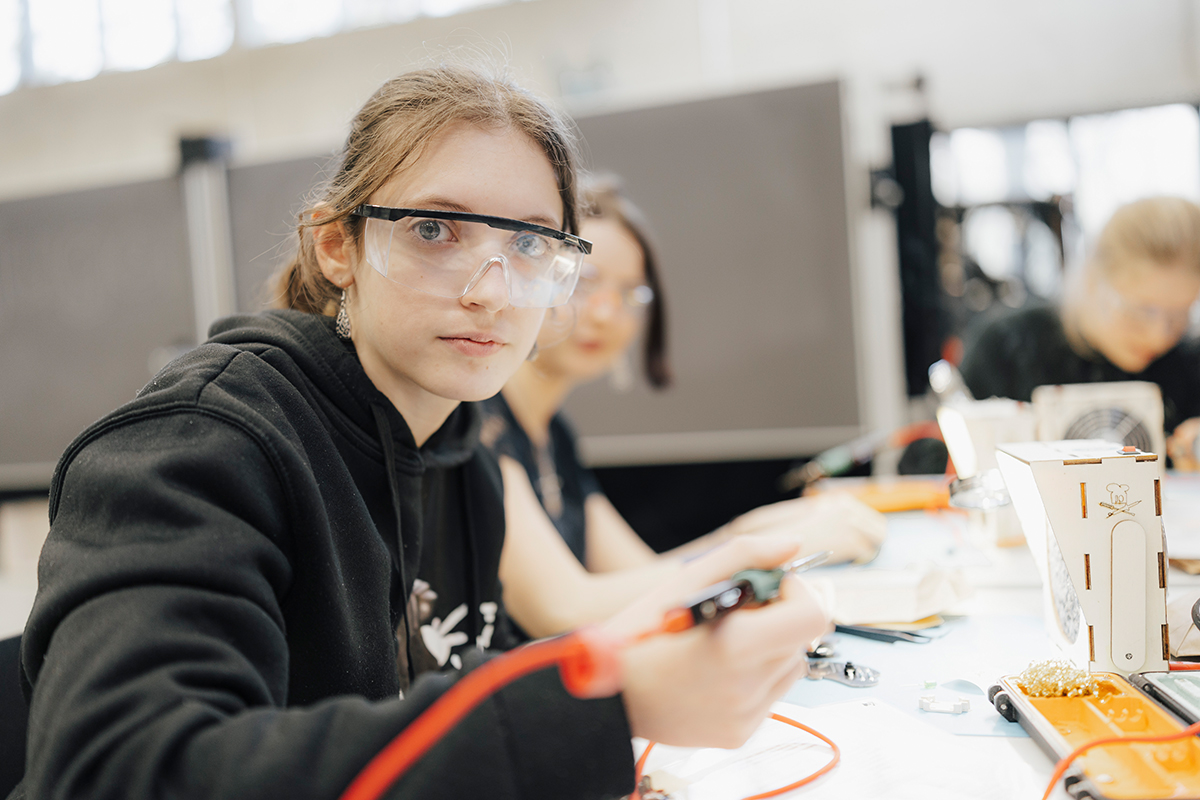
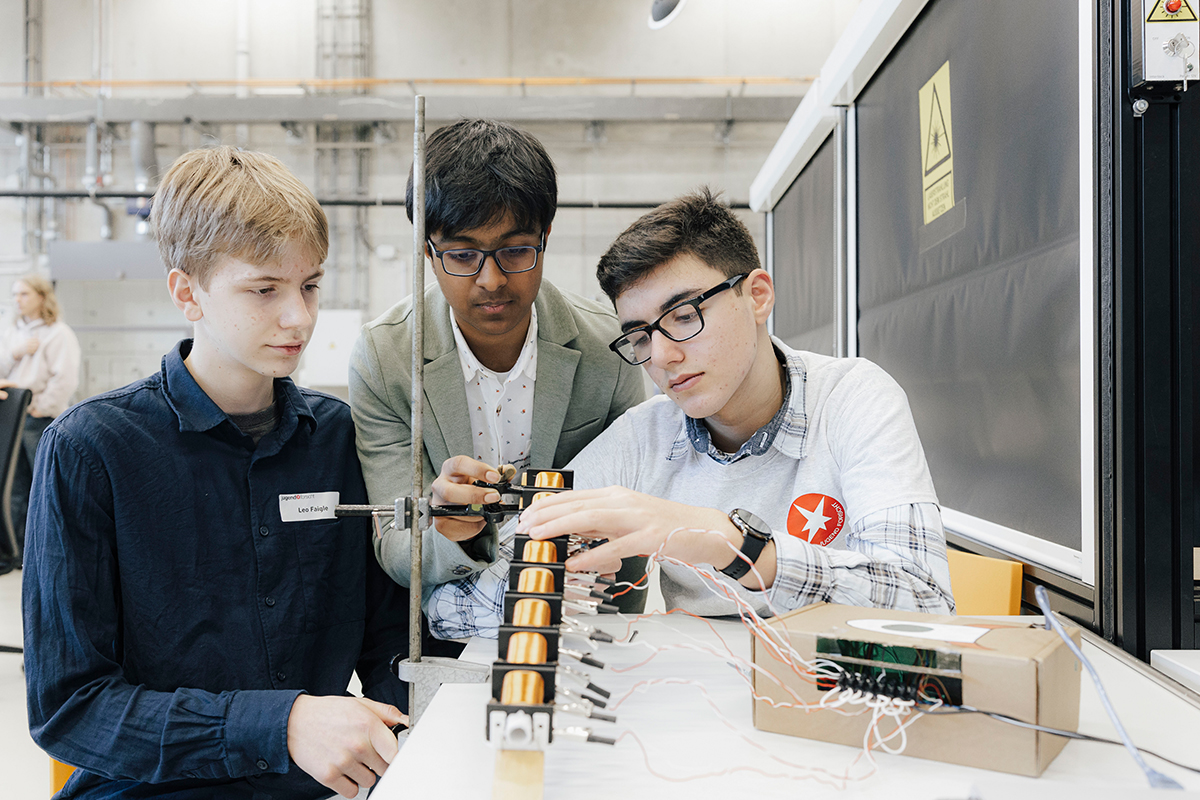
There is a lot of hustle and bustle in the research hall of the Erlangen Center for Astroparticle Physics (ECAP) at FAU. Young people talk about the results of their experiments around displays, while other participants, enthusiasts, parents, and representatives from the press listen intently. Prototypes and research materials are displayed on tables, while posters on bulletin boards provide information about the research process. In one corner of the hall, colorful lights shine: Young people are soldering small lights and metal pictures together. Right next to them, others are concentrating on building miniature ships.
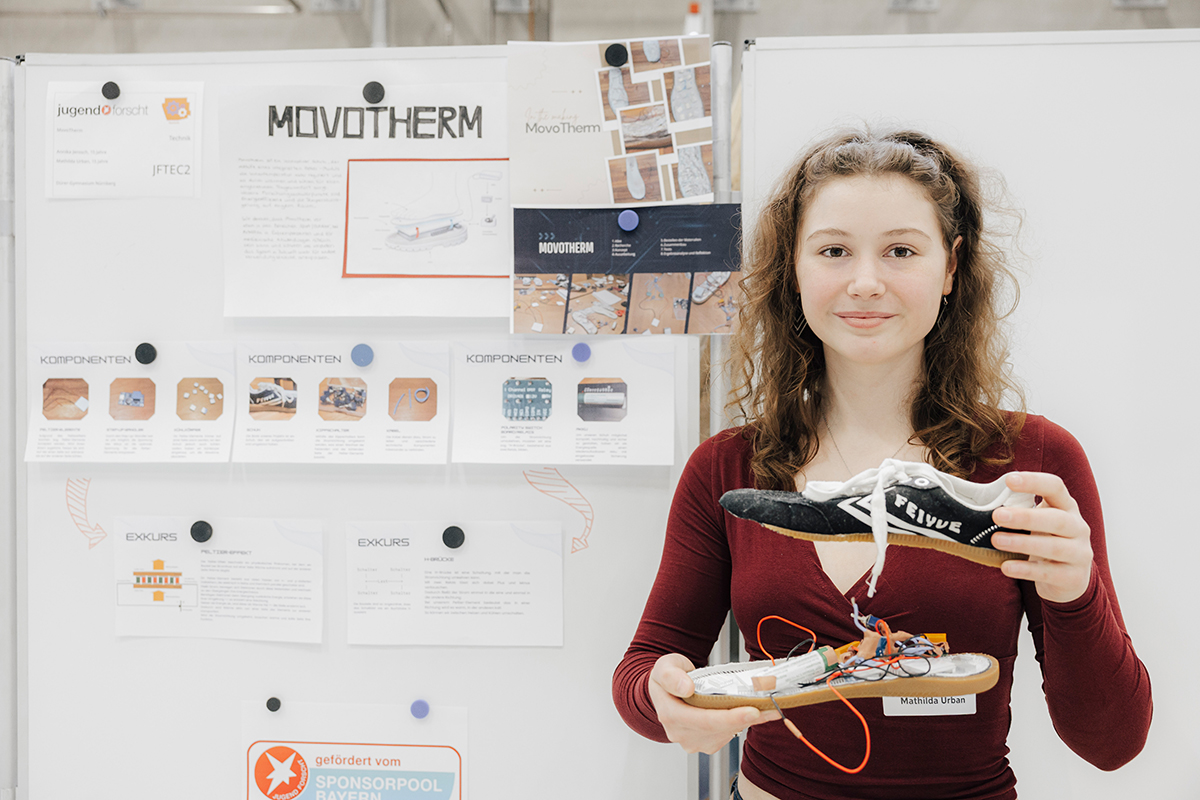
Over the course of two days, the young scientists presented their projects in the ECAP hall. On the first day of the competition, it was the turn of the 15–21-year-olds, and on the second day, the 9–14-year-olds. The research projects included everyday aids such as automatic cat feeders, heated mattresses and shoes, as well as technical innovations such as climate-friendly rocket launch pads and CO2-zinc batteries. The winners of the regional competition for 15- to 21-year-olds qualify for the state competition, and the winners there in turn qualify for the national competition, which takes place in Herzogenaurach.
Reused CO2 and recycled gold teeth
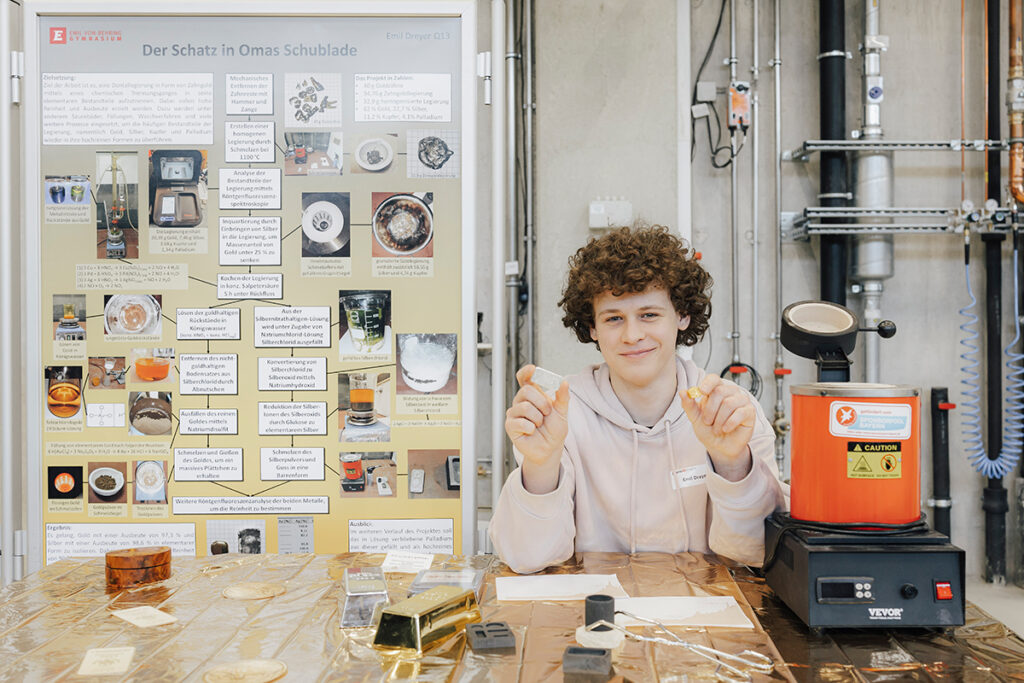
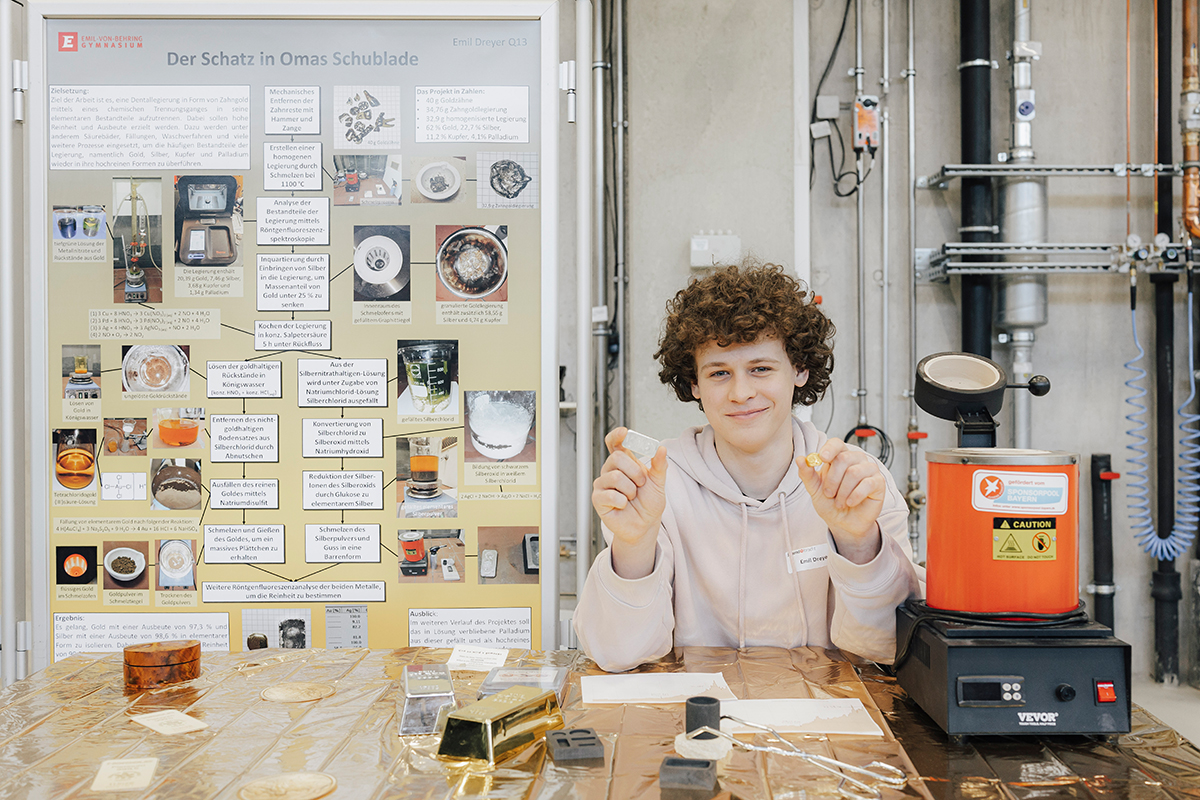
Emil Dreyer proudly displays two lumps of gold and silver at his stand. The 18-year-old obtained the nuggets from his grandparents’ old gold teeth. “During the holidays, I helped my grandmother on her farm. In a drawer, we found a bag with gold teeth in it.” To extract pure gold from the teeth, Emil used an industrial process in his school laboratory. To do this, he used acid baths, precipitation, and washing processes, among other things, to return the alloy to its original components.
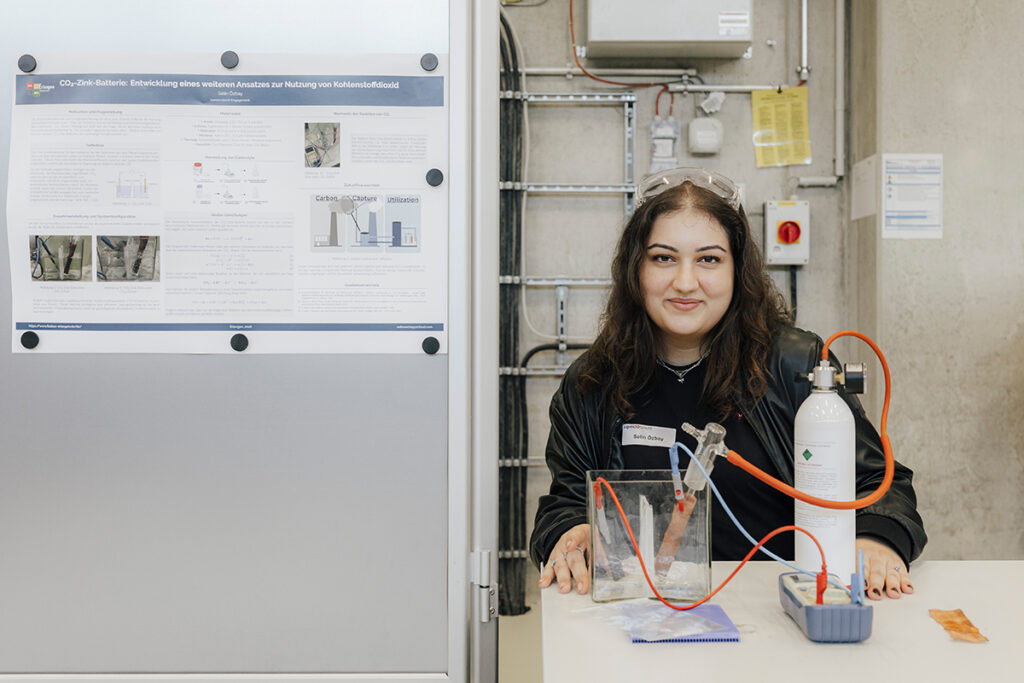
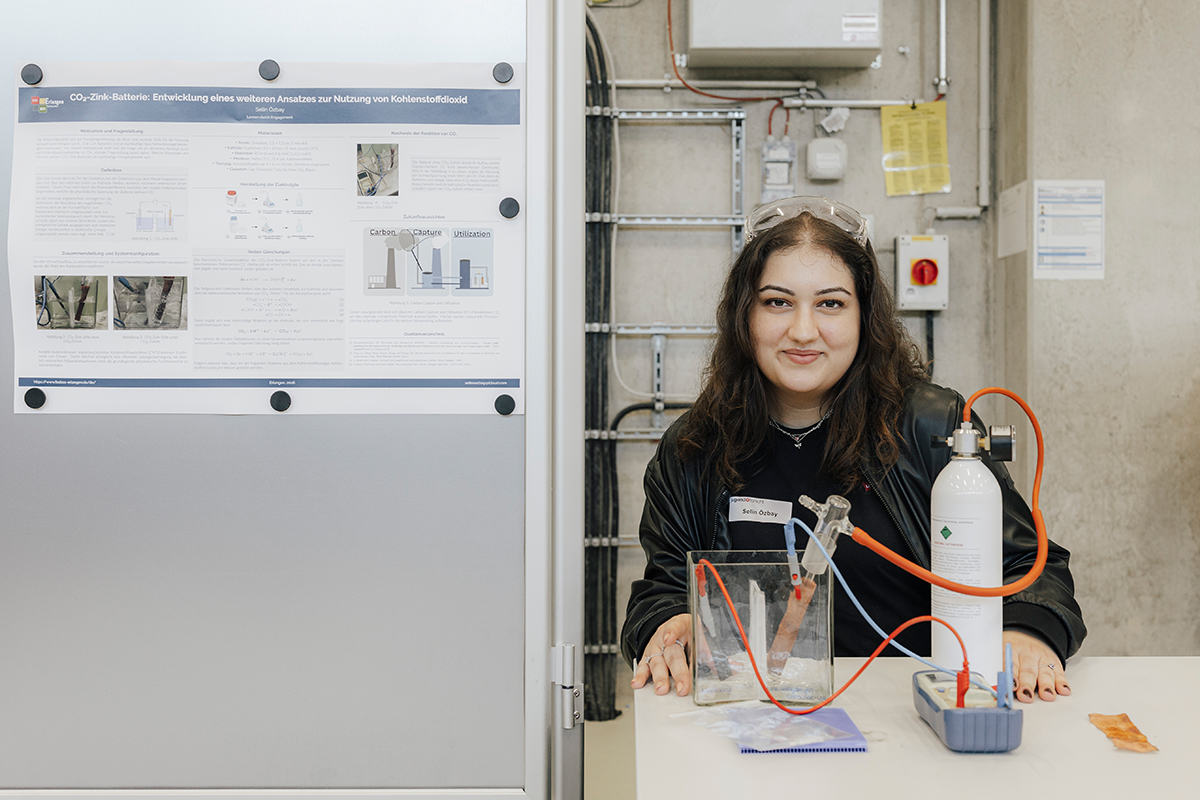
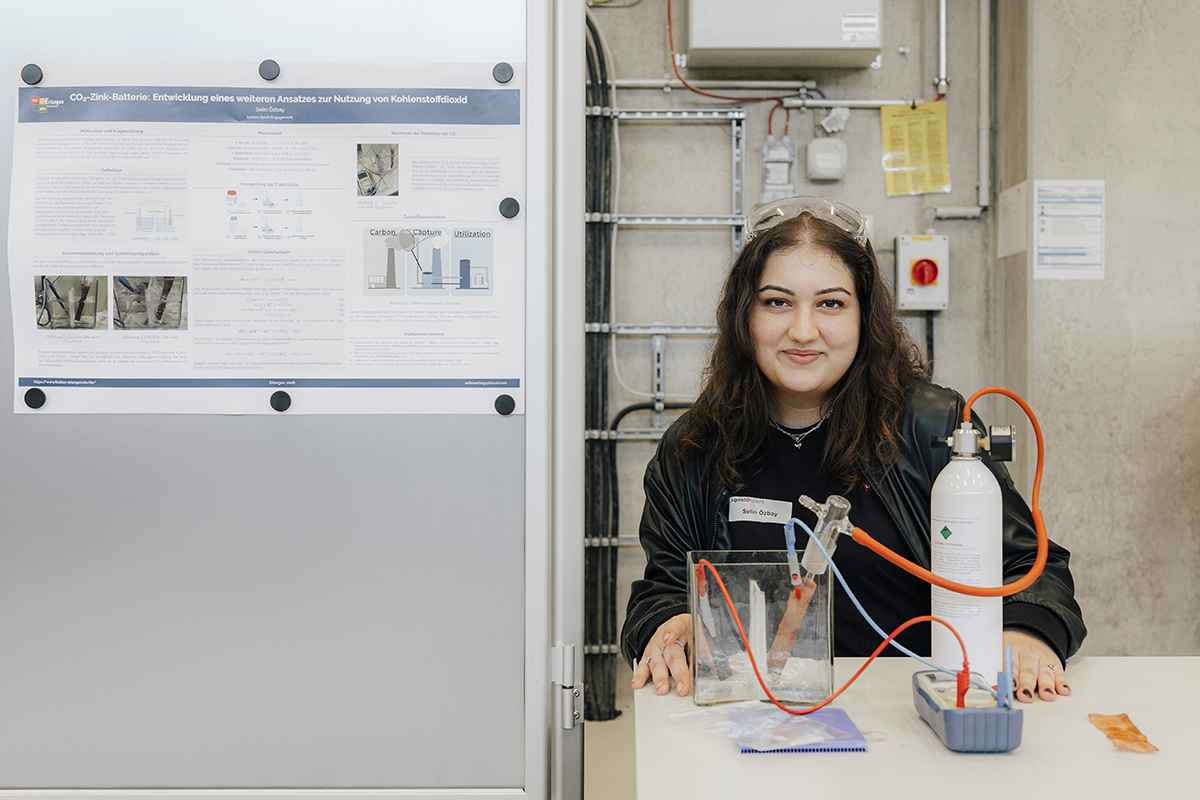
Selin Özbay’s topic is sustainable energy use. A CO2-zinc battery she developed is designed to utilize CO2. The regional competition is not her first time at FAU: The student from the Fachoberschule Erlangen spent a two-week internship at the Department of Physics. “This has made me realize that studying physics is the right choice for me.”
A mammoth task
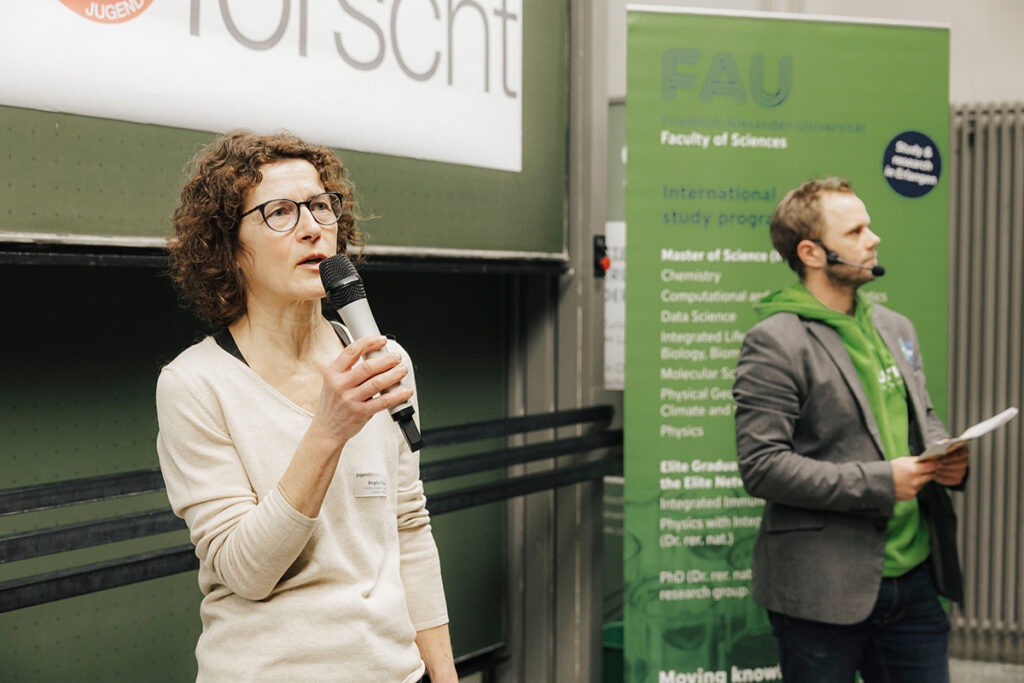
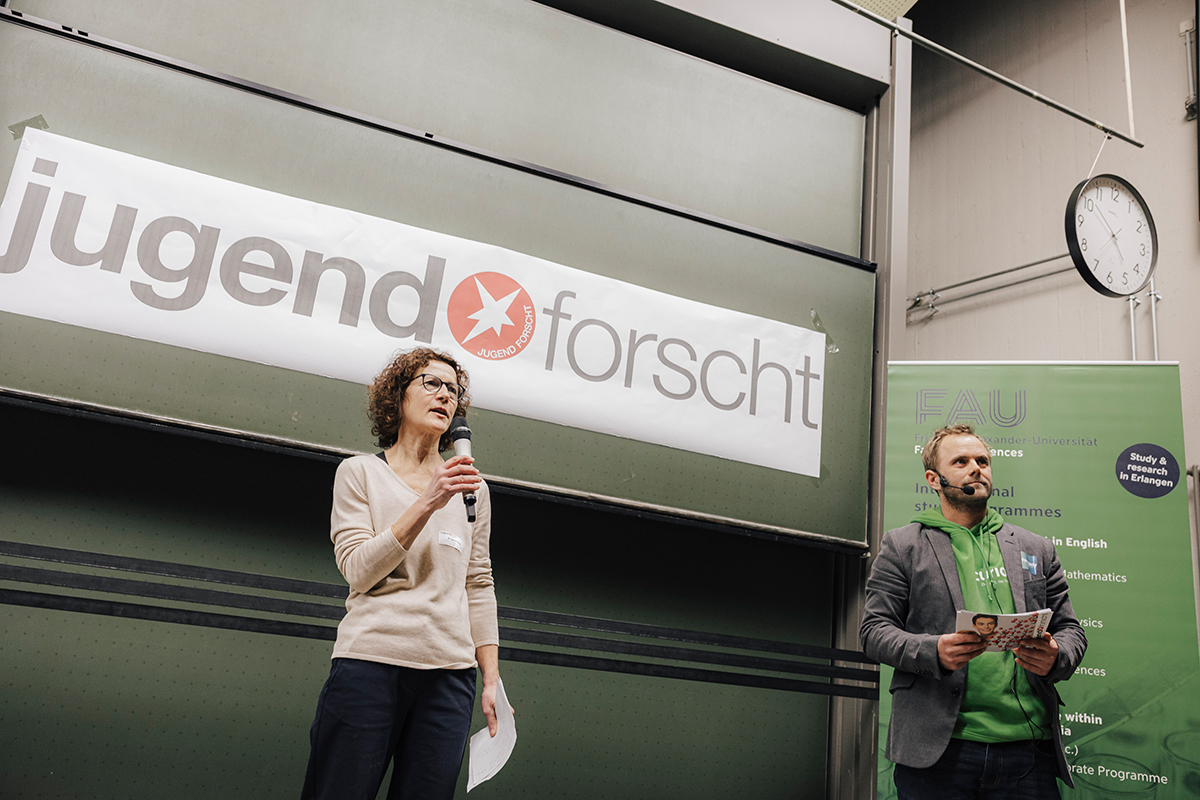
Dr. Angela Fösel is also standing in the hall. She has many different tasks on this day, as in her role as mentor and coordinator, she is the main organizer of the Jugend forscht Erlangen regional competition with competition director Diethard Grießhammer. And that’s not all: She also heads the Erlangen SchülerForschungs-Zentrum (ESFZ) (Erlangen High School Student Research Center) at FAU.
Angela Fösel is a research associate at the Professorship for Physics Education. “The organizational work involved in Jugend forscht often has little to do with physics or science. We arrange catering for the children, find a presenter for the award ceremony, and put together a supporting program,” she explains. Preparations for the regional competition at the end of February begin as early as October: Dr. Fösel looks for a venue, contacts sponsors, and divides the participants into the various competition categories. “The critical phase begins one week before the competition starts. Within a week, we set up tables, bulletin boards, and power outlets for 55 children. And we have to plan how we’re going to move everything from day one to day two.” All children also receive FAU cloth bags with information material, sweets, and FAU merchandise, which Angela Fösel and her team pack. But tackling this mammoth task is worth the effort. “It’s great to see how the young people research their own project ideas, which no one has assigned to them, and the enthusiasm with which they pursue and present these projects,” says Angela Fösel. “There are now so many participants in Middle Franconia that a second Middle Franconian competition is being held in Nuremberg in addition to the competition in Erlangen, starting this year. Many of the participants take part repeatedly; some of the young people in Erlangen competed for the third time in 2026.”
Experimenting from 9 am – 6 pm, five days a week
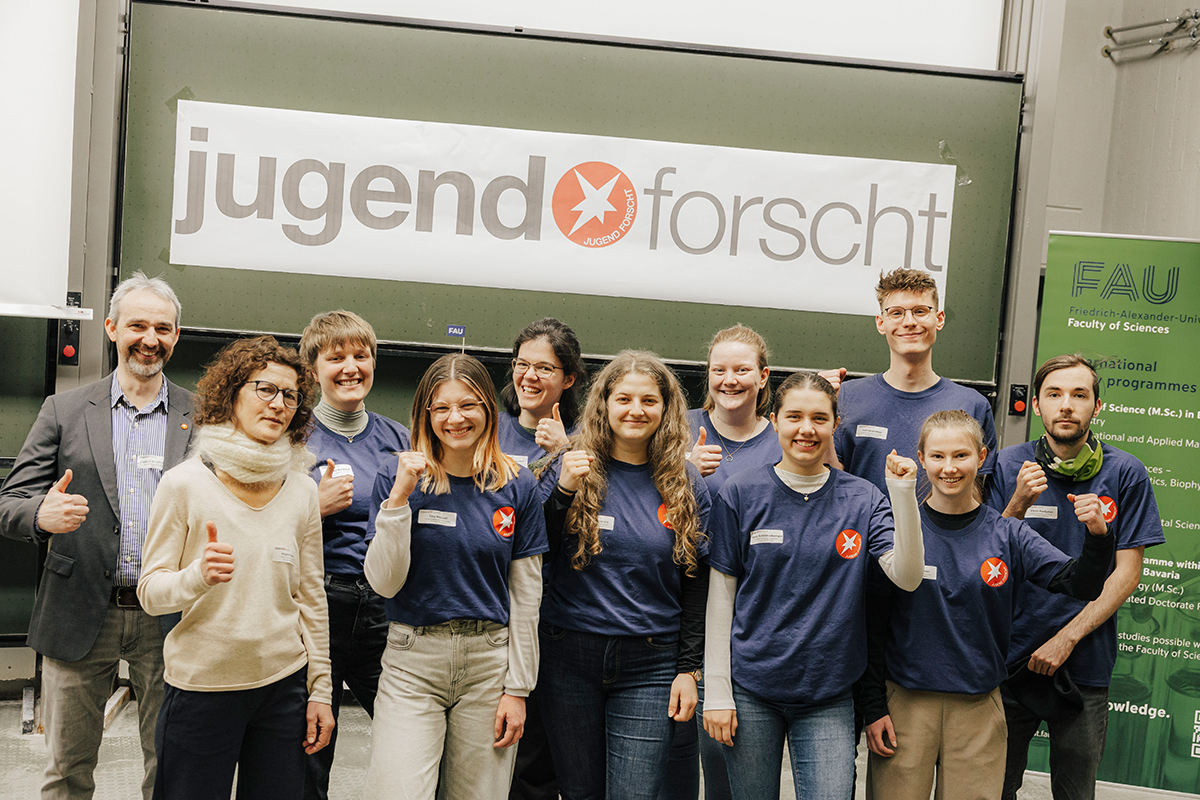
To enable young people to work on their Jugend forscht projects outside of home and school, Angela Fösel and her coworkers from the Physics Department founded the ESFZ in 2009. During the school holidays, students can spend a week there experimenting with their own project ideas in physics and technology. They are supervised by physics students at FAU, most of whom are former participants of the High School Student Research Center. “Many of the young people come back again and again to continue researching their projects,” explains Dr. Fösel, “some have already attended the research camp fourteen times.”
The students have already built functional models of geysers and a pancreas, and they always come up with the ideas themselves. “I think it’s very important to just let young people do their thing. In this respect, we have a unique selling point compared to school laboratories.” With their projects, ESFZ participants have already made it to the national finals of Jugend forscht, and they have also enjoyed success at the German Young Physicist’s Tournament and its international sister tournament. Young people also benefit personally, as Angela Fösel explains: “They receive support for their projects and realize that they are capable of doing something. The participants have an incredible amount of fun while tinkering with their projects.”
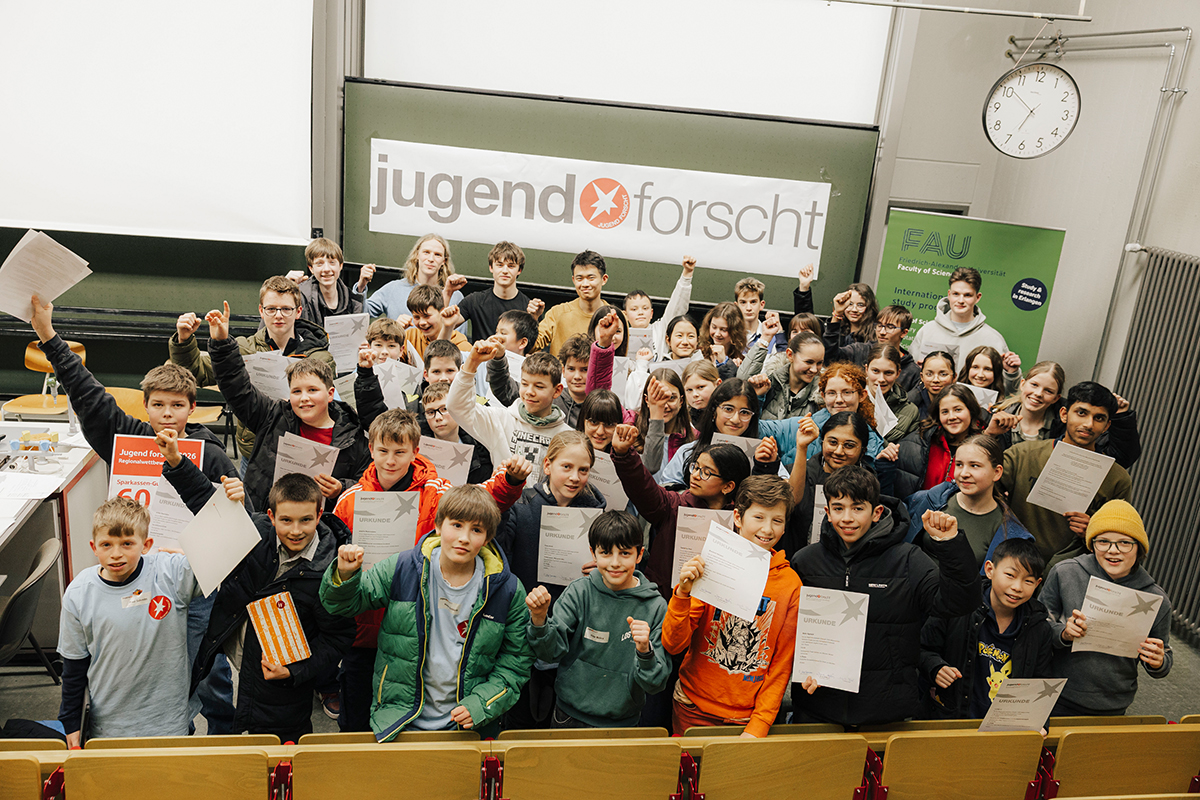
After two long days of competition, the award ceremony takes place in lecture hall A at Biologikum. The rows of seats are packed with young scientists, parents, teachers, and interested members of the public. Angela Fösel awards prizes and certificates to the participants, together with the competition director, the presenter, the Dean of Studies at the Faculty of Sciences, and sponsors. Emil Dreyer is also among the winners. With his project on his grandparents’ gold teeth, he wins first place in the Chemistry category and advances to the state competition. “I’m thrilled, it’s a great honor – all that time in the lab has paid off.”


Further information:
Dr. Angela Fösel
Professorship for Physics Education
Tel.: +49 9131 85-28363
angela.foesel@fau.de
- File Name
- FAU_Jugend forscht_2026_Selin Özbay
- File Size
- 604 KB
- File Type
- JPEG
- File Name
- Jugend forscht
- File Size
- 867 KB
- File Type
- JPEG

- File Name
- FAU_Jugend forscht_2026_Fösel
- File Size
- 661 KB
- File Type
- JPEG
- File Name
- FAU_Jugend forscht_2026_Zukunft
- File Size
- 761 KB
- File Type
- JPEG
- File Name
- FAU_Jugend forscht junior_26_Gewinner
- File Size
- 955 KB
- File Type
- JPEG
- File Name
- FAU_Jugend forscht_26_Gewinnerinnen uind Gewinner
- File Size
- 845 KB
- File Type
- JPEG