
With over 270 degree programs, FAU is among the 15 largest and leading universities for research in Germany. Over 6,000 employees and more than 39,000 students promote a culture of innovation, diversity and passion.
Get to know our newly-appointed professors who are driving forward research with their fresh ideas and creative approaches. Find out more about the people behind our research projects and their career paths, visions, and motivation for a successful academic future.
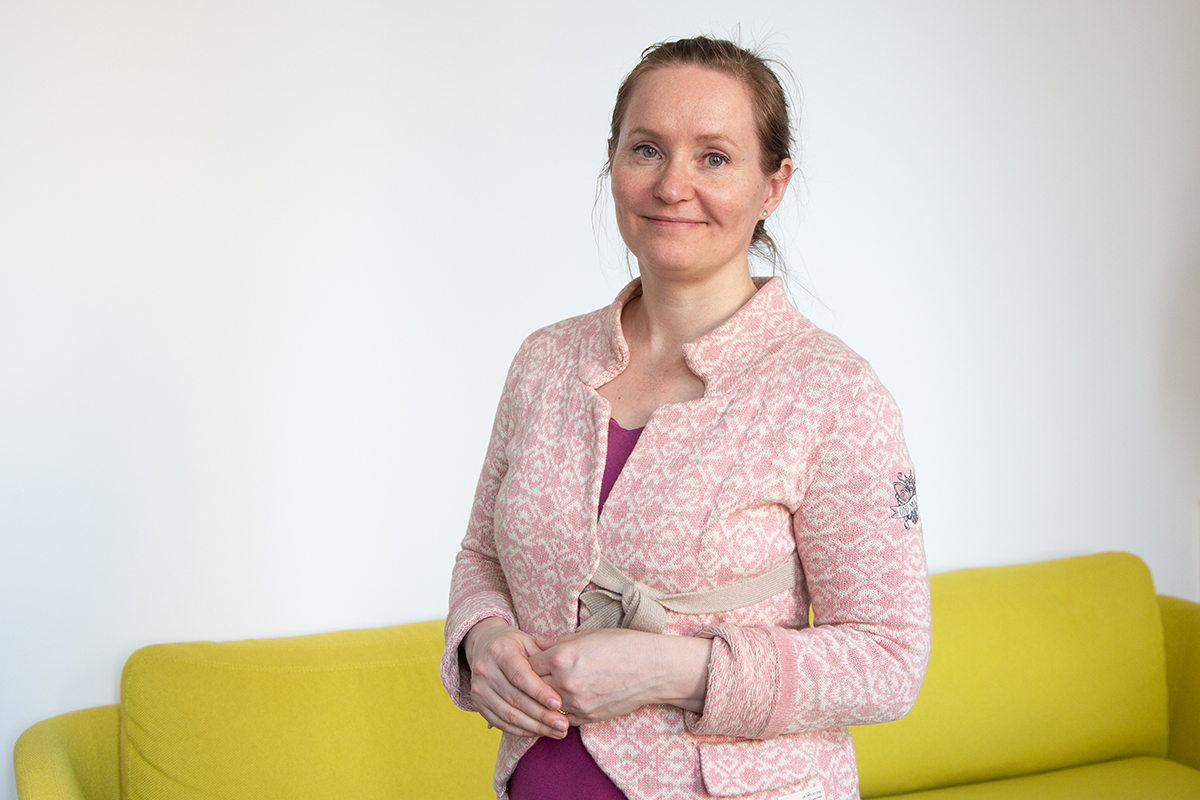
Prof. Dr. Mila Oiva – Professorship for Digital Humanities with a focus on Images and Objects
As a child, she wanted to become Pippi Longstocking – Prof. Dr. Oiva introduces herself.
What is your main area of research?
My current research focuses on studying representations of different worldviews in digitised historical newsreels—short news films screened in cinemas in the twentieth century. I have, for example, analysed changing visual discourses in Soviet newsreels. I am also interested in studying the circulation of audiovisual knowledge and cultural influence across time and space through audiovisual materials, and in developing computational methods for studying them at scale.
Why did you choose this topic?
The exponential growth of digital audiovisual media—from digitised historical film and television programmes to digital platforms such as YouTube, TikTok, and AI-generated content—poses a significant challenge for cultural understanding. While audiovisual culture spans more than a century, our ability to systematically analyse its structures, information flows, and historical patterns remains underdeveloped. This gap stems from the lack of robust methodologies that effectively integrate qualitative and computational approaches, particularly for the analysis of large-scale audiovisual heritage data. To understand where our visual understanding of the world comes from, and how it is shaped, we must be able to examine the formation and circulation of audiovisual information at scale, across national boundaries and over time.
Where were you before coming to FAU?
Before joining FAU, I worked at the Department of Cultural History at the University of Turku, Finland, on the DIGHT-net project, which focuses on digital cultural heritage. Prior to that, I worked at the Cultural Data Analytics Lab (CUDAN) at Tallinn University in Estonia.
Where did you study and what subjects?
I studied Cultural History as my major, specialising in Russian and Polish history, at the University of Turku and the Aleksanteri Institute at the University of Helsinki. During my PhD, I spent a year as a Fulbright Scholar at the University of California, Berkeley, and several months in the Culture Analytics programme at the Institute for Pure and Applied Mathematics (IPAM) at the University of California, Los Angeles.
Which events and activities would you like to take part in in Erlangen and the surroundings?
I am looking forward to becoming better acquainted with Erlangen and its surroundings! There are so many interesting museums, historical and architectural sites, gardens, nature reserves, and cultural events in the area that I am sure there will be plenty to explore and enjoy.
What is your most useful tool as a professor?
I believe that my most useful professor’s utensil is the coffee mug my sister gave me. It is not only that I love coffee and that it keeps me going, but, more importantly, that it symbolises the value of shared moments over coffee or tea. What may seem like a mundane and leisurely habit—chatting with colleagues during a break—surprisingly often leads to important insights and fruitful collaborations.
What did you want to be when you were growing up?
My very first career dream was to become Pippi Longstocking, as I was charmed by the distinctive way she saw the world. Later, someone pointed out that one cannot, in fact, become a fictional character, and I had to revise my plans. I subsequently dreamed of becoming a journalist, a photographer, or a detective. Looking back, I realise that, as a scholar, I am now able to combine elements of each of these dreams in my current work.
Do you have a role model? If so, did they influence your academic or professional career?
I profoundly respect and admire many people, and I have been fortunate to be surrounded by excellent supervisors, teachers, and colleagues. I cannot single out any one individual; rather, from all of them I have learned the importance of questioning our pre-existing assumptions while striving to understand other perspectives.
Have you got any hidden talents?
My secret talent is my ability to knit very colourful, patterned woollen socks, to the delight (or horror) of my family and friends.
Is there something you’ve always wanted to do?
I am an endlessly curious person and have always wanted to learn more about the world, as it never ceases to surprise me!