
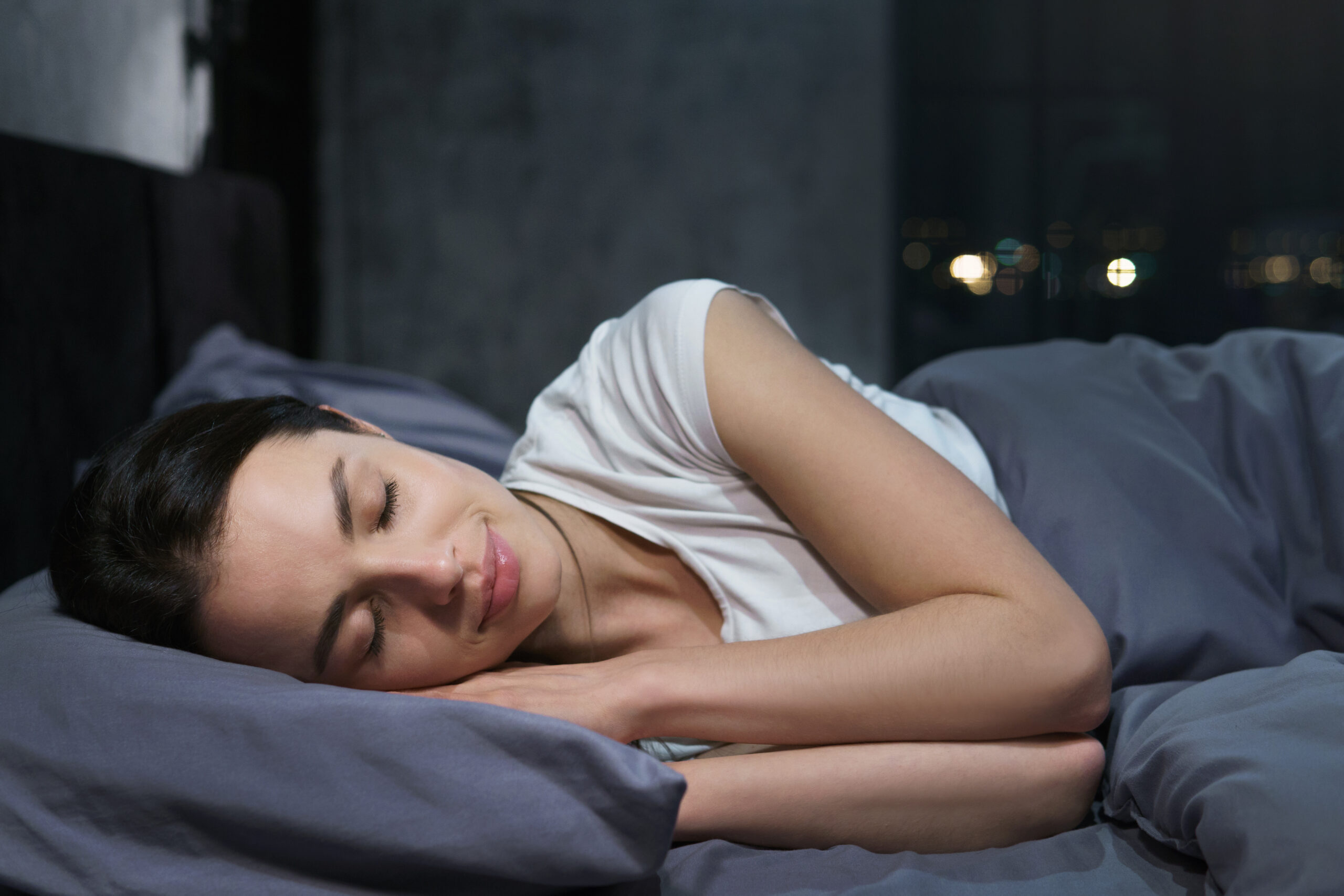
Sleepmaxxing – healthy sleep or dangerous obsession with optimization? A sleep specialist (somnologist) at the Department of Otorhinolaryngology in Erlangen explains
Mouth taping, sleepy-girl mocktail, melatonin spray: The hashtag sleepmaxxing is going viral on social media, especially on TikTok, giving numerous tips and tricks for boosting the quality of your sleep. But what is behind all the hype – and can these viral tips really improve sleep? For World Sleep Day on March 13, 2026, Dr. Judith Abel, somnologist at the Department of Otorhinolaryngology – Head and Neck Surgery at Uniklinikum Erlangen, offers advice and explains what really matters when it comes to healthy sleep.
Dr. Abel, getting down to basics: What does sleep medicine actually mean by “good sleep”?
Sleep quality depends on various different factors: One decisive factor is the length of time we sleep. For many people, seven to eight hours is ideal; however, this can vary greatly from individual to individual. Efficiency also has a role to play: Sleep is less restorative in people who wake up frequently. Ideally, deep and light sleep phases should alternate in a cyclic pattern.
The social media trend sleepmaxxing aims to optimize sleep. What is your opinion?
Generally speaking, it is good to see the topic of sleep gaining more attention. However, constantly trying to optimize your sleep can cause added pressure. There is even a term for this phenomenon: Orthosomnia. Those affected are pathologically fixated on their sleep quality – and that, in turn, leads to sleep problems.
A common tip on social media is “mouth taping,” which involves taping your mouth shut at night with a plaster to encourage nasal breathing. What do you think about that?
Nasal breathing can actually improve sleep quality because the nose filters, humidifies, and warms the air. However, there is no convincing scientific evidence in favor of mouth taping. For people with previously undiagnosed sleep apnea, this trend can even be dangerous.
Can certain foods improve sleep, such as tart cherry juice with magnesium – also known as the “sleepy girl mocktail”?
Although tart cherry juice contains melatonin, a hormone that influences the sleep–wake cycle, the amount present in the juice is very small. Studies show only very small effects. Magnesium, in turn, is involved in melatonin production. Research in this area is still limited, but it suggests that sufficient magnesium intake can make it easier to fall asleep, especially for people with deficiency symptoms or older individuals.
Melatonin sprays and gummy bears are also available. Do they help?
The problem with over-the-counter products is that dosage and quality can vary greatly. Melatonin can be useful in the short term, for example, to combat jet lag. I don’t recommend long-term treatment, however.
Another trend is the “5 am club” – i.e., the advice to get up as early as possible. Is that really healthier?
No, because the best time to get up varies from person to person. We distinguish between two chronotypes: “larks” and “owls.” While “larks” are particularly productive in the morning, “owls” only become active in the evening – but sleep longer as a result. More important than getting up very early is getting up at a regular time – even on weekends.
Many people use fitness watches that also analyze sleep. How reliable is this data?
Modern devices can usually measure sleep duration relatively reliably. However, the information on the individual sleep phases is often still inaccurate. If you suspect you may be suffering from a sleep disorder, an examination in a sleep laboratory remains the most reliable method for making a diagnosis.
What evidence-based tips are available for better sleep?
There are several scientifically proven recommendations for getting a good night’s sleep. The bedroom should be quiet, dark, and fairly cool – ideally between 16 and 18 degrees Celsius. You should also avoid eating heavy meals in the evening and refrain from consuming caffeinated drinks six to eight hours before going to bed. Consuming alcohol is not beneficial to helping you fall asleep either. Evening rituals such as reading or relaxation exercises, as well as keeping to a regular routine for the times you go to bed and get up in the morning can help. If you still find yourself lying awake for longer than 15 to 20 minutes at night, you should briefly get up and do something calm. This helps prevent the bed from being associated with lying awake or stress.
What advice do you give people with persistent sleep problems?
If symptoms persist for an extended period – such as severe daytime fatigue, microsleep episodes, or noticeable pauses in breathing – you should seek medical evaluation. Family doctors or ENT practices can conduct initial screening tests or refer patients to a sleep laboratory if necessary.

Further information:
Dr. Judith Abel
Uniklinikum Erlangen
Phone: + 49 9131/85-33156
judith.abel@uk-erlangen.de