
Art History (B.A.)
Are you interested in the other features of the Tower of Pisa, beside the fact that it leans to one side? Or why Michaelangelo’s David was placed in front of Palazzo Vecchio in Florence? Why Dan Brown’s theories about mysterious ciphers in Leonardo’s Last Supper leave us completely cold? Or why the discussion about the Mona Lisa’s smile is long out of date? Then studying Art History may be just the thing for you.
During the degree program, we not only examine, describe and analyze paintings, sculptures and architecture. We also decipher motifs and classify works of art. Different research methods and a wide-ranging knowledge of objects enable students to access lesser-known works.
Fact Sheet
- Degree
- Bachelor of Arts (B.A.)
- Admission
- No Admissions Restrictions
- Duration of studies
- 6 semesters
- Teaching language
- completely in German
- Faculty
- Faculty of Humanities, Social Sciences, and Theology
- Start of degree program
- Winter semester
- Number of students
- 250-600
- Special ways to study
- 2-subject Bachelor, Part-time degree program
- Special features
-
- Students can participate in the Erasmus exchange program at our partner universities in Bern, Córdoba, Leiden, Milan, Oviedo, Pisa, Poitiers and Sienna
- Workshops and lectures offered by international cooperation partners
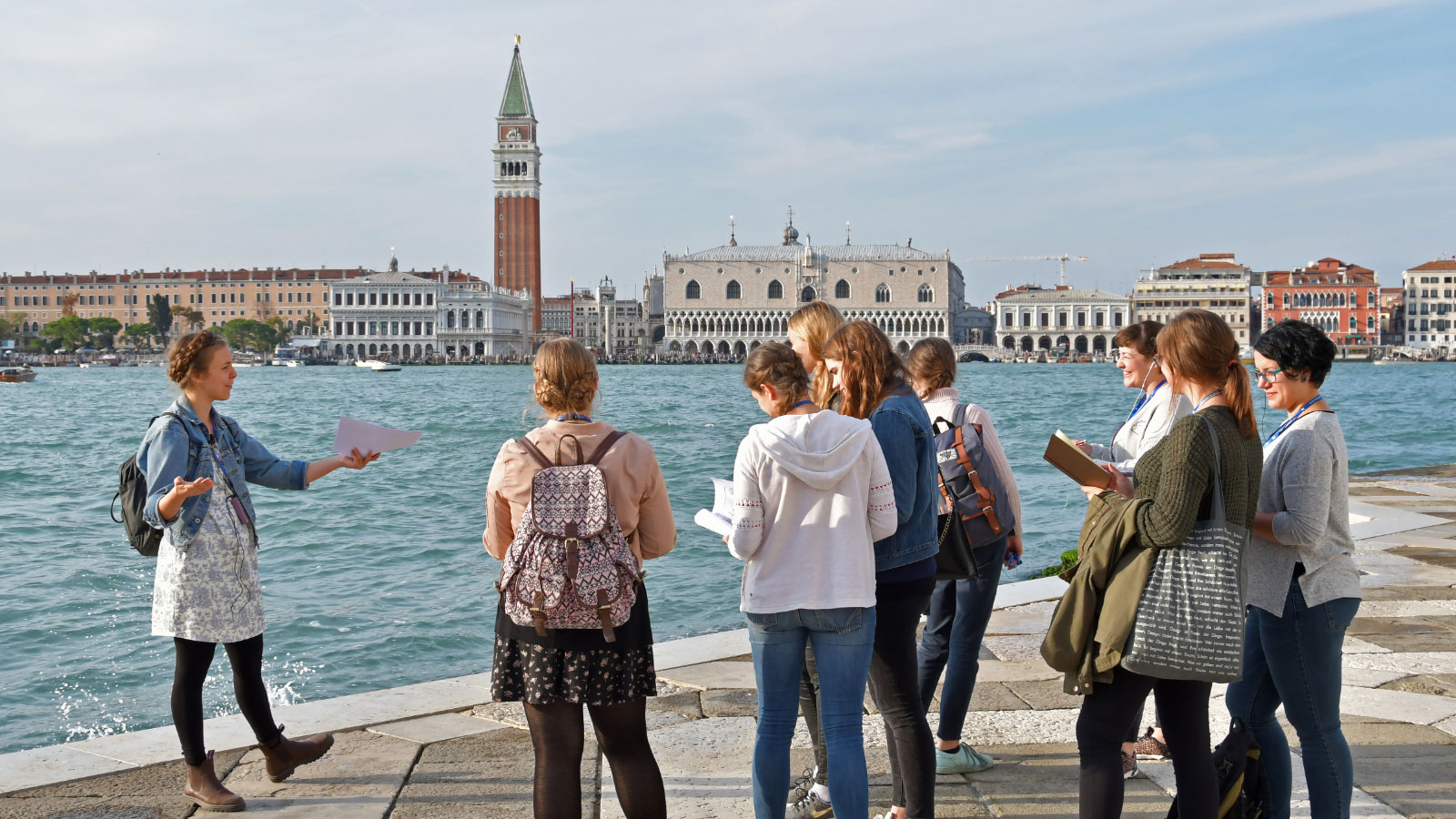
- International field trips
What is the degree program about?
Art History
- is a humanities subject that deals with works of art from late antiquity to the present (investigating the origin, form, content and meaning, chronological and geographic classification)
- is dedicated to all genres of art (architecture, sculpture, painting, graphic arts, decorative arts, photography, new media, etc.)
- addresses early modern, modern, and contemporary European art as well as art in non-European countries
- deals with artists and art theory as well as with the interpretation and perception of works of art
- has points of contact with many other academic disciplines, such as archaeology, book studies, history, literary studies, media and theater studies, philosophy and theology
Art History as a first or second subject consists of eight modules – teaching and learning units that are self-contained with examinations taken during the program – amounting to 45 ECTS credits; these modules teach fundamental specialist knowledge of medieval, modern and contemporary art history as well as the ability to conduct independent academic work, including using the relevant methods. When taken as the first subject, eight additional compulsory electives with a total of 45 ECTS enable students to develop their individual profile (second subject: five modules with a total of 25 ECTS). Students taking Art History as their first subject also complete 20 ECTS credits related to key qualifications aimed at practical skills. Of these, 10 ECTS credits must be taken in the compulsory electives in art history, and a further 10 ECTS credits can be chosen freely from the wide range of other subjects offered by FAU.
Students acquire
- well-founded subject-related skills: knowledge of time periods, the most important artists and works, and artistic techniques, as well as of important monuments and museums with a special emphasis on the Nuremberg metropolitan region.
- fundamental methodological skills in art history, history, and cultural studies: formal description, content analysis, social history, philosophy of art, media history, and visual studies.
- the relevant media skills: searching for, preparation, and evaluation of visual and textual sources, especially digital images, and working with digital learning platforms.
- useful communication and presentation skills: considered and differentiated use of language and subject-specific terminology in spoken and written form with regard to the communication and presentation of visual phenomena in different media.
FAU’s Art History degree program is suitable for students who
- have a pronounced interest in art, culture and visual media
- are interested in the historical and intellectual contexts of art
- wish to read academic texts critically and in great detail
- would like to learn to understand the world and its history in coherent categories
- have good observation skills
- are interested in other related subjects (interdisciplinary approach)
- enjoy going to exhibitions and traveling
- are confident in speaking in front of other students.
Studying Art History does not just involve looking at pictures; writing and interpreting texts is equally as important. Art History is a degree program that requires active participation (field trips, presentations, visits to exhibitions). The degree program cannot be completed without a certain level of discipline as careful preparation and follow-up is required.
Our institute:
- is rich in tradition with over 100 years of history with close connections to museums and cultural institutions
- has its own library and media library
- has a broad range of courses covering topics and methods from late antiquity to contemporary art
- has freelance teaching staff from museums and the field of monument conservation
General information about the degree program:
- Students can choose a second subject from a range of subjects in the humanities and social sciences that is unique in Germany
- Research-oriented teaching and research-based learning
- Digital learning opportunities
- Teaching units with practical components (museums, monument preservation)
- Intensive and individual support due to a manageable number of students in lectures and seminars
- Provides students with the opportunity to form their own academic profile due to a strong range of compulsory electives
Practical orientation:
- Study days
- Study of original works of art over several days
- Internships
- Close collaboration with the university’s own collection of prints and drawings
The career fields listed below are only a selection of potential careers that are open to art historians. These include:
- Collections and exhibitions, museums (curator)
- Art and cultural institutions
- Public administration, private foundations and associations
- Journalism, publishing, communication
- Public relations, event management
- Monument preservation
- Art trade and auction houses
- Archives and libraries
- Academic areas: Research and teaching
- Tourism
- Cultural and art education
Possible combinations without overlaps
- Archaeological Sciences
- Book Studies
- Business and Economics
- Chinese Studies
- Cultural History of Christianity
- Education
- English and American Studies
- German studies
- Hispanic Studies
- History
- Indo-European and Indo-Iranian Studies
- Islamic Religious Studies
- Italian Studies
- Japanese Studies
- Latin Philology
- Oriental Studies
- Philosophy
- Political Science
- Scandinavian Studies (BA)
- Theater and Media Studies
With these subject combinations, there are generally no overlaps in the timetable.
Possible overlaps in the timetable
- Computational Linguistics
- Digital Humanities and Social Sciences
- French Studies
- Geography: Cultural Geography as a two subject Bachelor's degree program
- Greek Philology
- Medieval Latin and Neo-Latin
- Sociology
If you combine these subjects, individual courses may overlap in your timetable. For this reason, you can only combine the following subjects with your chosen subject after a consultation. Students are responsible for ensuring that the combination can be studied and that the deadlines set out in Section 11 of the ABMStPOPhil are met. When enrolling, proof of a corresponding consultation with the Central Student Advisory Service or the Student Service Center (Faculty of Humanities, Social Studies, and Theology) must be submitted.
Admission Requirements and Application
The following information is intended for German applicants as well as domestic applicants with foreign educational qualifications. Different regulations and deadlines may apply to international prospective students.
Admission
- 1st semester: No Admissions Restrictions
Application deadline
- Winter semester: 30.09.
- Summer semester: not possible
Language skills
- Demonstrate sufficient proficiency in two foreign languages, including English, by the end of the 4th semester.
- German language skills for international applicants: DSH 2 (written 2 / oral 1) or equivalent
Details and notes
The application deadline for the winter semester for international applicants is July 15th.
In addition to the general qualification for university entrance (Abitur), there are other access options for studying at FAU.