
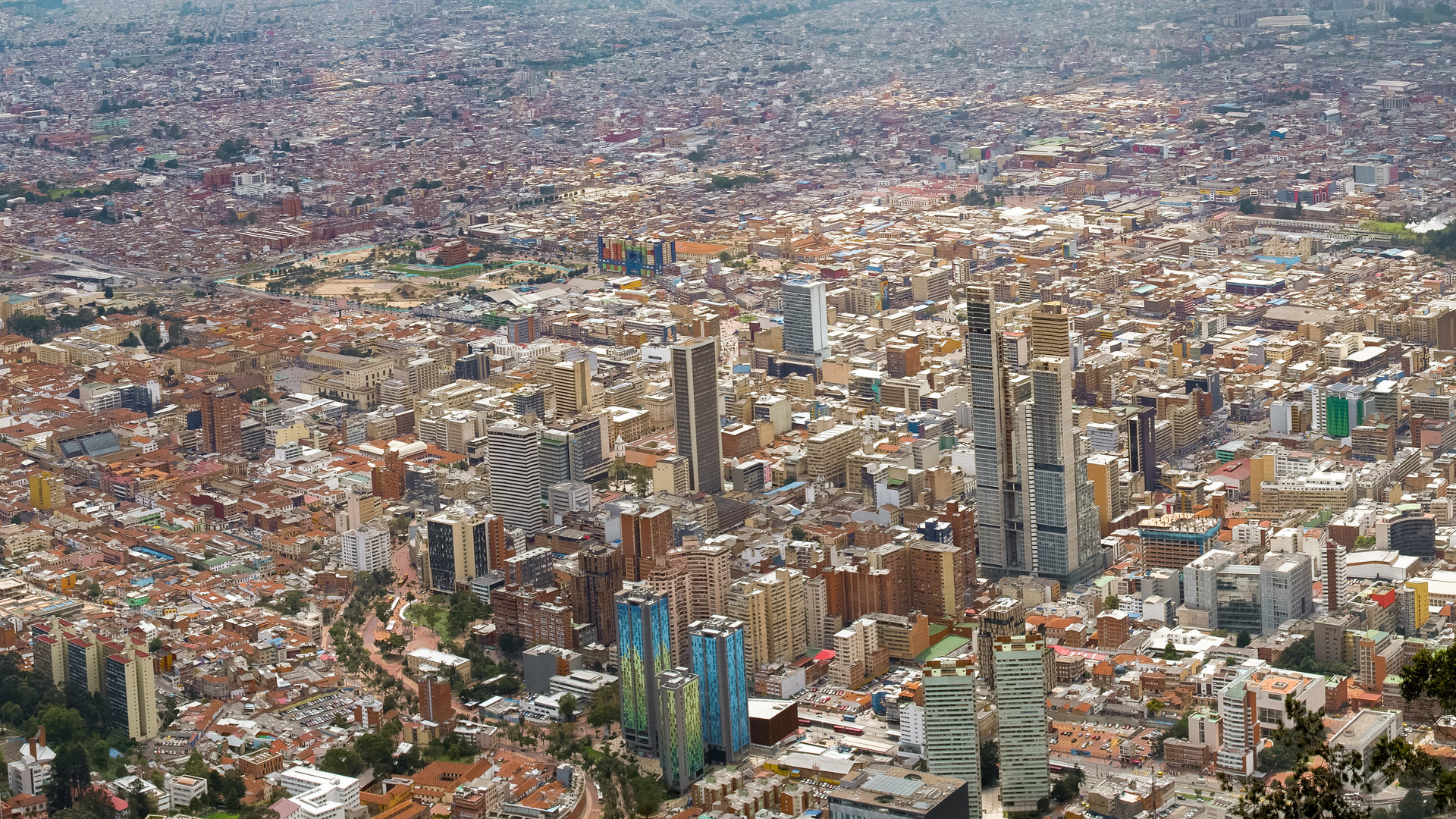
Geography: Cultural Geography (B.A.)
In the study of geography, the focus is on understanding social developments and natural processes in their spatial dimensions. Students can look forward to a wide range of subject areas that use a number of different methods: cartography, observations, interviews, GIS. Alongside cultural geography, students can choose from a wide range of electives, such as economics, sociology, political science or a language (students must decide to take one of these electives).
Fact Sheet
- Degree
- Bachelor of Arts (B.A.)
- Admission
- No Admissions Restrictions
- Duration of studies
- 6 semesters
- Teaching language
- completely in German
- Faculty
- Faculty of Sciences, Faculty of Humanities, Social Sciences, and Theology
- Start of degree program
- Winter semester
- Number of students
- 50-150
What is the degree program about?
Ecological crises and environmental problems, globalization and regionalization, migration, intercultural communication, and urban and regional development are just a few examples of socially relevant topics covered when studying geography at university.
Students deal with the description, explanation and interpretation of social and natural phenomena and their interactions in a spatial perspective. They face the challenge of understanding and explaining social and ecological change as well as the complex interactions of humans with their environment.
In their studies, they address causes and effects at global and local scales. They gain the skills they need to participate actively and competently in solving spatially related social and ecological problems.
Cultural Geography also explores societies and the spatiality of human activity.
The study of cultural geography is divided into three phases. In the first phase of study (first year), students acquire basic knowledge of spatial issues concerning the human-environment relationship as well as basic knowledge of important subfields of geography and in a first elective subject.
In the second study phase, which is completed from the third to the fourth semester, students expand their specialized knowledge and, in particular, gain methodological skills (such as GIS, empirical social research, statistics).
In the one subject degree program, students gain further knowledge in the first elective and acquire basic knowledge in at least one other elective. In the third study phase (fifth and sixth semester), students specialize further in regional and thematic aspects, and acquire the skills they need to take a problem-solving approach by applying methodical knowledge. Finally, students continue to acquire knowledge in their electives. Students are encouraged to start conducting independent scientific work.
Your degree program will take you on field trips to a wide range of destinations across the globe. Costs will be incurred depending on the destination.
Cultural Geography as a one subject Bachelor’s degree program
The degree program provides in-depth specialized academic training in geography (with a focus on cultural geography) worth 130 ECTS credits (including Bachelor’s thesis). 20 ECTS credits for career-oriented key qualifications are distributed across various modules and are taught in the context of subject-related content.
A further 10 ECTS credits are awarded for an external placement related to a professional field, lasting at least 6 weeks, and 40 ECTS credits for at least two electives. One of these electives must be political sciences, economics, sociology or a language. Students must study one elective subject worth at least 20 ECTS credits, and one worth at least 10 ECTS credits. Please refer to the information for students on the Institute of Geography’s website for an updated list of all subjects that are currently available.
Basic knowledge is imparted in particular in the following areas:
- Sound knowledge of cultural and social theory
- Theories of spatial systems
- Dynamics of spatial organization of societies and institutions
- Geographical development research
- Intercultural interaction and communication
- Human-environment relations
- Spatial action orientation
- Opportunities and risks of globalization
- Specialized knowledge in selected topics and regions
- Discourses on cultures and cultural space constructs
- An interest in all current issues concerning society and the environment, also going beyond the topics covered in lectures and seminars
- A willingness to take a critical approach and practice networked thinking instead of learning by rote
- A fascination with “the outdoors”
- Modern scientific and methodological education
- Tried and tested and innovative approaches to teaching
- Opportunity to learn communication and intercultural skills
- Modern scientific and methodological education
- Wide range of field trips on offer, focus on practicing geography “in the field”
Geography is at the interface of science, the humanities and social sciences. As you will develop strong methodological skills during the degree program and also study related subjects, there are a wide range of possible careers. By choosing specializations during the degree program you can increase your chances on the job market.
Geographers often work in town planning, regional planning or traffic planning, at energy companies or in market research.
Further possible areas of work are:
- Public administration
- Real estate
- Economic development
- Development cooperation
- Specialist publishers/journalism/PR
- Economic development
- A number of other professions that expect professional skills relating to society and the environment
Admission Requirements and Application
The following information is intended for German applicants as well as domestic applicants with foreign educational qualifications. Different regulations and deadlines may apply to international prospective students.
Admission
- 1st semester: No Admissions Restrictions
Application deadline
- Winter semester: 30.09.
- Summer semester: not possible
Language skills
- German language skills for international applicants: DSH 2 (written 2 / oral 1) or equivalent
Details and notes
The application deadline for the winter semester for international applicants is July 15th.
In addition to the general qualification for university entrance (Abitur), there are other access options for studying at FAU.