
Media Science (M.A.)
The media world is a constantly growing and dynamic field that shapes and influences our everyday lives. The Master’s degree program in Media Studies offers the opportunity to view and analyze this complex field from different perspectives. Through an interdisciplinary approach, students not only learn current media science theories, but also acquire practical skills in dealing with digital media and new technologies. Graduates are thus ideally equipped to work successfully in a wide range of professional fields such as journalism, marketing or public relations.
Fact Sheet
- Degree
- Master of Arts (M.A.)
- Admission
- Qualification assessment
- Duration of studies
- 4 semesters
- Teaching language
- completely in German
- Faculty
- Faculty of Humanities, Social Sciences, and Theology
- Start of degree program
- Winter semester
- Number of students
- 1-50
- Special ways to study
- Part-time degree program
What is the degree program about?
Whether photography, film, television, series, video, whether analog or digital images – as a decidedly research-oriented course of study, the Master’s degree in Media Studies aims to impart methodological, theoretical and analytical knowledge about (audio-)visual media. Technical image media and their historical predecessors are examined in their cultural, social and aesthetic dimensions, with a particular focus on the interconnections between individual (audio-)visual media and their practices. From handcrafted image artifacts to the image forms of the Internet, the course deals with a broad range of phenomena of visual cultures in both synchronic and diachronic perspectives.
The program can be completed on a full-time or part-time basis. It consists of ten modules that build on each other. The basic modules create a common starting point for all students in the areas of theory, history and analysis. This careful exploration of the state of research is then combined with theory-oriented in-depth seminars and courses on practice and presentation.
Modules 5 to 8 serve to deepen and specialize by systematically reflecting on historical and present-oriented issues as well as the digitalization of society. Module 9 complements the research-oriented approaches with practice-related components and contemporary forms of media-supported knowledge presentation, thus strengthening the theory-practice links.
The profile of Erlangen Media Studies is characterized by a clear focus on visual media in both analog and digital image cultures. The focus is on a media-comparative approach, which takes into account the current tendencies to dissolve boundaries and the interconnections in and between individual media.
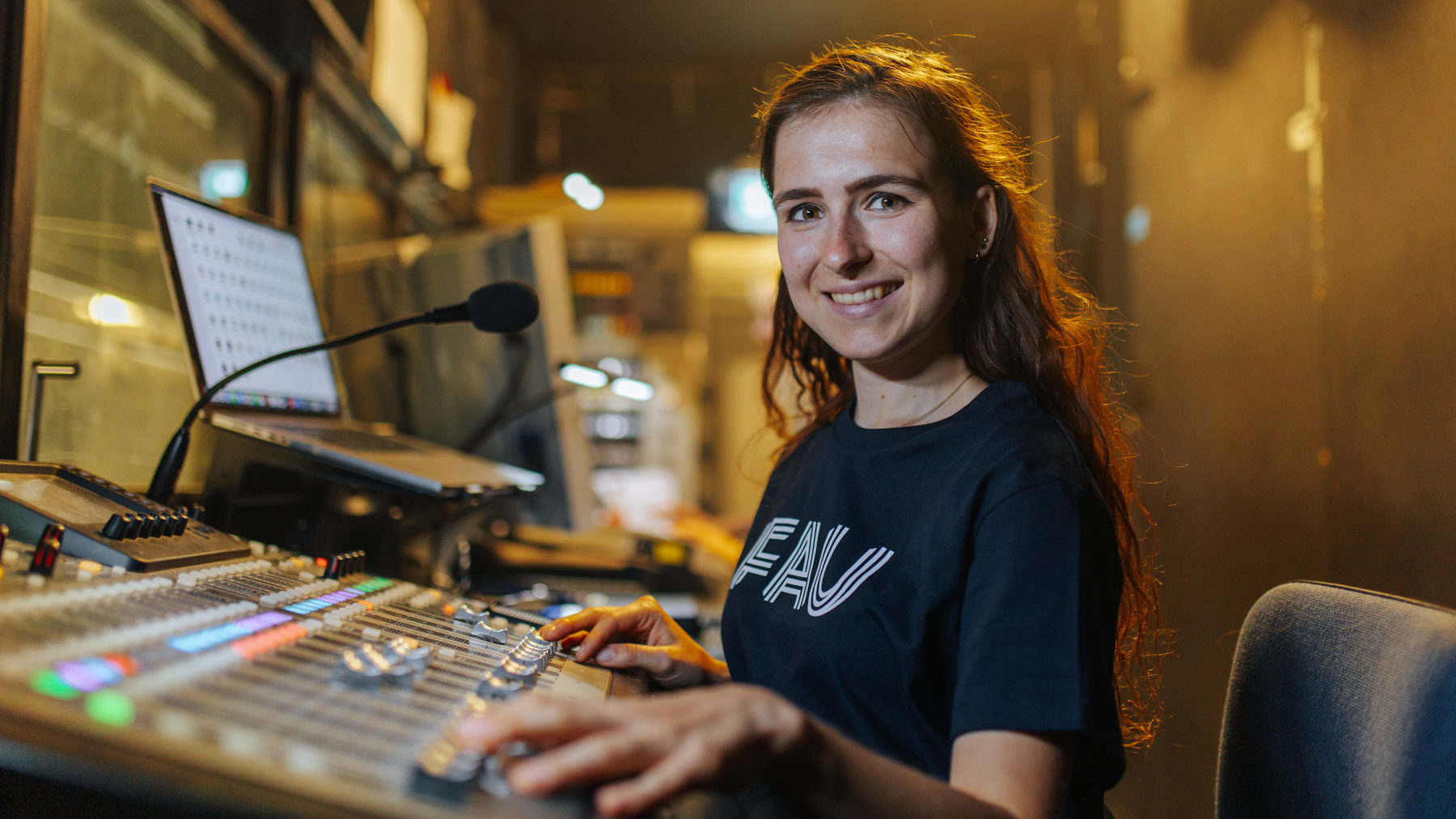
This comparative approach to image media provides students with a multifaceted and historically grounded perspective on both individual media and media systems. In addition to this academic profiling, Master’s students benefit from the technical infrastructure of the Institute for Theater and Media Studies, which includes a media and sound studio, numerous editing suites, and a Games Lab.
The Master’s degree program imparts competencies for the independent scientific handling of media products within and outside of university research practice. It prepares students for professions in the fields of media, culture and the arts in which reflective and responsible activities are required. The acquired reflective, research and conceptual skills qualify students for subsequent doctoral studies as well as for professions in cultural institutions such as film festivals, art-house cinemas, television and radio stations, museums or publishing houses.
Admission Requirements and Application
The following information is intended for German applicants as well as domestic applicants with foreign educational qualifications. Different regulations and deadlines may apply to international prospective students.
Admission
- Master: Qualification assessment
Application deadline
- Winter semester: 15.07.
- Summer semester: not possible
Language skills
- Knowledge of English at the European reference level B2 is an advantage.
- German language skills for international applicants: DSH 2 (written 2 / oral 1) or equivalent
Content related master requirements
A completed first university degree (e.g. Bachelor) with a subject-specific or related degree is required for the Master’s degree program in Media Studies. A degree in a one- or two-subject Bachelor’s program in Media Studies, in Theater and Media Studies, or in Art and Media Studies is considered subject-specific. Bachelor’s degrees with a media science component of at least 50 ECTS credits are recognized as subject-related.
Applicants with an overall grade of up to 2.50 are admitted directly to the Master’s degree program; applicants with an overall grade of 2.51 to 3.00 are admitted only after a successful selection interview. Detailed information on admission requirements can be found in the Subject Study and Examination Regulations M.A. Media Studies and in the General Study and Examination Regulations for the Bachelor’s and Master’s Programs of the Faculty of Humanities and Department of Theology.
If no German degree or German university entrance qualification is available, German language skills on the level DSH2 must be proven. Knowledge of English at the European reference level B2 is an advantage.