
Molecular Medicine (B.Sc.)
Studies between medical and natural sciences
Immerse yourself in the fascinating world of molecular medicine. This major lays an important foundation for medical science. Explore anatomy, pathology, and discover different areas of research. Become part of an innovative discipline that is helping to shape the future of medicine.
Fact Sheet
- Degree
- Bachelor of Science (B.Sc.)
- Admission
- With NC
- Duration of studies
- 6 semesters
- Teaching language
- completely in German
- Faculty
- Faculty of Medicine
- Start of degree program
- Winter semester
- Number of students
- 1-50
- Special ways to study
- 1-subject Bachelor
What is the degree program about?
Molecular medicine is concerned with the fundamentals of life and its pathological changes. Towards the end of the 19th century, biochemistry first emerged as an independent subject from medicine and organic chemistry. Since then, biochemical laboratory analyses have become an almost irreplaceable diagnostic tool in medicine: Blood analyses of metabolites and enzyme activities have long been part of the routine protocol of outpatient and inpatient examinations. In fact, most metabolic diseases and endocrine disorders can only be diagnosed biochemically.
The rapid development of molecular medicine has triggered a fundamental change in clinical medicine in recent years: The number of diseases whose cause can be defined by molecular genetics is constantly increasing. Clinically relevant examples are the molecular elucidation of cystic fibrosis (cystic fibrosis) and progressive muscular dystrophy of the Duchenne type.
DNA analysis of oncogenes enables tumor-prone patients to be reliably diagnosed and treated as a precaution, while human neurotransmitter receptors can be transplanted into cell cultures by recombinant expression of the associated genes, thus enabling the development of novel, highly selective pharmaceuticals. But it is not only the number of diseases characterized by molecular genetics that is constantly growing. Understanding viral and bacterial infection pathways or drug effects would also be inconceivable without the findings of molecular biology, biochemistry and cell physiology.
The study of molecular medicine is offered as a consecutive, i.e. a coordinated bachelor’s and master’s program with the degrees „Bachelor of Science“ and „Master of Science“.
The bachelor’s degree program consists of six semesters during which the examinations for the bachelor’s degree are taken during the course of study.
In the bachelor’s program, the preclinical subjects of medicine are taught in addition to the chemical fundamentals of molecular medicine. The medicine-specific curriculum is supplemented in the basic molecular and cellular subjects and expanded in content to include the issues of pathogenesis and experimental therapy. Through further presentation of selected molecular medical issues, specialized knowledge will be expanded and the connection to methodological advances will be made clear. The modules to be completed in the bachelor’s program are assigned to the following subject areas:
Subject area Medical Basics
- Biochemistry and basic principles of molecular medicine
- Functional anatomy of the human being
- General histology and embryology
- Special histology and organogenesis
- Cell Biology
- Vegetative physiology, neurophysiology and neuroanatomy
- Biochemistry and molecular biology
- Pathology
- Pharmacology and Toxicology
- History of knowledge and ethics of medicine
- Radiation protection
- Human Genetics
- Elective F1 – Practical courses
Subject area Chemistry
- General and Inorganic Chemistry
- Organic Chemistry
- Physical Chemistry
Subject area Mathematics and Physics
- Physics
- Biometry and Epidemiology
- Basics of Bioinformatics
- Interest in studying the natural sciences with a strong connection to medicine
- Desire to work independently in a research laboratory
- A lot of discipline and motivation, since the study is quite time-consuming
- A good school-leaving certificate or a few semesters of waiting to be admitted to the study program in Erlangen
- In the first semester, each student is assigned a lecturer as a mentor, whom you can ask anything about your studies.
- We admit only 37 students per semester to the program. This ensures a very good supervision ratio.
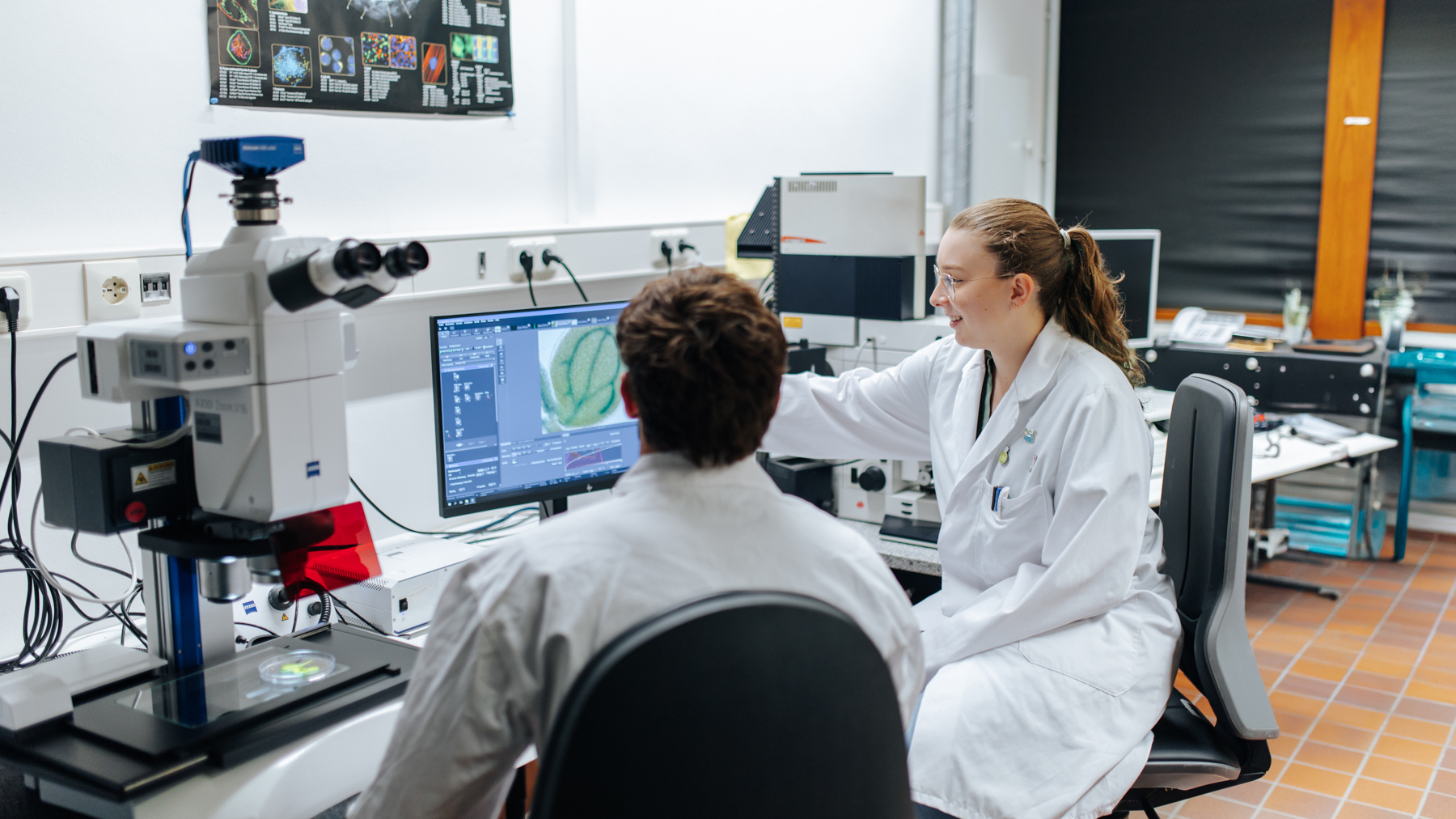
- Laboratory practicals are an essential part of the program, so you learn to plan experiments and work on projects independently at an early stage and can live out your thirst for research.
Many graduates work in scientific research at universities, Max Planck Institutes and other major research institutions in Germany or abroad. However, one can also work in other fields, e.g.
- Basic research and development, biomedical engineering, production and quality control, administrative tasks and marketing in the pharmaceutical industry
- Molecular and biochemical diagnostics in clinics and private laboratories
- Monitoring tasks in administration and laboratory diagnostics (e.g. examination offices)
- Publication and publishing in the scientific field
- Öffentliche Verwaltung, z.B. Gesundheitsämter
Admission Requirements and Application
The following information is intended for German applicants as well as domestic applicants with foreign educational qualifications. Different regulations and deadlines may apply to international prospective students.
Admission
- 1st semester: With NC
- Higher semesters: With NC
Application deadline
- Winter semester: 15.07.
- Summer semester: not possible
Language skills
- German language skills for international applicants: DSH 2 (written 2 / oral 1) or equivalent
Details and notes
The application deadline for the winter semester for international applicants is July 15th.
The program starts annually in the winter semester. Applications are submitted via the campo portal, but applicants must first be registered at hochschulstart.de. The courses of study with decentralized admission restrictions are awarded via the Dialog-Oriented Service Procedure of the Foundation for University Admission.
Further information is available here.
In addition to the general qualification for university entrance (Abitur), there are other access options for studying at FAU.