
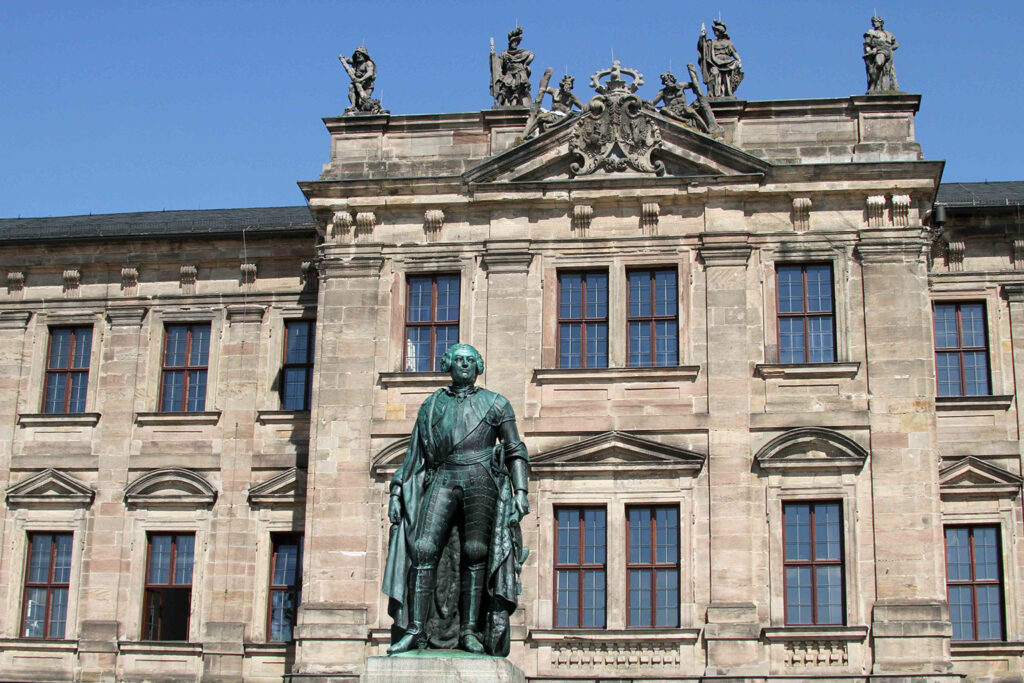
During its 275-year history, our FAU has produced a large number of successful graduates and has several world-renowned researchers among its alumni.
The names of many prominent figures are linked to the University. Browse our gallery of historical figures for an introduction to some of our outstanding FAU alumni ranging from the founding of the University to the present day.
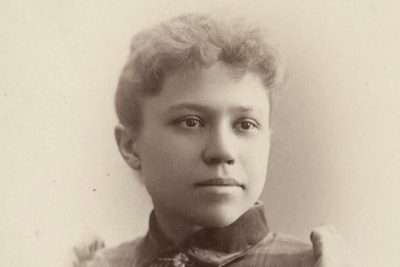
Dixie Lee Bryant, the daughter of a merchant from Kentucky, USA, was the first woman to earn a doctorate at Friedrich-Alexander-Universität Erlangen-Nürnberg (FAU) – in 1904, after previously studying at the Massachusetts Institute of Technology (MIT). She left everything behind in the States to pursue her academic career, coming to Germany and enrolling at FAU for physics, geology and botany.
Champion for women in science
Before the Bavarian Prince Regent Luitpold passed a decree in 1903 allowing women to enroll at Bavarian universities, they were only allowed to attend as guests. However, Dixie Lee Bryant managed to obtain a place in the young team of researchers led by the renowned geologist Hans Lenk, paving the way towards her doctoral degree. She wrote her doctoral thesis on the rocks of Spitsbergen.
When she returned to the North Carolina State Normal Industrial School with a doctoral degree in geology, she was the only member of faculty with a doctoral degree. However, at that time, it was still not possible for her to pursue a career in science. Instead, she taught for many years at secondary schools in Chicago, before returning to North Carolina in her later years.
“Dixie Lee Bryant was an impressive young woman, who pursued her goal of an academic career with determination. At that time, she was not permitted to enroll at any university in the Southern states of the USA. She was only able to complete her Bachelor’s degree later at MIT. She deserves to be admired for the remarkable step of undertaking an arduous journey across the Atlantic and gaining the respect of her male colleagues. We are proud that this brave woman gained her doctoral degree from FAU,” states FAU President Joachim Hornegger.
Dr. Hermann Bruno Otto Blumenau studied at the university in Erlangen from September 1844. In 1846 he completed his studies with a doctoral thesis on the relationships between alcaloids and their related salt bases. During his studies, one of the scientists who supervised and encouraged him was Carl Friedrich Philipp von Martius.
After Blumenau completed his studies, Carl Friedrich Philipp von Martius supported him in achieving his life goal of creating a new home and way of life for German exiles in Brazil.
In 1850, Blumenau and seventeen German immigrants worked single-handedly and without resorting to slave labor to found the settlement at the side of the river Itajaí which would later bear his name: Blumenau in the state of Santa Catarina, southern Brazil. Today, this city with its German origins and a population of approximately 360,000 is the most well-known German settlement of its kind in Brazil, and is a popular exhibition, media and economic center which attracts numerous tourists who are keen to experience the “Bavarian Oktoberfest” in Blumenau and see the German half-timbered houses at first hand.
In 2019, the 200th anniversary of the founder’s birth was celebrated in Blumenau SC, attracting a lot of media attention.
Arthur Eichengrün began his studies in chemistry in his hometown of Aachen in 1885. In 1890, he completed his doctoral degree at Friedrich-Alexander-Universität Erlangen-Nürnberg.
Eichengrün, one of Bayer AG’s most important inventors, held around 50 patents, particularly for numerous discoveries relating to the synthesis of various chemical substances, but also for the invention of records made from Cellon and smokeless flashbulbs for photography. The question of whether he should also be credited with the invention of aspirin remains controversial to this day (British Medical Journal).
Arthur Eichengrün was persecuted by the Nazi regime due to his Jewish heritage and deported to the Theresienstadt concentration camp. He was freed at the end of World War II. Shortly afterward, he died at the age of 82.
Ludwig Erhard studied business administration at Friedrich-Alexander-Universität Erlangen-Nürnberg.
In the early 1930s he encouraged competition and free price formation on the market and despite the predominant political beliefs of the time, he was a great believer in the principle of social market economy, which he is indeed considered to have invented. In 1934 he was one of the founders of the Gesellschaft für Konsumforschung (GfK, Society for Consumer Research), which is one of the largest market research companies today.
His political career began in 1945 as Minister of Economic Affairs in the Bavarian cabinet. From 1949 until 1963 he was the Federal Minister of Economic Affairs, in 1963 he was appointed Chancellor of the Federal Republic of Germany as successor to Konrad Adenauer.
Erhard, who was rarely seen without his iconic cigar, is considered the father of the German economic miracle and was one of the most popular politicians in the 1950s.
Ludwig Andreas Feuerbach studied in Heidelberg, Berlin, and Erlangen. In 1828, Feuerbach earned his doctorate and habilitation in philosophy at Friedrich-Alexander-Universität Erlangen-Nürnberg and became one of the most prominent advocates of philosophical materialism. With his criticism of religion, Feuerbach had a lasting influence on the Vormärz movement. He became famous overnight with the publication of his major work, “The Essence of Christianity.”
Feuerbach is considered a pioneer of Marxist philosophy.
The Nobel Prize winner Hermann Emil Fischer researched and taught chemistry at Universität Erlangen-Nürnberg from 1881 to 1888. The Emil Fischer Center at the University is named after him.
He received several awards for his outstanding achievements in his work involving sugars, carbohydrates, enzymes, proteins and purines. However, the highlight of his career was undoubtedly receiving the Nobel Prize in 1902 in recognition of his work in the field of sugar and purine synthesis.
Fischer is considered the founder of classical organic chemistry. We are indebted to him for the formulation of the lock-and-key principle, the sleeping pill (Veronal), the “Fischer projection”, and the deciphering of the glucose structure, among other things.
Hans Geiger studied mathematics and physics at Friedrich-Alexander-Universität. After obtaining his doctoral degree in Erlangen in 1906, he began his research in the field of radioactivity and atomic physics, initially under the supervision of Ernest Rutherford in Manchester, before returning to Germany to pursue further research projects.
His outstanding research brought him international acclaim and earned him numerous awards. One of his most famous inventions is the Geiger-Müller tube, known as the Geiger counter, which is used to measure radioactivity and energy.
Alongside his professional career, Kurt Glässer studied business administration and business law at what was then the Nuremberg Commercial College (Handelshochschule Nürnberg), and now the School of Business, Economics, and Society at FAU, from 1923 onwards. Even as branch manager in the Thyssen Group’s trading division in Nuremberg and later as CEO of Rheinstahl Handelsgesellschaft, he always maintained close ties to his alma mater. In December 2001, he established a foundation in his name, the Kurt Glässer-Stiftung, to promote research and teaching in the field of business and economics. It is one of the five largest foundations at Friedrich-Alexander-Universität Erlangen-Nürnberg. Kurt Glässer donated a listed apartment building on Burgschmietstraße in Nuremberg to the University and transferred a generous sum of money to ensure the building is maintained in good condition. With the help of the Kurt Glässer-Stiftung, it has been possible to specifically promote international activities among early-career researchers and to bring lecture hall equipment up to the latest technical standards.
In recognition of his outstanding services to the University, Kurt Glässer was appointed Honorary Senator in 2002. In his honor, the Auditorium maximum of the School of Business, Economics and Society has been named the “Kurt-Glässer-Saal.” A bronze bust still commemorates the University’s patron today.
After completing his law studies in Halle, Christian von Glück came to Erlangen in 1784 as a professor of law. During his time at Friedrich-Alexander-Universität, he mainly focused on writing a detailed commentary on the Pandects, the most important surviving digest of Roman law. Pandectism laid the intellectual groundwork for drafting the German Civil Code (Bürgerliches Gesetzbuch, BGB).
Samuel Hahnemann, the founder of homeopathy, studied medicine in Leipzig, Vienna, and Erlangen and completed his studies with a doctoral degree at Friedrich-Alexander-Universität.
He practiced medicine, translated and published numerous medical writings, and focused on conducting chemical and pharmaceutical experiments. Based on his experiences and experiments, he eventually developed a new healing method: Homeopathy.
The publication of his “Organon of Medicine” in 1810 is considered the first fundamental work on homeopathy.
Johann Peter Hebel studied theology at the University of Erlangen from 1778 to 1780.
In the first few years after obtaining his degree, he worked as a lecturer and professor. He taught Hebrew, Greek, Latin, and science at the University of Karlsruhe.
In 1819, he was elected to the First Chamber of the Baden State Parliament, and was at the same time appointed a prelate, the highest office in the Evangelical Regional Church in Baden.
In addition to his teaching activities and church offices, Hebel made a name for himself in literature, particularly through his vernacular poems such as his Alemannischen Gedichte für Freunde ländlicher Natur und Sitten (“Alemannic Poems for Friends of Rural Nature and Customs”) (1802). The stories in the “Rheinländischer Hausfreund oder neuer Calendar” (Rhenish Family Friend or New Calendar) and his “Schatzkästlein des rheinischen Hausfreundes” (Treasure Chest of the Rhenish Family Friend) revealed him to be a master of anecdotes and made him known even beyond the borders of Baden. Johann Peter Hebel is considered the most important poet writing in the Alemannic dialect.
As the son of the great philosopher Georg Wilhelm Friedrich Hegel, Karl Hegel initially stood entirely in his father’s shadow. After completing his studies and spending time in Italy, he returned to Germany and accepted a professorship in history in Rostock in 1841. In 1856, he was appointed to the newly established Chair of History at Friedrich-Alexander-Universität Erlangen-Nürnberg.
With the publication of the 27-volume “Chronicles of German Cities,” he quickly gained fame and made a name for himself as one of the most outstanding historians. He is considered an important foundational researcher in the field of historical science.
Karl Hegel worked at Friedrich-Alexander-Universität Erlangen-Nürnberg for almost half a century, from 1856 until his death in 1901. He was also responsible for founding the Historical Seminar in 1872, which later became the Institute of History. Every year, the Department of History organizes a memorial lecture in his honor, inviting renowned historians from Germany and abroad to discuss fundamental questions of theory and methodology in their discipline and to address issues related to modern historical-critical editions of primary sources.
During his time as Chief Mining Administrator in Bayreuth, the renowned natural scientist Alexander von Humboldt attended lectures in chemistry and physics at Friedrich-Alexander-Universität Erlangen-Nürnberg and later became a pioneering geographer of his time.
His numerous research trips took him as far as America and Asia. After his trip to South America from 1799 to 1804, the scientist was even hailed as the “second Columbus”.
Humboldt is considered a pioneer of geography as an empirical science and the founder of scientific disciplines such as climatology, ecology, and oceanography.
As a patron, Humboldt supported artists and early-career researchers, including Felix Mendelssohn-Bartholdy and Justus von Liebig.
The renowned writer Hermann Kesten studied law at Friedrich-Alexander-Universität Erlangen-Nürnberg. Before the Second World War broke out, he was considered one of Berlin’s most promising literary talents, alongside Erich Kästner. However, due to his Jewish ancestry, he was forced to flee Germany. In exile in the United States, he saved writers and artists from persecution by the Nazi regime.
He received numerous awards for his literary work and in recognition of his work advocating for the oppressed. Among other honors, he received the Georg Büchner Prize and the Nelly Sachs Prize, was a member of various academies of sciences, and served as president of the German PEN Center. He was awarded an honorary doctorate by Friedrich-Alexander-Universität Erlangen-Nürnberg in 1978.
In 1995, Kesten donated the prize money for the first Nuremberg Human Rights Prize.
Justus von Liebig enrolled at Friedrich-Alexander-Universität in 1821.
He went down in history as one of the most famous and successful chemists of his century and as the founder of organic chemistry, agricultural chemistry, and nutritional physiology. We owe him discoveries such as mineral fertilizer, the silver mirror, chloroform, radical theory, meat extract, baby food, and baking powder.
Seen from a modern personnel development perspective, his career left a lot to be desired. He never moved away from his village parish position in Neuendettelsau, and was often at odds with the Regional Church in Bavaria. And yet: No cleric since Martin Luther has had such a lasting influence on Bavarian Protestantism as Wilhelm Löhe.
He was born on February 21, 1808, in Fürth. At the age of 18, Löhe began his studies in theology in Erlangen. Two theology professors were particularly important to him: Gottlieb Philipp Christian Kaiser and the Reformed theologian Christian Krafft. The latter was influenced by the revivalist movement, which also captivated the young Löhe. Alongside attending lectures, he was an avid reader. Thomas à Kempis’ work “The Imitation of Christ” made a particularly strong impression on him. According to his own statements, it was David Hollaz who made him a Lutheran. Student life, however, had little influence on him. He joined a fraternity for only a short time and was neither a fan of tobacco nor of beer. In summer semester 1828, he changed his place of study and went to Berlin, but neither Schleiermacher nor Hegel made much of an impression on the young student. At his mother’s request, he returned home after just one semester. In October 1830, Löhe passed his final examination with distinction.
After several stops along the way, he finally arrived in Neuendettelsau on August 6, 1837, where he would go on to make a significant impact over the next 35 years: Diakonie Neuendettelsau, now one of the largest Protestant social welfare organizations in Germany with over 6,000 employees, evolved from the deaconess institute established by Löhe in 1854. The missionary work that continues to this day from Bavaria can also be traced back to Löhe. Settlements such as Frankenmuth and Frankentrost in the US state of Michigan owe their existence to Löhe. He founded the “Society for Internal and External Mission in the Spirit of the Lutheran Church.” In addition to his theological works, particularly those on church history, he was also involved in church politics and conducted research on the history of liturgy. He died on January 2, 1872, in Neuendettelsau.
Ernst Wilhelm Martius was a university pharmacist in Erlangen and co-founder of the Regensburg Botanical Society when he was assigned a teaching position by Friedrich-Alexander-Universität Erlangen-Nürnberg in 1818 to give lectures on “Pharmacy and pharmaceutical products.” Martius soon came to the conclusion that the students’ training was far removed from the practical work of a pharmacist and that there was also a lack of illustrative materials on natural history to support teaching.
To counteract that, he initiated the creation of a collection of natural raw materials from all over the world. They were all basic ingredients for medicines, food, and everyday items. With this collection, the pharmacist wanted his students to learn not only about the effects and description of the medicine, but also about its origins and natural history.
During his time as a Privatdozent lecturer from 1818 to 1824, Ernst Wilhelm Martius laid the foundations for a sound pharmaceutical education. At the same time, it marked the beginning of pharmaceutical education at Friedrich-Alexander-Universität.
Theodor Martius’ life, like that of his father Ernst Wilhelm, was dedicated to pharmacy. In 1824, he received his doctorate from Friedrich-Alexander-Universität and became a Privatdozent at the University.
Martius expanded his father’s collection with 1,841 further objects from flora and fauna, making it one of the most significant collections in Europe. In recognition of his services to the collection, the University appointed him honorary professor in 1838.
In 1862, Theodor Wilhelm Christian Martius sold his collection to the University to preserve it for posterity.
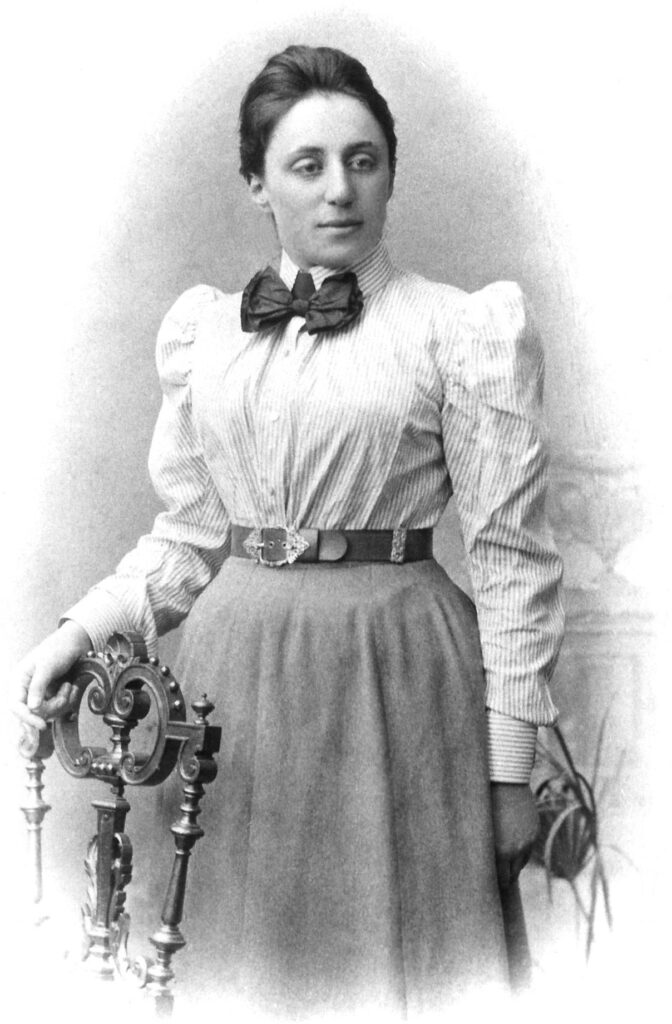
Emmy Noether enrolled at Friedrich-Alexander-Universität Erlangen-Nürnberg in 1904 as one of the first female students. She studied mathematics and was the first fully enrolled woman to earn a doctorate in Erlangen, in 1907.
Emmy Noether is considered one of the founders of modern algebra. Noetherian rings and modules are named after her, as are Noether’s normalization theorem and, in physics, Noether’s theorem.
Emmy Noether’s biography reflects the tragic fate of a highly gifted woman of Jewish descent in Germany at the beginning of the 20th century: Initially, she faced social and academic resistance in Germany, where women were only allowed to study from the beginning of the 20th century onwards. The ban on women obtaining a postdoctoral qualification, or habilitation, remained in place until 1919, when Emmy Noether was finally allowed to obtain a habilitation and teach under her own name. However, her teaching license was revoked in 1933 under the Nazi regime, and she emigrated to the USA.
Friedrich-Alexander-Universität Erlangen-Nürnberg honors its most famous alumna as the namesake of the Emmy Noether Lecture and the Emmy Noether Prize of the Faculty of Sciences.
A detailed portrait of this outstanding mathematician can be found in Professor Knut Radbruch’s university speech: Emmy Noether: A female mathematician with a bright outlook in dark times (in German).
The Office of Equality and Diversity at FAU organizes an Emmy Noether lecture every year.
After successfully completing his degree and doctoral degree at Heidelberg University, Max Noether was appointed associate professor at Friedrich-Alexander-Universität in 1875. He remained in office in Erlangen for 44 years.
Max Noether is one of the founders of the theory of algebraic curves and surfaces. The highly gifted mathematician, who was affected by polio in his youth, initiated lively communication between English, Italian, and German mathematicians and continued to nurture it throughout his lifetime.
His daughter Emmy Noether followed in her father’s footsteps and became one of the most famous female mathematicians.
Ohm began studying mathematics, physics, and philosophy at Friedrich-Alexander-Universität at the age of 16 and received his doctorate in 1811. His main interest was in electricity, which was still largely unexplored at that time. His discoveries include Ohm’s law, which was later named after him, Ohm’s rotary balance for measuring current, and Ohm’s law of acoustics.
In 1841, the Royal Society in London awarded him the Copley Medal, which by today’s standards is equivalent to the Nobel Prize. However, the greatest honor was bestowed upon him only after his death, when in 1881 the International Electrical Congress in Chicago declared Ohm’s name to be the international unit of electrical resistance, designated by the capital letter omega.
Franz Penzoldt, who came from Thuringia, arrived in Erlangen in 1874, completed his habilitation in 1875, and quickly became an advocate for pediatrics.
In recognition of his achievements, he was appointed a full professor. In 1893, he was entrusted with the management of the Pharmacological Polyclinic Institute. In this position, he played a decisive role in the founding of the University Children’s Hospital. From 1903 onwards, he was director of the Medical Clinic in Erlangen.
Franz Penzoldt was also highly committed to helping children outside of the university. In 1887, one of the first “milk kitchens” in the German Empire was established thanks to his efforts.
During World War I – having been promoted to the rank of Surgeon General – he managed the military hospitals housed in the university buildings.
The city of Erlangen appointed him an honorary citizen in recognition of his services. He received further recognition through an honorary doctorate from the Faculty of Humanities, Social Sciences, and Theology.
Karl August Georg Maximilian Graf von Platen-Hallermünde studied literature and languages at Friedrich-Alexander-Universität, which he praised with the words: “Our university is without doubt the finest in Germany, at least in terms of spirit and ingenuity.”
Influenced by Friedrich Rückert and Friedrich Wilhelm Schelling in Erlangen, he dedicated himself to the culture of the Orient.
Literary critics praised his poetry in particular. The general public appreciated his comedies and ballads.
Friedrich Rückert is known as a linguistic and philosophical genius: As a writer, he was even more popular than Goethe for a while in Germany in the 19th century. Not only that, he mastered more than 40 foreign languages and translated literature from them into German, including the Qur’an.
In 1826, he became a professor of Oriental languages in Erlangen, which was to be his most productive phase. During his time at FAU, Rückert published his most famous work “Die Weisheit der Brahmanen” (the wisdom of the Brahmins), inspired by Indian and other Oriental works. He also made a decisive impact in teaching as a specialist in Oriental Studies.
It is thanks to Rückert that the emerging 19th century engaged with the rich heritage of the Orient. In this respect, he can be compared to Goethe, Herder, and Schlegel.
Many of Friedrich Rückert’s poems have been set to music as songs. Among the most well-known are his “Kindertotenlieder” (songs on the death of children) composed by Gustav Mahler. Other composers including Franz Schubert, Robert Schumann, Clara Schumann, Johannes Brahms, Carl Loewe, Heinrich Kaspar Schmid, Richard Strauss and Felix Draeseke set Rückert’s works to music, making him one of the German writers whose writing has been set to music the most often, together with Goethe and Heine.
Johann Christian Daniel von Schreber published his first scientific papers while still a student. He completed his studies in Uppsala under the famous researcher Carl von Linné.
Schreber initially worked as a general practitioner and was accepted as a full member of the Leopoldina in 1763, becoming its president in 1791.
In 1770, Schreber came to Erlangen as a professor of pharmacology, botany, business and economics, and cameral sciences, and was appointed director of the Botanical Garden. During his tenure, the university received large collections of natural history specimens and art objects from the Ansbacher Kunstkammer. In addition, he set about translating all of Carl von Linné’s works into German.
Schreber wrote the most comprehensive and for many years undisputed standard work on mammalogy. He is also considered one of the most important supporters and advocates of Linnaeus’ system in Germany, which classifies animal and plant species according to genus and species and remains valid to this day.
Incidentally, the term “Schrebergarten” (allotment garden) can be traced back to his nephew, the Leipzig doctor and educator Daniel Gottlob Moritz Schreber.
The poet and musician Christian Friedrich Daniel Schubart, who is now unjustly largely forgotten, studied theology in Erlangen. With his musical virtuosity and poetry, he even managed to impress Goethe. Schubart was the editor of the “Deutsche Chronik,” which was the most widely read German newspaper at the time. In addition to political articles, he also published poems and short stories by renowned writers, gave music and literature recommendations, and in this way contributed to making Goethe, Schiller, Lessing, and Mendelssohn known to a wide audience.
Throughout his life, Schubart caused offense with his lifestyle and rebellion against authority. He published his criticism in the “Deutsche Chronik” (German chronicles). In 1773, he was excommunicated, dismissed from his position as organist and music director in Ludwigsburg, and expelled from the state for repeatedly criticizing the clergy and aristocracy. In 1777, his political views and his criticism of Duke Carl Eugen of Württemberg proved to be his undoing. Lured into a trap, the duke held him prisoner for more than ten years in the dungeon of Hohenasperg without trial, under degrading conditions. The action was unlawful in every respect: Schubart was imprisoned without trial or judgment; he was neither a citizen of Württemberg nor had he printed his chronicles there. He dictated his most famous poem, “Die Fürstengruft” (The Princes’ Crypt), written during his imprisonment, to another prisoner through the stove pipe in the cell next door, as he was denied any writing implements.
Schubart was the most famous political prisoner of his time. His “crime” was to sharply criticize the absolutism of those in power. For this, he was imprisoned like a dangerous criminal until the clothes on his body rotted away.
Altenstein, who came from near Ansbach, studied law, philosophy, and natural sciences in Erlangen, Göttingen, and Jena.
As a colleague of August von Hardenberg, he was involved in the reestablishment of the Prussian state.
In 1818, he became the head of the Ministry of Culture. During his term of office, the University of Bonn was founded, compulsory education was extended to the entire empire, and a secondary school curriculum was also drawn up under his leadership. Together with Frederick William III, King of Prussia, he carried out the reestablishment of the Prussian Evangelical Regional Church.
Born in Berlin as the son of a rope maker, Ludwig Tieck showed a talent for writing even during his school days. From that time on, he enjoyed a deep friendship with Heinrich Wackenroder.
Tieck attended lectures on literature, philosophy, and classical studies in Erlangen, but dropped out of university to devote his time entirely to writing. He became one of the most famous German writers and even made a name for himself in America. His most prominent patron was King Frederick William IV of Prussia.
After obtaining his medical degree at Friedrich-Alexander-Universität, Siegfried Trotnow worked at the local university hospital, specializing in reproductive medicine. In 1982, he achieved a breakthrough with the first successful in vitro fertilization in Germany: In 1982, Universitätsklinikum Erlangen announced the birth of Germany’s first “test-tube baby,” making Erlangen a leading center for reproductive medicine.
Wilhelm Heinrich Wackenroder initially studied theology and philology in Halle and Göttingen, but then, accompanied by his friend Ludwig Tieck, began to study law in Erlangen. He soon turned his attention back to literature, and refined his musical abilities.
In 1794, he became an assessor at the Court of Appeal in Berlin and wrote literary essays on the side, which were initially published anonymously. After his early death in 1798, Tieck published additional works by his friend.
Our first student
“The early bird catches the worm,” Georg Wilhelm Heinrich Erdmann Freiherr von Pölnitz must have thought, enrolling on March 24, 1742 already. The curious thing: At that time, Friedrich-Alexander-Universität Erlangen-Nürnberg had not yet been founded. This apparent contradiction can be explained by the fact that today’s Friedrich-Alexander-Universität Erlangen-Nürnberg was initially founded in Bayreuth in 1742 as Academia Fridericiana and was only transferred to Erlangen and elevated to university status the following year. Enrollment records therefore begin with the first student who enrolled in Bayreuth.
Johann Lorenz Arzberger from Ipsheim was the first student to enroll in Erlangen after the university’s inauguration. He enrolled as a law student on November 6, 1743.
And the first female student?
It’s hard to believe, but it wasn’t until 1903 that women were allowed to study, making Germany one of the last countries in the world to accept female students. Fanny Fuchs from Nuremberg was the first woman to enroll as a student of Medicine in Erlangen on November 21, 1903.
The American Dixie Lee Bryant studied at the Massachusetts Institute of Technology before becoming the first woman to receive a doctoral degree at FAU, in 1904. She left everything behind in the States to pursue her academic career, coming to Germany and enrolling at FAU for physics, geology and botany.
The first full-time female student, Emmy Noether from Erlangen, completed her doctoral degree in 1907 and later achieved worldwide fame in the field of mathematics.
Gisela Freund, Prehistory and Early History, became the first woman to obtain her postdoctoral habilitation at Friedrich-Alexander-Universität Erlangen-Nürnberg in 1950. In 1963, the university appointed Ingeborg Esenwein-Rothe as its first female professor to the Chair of Statistics.