
FAU project develops new technical components for small satellites
Satellites that are as small as a shoe box are called small satellites. A research project at Friedrich-Alexander-Universität Erlangen-Nürnberg (FAU) is now investigating how to maximize their technical potential. The long-term goal of “FORnanoSatellites” is to set up automated small series production of small satellites in Bavaria. The Bavarian Research Foundation is providing around 1.8 million euros of funding to the collaborative project over a period of three years.
Conventional satellites are extremely expensive to produce and are only suitable for applications at low orbital heights around the Earth due to their size. Small satellites have significant advantages in this respect. They weigh only a few kilograms, are around the same size as a shoe box and fly around 300 kilometers above the surface of the Earth in the very low Earth orbit (VLEO).
The aim of FORnanoSatellites is to make the production of small satellites more efficient and less expensive. To do so, researchers are analyzing how current technology is built and incorporated into small satellites with the aim of subsequently developing the technology further.
Interdisciplinary collaboration at FAU
Prof. Dr. Dietmar Fey from the Chair of Computer Architecture at FAU is head of the project and explains: “We want to revise the assembly and interconnection technology for components and the computer architecture in order to make the small satellites even more compact. In Erlangen, we are keeping technology independence in mind and are focusing on how to change the concept behind the on-board computer using open source architecture and hardware ‘made in Germany’.”
Another aspect is being investigated at the Chair of Factory Automation and Production Systems (FAPS). Here, the team led by Prof. Dr. Jörg Franke is looking at how to connect mechanical and electronic components using vertical interconnection technology to make the system more compact in future in a low-cost manufacturing process. In addition, it will also be possible to change the design in a web configurator using an Internet browser.
Automated production in Bavaria
Those involved in the project are hoping to digitalize the manufacturing and sale of small satellites in the long term in such a way that automated production can take place in Bavaria. Ultimately, the research project should contribute to allowing small and medium-sized enterprises in Bavaria to control the satellites themselves and meet their own needs in a cost-effective way.
Individually adapted technology for small companies
Small companies are playing an active role in the collaboration project in order to develop solutions for their own needs. For example, a company based in Bavaria that operates across the globe collects data for setting up sustainable ecosystems. To do so, the company requires satellite images of coastal and inland waterways without glare. However, the images are often unusable because the sun often reflects off the surface of the water. Large satellites are unable to change their angle in such cases, whereas small satellites are more maneuverable and can take images without glare.
As part of the FORnanoSatellites project, another partner from industry is hoping to be able to send weather data directly to the cockpits of aircraft in real time using nanosatellites. Up to now, data is sent to aircraft via ground stations. Nanosatellites operate at shorter distances and require less transmission power. Furthermore, a company based in Franconia that is also participating in the project intends to feed data from weather balloons to the Internet via nanosatellites to open up new business models.
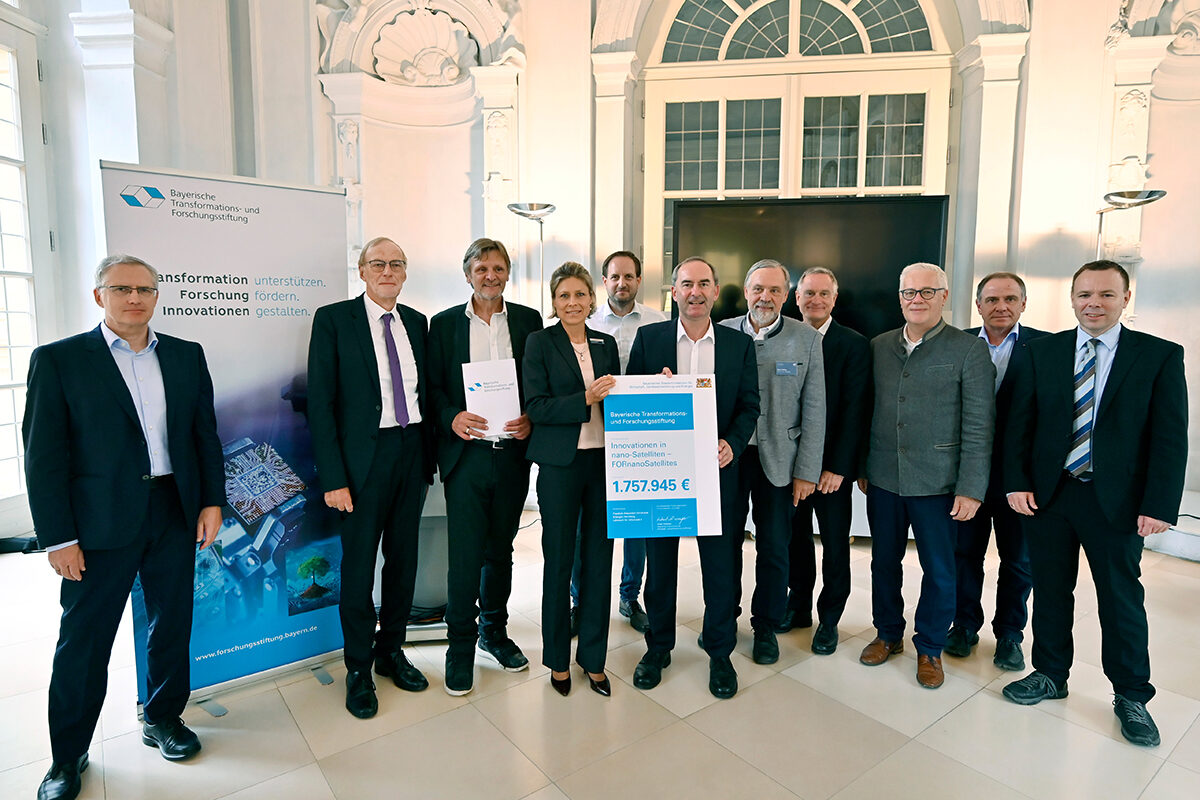
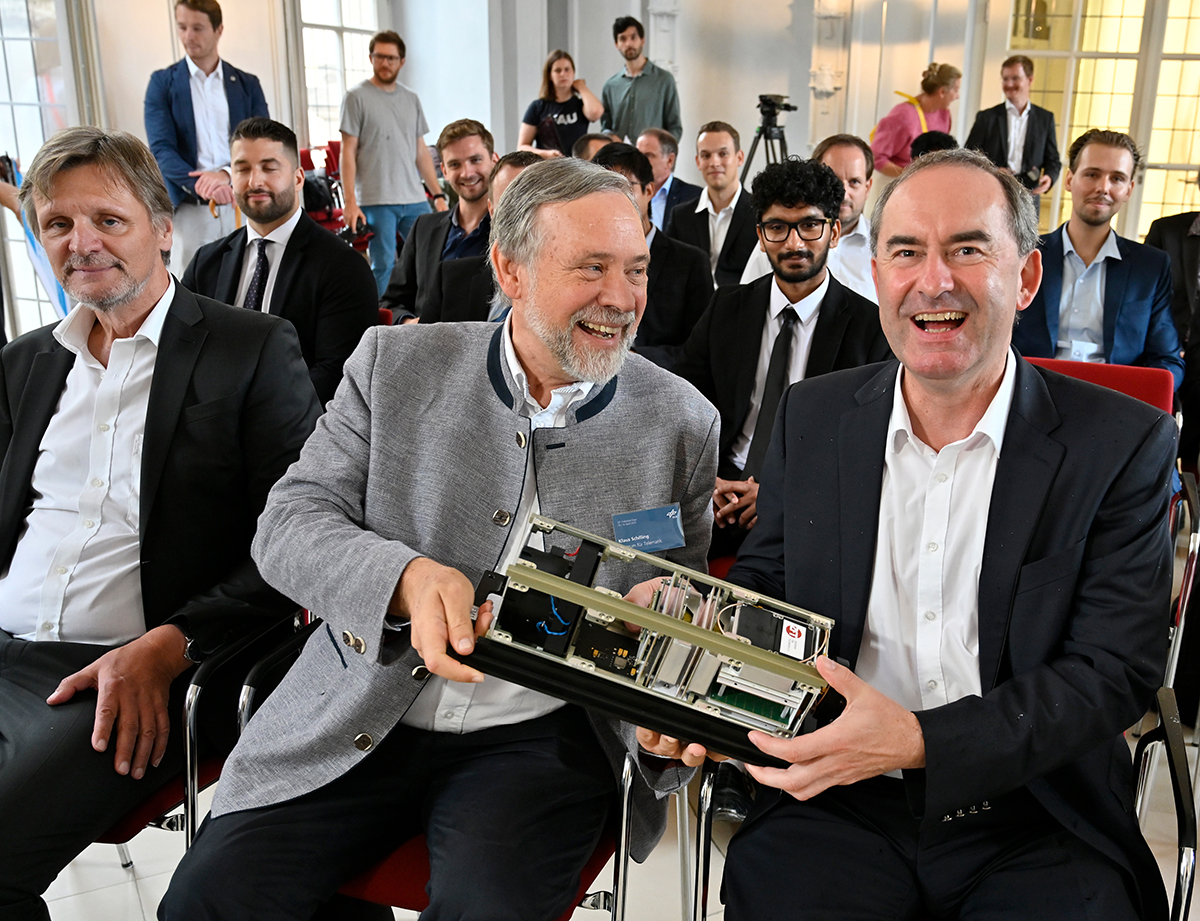
In addition to the Chair of Computer Architecture and FAPS at FAU, the Center for Telematics e.V. (ZfT) at the University of Würzburg and the German Aerospace Center (DLR) in Oberpfaffenhofen are involved in the project, together with numerous partners from industry. The FORnanoSatellites project was launched on June 1, 2025 and the official presentation of the funding confirmation by State Minister Hubert Aiwanger to Prof. Fey took place last Monday. FORnanoSatellites is a project that is part of the FOR initiatives of the Bavarian Research Foundation that supports major alliances between science and industry.
Opinions from project members
Hubert Aiwanger, Bavarian State Minister of Economic Affairs, Regional Development and Energy, emphasizes the significance of FORnanoSatellites for Bavaria: “Without our own satellites, we would have to rely on others when making observations of Earth or for navigation systems. Projects such as FORnanoSatellites help us to strengthen our technological independence in the aerospace sector. This applies to Bavaria and also to Germany and Europe. In addition, satellite research in Erlangen also benefits the North Bavarian region for science and research.”
Prof. Arndt Bode, President of the Bavarian Transformation and Research Foundation, adds: “The FORnanoSatellites research association was able to fully convince us in the evaluation and in the foundation committees. The project is ambitious, but realistic. The consortium offers high levels of expertise in terms of all important components, such as satellite and communication technology and the computer architecture, as well as pilot applications. In particular, one of the major strengths of the association is its collaboration with small and medium-sized companies that perform research.”
FAU President Prof. Dr. Joachim Hornegger is proud of the interdisciplinary collaboration: “With the FORnanoSatellites project, FAU is now taking off into space. This has all been made possible by the generous funding of the Bavarian Research Foundation. An interdisciplinary team from the Chair of Computer Architecture and FAPS is working hand in hand with one goal: the automated production of small satellites in Bavaria. FORnanoSatellites is yet another example of FAU’s strength in innovation.”
Prof. Dr. Dietmar Fey is pleased about the start of the project: “FORnanoSatellites will give new impetus to the Faculty of Engineering to play a pioneering role in the rapidly expanding field of satellite operation and research in the area of computer and manufacturing technology.”
 1/6
1/6 2/6
2/6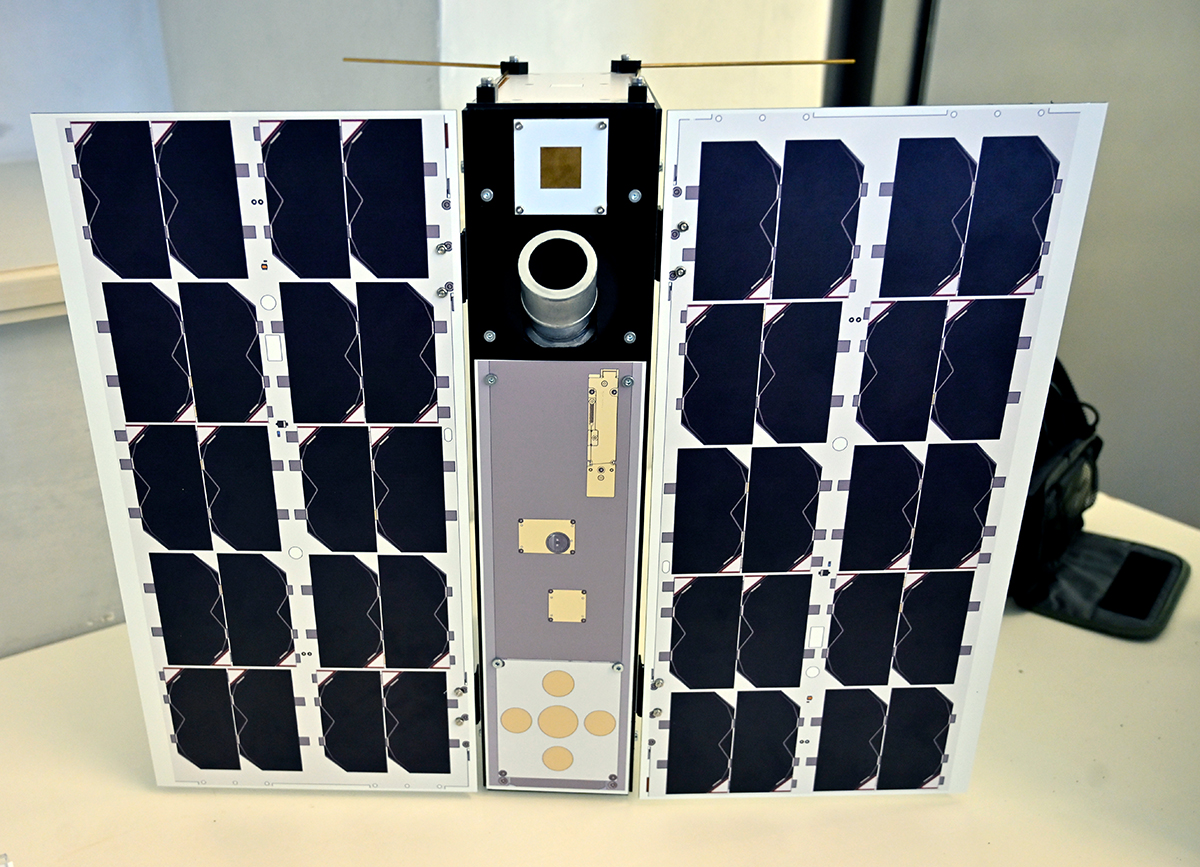 3/6
3/6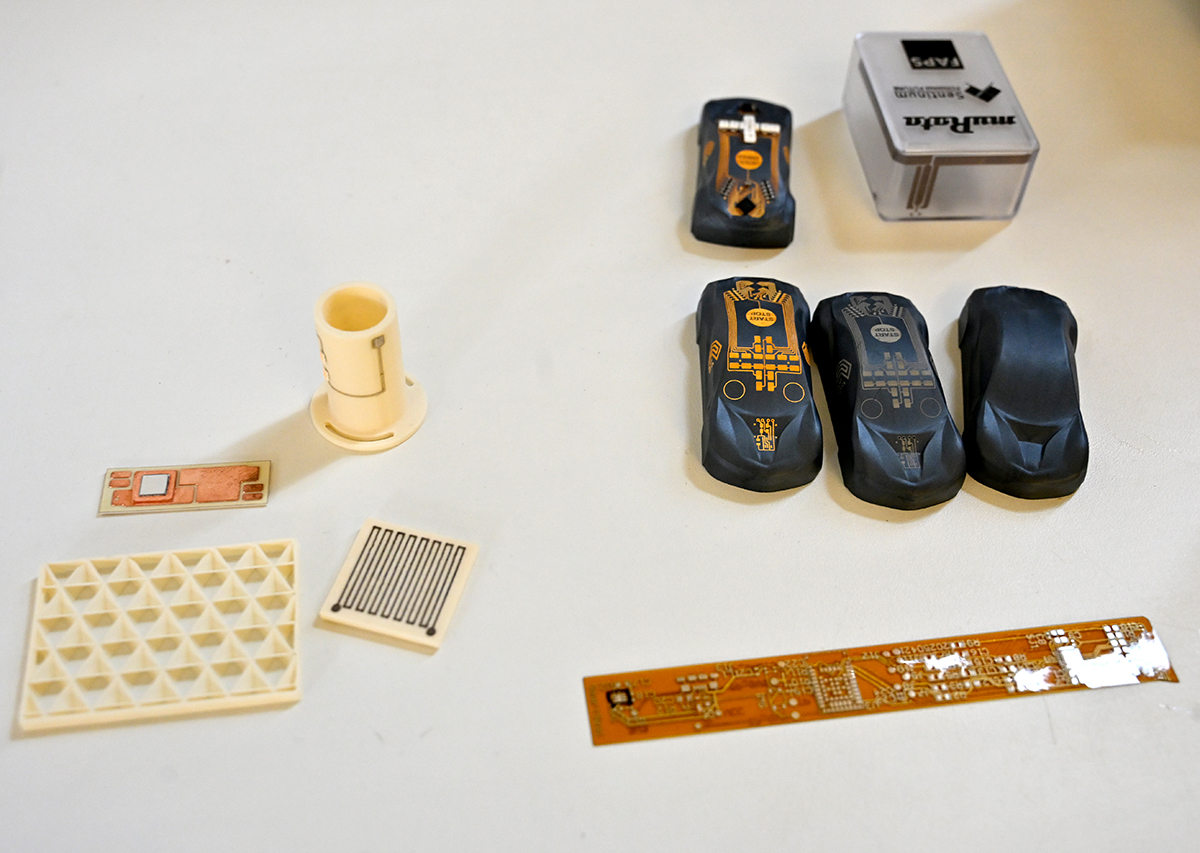 4/6
4/6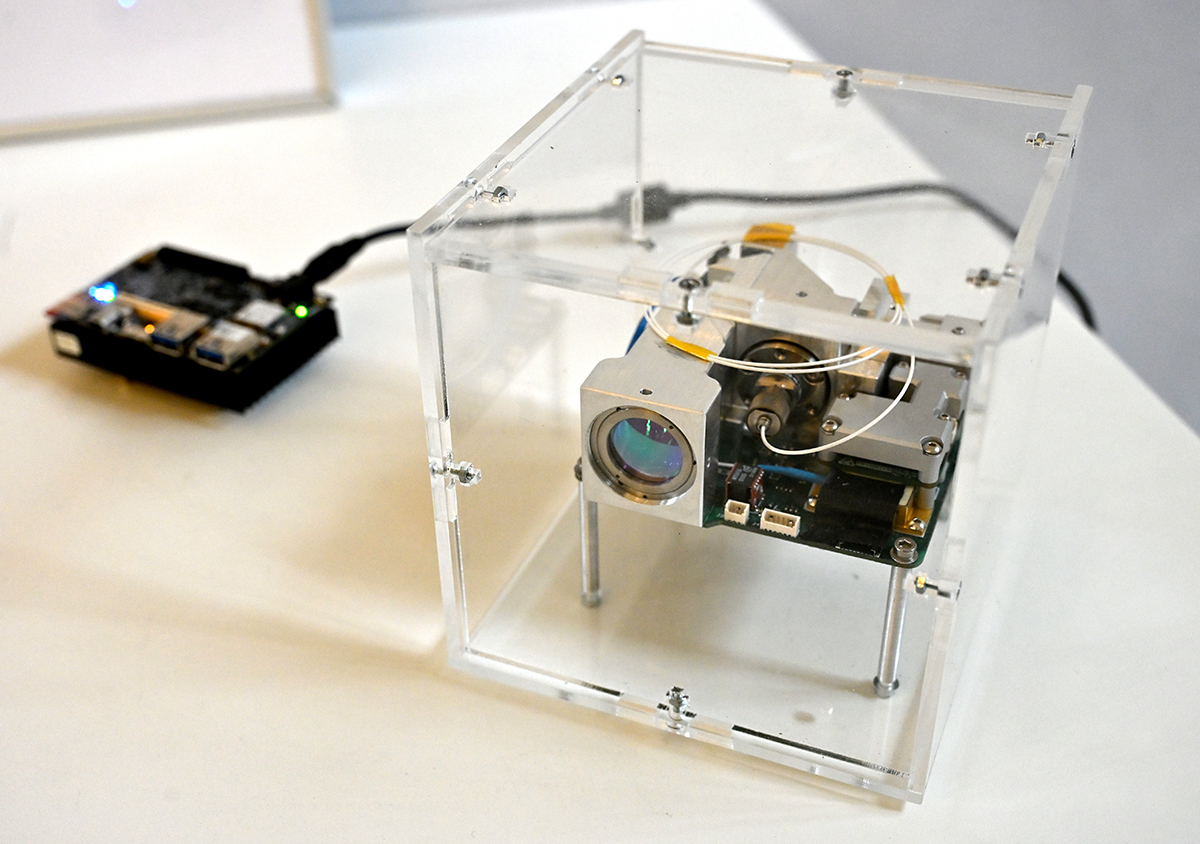 5/6
5/6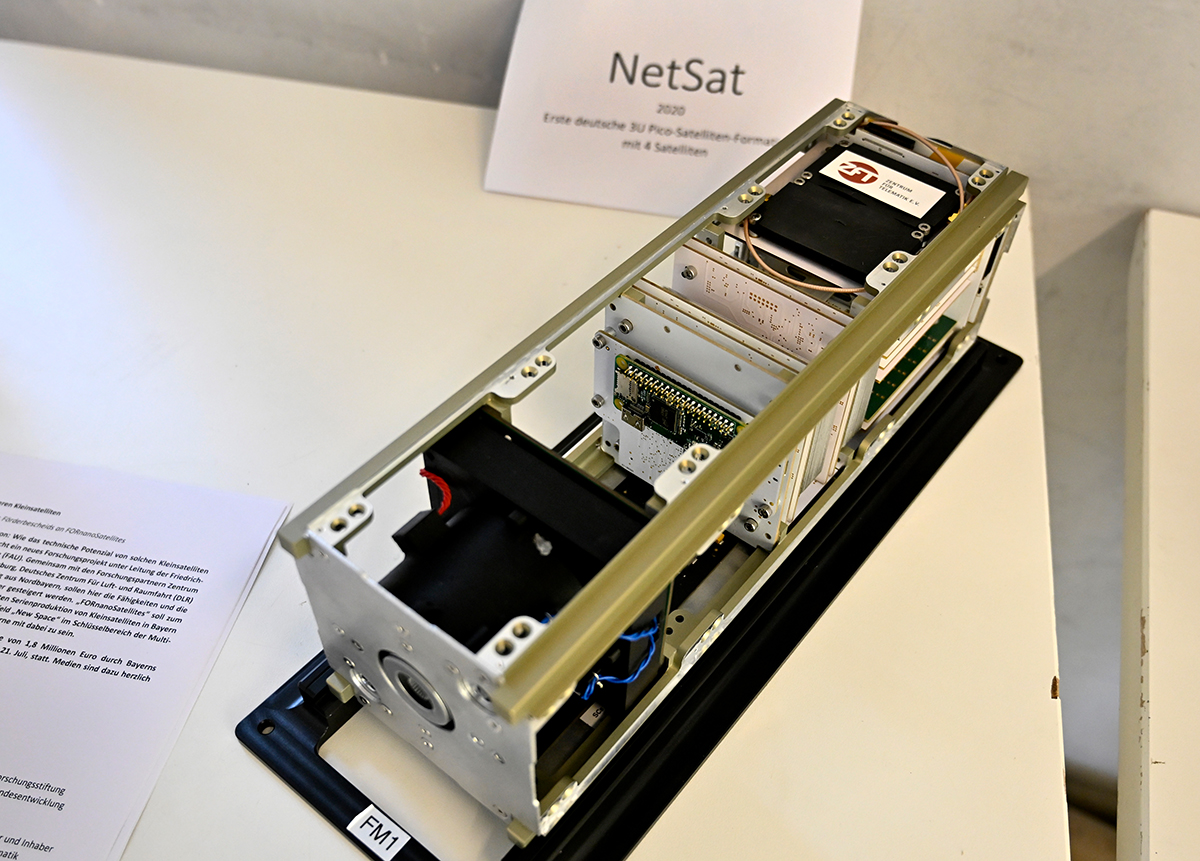 6/6
6/6More information:
Prof. Dr. Dietmar Fey
Chair of Computer Architecture
Phone: +49 9131 85 27003
dietmar.fey@fau.de