
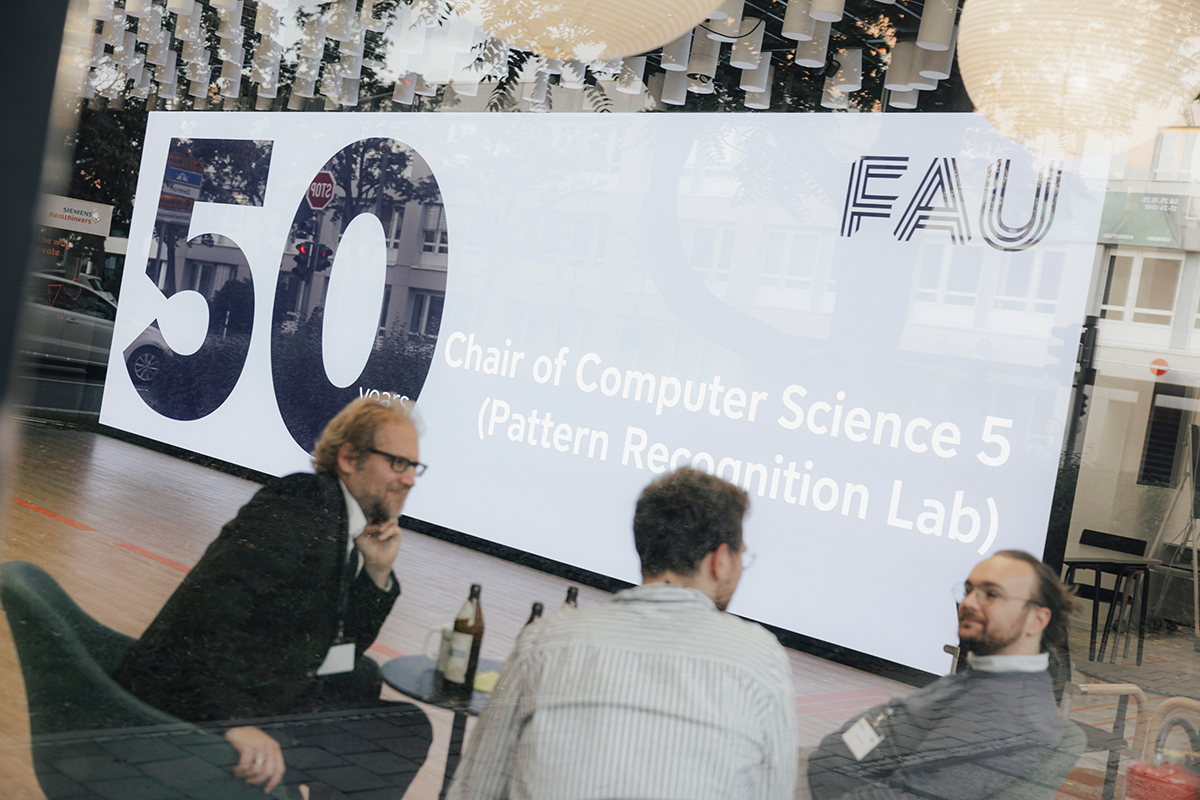
50 years of the Pattern Recognition Lab
Exactly 50 years ago, Friedrich-Alexander-Universität (FAU) took a step that it still benefits from today. It was the first university in Germany to set up a chair specifically dedicated to pattern recognition. That makes it one of the pioneers in Germany of a discipline that can be considered the foundation of the current boom in artificial intelligence.
This development could not have been predicted at the time. IBM had just launched the first portable computer, a relative term, since the machine weighed 25 kilos. The best model hat 64 kilobytes of RAM – every smartphone nowadays has 100,000 times this capacity. However, it still cost more than 100,000 dollars in today’s money. Computers were a rarity, even in research. Nevertheless, even back then, FAU was already searching for solutions to problems that computer science is still dealing with today – such as the automatic classification of image content or machine speech recognition.
Today, Friedrich-Alexander-Universität is not only one of the leading institutions for machine learning, but is also an important academic institution for early-career researchers. Whereas often only a handful of committed students would attend the lectures and tutorials in the early days, now more than 3000 students complete courses offered by the Pattern Recognition Lab each semester.
An interview with FAU President Prof. Dr. Joachim Hornegger, who held the Chair from 2005 and 2015, and Prof. Dr. Andreas Maier, who currently holds the Chair.
Prof. Hornegger, sometimes we hear that the Pattern Recognition Lab is the first chair of AI in Germany. Is this true?
Prof. Hornegger: Yes, definitely. Pattern recognition is an important part of artificial intelligence – I always say it’s the part of AI that actually works (laughs). FAU was in fact the first university in Germany to dedicate its own chair to this field. The first holder of the chair was Heinrich Niemann. To us, he was the king of pattern recognition, even though he would never call himself that – he’s much too modest. But it’s no exaggeration to say that he has made history with AI research in Germany.
It almost sounds as if pattern recognition is old hat now…
Prof. Maier: Not at all. Without pattern recognition, there would be no ChatGPT. The statistical methods developed by people like Heinrich Niemann and that have been researched for 50 years are, to a certain extent, the basis for the current boom in AI. This is because large language models are nothing more than huge statistic inference engines. They search for patterns in sentences and, from these patterns, they deduce which word is probably going to come next.
Prof. Hornegger: However, at the time, nobody could have predicted how quickly the field would develop. The sheer quantities of data and storage capacities available to us now were unimaginable. When I was a student, USB sticks didn’t exist, just disks that had a capacity of 1.4 megabytes. You would have needed a couple of dozen of them to store an image sequence lasting just one second. Back then, Heinrich Niemann analyzed language and images: How can you reliably identify sounds even if they are coming from different people? What is being shown in a photograph and which characteristics can an algorithm (we call it a classifier) use to recognize it? Things like that.

At that time, this meant the computer had to know that a table has four legs?
Prof. Hornegger: That’s right. At the time, we were talking about explicit knowledge representation. What parts is a car made of, which characteristics have to be present, which of these could be hidden and how? These were some of the questions that the chair was investigating at the time. Today, the algorithms learn it all automatically, thanks to the huge flood of data available to them and the computing power that they can use.
Prof. Maier: This explicit description – a table has four legs – has become increasingly unimportant. At IBM’s language recognition department, someone reportedly said that whenever they fired a linguist, the error rate of their algorithms would go down. A linguist may well know how a word should sound in ideal conditions. But in reality, it may sound completely different. Instead, current methods are based on statistics, i.e. the knowledge that certain sounds often occur together. That makes the systems much more flexible.
Because a table can also have three legs, or two of the four legs are hidden? And because all tables still have similarities – patterns that cannot be easily put into words?
Prof. Maier: That’s right. The algorithms learn themselves which characteristics are important and in which combinations they have to occur so that they know it’s probably a table.
Prof. Hornegger: Back then, there wasn’t enough computing power and training data for approaches like this one. Instead, Niemann and then I tried to find the most efficient solutions to specific problems, such as detecting contours in a photograph. And yet, the idea for neural networks was already emerging back then. And algorithms were already being developed that could be used to train such networks. These methods only made a breakthrough when modern super fast graphic processors came onto the market. And when masses of data suddenly became available via the Internet with which we could feed the models.
Prof Maier: There is not enough information around now to significantly improve AI methods. Today, we’re moving towards training the algorithms with synthetic data. For example, we generate an image of a tumor on a computer that we can vary in several ways. And we use this to feed the artificial intelligence so that it can detect tumors like it in real radiology images better.
Prof. Hornegger: However, there are some problems that AI will not be able to solve. If you have a text in a completely unknown language, the methods won’t be able to translate it. For example, we once had a project about the calls made by orcas. Although AI can detect patterns that happen over and over again, without any further information, it does not know what these patterns mean. This is only possible when behavioral information is also available. This could then allow the algorithm to learn that one particular call is made by female orcas when they are separated from their young.
Many people are afraid of the developments in artificial intelligence. Is that something you understand?
Prof. Hornegger: I do understand that. AI will change entire professions. Even computer science – GPT-5 can already write programs in minutes that earlier would have taken months to write. But fear is a poor advisor. On the other hand, AI will also free up resources that we can hopefully use for more creative tasks. Change has always occurred in the past.
Prof. Maier: I have the impression that as computer scientists, the public doesn’t listen enough to us about this question. The researchers I know are all investigating the question of the social implications this technology will have. At the same time, I have the impression that almost all of them are impressed by the possibilities offered by AI. We must not forget that a lot of good things for humanity can be achieved using artificial intelligence. These opportunities are often not discussed enough.
 1/24
1/24 2/24
2/24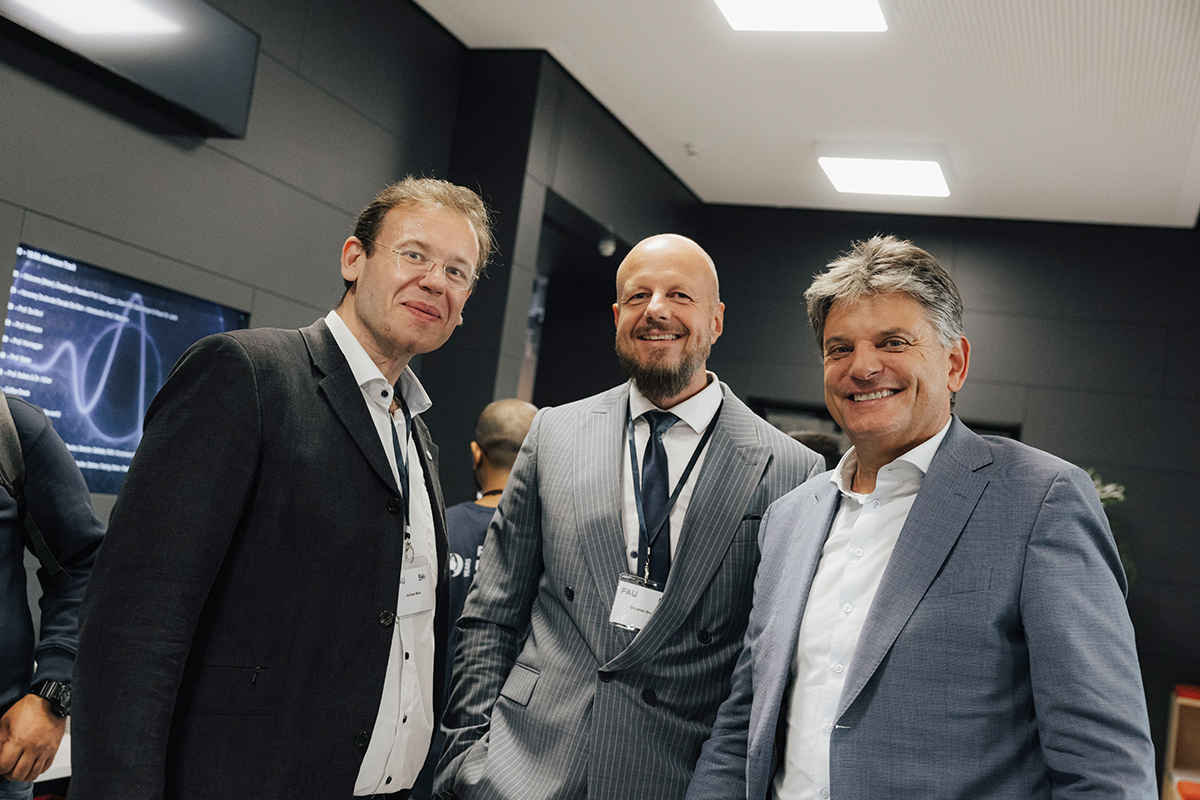 3/24
3/24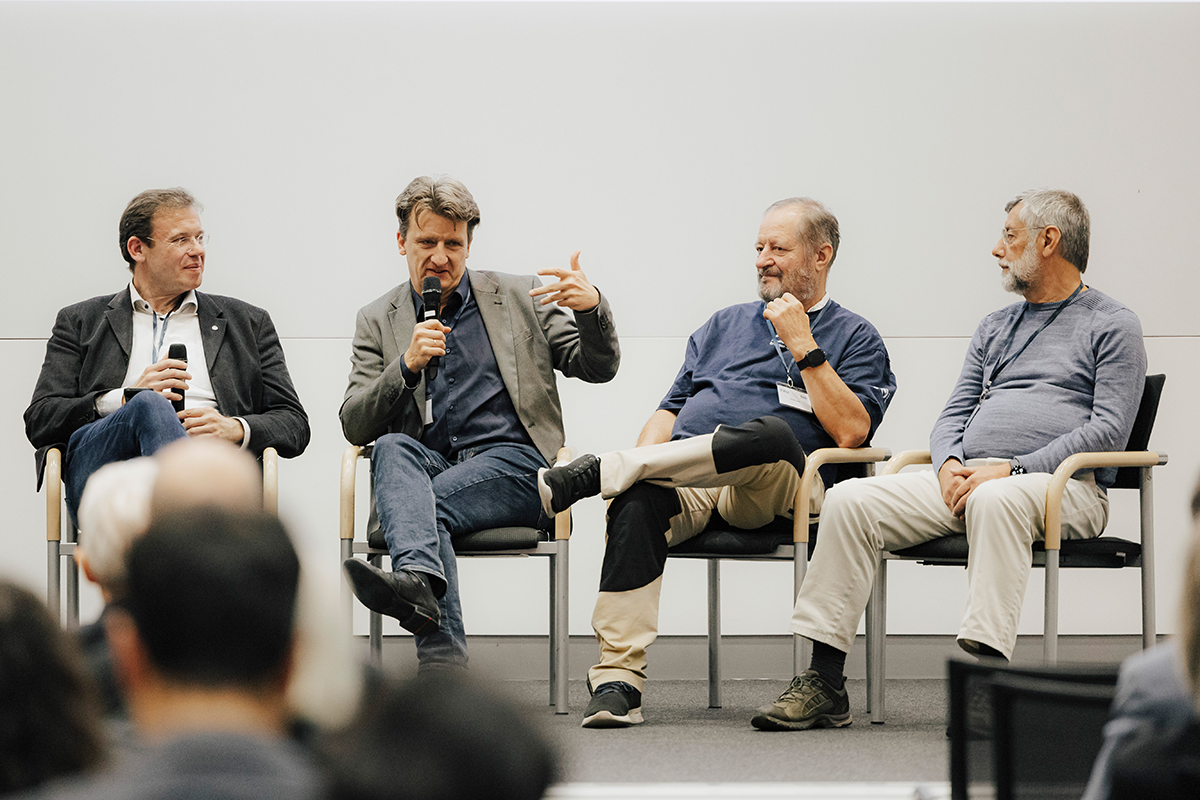 4/24
4/24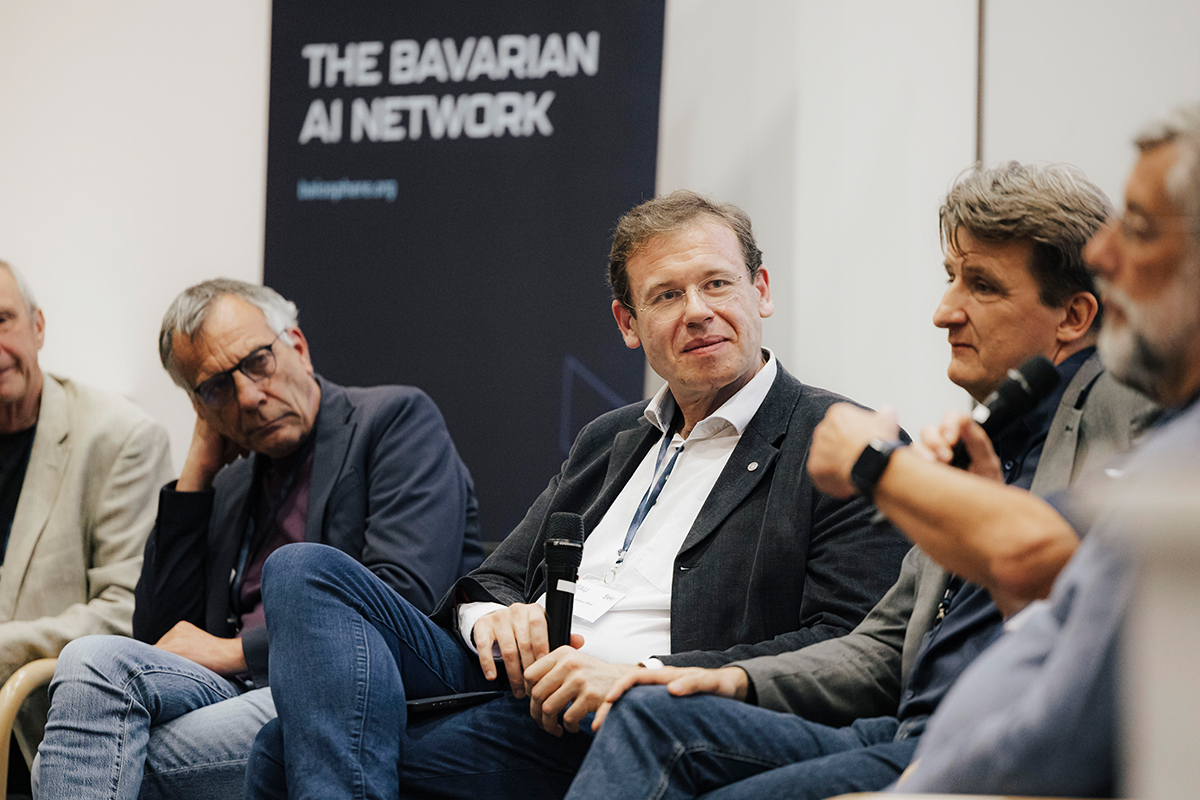 5/24
5/24 6/24
6/24 7/24
7/24 8/24
8/24 9/24
9/24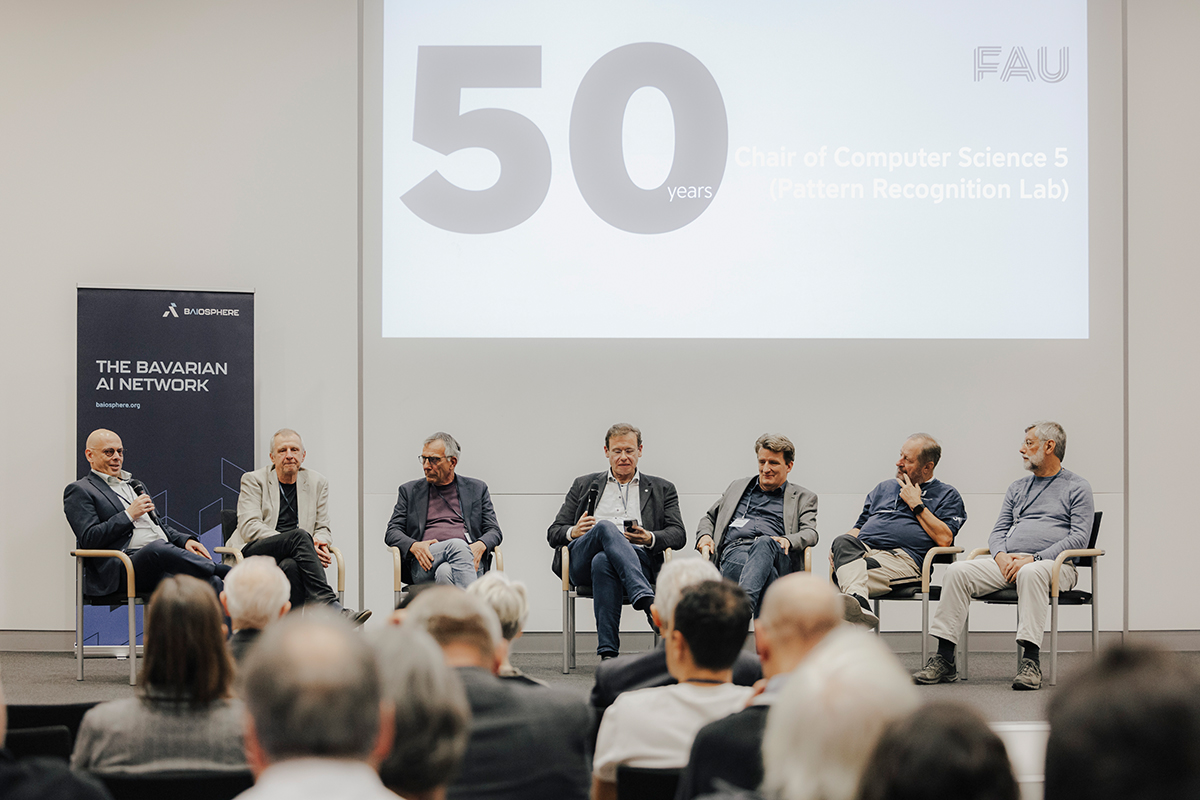 10/24
10/24 11/24
11/24 12/24
12/24 13/24
13/24 14/24
14/24 15/24
15/24 16/24
16/24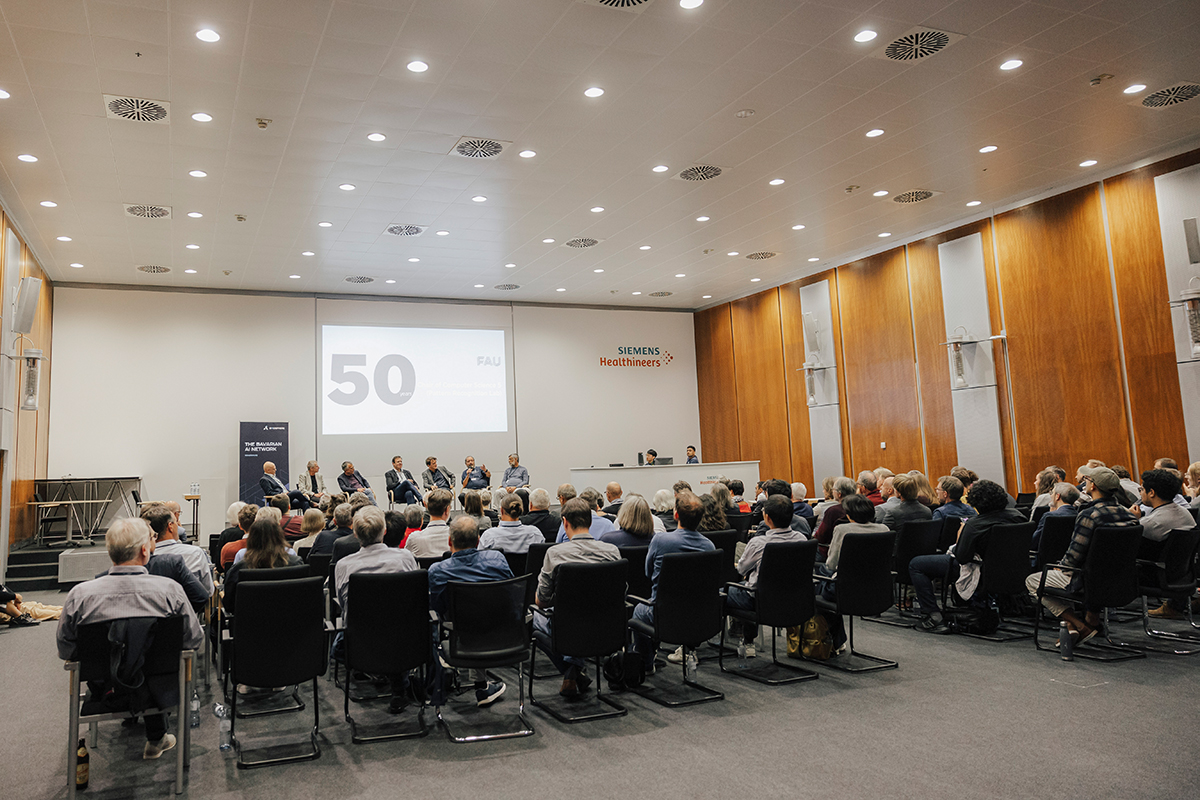 17/24
17/24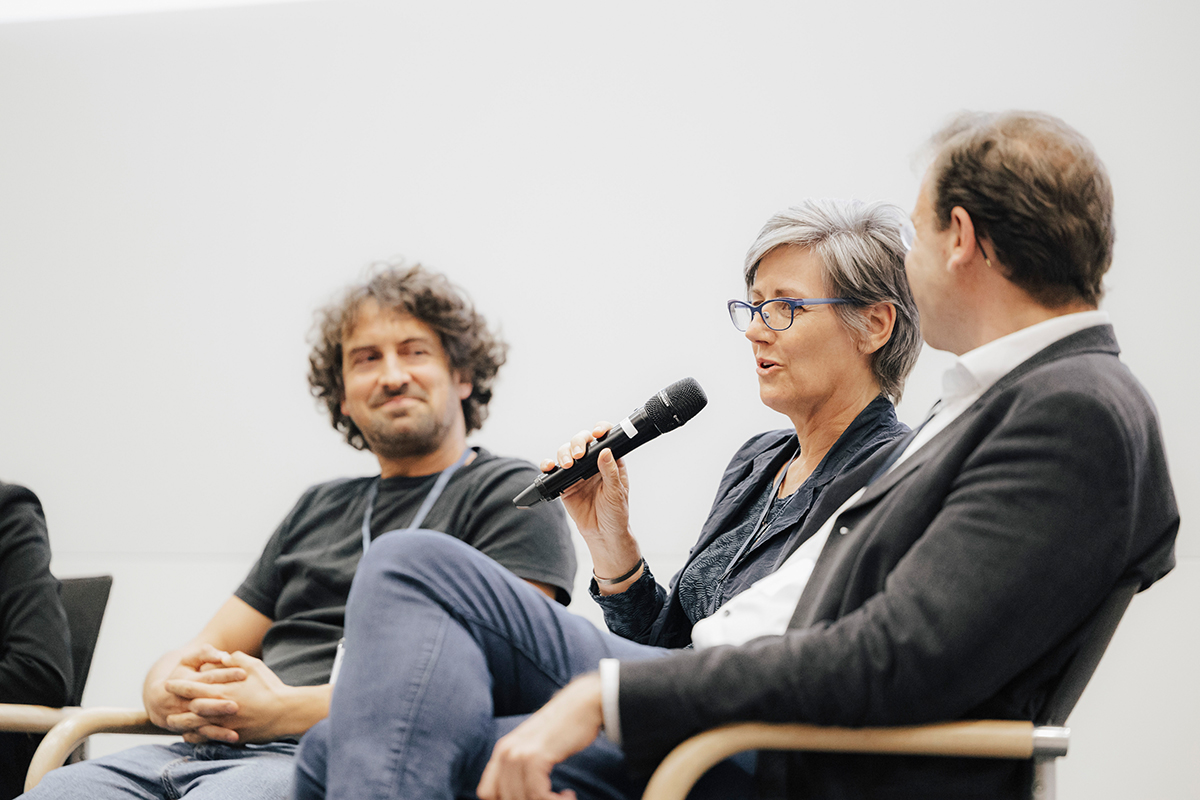 18/24
18/24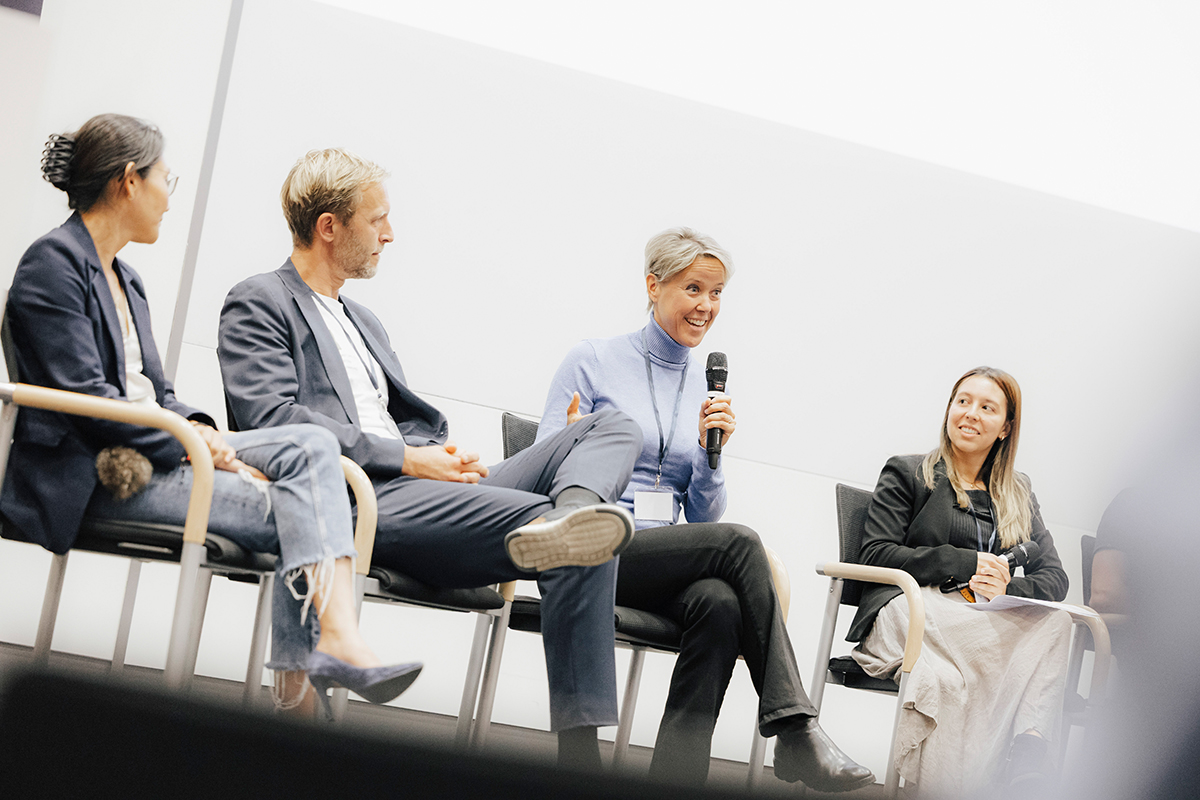 19/24
19/24 20/24
20/24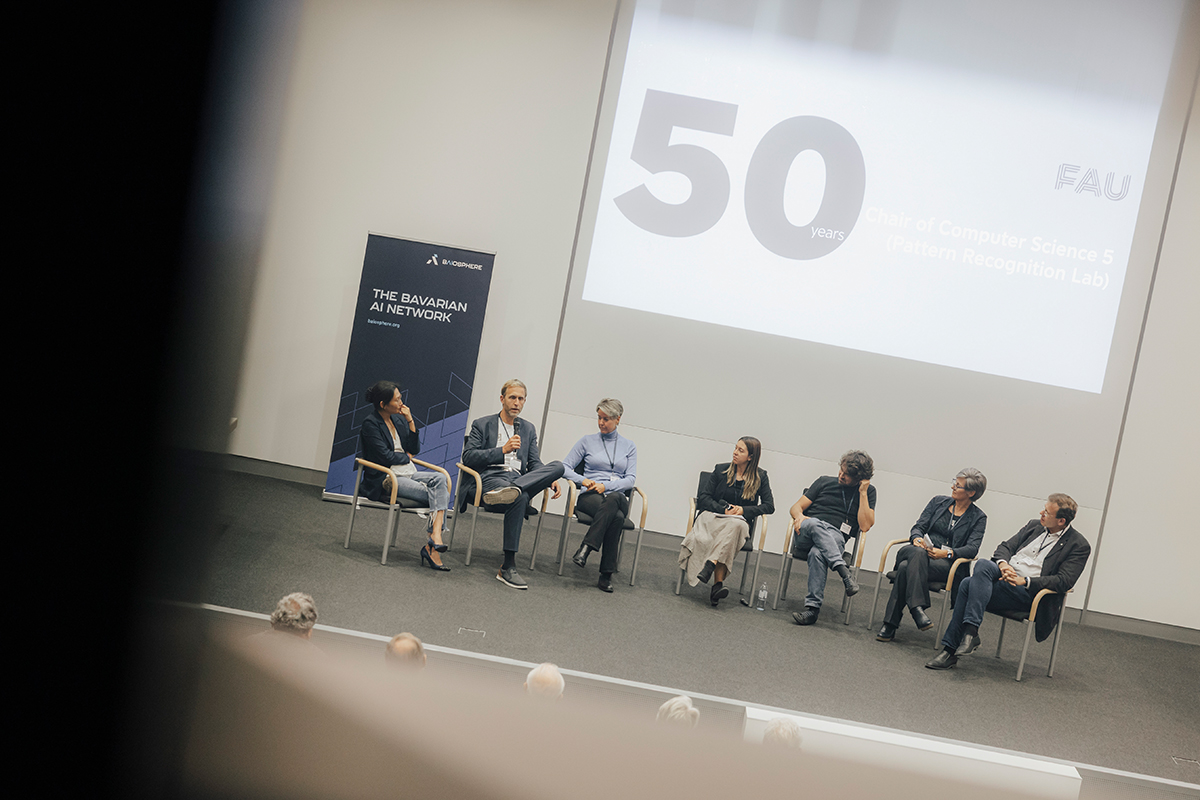 21/24
21/24 22/24
22/24 23/24
23/24 24/24
24/24Further information:
Prof. Dr. Joachim Hornegger
FAU President
praesidium-assistenz@fau.de
Prof. Dr. Andreas Maier
Pattern Recognition Lab
andreas.maier@fau.de