
FAU starts new international research project
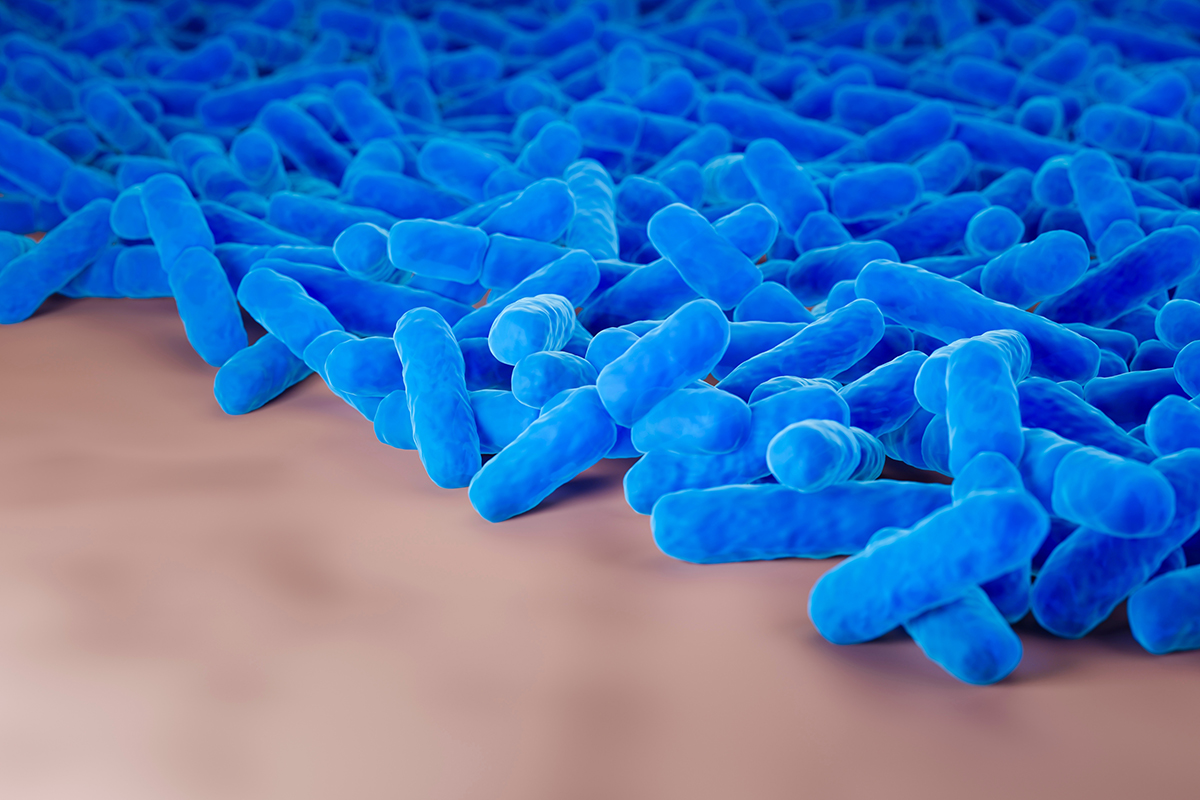
Bacteria use surfaces to join together into complex heterogeneous communities known as biofilms. Within a group, bacteria in a biofilm are extremely resistant to various environmental influences. How these biofilms form is the subject of a new international research project at Friedrich-Alexander-Universität Erlangen-Nürnberg (FAU). The German Research Foundation (DFG) and the Israel Science Foundation (ISF) are providing funding of around 750,000 euros for three years for the collaboration.
Biofilms are everywhere
Bacterial biofilms can be found everywhere and play a decisive role in many areas of our lives. We brush them off our teeth, they aid digestion in the gut, but can also cause deadly hospital infections or major problems in industry such as blocking oil pipelines or slowing cruise ships down.
One of the most important characteristics of a biofilm is something known as the extracellular matrix (ECM). This is excreted by the bacteria that collects in order to cover the community of bacterial cells and join them together. How such a matrix forms it is not yet completely understood, despite decades of research. The interdisciplinary team led by Prof. Dr. Vasily Zaburdaev, Chair of Mathematics in Life Sciences at Friedrich-Alexander-Universität Erlangen-Nürnberg (FAU) and Max-Planck-Zentrum für Physik und Medizin (MPZPM), Erlangen, Prof. Dr. Liraz Chai, Hebrew University of Jerusalem, and Dr. Thomas Pfohl, University of Freiburg, want to change this.
Investigating mechanical, physical and chemical mechanisms
In this project, the team will use its specialist knowledge in bio-microfluidics, bacterial ECM mechanobiology and biochemistry in conjunction with theoretical modeling to decipher the chronology and the microscopic mechanisms of bacterial ECM formation. All in all, this project aims to uncover previously unknown mechanical, physical and chemical mechanisms that lead to the formation of the ECM, which is one of the most important binding components of bacterial biofilms which can provide new insights into their physiology.
Further information:
Prof. Dr. Vasily Zaburdaev
Chair of Mathematics in the Life Sciences
Phone: + 49 9131 8284102
vasily.zaburdaev@fau.de