
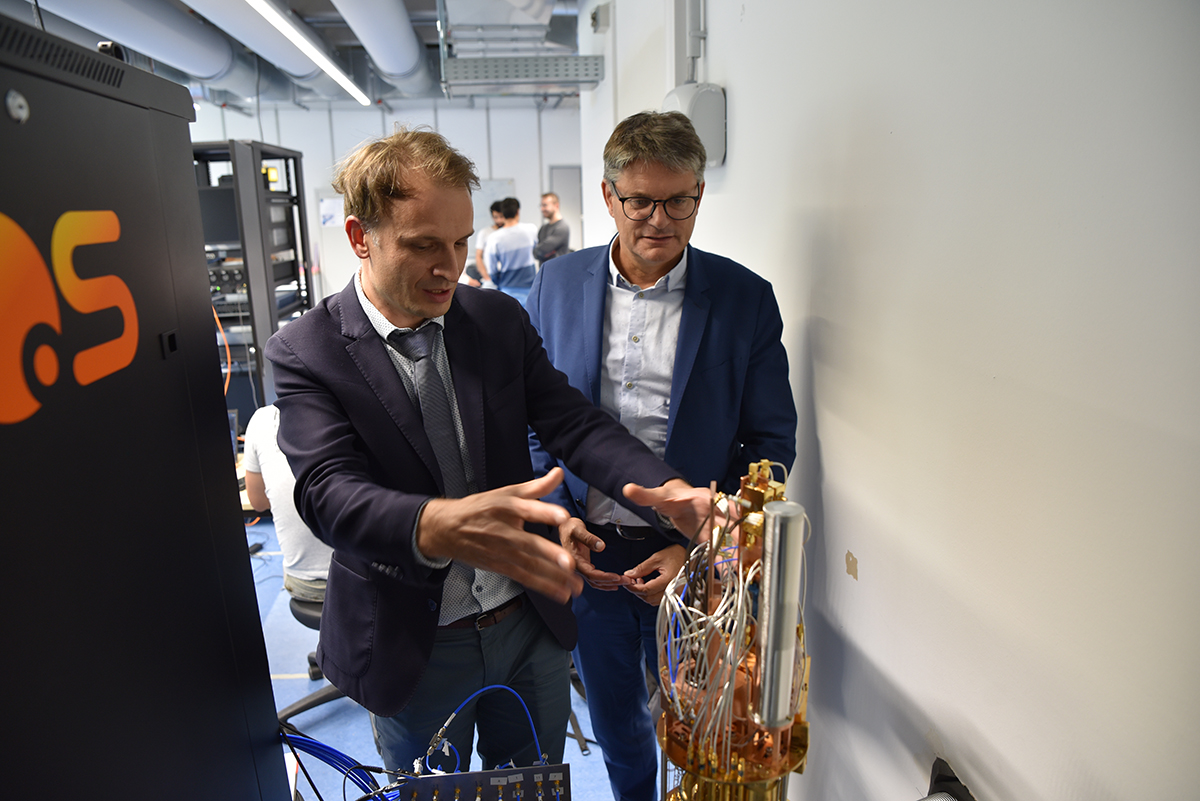
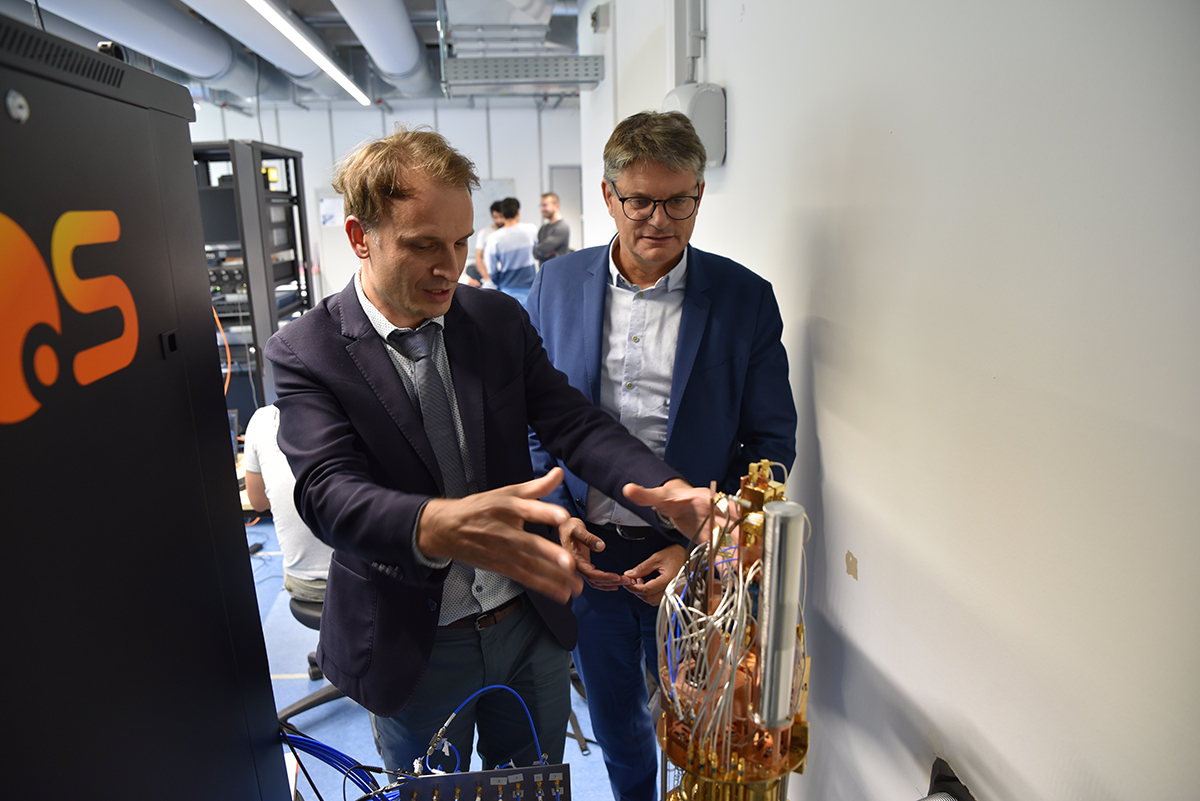
ERC Consolidator Grant awarded to Prof. Dr. Christopher Eichler
Quantum computers promise to be significantly faster and more efficient than their conventional counterparts in several fields. However, their processors are still prone to errors. Prof. Dr. Christopher Eichler at Friedrich-Alexander-Universität Erlangen-Nürnberg (FAU) develops quantum processors that are able to find these errors more efficiently and correct them. Successfully implementing such methods is vital in ensuring this technology makes a breakthrough. The European Research Council (ERC) will finance the project in the coming five years with 2.7 million euros.
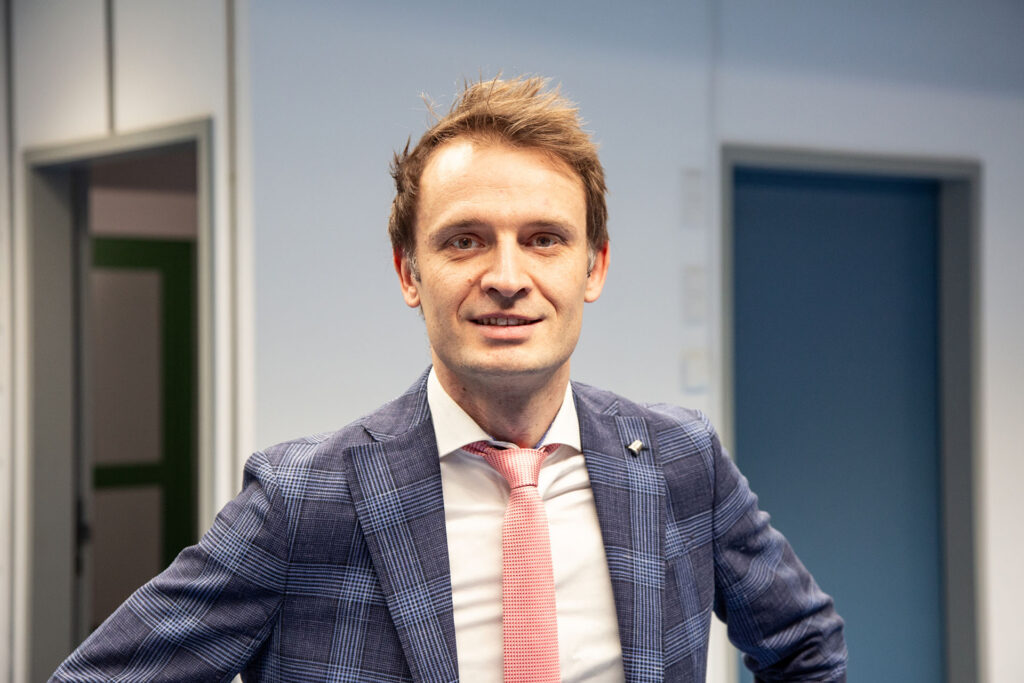
Research is similar to music, says Christoph Eichler: Great things are usually achieved through the collaboration of many people and a lot of hard work. The 41-year old knows what he’s talking about, since he studied music alongside his degree in physics in Frankfurt. After periods of research at ETH Zürich and Princeton, he was appointed Chair of Experimental Physics at FAU in September 2022, where he has been investigating quantum information processing with superconducting circuits ever since. The foundations of this field were laid in the 1980s and honored with a Nobel prize this year.
The focus of Eichler’s research team lies in developing quantum computers – computers that utilize the fundamental laws of quantum physics. Their enormous potential has been fueling the ambitions of the quantum research community for several years. This is because the ability to superposition quantum mechanical conditions can be beneficial to finding the solution to selected computing tasks more quickly. This means that future quantum computers could solve tasks in a short period of time that would take conventional computers thousands of years to complete.
Repeated saving to correct errors
“However, quantum computers are still currently making errors,” explains Eichler. “This puts enormous limits on their performance. To make a breakthrough with this technology, we therefore need efficient correction methods.” Eichler would like to develop these methods in his project “Quantum Error Correction with Multispecies Superconducting Circuits” or MultiCorreQCt for short. He has now been awarded a Consolidator Grant for his work by the European Research Council (ERC).
Conventional computers only have one type of error: Bits can unintentionally change their value from 0 to 1 and from 1 to 0. To correct this error, the same information can be saved several times, for example. If the value of these bits is then “0” and one of them is “1”, it is highly likely that the correct value must be “0”.
In quantum computers, calculations are performed using superposition states. In addition to the bitflip error described above, another type of error can occur in quantum computers – the phase error. Quantum error correction must correct both types of errors, which makes everything more complex. A particularly high amount of redundancy needs to be created in order to correct all the errors that occur.
Individual error correction methods for various types of errors
“During recent years, research has demonstrated that this highly redundant saving of quantum information works in principle to detect and correct errors,” says Eichler. “However, it involves a great deal of outlay. With the best correction methods currently available, we would need thousands of physical quantum bits for one sufficiently error-tolerant logical quantum bit. We want to use new approaches in order to significantly reduce the number of physical elements and the resources required.”
To do so, Eichler will develop quantum processors that detect the most frequent types of errors directly at the source. The remaining errors will then be eliminated in a second round of corrections. Eichler also wants to optimize the individual components himself in order to implement such multi-stage correction methods. “Currently, only one component is used for all tasks on the chip,” says physicist Eichler. “Instead of this, we want to combine various types of these superconducting switching elements which will enable us to use the optimum component for each task.” This could make correcting errors in future considerably simpler and thus rapidly accelerate the development of quantum computers suitable for practical applications as well as make them cheaper and more resource-efficient.
Excellent environment
Eichler also benefits from the excellent research environment at FAU for turning his ideas into reality. For example, the neighboring Max Planck Institute for the Science of Light has highly equipped cleanrooms that are essential for manufacturing chips. “In addition, I really enjoy being part of the close network of students and researchers and the excellent collaboration with co-workers in our department.”
About Professor Eichler
Prof. Dr. Christopher Eichler has held the Chair of Experimental Physics at FAU since 2022. He completed his doctoral degree at ETH Zürich, one of the most renowned locations for quantum research in Europe, where he made a significant contribution to breakthroughs in quantum error correction. From 2014 to 2016, he worked as a Dicke Fellow at the renowned Princeton University in the USA. At FAU, Eichler’s working group is closely involved in the Bavarian initiative “Munich Quantum Valley” and it contributes significantly to the development of superconducting quantum hardware.
Further information:
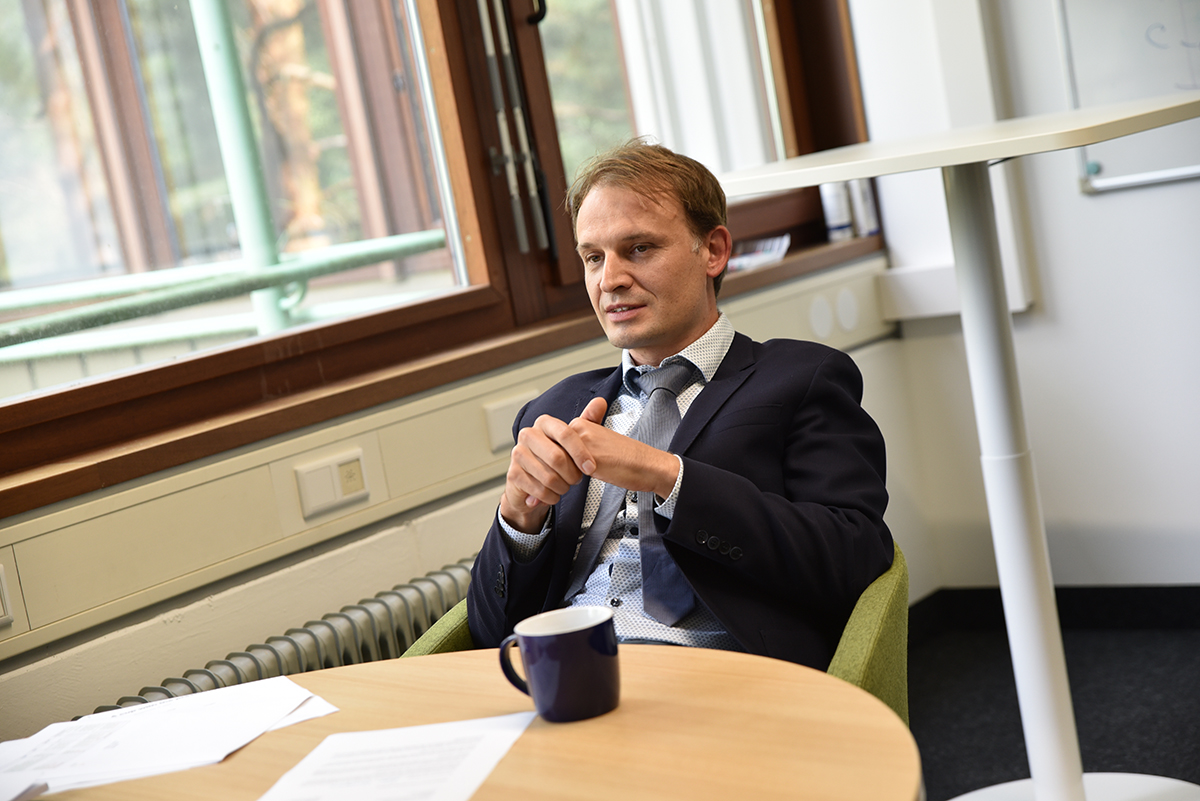
Prof. Dr. Christopher Eichler
Contact
- File Name
- 2_Porträt
- File Size
- 581 KB
- File Type
- JPEG
- File Name
- Christopher Eichler und Joachim Hornegger
- File Size
- 617 KB
- File Type
- JPEG