
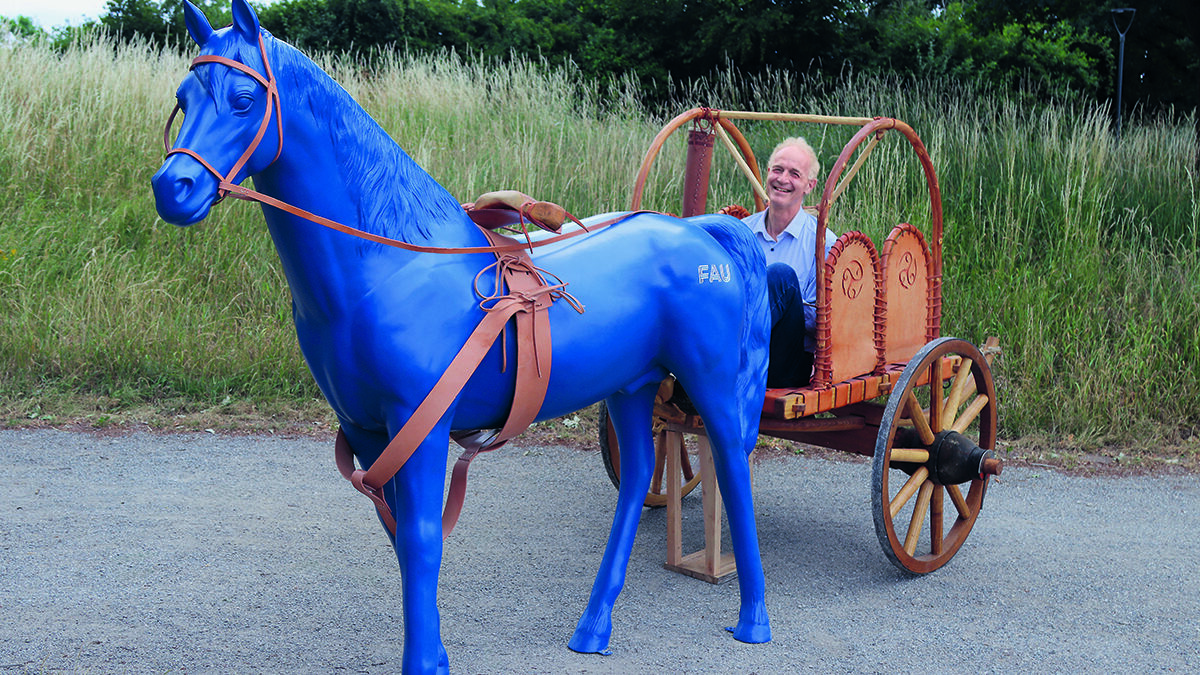
FAU Professor of Ancient History Boris Dreyer and his team are preparing their Roman replicas for the coming year
There’s plenty to do in the Roman Center in Gunzenhausen on the shores of Altmühlsee lake, even in winter, and time is running out. In February 2026, the renowned coach expert and collector Jörg Wildung will test the FAU replicas of a Celtic chariot and a Roman carriage and light carriage on the stud farm of Schloss Kühlenfels near Pottenstein. This is the reason why Boris Dreyer from the Professorship for Ancient History and his team of students and volunteers are now pulling out all the stops to get everything ready. They recently had the assistance of high school students from Melanchthon Gymnasium in Nuremberg who were on site as part of a joint seminar held by the Chair of School Education focusing on School Development Research and Experiential Learning at Friedrich-Alexander-Universität Erlangen-Nürnberg (FAU). For the seminar, the FAU students developed a history lesson during which school pupils are allowed to try their hand themselves.
Tasks for winter and preparing for tests
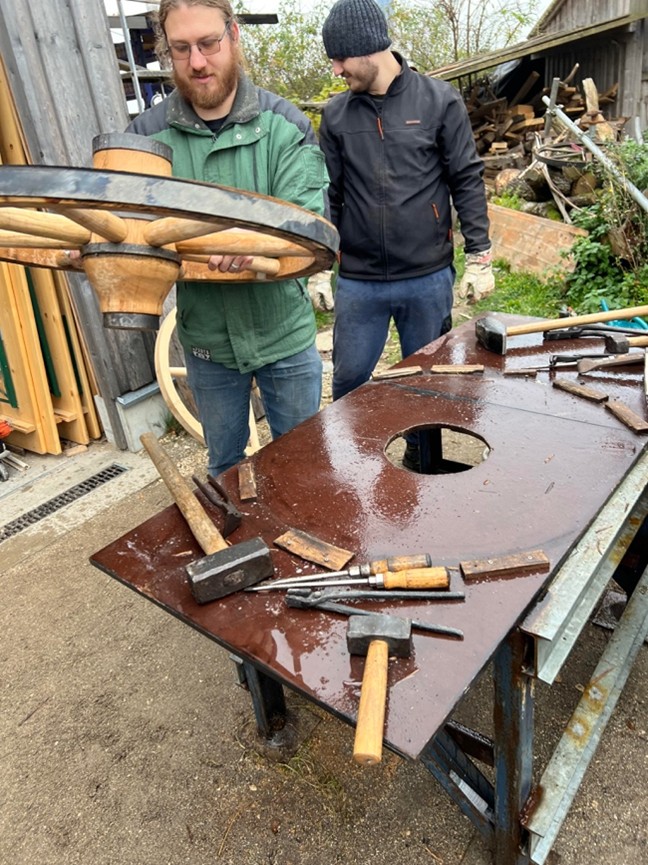
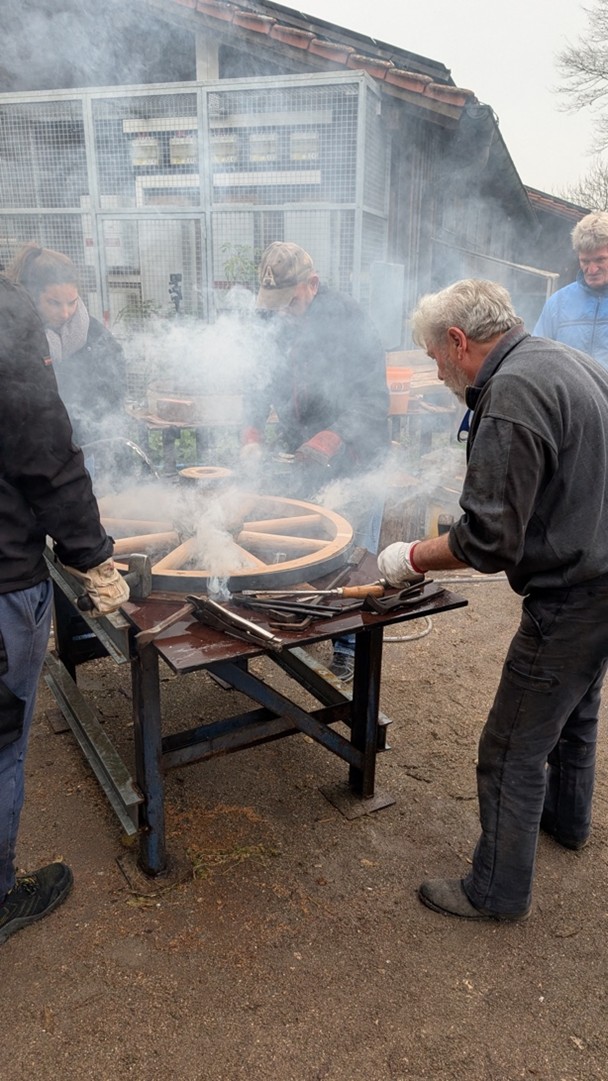
An important stage of the construction process of the Roman carriages was completed at the beginning of November as all the wheels were fitted with iron hoops. The Langenrehm wheelwright’s workshop near Hamburg made the six spoke wheels. The iron hoops were then heated by Dreyer’s team using a wood fire and charcoal embers to around 500 degrees, fitted on the wheels and rapidly cooled. This process is called shrink fitting. The team also riveted iron fittings for the transverse suspension on the Roman carriage.
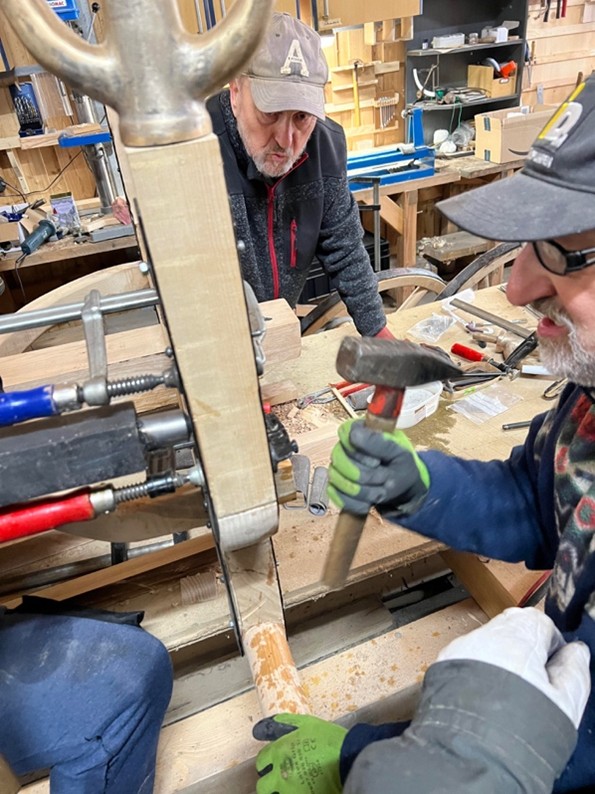
Dreyer’s team and the high school students also had to do some work on the replica Roman boats at the center. They hauled the wooden flat-bottomed boat called “Alchmona rediviva”, which was only launched in September, out of the water. As is the case with the F.A.N. and the Danuvina, which will be traveling to Osijek in Croatia in 2026, the flat-bottomed boat will undergo maintenance during the winter. In addition, the F.A.N. and the Alchmona rediviva as well as the catapults, weapons and carriages will be prepared for testing. These tests will take place in collaboration with researchers in fluid dynamics from Hungary as well as with engineers from TU Dortmund University during the coming year.
Further information:
Prof. Dr. Boris Dreyer
Professorship for Ancient History
Boris.dreyer@fau.de