
FAU study shows how a chromosome reduces severity of disease
In conjunction with University Medical Center Mainz, researchers at Friedrich-Alexander-Universität Erlangen-Nürnberg (FAU) have identified a mechanism that protects the female brain from genetic diseases. Although one of the two X chromosomes is switched off in female cells at an early stage, cells reactivate selected genes on this chromosome. This results in weaker symptoms of disease.
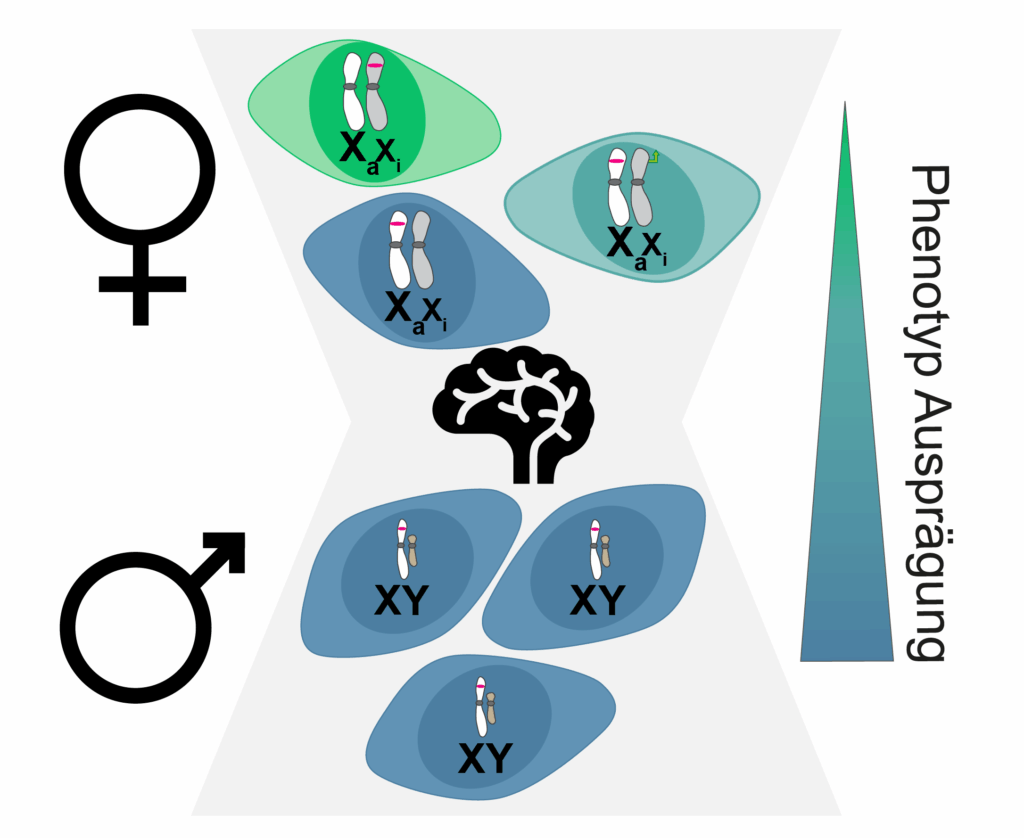
Female cells have two X chromosomes and male cells have one X chromosome and one Y chromosome. So that the body can develop normally, it switches off one of the two X chromosomes in females in a very early stage of embryonic development. This chromosome remains in the cell, but most of its genes are switched off.
“Research had already indicated that this mechanism does not affect the entire chromosome,” explains Dr. Sven Falk from the Institute of Biochemistry at FAU. “With our study, we were now able to show that the deactivated X chromosome is put back into use later on in embryonic development.”
A component in early brain development
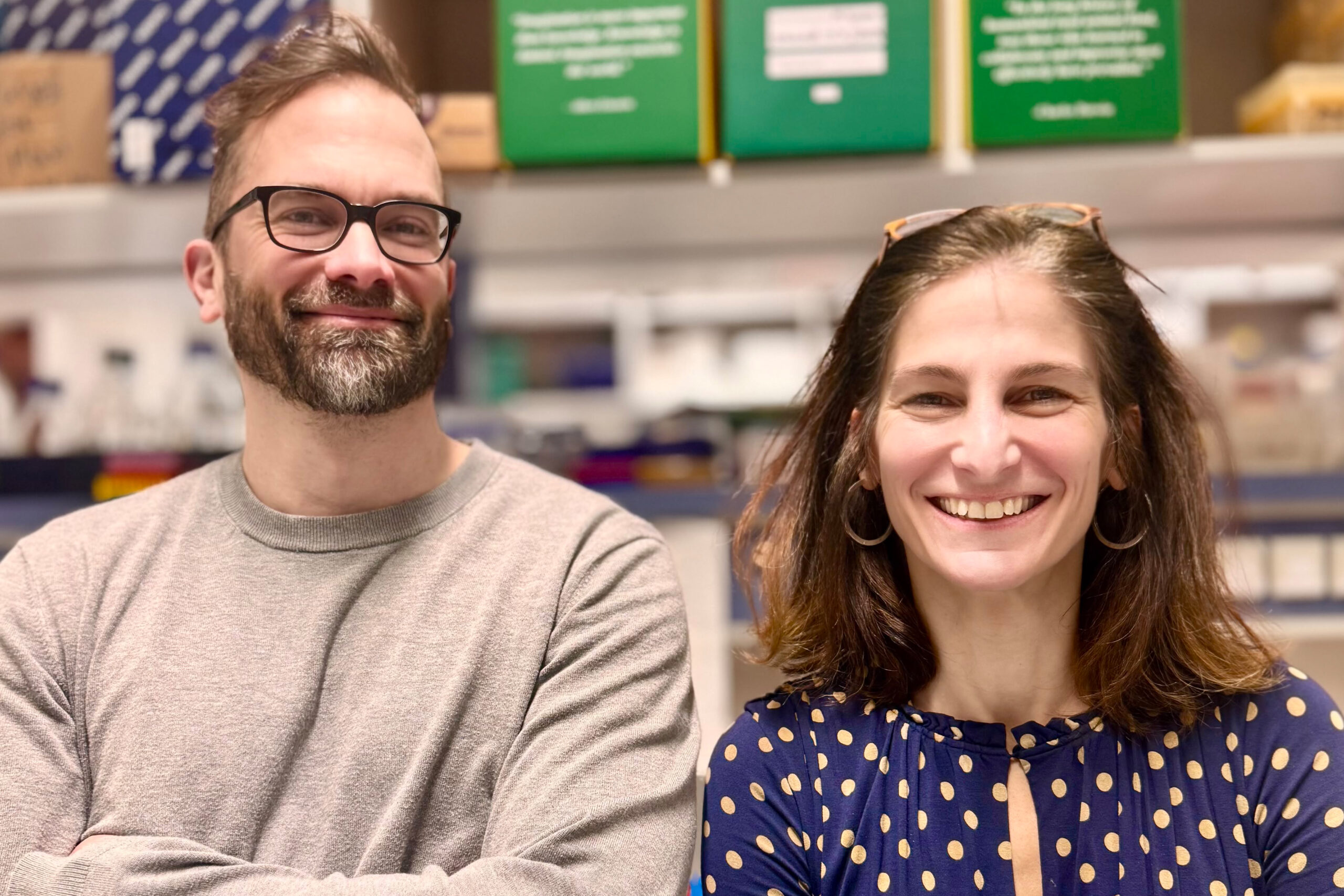
The teams led by Prof. Dr. Marisa Karow and Dr. Sven Falk at FAU and Prof. Susann Schweiger at UMC Mainz discovered that during human brain development, selected genes on the previously deactivated X chromosome are reactivated. “This reactivation does not occur to the same extent in all cells, but varies in different groups of cells”, explains Dr. Sven Falk. “It occurs more frequently in cells that develop more brain cells.”
Research with human cell models
The researchers investigated this mechanism with human cell models, using what is known as induced pluripotent stem cells. These are cells from the body that have been reverted back to an earlier stage of development in the laboratory. They can then grow to become various types of brain cells.
The researchers take these stem cells and use them to form brain organoids. These tissue structures, which are only a few millimeters in size, reproduce early stages of human brain development in the laboratory. “This enables us to investigate processes that are different in humans and animals,” says Dr. Falk.
Weaker signs of disease in female brain tissue
The research team investigated which effects this reactivation has on the severity of signs of disease in female brain tissue. They use brain organoids as a disease model that reproduces the rare genetic disorder Opitz G/BBB syndrome.
Their investigations showed that signs of disease were less severe in female brain tissue if the genes on the deactivated X chromosome became active again. This reactivation acts like additional protection. “We were able to demonstrate that this reactivation makes a measurable difference,” says Falk. “It contributes to reducing the signs of disease in the female brain.”
One X chromosome as a reserve
The results give a potential biological reason as to why female patients have less severe symptoms in a number of genetic developmental disorders of the brain. Whereas a defect to the only X chromosome in males affects every cell, the activity of both X chromosomes in women is distributed over different cells.
In addition, the deactivated X chromosome can sometimes be reactivated during brain development. The researchers refer to this as a genetic reserve. “This second X chromosome is not only available, it is also actually used during brain development,” says Falk.
The study shows for the first time that the second X chromosome in the female brain actively contributes to reducing the severity of disease symptoms. In the long term, this knowledge could be useful for developing new approaches for the treatment of genetic developmental disorders.
Further information:
Prof. Dr. Marisa Karow
Institute of Biochemistry
marisa.karow@fau.de
Dr. Sven Falk
Institute of Biochemistry
sven.falk@fau.de