
An international team has upgraded the IceCube neutrino observatory at the South Pole.
There are new eyes in the Antarctic ice. An international team of scientists and technicians, including a group of researchers from Friedrich-Alexander-Universität Erlangen-Nürnberg (FAU), has just installed more than 600 new sensors for IceCube – a giant neutrino observatory at the South Pole. There, they capture ghostly cosmic particles known as neutrinos.
Neutrinos are produced in various types of nuclear reactions. They are virtually massless, carry no electrical charge, and only very rarely interact with matter. In recent decades, however, researchers have found ways to detect neutrinos using huge amounts of dense material – in this case, the ice sheet of Antarctica – and thus learn a great deal about these particles in a relatively short time. When neutrinos interact with matter, one of the results is a brief flash of light. With the help of photomultiplier tubes (PMT), the researchers amplify the light into electrical signals that can be detected. Using this method, neutrino observatories around the world turn these ghostly particles into messengers that deliver information about distant regions of the universe. IceCube has emerged as a unique pioneer among these observatories, making discoveries that have not been made anywhere else.
New sensors for IceCube from Germany
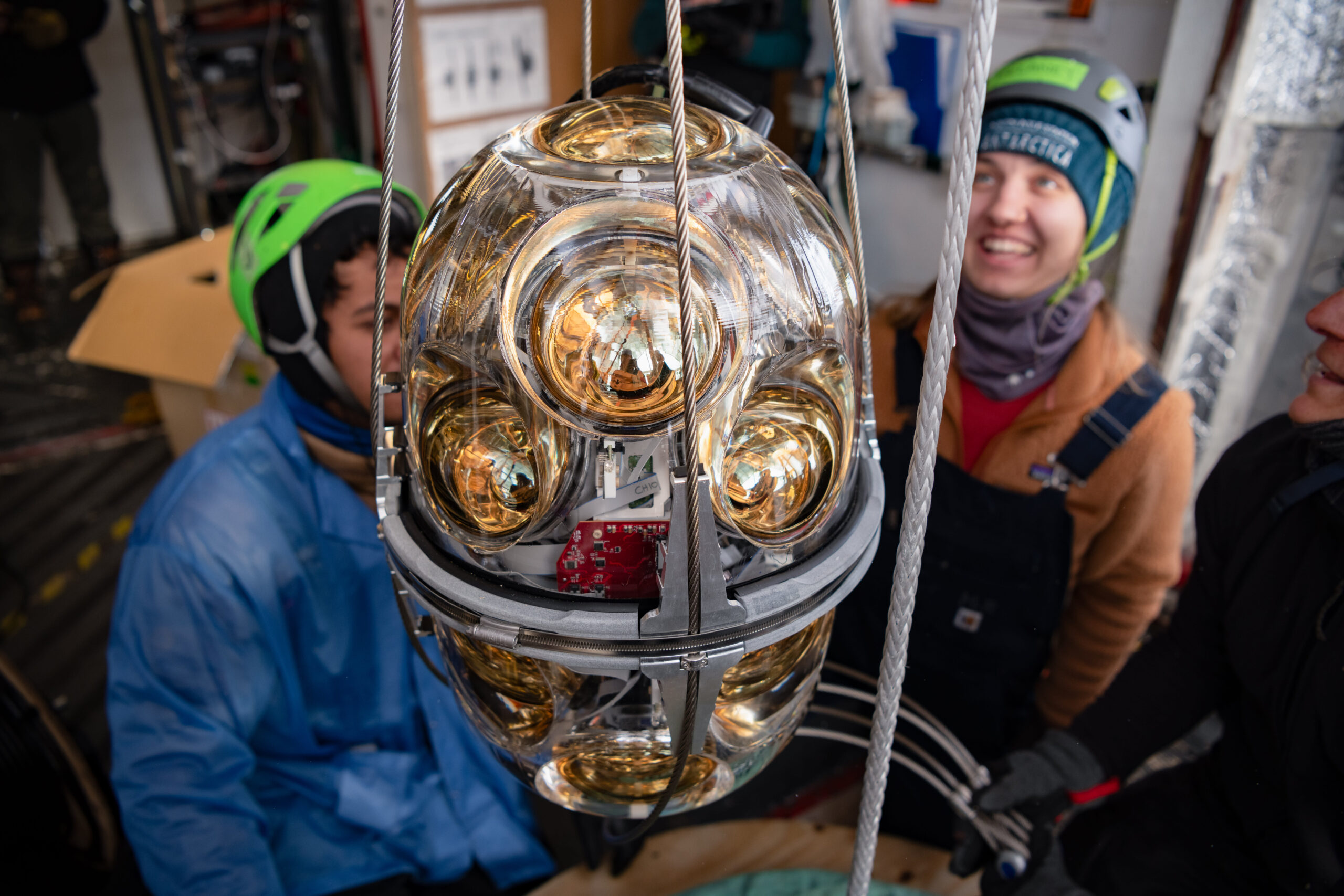
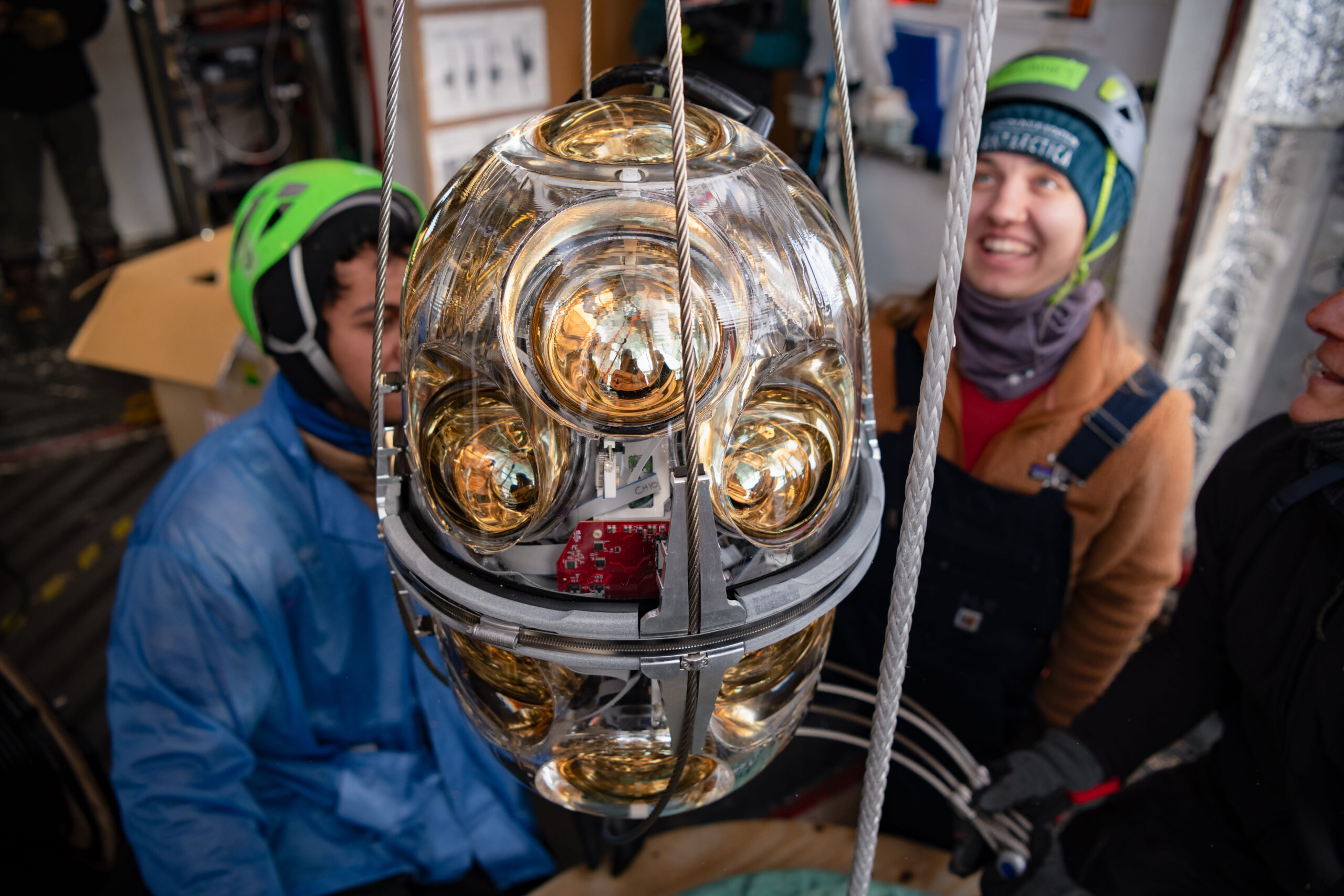
The sensors developed in Germany, which have now been newly installed in the IceCube telescope, are called mDOMs (multi-PMT digital optical modules) and are slightly larger than a basketball. They are connected to each other like pearls on a necklace by a long cable known as a string. These strings, each consisting of more than 100 components, are sunk into bore holes 2,600 meters deep in the Antarctic ice.
The sensors were developed in a joint effort by DESY (Deutsches Elektronen-Synchrotron), the universities of Münster, Aachen, Wuppertal, Mainz, Dortmund, Karlsruhe, and FAU. The new components should help the IceCube detector to detect lower-energy neutrinos much more effectively than before.
FAU technology maps contaminants in ice
The Antarctic ice sheet consists of layers of snow that have been deposited and compacted over a period of approximately one hundred thousand years. These layers contain dust from the atmosphere that can deflect or scatter light, including the flashes of light produced by neutrinos. This phenomenon makes it difficult to reconstruct where the neutrinos come from and how energy-rich they are. In addition, such a neutrino sighting is a rather rare event that only occurs a few dozen to a hundred times per year.
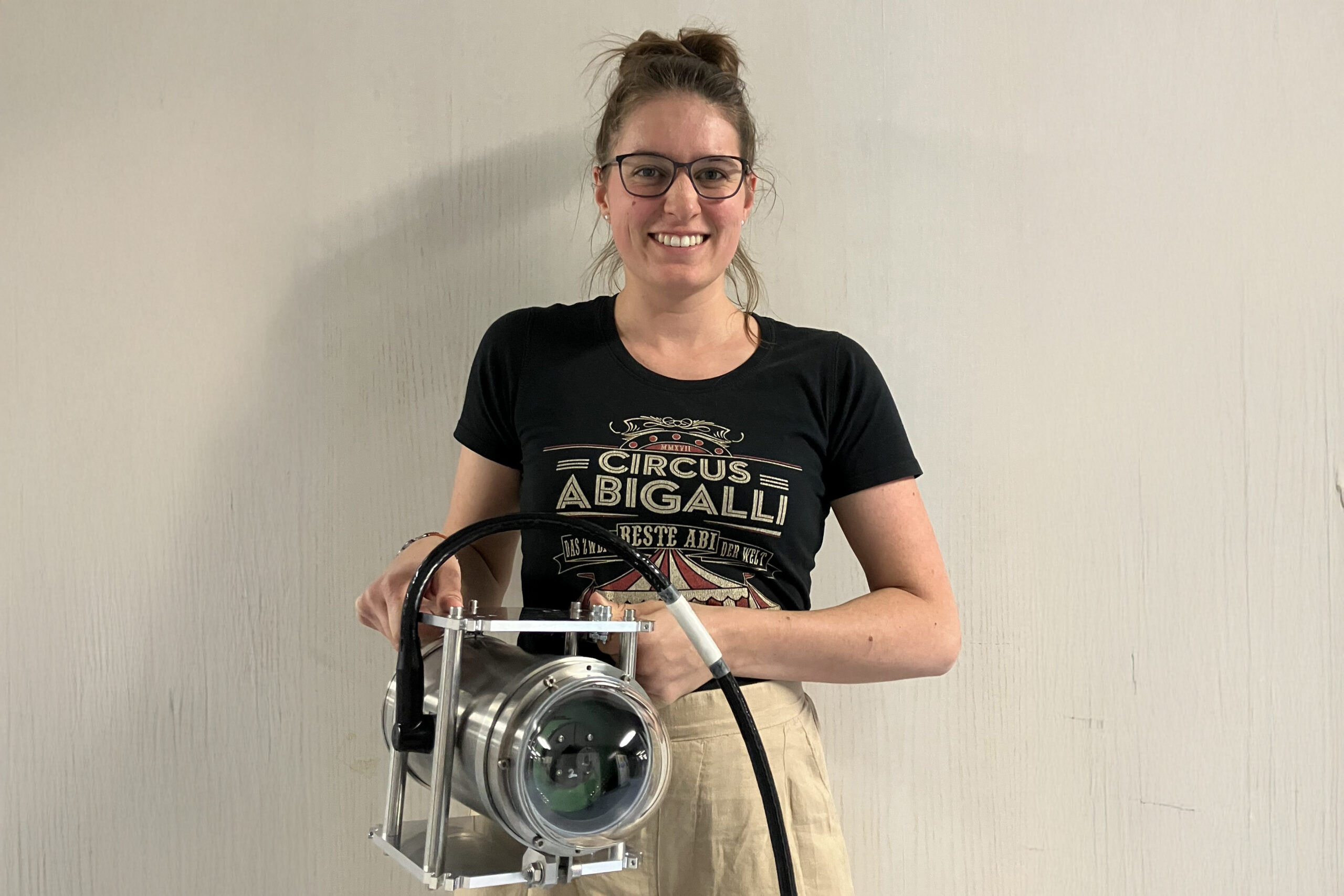
The FAU team led by Prof. Dr. Claudio Kopper from the Erlangen Center for Astroparticle Physics (ECAP) has taken on this problem. Doctoral candidate and astrophysicist Anna Eimer developed a “LOMlogger” for this purpose. “This hardware component maps the ice stratification using a laser that shines into the ice and a sensor module that records the intensity of the light that is scattered back,” she explains. “An improved understanding of the optical properties of glacier ice makes it possible to reconstruct the direction and energy of the particles more precisely than before.” The team from Erlangen was not on site during the installation of the new IceCube components in the Antarctic summer at the end of last year. However, Dr. Martin Rongen is familiar with the conditions at the South Pole from previous visits: “A stay at the South Pole always has the special character of an expedition: getting our equipment in Christchurch, the journey there in US military transport planes, the inhospitable ice desert of the Antarctic high plateau, and the constant brightness during the months we are working there…”
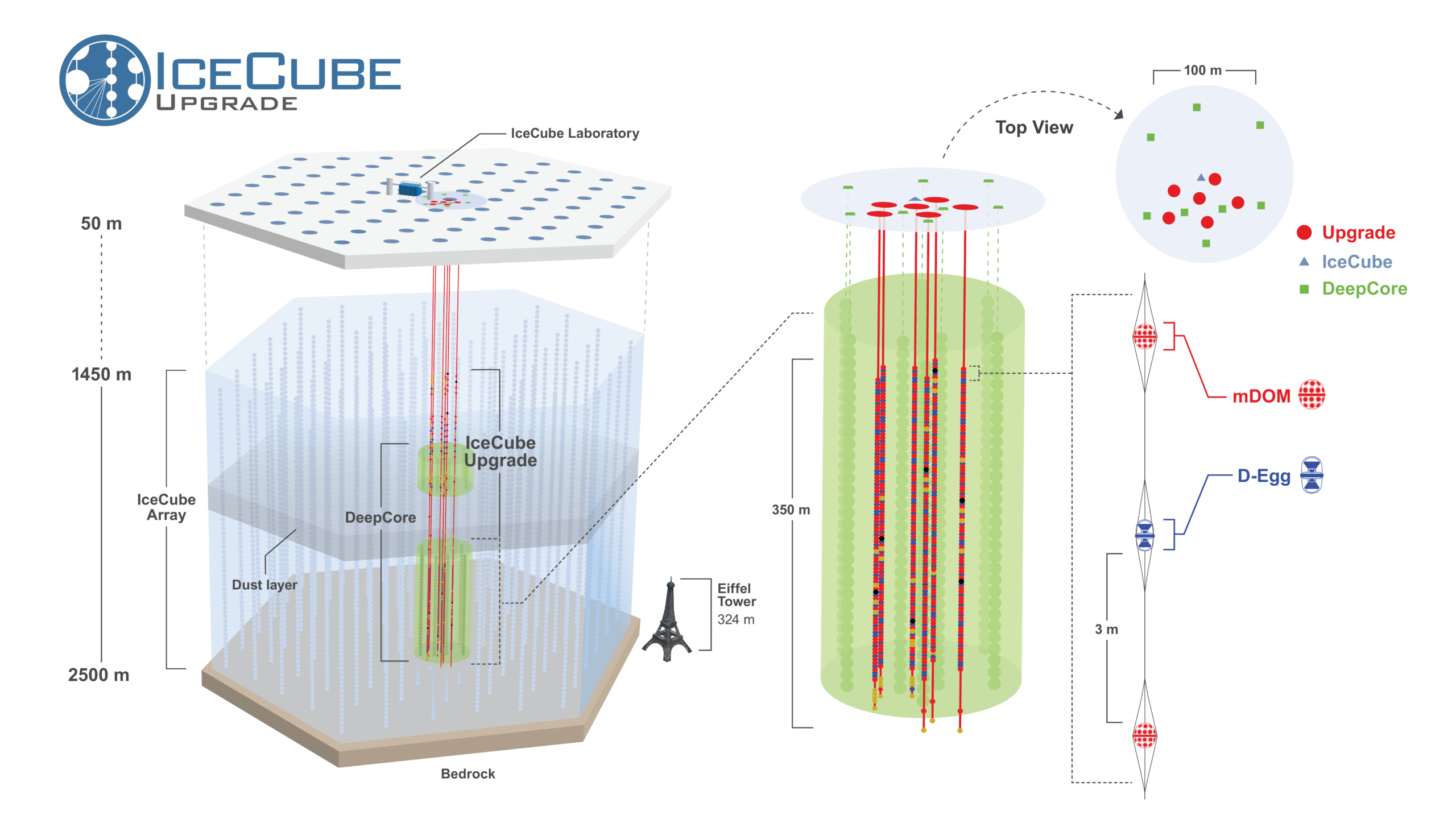
The IceCube upgrade consists of six new strings at the locations marked in red in the top view. The current IceCube array, optimized for TeV neutrinos, is shown in blue, while the existing low-energy extension called DeepCore is shown in green. The new module types mDOMs (red dots) and D-Eggs (blue dots) each contain several photosensors in each module. 1/8(Image: IceCube/NSF)1/8

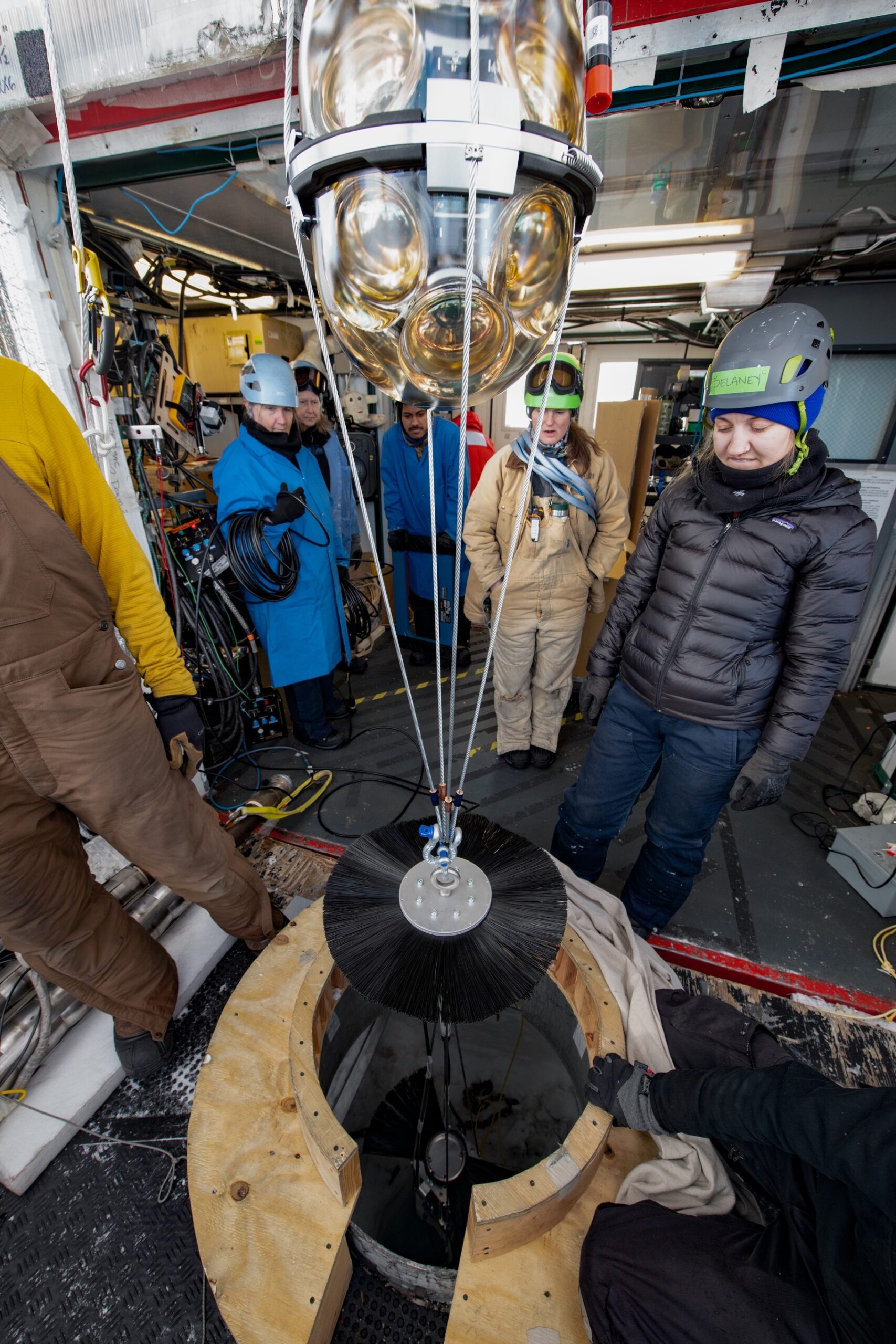
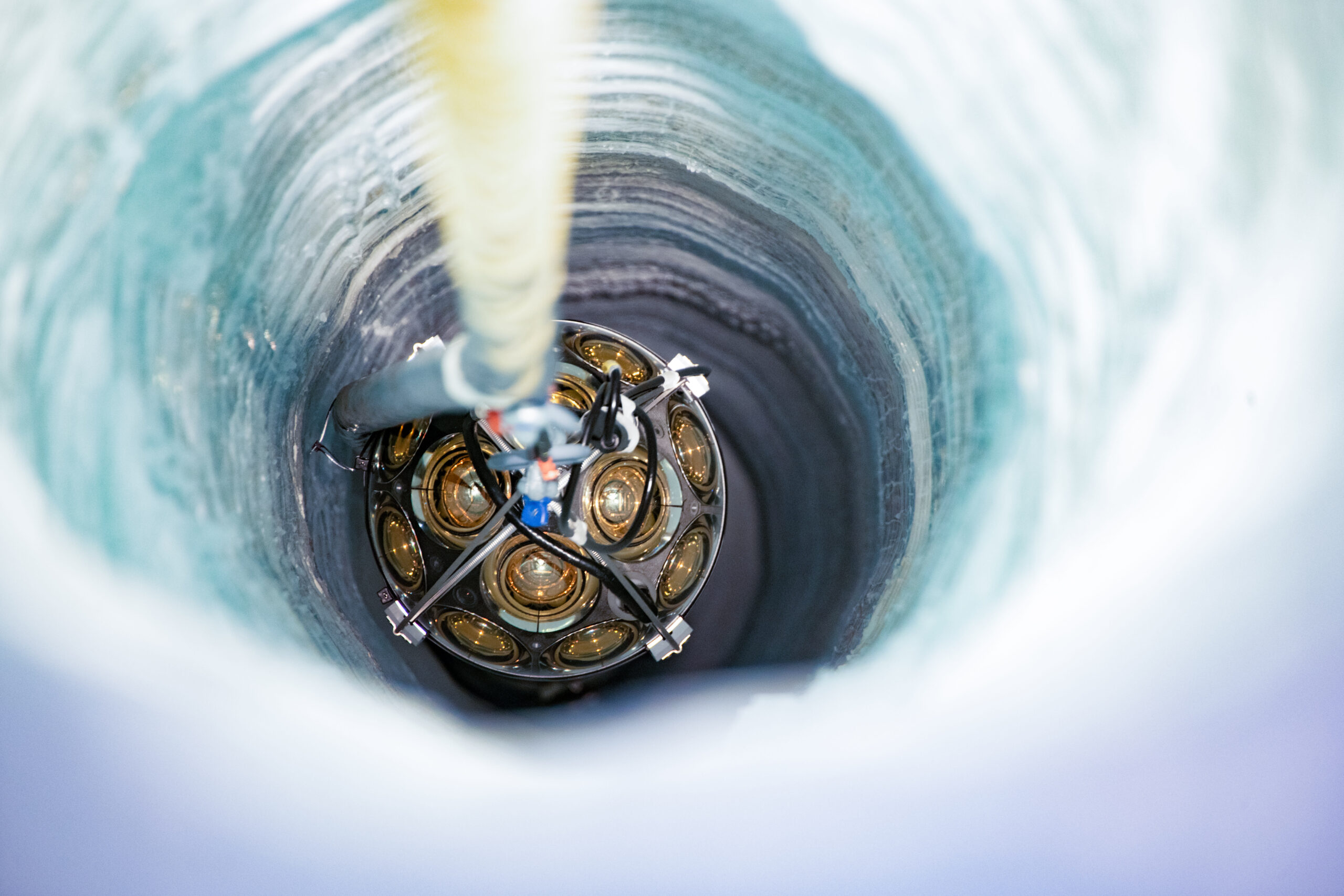
6/86/8
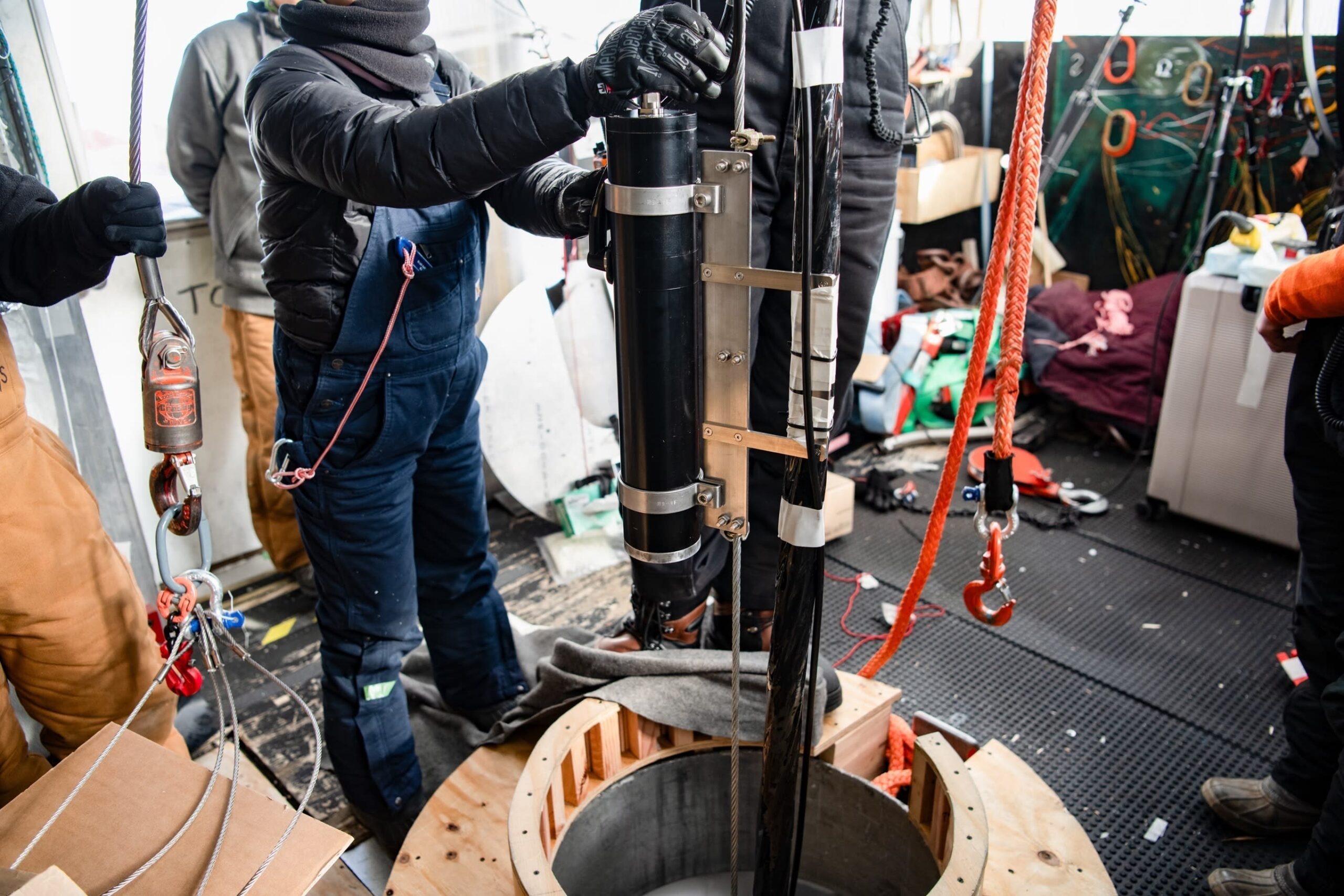
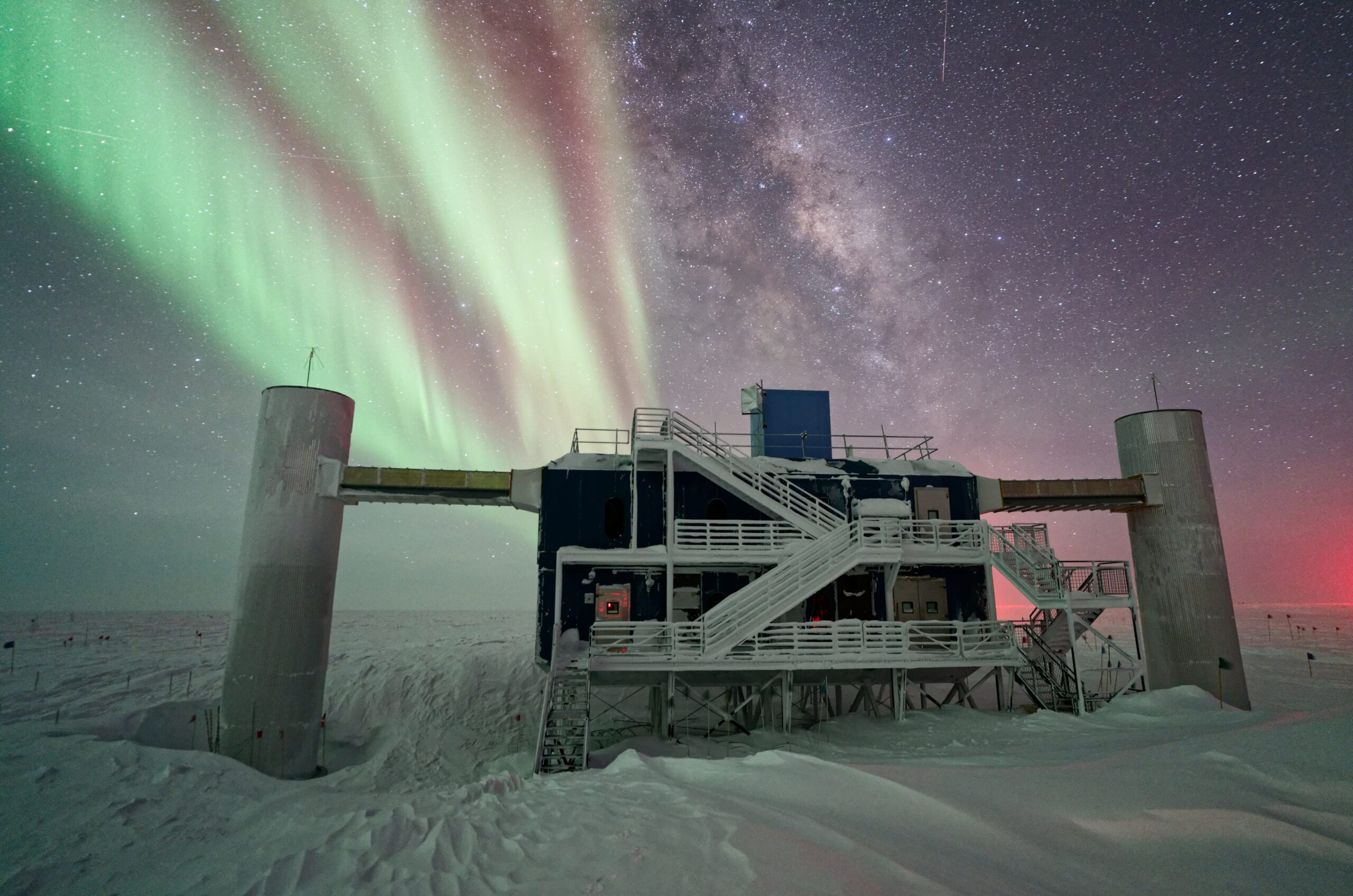
A new expansion stage of IceCube is in preparation.
The current work on the telescope is part of the IceCube upgrade, which will enable more precise measurements of neutrino properties, such as neutrino oscillations. Oscillations are a phenomenon in which atmospheric neutrinos can transform into different types or “flavors” – electron, muon, and tau. The IceCube upgrade also serves as a stepping stone for the next major neutrino experiment at the South Pole: IceCube-Gen2. The IceCube Neutrino Observatory is an international consortium led by the US National Science Foundation and the University of Wisconsin-Madison.
Detailed press release from Deutsches Elektronen-Synchrotron DESY as well as images:
Further information:
Prof. Dr. Claudio Kopper
Contact
- File Name
- Dr. Martin Rongen
- File Size
- 279 KB
- File Type
- JPEG
- File Name
- Anna Eimer
- File Size
- 419 KB
- File Type
- JPEG
- File Name
- LOM18
- File Size
- 601 KB
- File Type
- JPEG
- File Name
- icl_night-1
- File Size
- 592 KB
- File Type
- JPEG