
FAU researchers decipher the key role of a regulatory DNA element in tumor growth
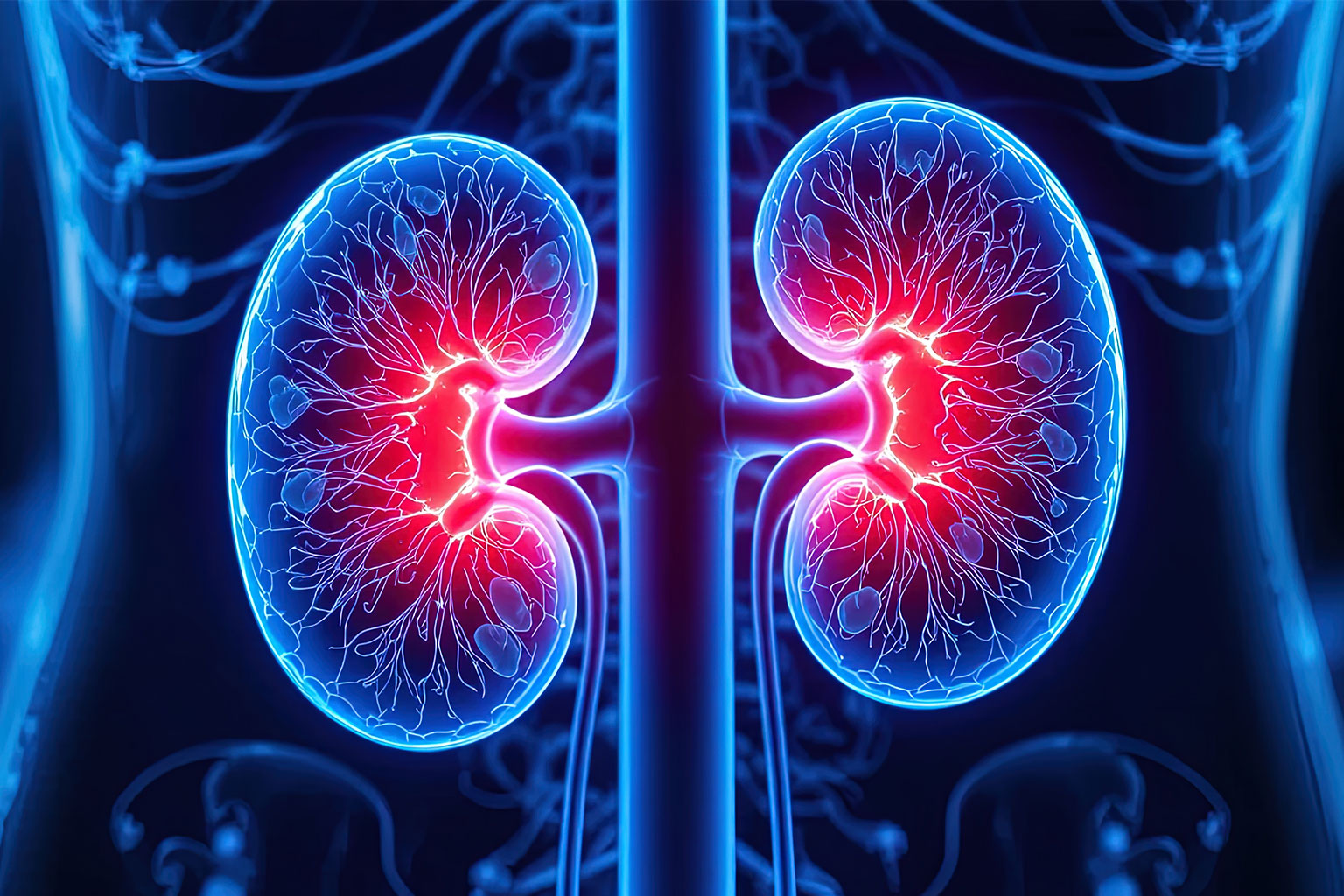
Switching off a regulatory DNA element can slow tumor growth in the most common type of kidney cancer, renal clear cell carcinoma. This has now been shown by a team of researchers from Friedrich-Alexander-Universität Erlangen-Nürnberg (FAU) and Uniklinikum Erlangen. Their results describe a new approach that prevents excessive production of an oncogenic protein.
Renal cell carcinoma is one of the 15 most common cancers world wide. In Germany, approximately 15,000 people are diagnosed with the disease every year, 70 to 80 percent of these cases are renal clear cell carcinoma, the most common form of this type of cancer. “The disease is particularly problematic once it metastasizes,” explains Dr. Stephanie Naas, physician and researcher and Uniklinikum Erlangen. “At that stage, treatment options remain limited.”
Disrupted oxygen signaling pathway as cause
Renal clear cell carcinoma is triggered by changes in a protective gene within the cell, the von Hippel-Lindau (VHL) gene. In healthy cells, this gene ensures that a certain protein, hypoxia-inducible factor HIF-2α, is only active when oxygen is lacking. If the protective gene is defective, HIF-2α remains active at all times and is no longer broken down, so the cell then behaves as if it is constantly deprived of oxygen, which promotes tumor growth.

Dr. Stephanie Naas
Department of Medicine 4 – Nephrology and Hypertension at Uniklinikum Erlangen
“Novel drugs such as belzutifan target this signaling pathway: By inhibiting HIF-2α, they also slow the oncogenic processes that this protein drives in the cell. However, some patients develop resistance to the drug, causing it to stop working sufficiently in their case,” says Dr. Naas. “Our approach starts earlier: We switch off a regulatory DNA element that is responsible for the high production of HIF-2α in tumor cells in the first place.”
Researchers target dysregulation in a DNA segment
In their current study, Prof. Dr. Dr. Johannes Schödel, specialist in internal medicine and nephrology and senior physician at Uniklinikum Erlangen, and Dr. Stephanie Naas demonstrated that the production of the protein HIF-2α is further increased via this DNA element. This regulatory element is exposed in kidney tumor cells and acts as an amplifier, resulting in unusually high amounts of the oncogenic protein HIF-2α.
“This dysregulation is linked to a specific section of DNA that is almost exclusively accessible in renal cell carcinoma cells,” explains Dr. Naas. “This may also be a major factor explaining why mutations in the VHL gene almost exclusively lead to tumors in the kidney.” In experiments, the researchers demonstrated that selectively switching off this section of DNA slowed tumor growth in model systems.
New prospects for future treatment
Further research will be needed before this approach can be applied in clinical practice. However, the results provide a new starting point for limiting the pathological overproduction of HIF-2α at an earlier stage and more precisely than previous therapies. This opens up new perspectives for future research and the development of novel treatment strategies.
DOI 10.1038/s41467-026-68576-0
Further information:
Prof. Dr. Dr. Johannes Schödel
Phone: + 49 9131/85-39002
johannes.schoedel@uk-erlangen.de
Dr. Stephanie Naas
stephanie.naas@uk-erlangen.de