
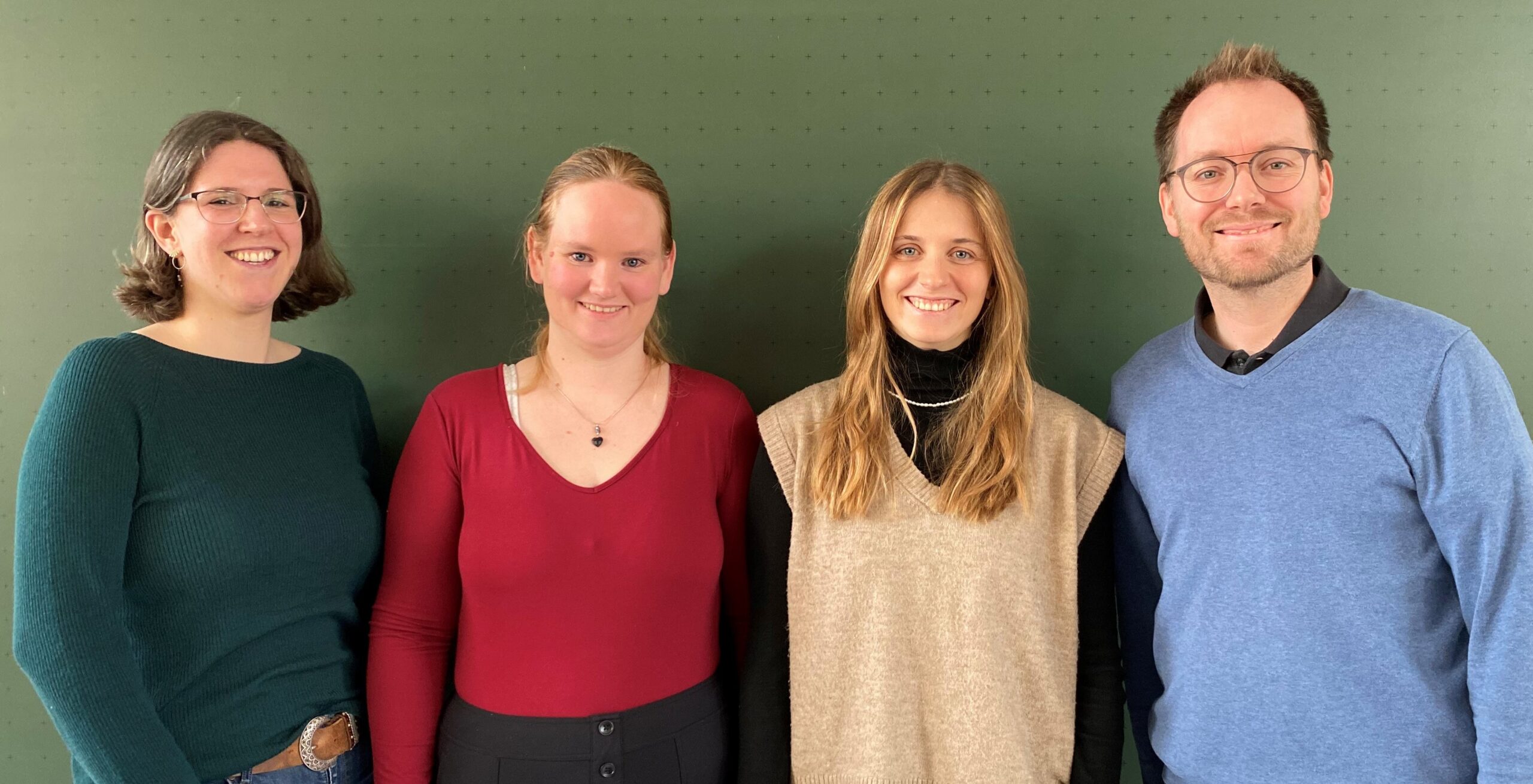
A study by FAU and Uniklinikum Erlangen shows: Metabolic rest is the key to long-lasting immunological memory
Why can the human immune system often remember a vaccination for a whole lifetime? Researchers at Friedrich-Alexander-Universität Erlangen-Nürnberg (FAU) and Universitätsklinikum Erlangen have now investigated this question. Their study provides a surprisingly clear answer: The immune cells responsible for immunological memory seem to switch to a type of standby mode at an early stage. They can survive for many decades in this state. The findings have now been published in the journal Nature Immunology.
The research team used the vaccination against yellow fever as a model system. With good reason, as it is considered one of the best examples of effective vaccination in humans. For most people, it requires only a single injection. Nevertheless, its protective effect is exceptionally strong and often lasts a lifetime. This makes the vaccination ideal as a “blueprint” for understanding how stable immunological memory develops.
The researchers examined more than 50 healthy adults who had just received a yellow fever vaccination and tracked their immune response over a whole year. They also analyzed blood samples from individuals vaccinated against yellow fever between seven and 26 years ago. This allowed a direct comparison of the characteristics exhibited by the body’s own immune cells shortly after vaccination – and those they retain over decades.
Hard-hitting fighters, long-lived sentinels
The team focused their attention on what are known as T lymphocytes. There are many different types of these cells in the body, each specialized for a specific category of pathogens. After a yellow fever infection (or vaccination), the types of T cells that target yellow fever virus-infected body cells multiply. This quickly creates an entire arsenal of suitable immune cells. Most of them perish after successfully fighting the virus. However, some “memory cells” persist in the long term.
Even at the beginning of the immune response, not all T cells are dedicated to defending against pathogens. Some leave to stand guard in the future – often for many decades. “In the event of a new infection, they can then multiply very rapidly,” explains Prof. Dr. Kilian Schober, Heisenberg Professor of T-Cell Immunology at the Institute of Microbiology (Director: Prof. Dr. Christian Bogdan) of Uniklinikum Erlangen, who led the study. “The immune system then reacts much faster than when it first encounters the pathogen and can nip the infection in the bud.” This immunological memory is also the main reason why vaccination protects against diseases.
Survival in low gear
But how exactly do these long-lived memory T cells differ from their siblings that are active in infection defense? To answer this question, the researchers measured, among other factors, the metabolic rate of yellow fever-specific T cells. “We were able to show that some of them—namely those that later form the immunological memory—switch to a kind of energy-saving mode early on,” says Sina Frischholz from Schober’s research group, who carried out most of the experimental work as part of her doctoral degree. “They greatly slow down their metabolism and can thus survive for years and decades.”
The team was surprised at how clearly this principle became apparent. “The most durable immune cells are not the most active ones, but those that learn very early on to use their energy reserves sparingly,” emphasizes Frischholz. One of the substances the team used for the measurements was puromycin. The more active a cell is, the more of this substance it incorporates into its proteins. Using this correlation, the researchers were able to determine how the metabolic activity of individual T cells was influenced by the yellow fever vaccination. “These data show very clearly: Long-term immune memory is based on restraint, not on consistently high activity,” explains Schober’s colleague Dr. Ev-Marie Schuster, who contributed her expertise in the field of cell metabolism.
This pattern was already evident in the first few weeks after vaccination and was confirmed in test subjects whose vaccination dated back many years. The large quantity and variety of measured values required elaborate computer-assisted evaluations. “Only through systematic bioinformatic analysis were we able to recognize how stable this energy-saving program remains over decades,” says Dr. Myriam Grotz, who is responsible for the data analysis.
Observations also apply to the Covid vaccination
To ensure that this is a general principle, the team also tested their findings in two different mouse models of bacterial and viral infections. The researchers also examined individuals who had recently received a vaccination against SARS-CoV-2. The correlation found was also evident in these analyses. “This proves that metabolic rest is not a special case of yellow fever vaccination, but a fundamental principle of the immunobiology of memory cells,” says Professor Schober.
A permanently strong immune system is therefore not based on constant peak performance. “The key factor seems to be the ability of individual immune cells to slow down at the right time, thereby remaining operational for decades,” emphasizes Schober. “This changes our understanding of how long-lasting immunity develops – and could help in the development of more targeted vaccines and immunotherapies.”
*DOI: 10.1038/s41590-026-02421-w
Further information:
Prof. Dr. med. Kilian Schober
Contact
]]>