
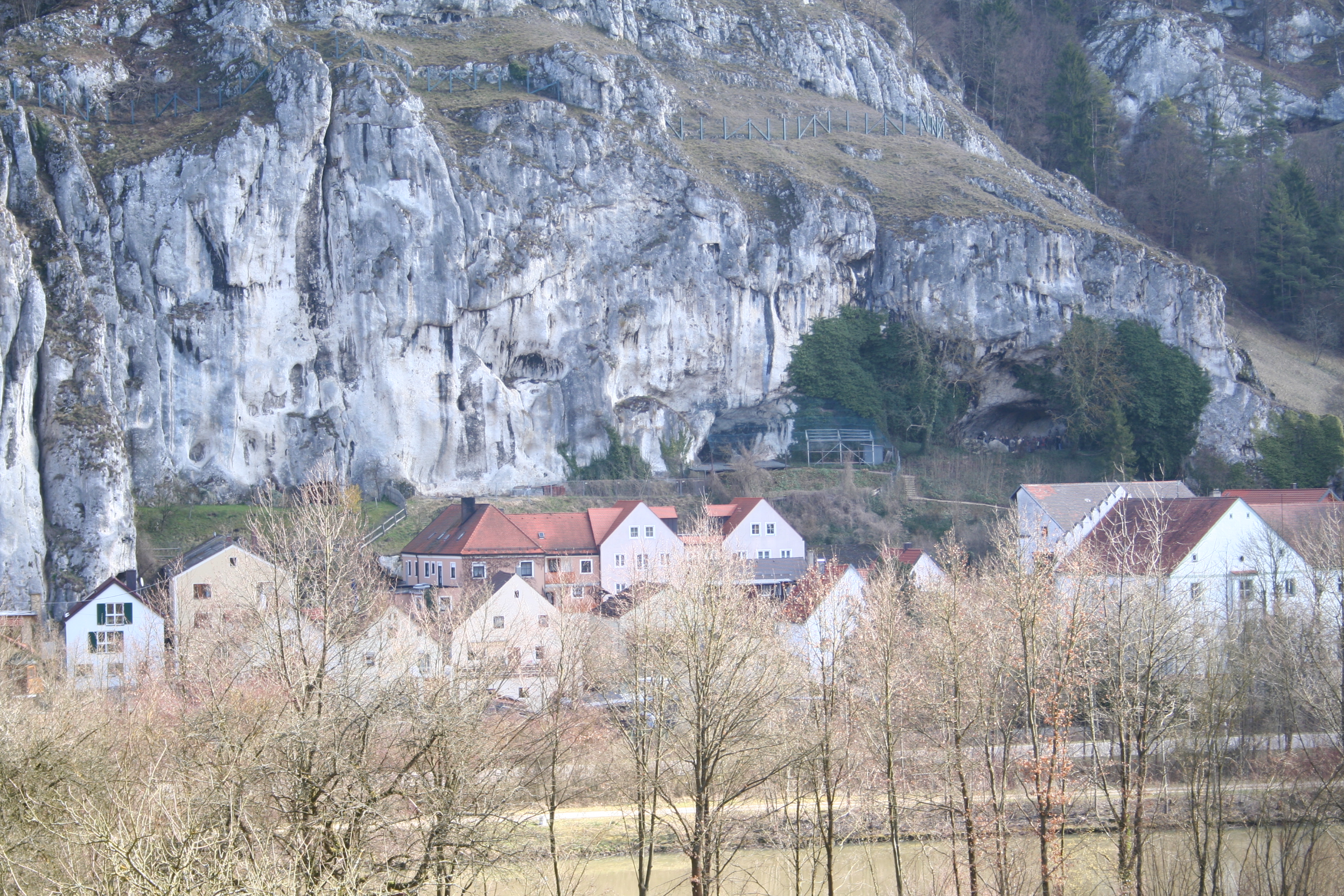
FAU has been conducting research in the Sesselfelsgrotte cave in the Altmühl Valley since 1964
New DNA tests have revealed that the fetus found in the Sesselfelsgrotte cave in the Altmühl Valley was related to Neanderthals who lived in southwestern France around 50,000 years ago. Friedrich-Alexander-Universität Erlangen-Nürnberg (FAU) began excavations in the Sesselfelsgrotte cave in 1964, and now actually owns the cave. Prof. Dr. Thorsten Uthmeier, Chair of Prehistoric Archaeology and the Archaeology of Prehistoric Hunter-Gatherers at FAU, shares insights on the history of the cave and its contribution to current research questions:
Prof. Uthmeier, you participated in an international study that provides new insights into the population history of Neanderthals. What are the most important findings of this study?
The most important finding was that around 65,000 years ago, a genetic bottleneck event occurred that is believed to have contributed to the extinction of the Neanderthals. As recently as 130,000 years ago, Neanderthals were widespread throughout western Eurasia, stretching as far as the Caucasus and even southern Siberia. Over the course of just tens of thousands of years, both genetic diversity and the range of the species declined, and its population shifted increasingly toward southwestern France. We suspect that the climatic conditions 70,000 years ago, a very cold and dry period, triggered the retreat to this refugium and the extinction of the remaining Neanderthal lineages in other regions of Europe. Subsequently, the Neanderthals began to populate a much wider area again, with virtually all later Neanderthals descendants of this group.
How did you find that out?
Archaeogeneticists at the University of Tübingen, led by my colleague Cosimo Posth, analyzed ten new mitochondrial DNA sequences from Neanderthals found at six archaeological sites in Belgium, France, Germany, and Serbia, and compared them with 49 previously published samples. Since DNA mutates over time, the degree of its diversification can be used to determine how closely related the Neanderthal groups from which the bone and tooth fossils originate are to one another. As some of the samples have been reliably dated, it is possible to reconstruct temporal and spatial patterns in the distribution of Neanderthals.
FAU was able to provide one of the new DNA samples …
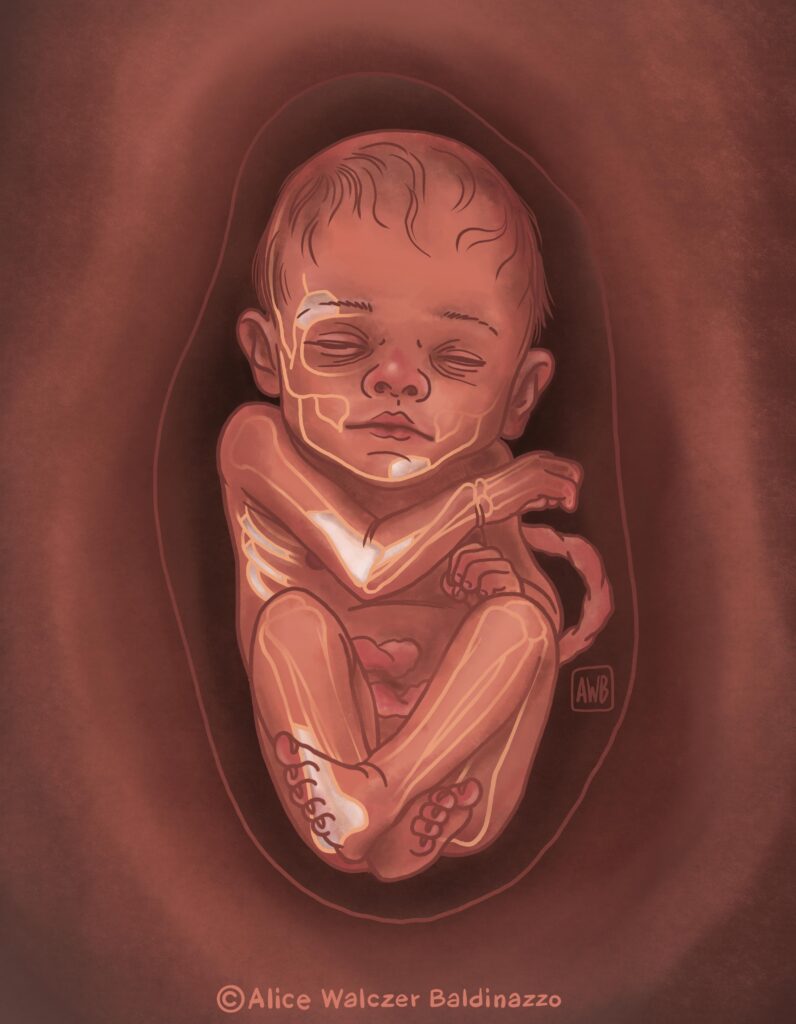
That’s right; it comes from a Neanderthal fetus – an embryo that died shortly before or after birth – which was discovered in 1968 by FAU researchers in the Sesselfelsgrotte cave in the Altmühl Valley near Kelheim and is estimated to be around 55,000 years old. We were able to take a tiny sample from a thigh bone, which was genetically analyzed at the University of Tübingen. The analysis revealed a big surprise: Interestingly, the fetus does not belong to the southwestern French lineage that survived the bottleneck, but rather to a group that, for the most part, did not survive that event. Until now, it was believed that this group was isolated and was only able to survive in a very small area around the Mandrin Cave in the Rhone Valley. However, the fetus found in the Sesselfelsgrotte cave is now the first indication that the group may have been more widespread than previously thought.
Were any other Neanderthals found in the Sesselfelsgrotte cave besides the fetus?
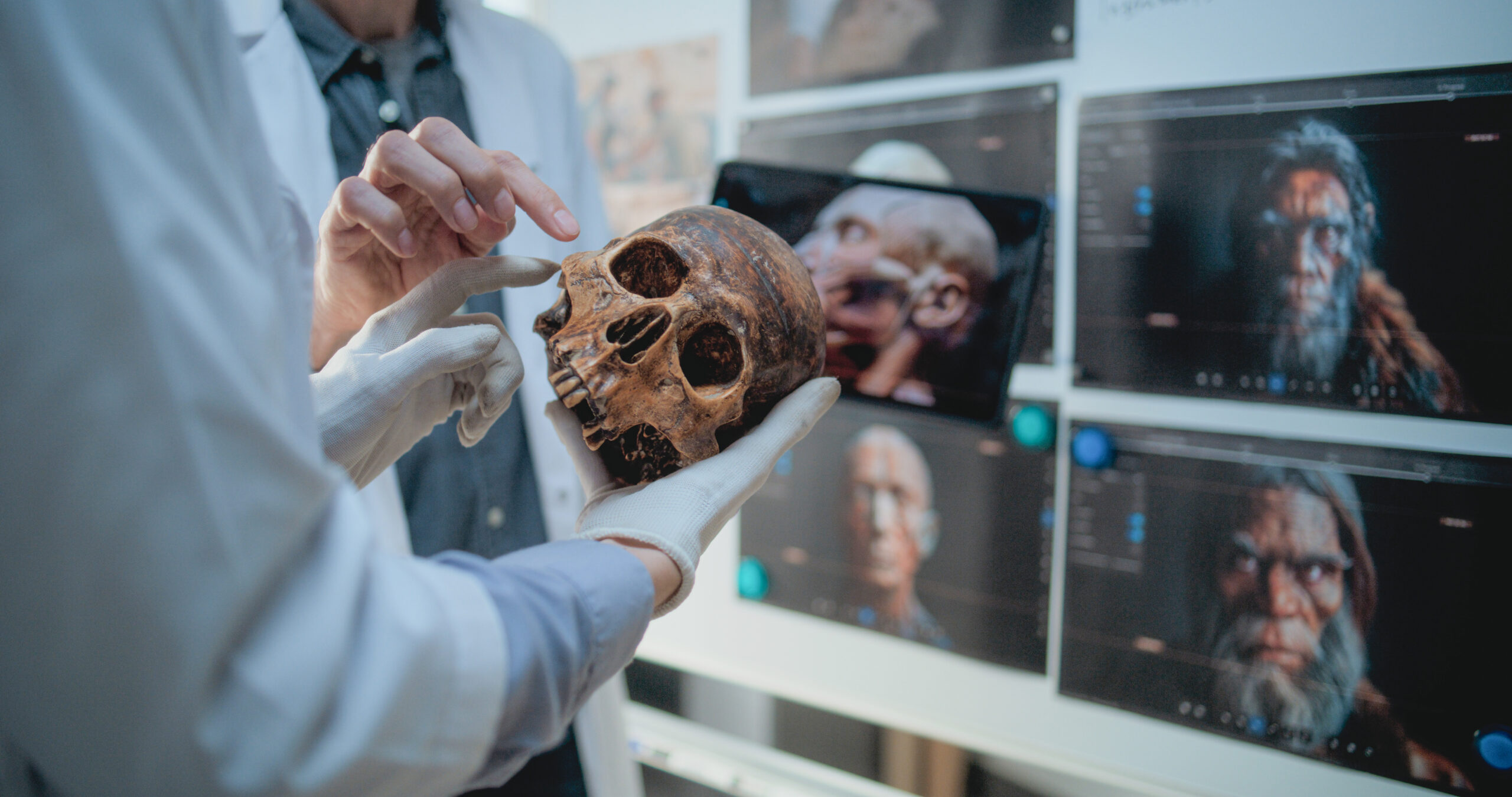
To date, a total of 14 human fossils from three individuals dating back to the Paleolithic era have been found in the cave, with twelve bone fragments coming from the fetus mentioned above. In additional archaeological layers dating to the late Neanderthal period, two baby molars were found that had been lost by two children when their adult teeth came in. However, because of their small size and fragmentary state of preservation, the teeth reveal very little about the physical characteristics of the people from whom they came. In contrast, the partial skeleton of the embryo provides rare insights into the early childhood development of Neanderthals. New CT scan studies are currently underway for this purpose, led by researchers at the University of Faro as part of a National Geographic project*. At this point, we assume that the fetus was buried in a grave – this is suggested above all by the fact that the fragile bones of the infant have survived at all. And, of course, the numerous stone artifacts and animal bones found in the various layers of the Sesselfelsgrotte cave tell us a great deal about the lifestyle and mobility of late Neanderthals.
For example?
The Neanderthals used fire pits, they made stone tools – preferably using chert slabs from the surrounding area – and they hunted mainly reindeer and horses. We know from other sources that they ambushed the animals and killed them with wooden spears. Late Neanderthals were highly mobile and usually moved their camps after just a few days or weeks. The open steppe landscape of the Altmühl Valley at that time, dotted with small wooded areas, was an ideal area for settlement, and the cave itself provided a naturally formed and sheltered living space. Although Neanderthals inhabited the Sesselfelsgrotte cave intensively on numerous occasions from the end of the Eemian interglacial period some 110,000 years ago until their extinction about 42,000 years ago, there were also longer periods during which they were absent. What we see overall are small groups that, thanks to their considerable expertise, managed to cope with the undoubtedly harsh living conditions of the last Ice Age.
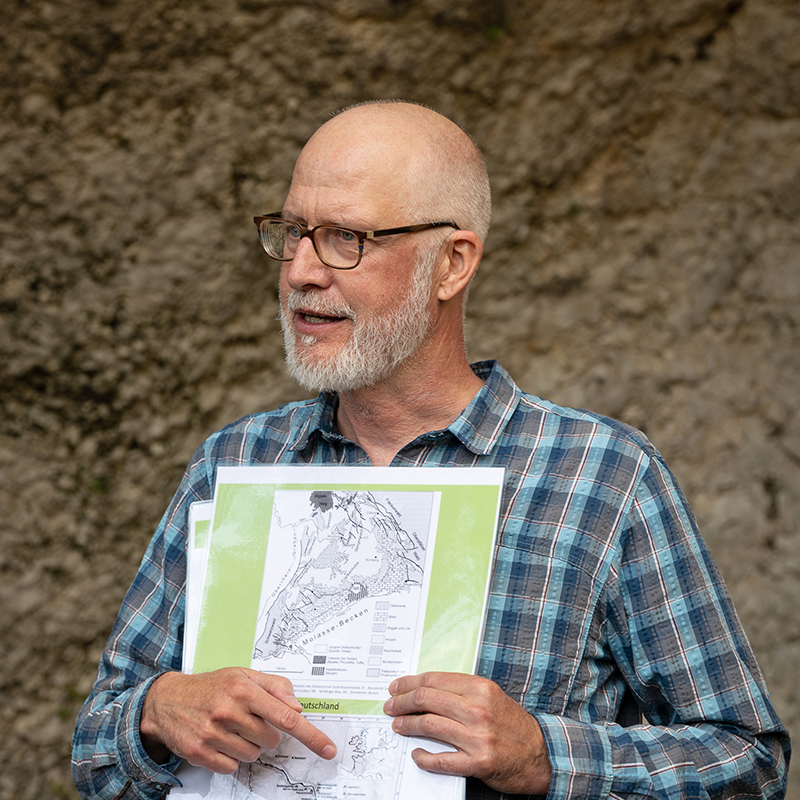
The Sesselfels Cave is of outstanding importance for research into the Paleolithic era, not only in Bavaria but throughout Central Europe—not least because of the human remains found there.Prof. Dr. Thorsten Uthmeier, Chair of Prehistory and Early History
When did the excavations at the Sesselfelsgrotte cave begin?
The first excavation by researchers from FAU began in 1964, followed by 15 digs between 1964 and 1977, as well as in 1981, most of which were funded by the German Research Foundation. Since 2023, as part of our international National Geographic project, we have resumed research at the site and, together with an international team, are investigating questions regarding the formation of the archaeological layers, the fire pits, the climate, and much more. Although only a few sedimentary remains are left, state-of-the-art methods – what we could call forensic archaeology – enable new insights to be gained even from the smallest samples. Important analyses, focusing for instance on isotopes in sediment, are currently being conducted in the soil laboratory and isotope laboratory of the Institute of Geography at FAU. From an archaeological perspective, the cave is very rich in finds – the first stone tools were discovered at a depth of less than half a meter. By the time the excavations were completed, over 100,000 artifacts had been recovered that we can definitively attribute to Neanderthals.
How are such excavations carried out?
First of all, we must proceed with great caution, because excavations always involve some degree of destruction. The sediment is excavated in square-meter sections and layers, with the aim of documenting as many artifacts (stones, bones, and the like) as possible in their original context. The excavated sediment is sieved or washed with water and anything larger than two millimeters in size is examined very closely. In addition, the composition of the sediments is examined and the microparticles they contain are identified, such as pollen or the remains of rodents, fish, and even insects. Charcoal remains from the fire pits also tell us a great deal about the climatic conditions of that time. However, comprehensive documentation is also important: Taking notes, surveying the location of the finds, sketching, and taking photographs usually takes more time than the actual excavation.
The cave is owned by FAU. How did that come about?
It’s quite special for a university to have its own archaeological site. For FAU, however, this was a logical step after leading the excavations there since 1964, and using the site as a teaching site for the Institute for Prehistory and Protohistory for decades. The Sesselfelsgrotte cave is of outstanding importance for research into the Paleolithic era, not only in Bavaria but throughout Central Europe, not least because of the human remains found there. Because FAU both conducted the excavations and owns the cave, the artifacts are housed in the Institute for Prehistory and Protohistory’s own collection and are thus accessible to researchers from Germany and abroad. Since acquiring the site, FAU has also been able to better protect the archaeological site from the elements and unauthorized access. Even though the vast majority of the site has already been fully excavated, this remains a major concern for the University, ever since an illegal excavation took place in 1967 – that is, while excavations were still underway and before the current protective measures were put in place – resulting in the loss of valuable artifacts.
What plans are in the pipeline for continued research in and around the cave?
In upcoming research projects, we aim to determine exactly how the cave came to be filled. The vast majority of this seven-meter-thick sequence of layers does not consist of material deposited from outside, such as by wind or flooding, but rather of limestone that has flaked off the cave walls and ceiling. We can draw conclusions about the climatic conditions based on the thickness and sequence of the individual layers. Of course, the fetus remains of particular interest: It could tell us more about the burial customs of late Neanderthals. In addition, we want to investigate whether, in addition to the proven genetic relationship with later members of the Thorin group, there are also cultural similarities, such as in the manufacture of stone tools. In this context, we are also in the process of verifying the gestational age of the fetus and, if possible, dating it more accurately. A poster exhibition at the Archaeological Museum in Kelheim is also in the works. As you can see, things are still exciting.
*SHARP – Testing hypotheses on the transition from Neanderthals to Homo sapiens at the Paleolithic site of Sesselfelsgrotte
Further information:
Prof. Dr. Thorsten Uthmeier
Chair of Prehistoric Archaeology