
A milestone in the history of technology
May 12, 2026 marks the 85th anniversary of a milestone in the history of technology: The presentation of the Zuse Z3, the world’s first functioning computer. Even though the original machine was destroyed in a bombing raid during the Second World War, its legacy lives on today. Friedrich-Alexander-Universität Erlangen-Nürnberg (FAU) has a Zuse Z23, which is a later version of the original. Unlike most of its kind, the Zuse Z23 at FAU still works as originally built. Edwin Aures, head of the Computer Science Collection at FAU, gives some insights into the beginnings of modern computer technology.
The dawn of a new era
On May 12, 1941 in Berlin, Konrad Zuse presented the Zuse Z3 for the first time and laid the foundations for modern computer technology. This machine is considered the first functioning, freely programmable binary digital computer. Civil engineer Zuse, who was from Berlin, developed the device out of a practical need. “Zuse was driven by the need to automate complex static calculations and to make people’s work easier,” explains Edwin Aures, head of the Computer Science Collection at FAU.
Technology made of relays and punched tape
The Z3 operated with around 2000 relays that worked as switching elements and facilitated basic calculations. Programs were entered using punched tapes while data was input via a keyboard similar to a typewriter. With a clock frequency of 5.3 Hertz, it performed serial calculations and already used floating-point numbers. “The Z3 had all the fundamental elements of a modern computer, just in a completely different technical form. Despite its size – equivalent to several wall cabinets – and its weight of around one metric ton, it was a milestone in engineering.
Developments took place in parallel, not in a race
“Nobody specifically set out to build the world’s first computer in those days. It was always a matter of trying to solve certain problems,” emphasizes Aures. “And, even though the Z3 is often called the world’s first computer, it was not created during some kind of race.” Various computers were being developed worldwide for specific purposes at the same time.
While Konrad Zuse’s machine was intended for technical calculations, other systems, for example, were used to decipher military communication. These parallel developments may put the Z3’s title into perspective, but still emphasize its significance as an early universal computer.
A technological leap forward: From the Z3 to the Z23
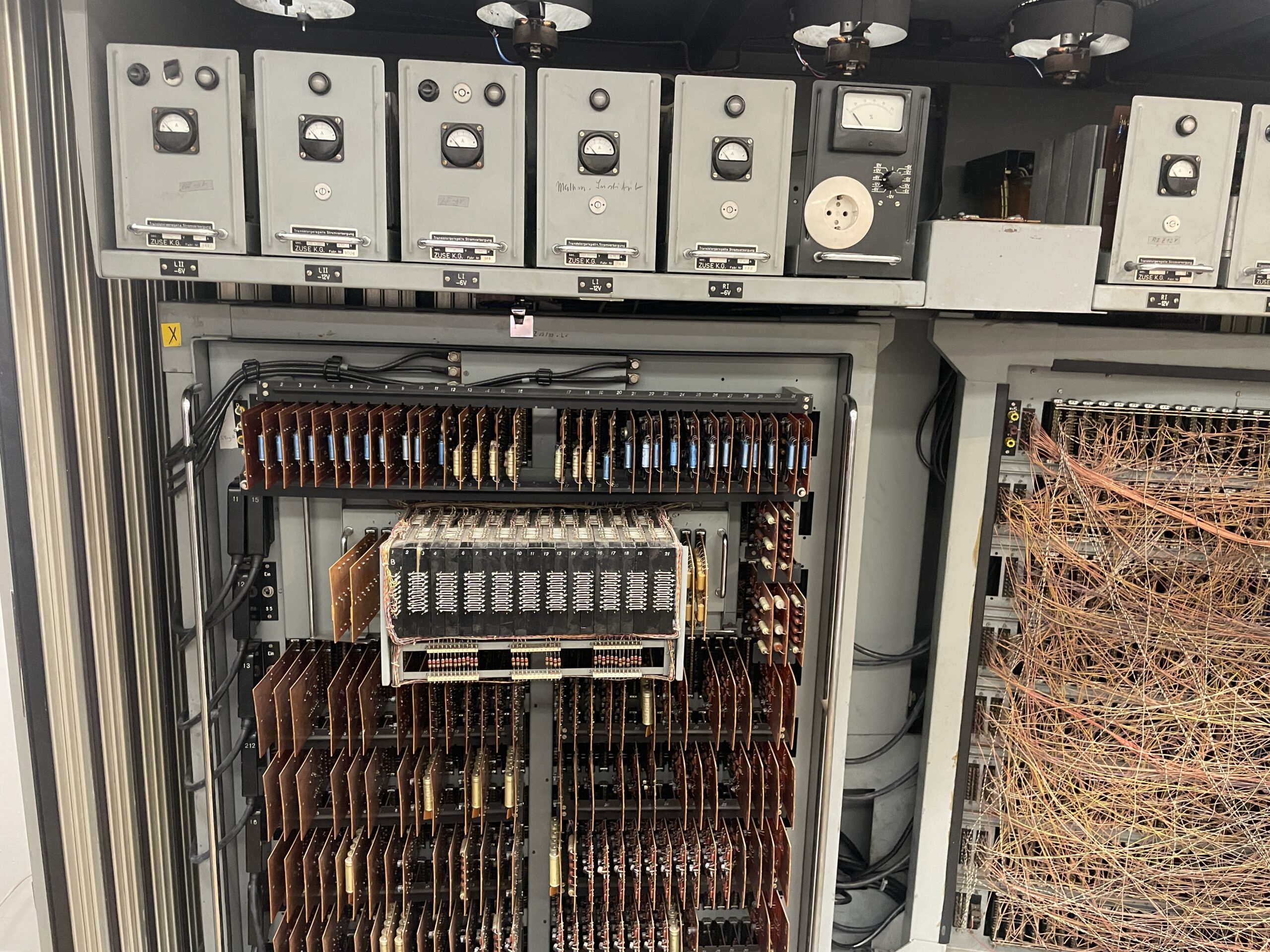
Around two decades after the Z3, the Zuse Z23 demonstrated just how rapidly technology had advanced. Whereas the Z3 was still based on relays, the Z23 already used transistors, making it significantly more reliable and powerful. “It achieved several thousand calculation operations per second and, as a scientific and mathematical computer, it was mainly intended for use at universities and research institutions. With the Z23, it becomes clear how the transition from mechanical-electrical systems to electronic systems was made,” explains Aures.
A trip back in time to the Zuse3
The Z23 at FAU: A functioning original
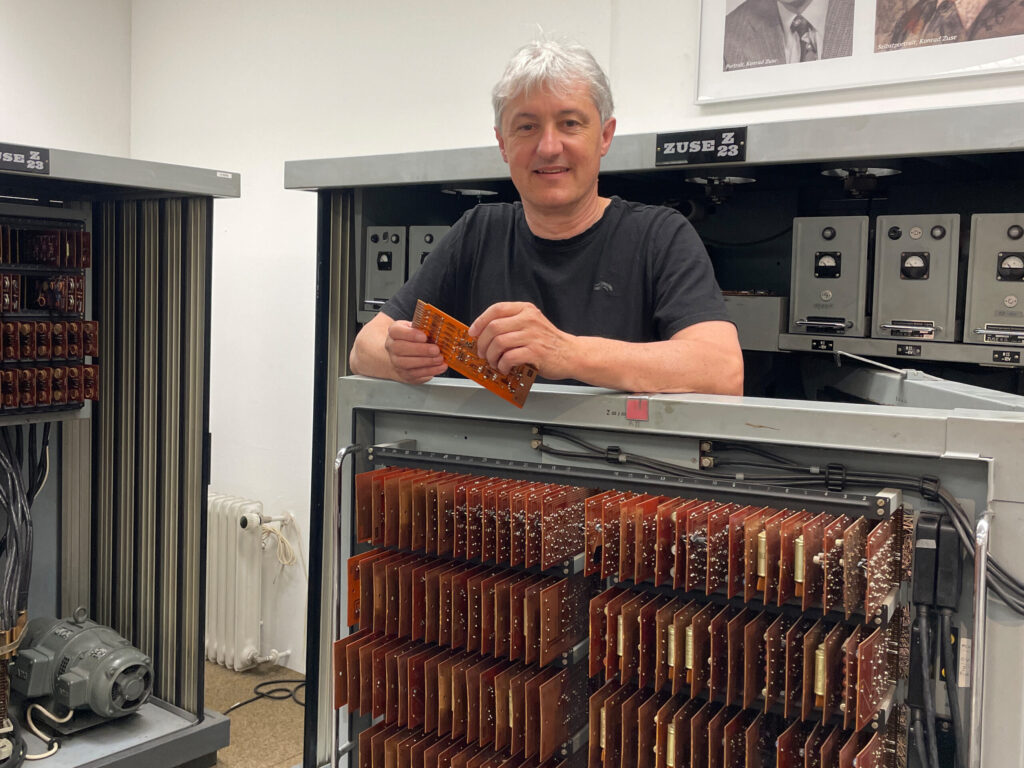
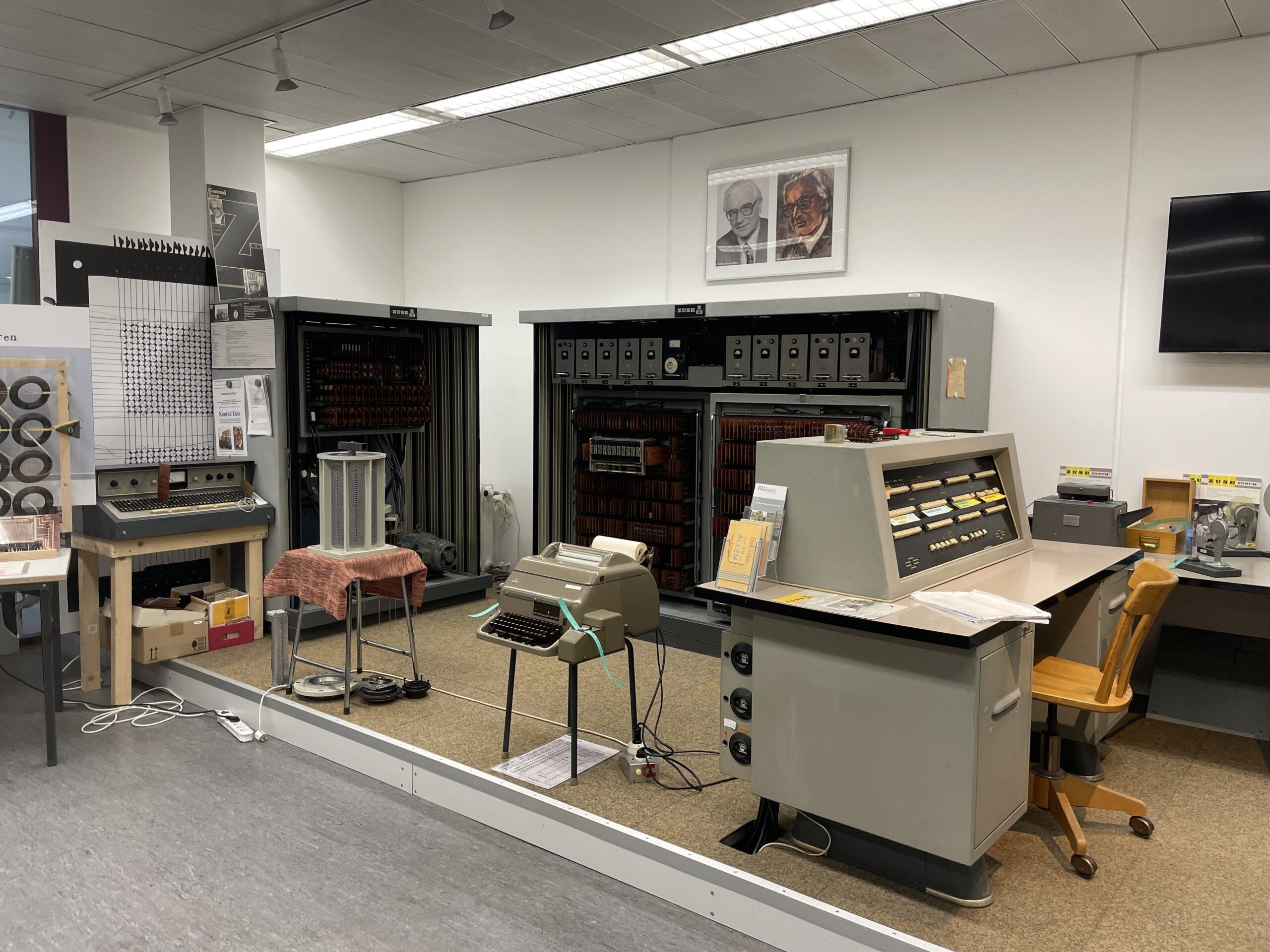
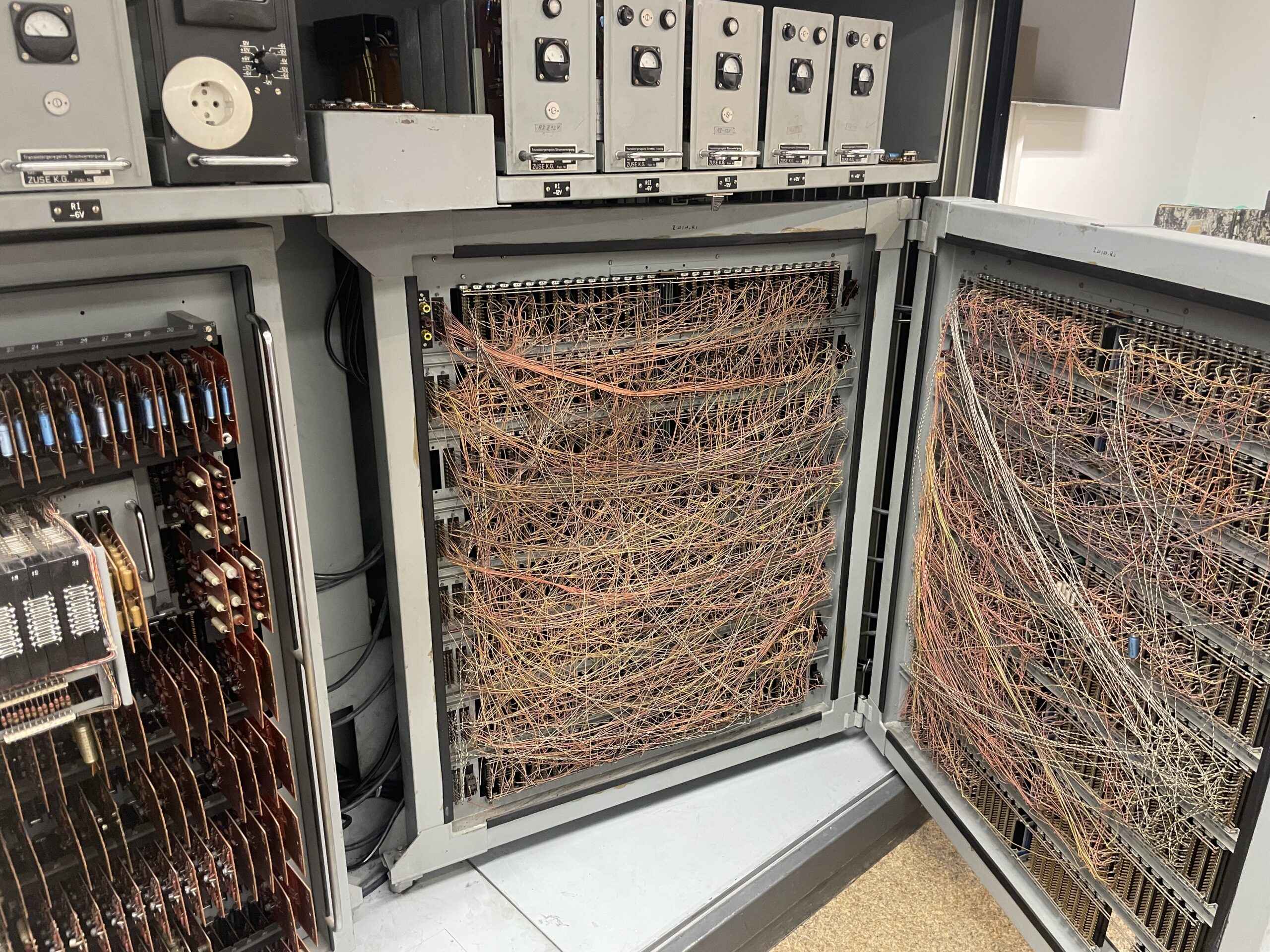
The Computer Science Collection at FAU has a very special Zuse Z23: It is the only machine of this series in the world that is still working and is regularly used for demonstrations. The machine was installed at the Institute of Mathematics at FAU in 1962. Students were able to learn programming with the Z23 and researchers were able to carry out complex calculations with it. After being taken out of service, it ended up at Christian-Ernst Gymnasium in Erlangen, where it was used as a school computer for around 9 years as of 1974.
It remained unused for a long time after this period. “We are very lucky that it wasn’t taken apart there,” says Aures.
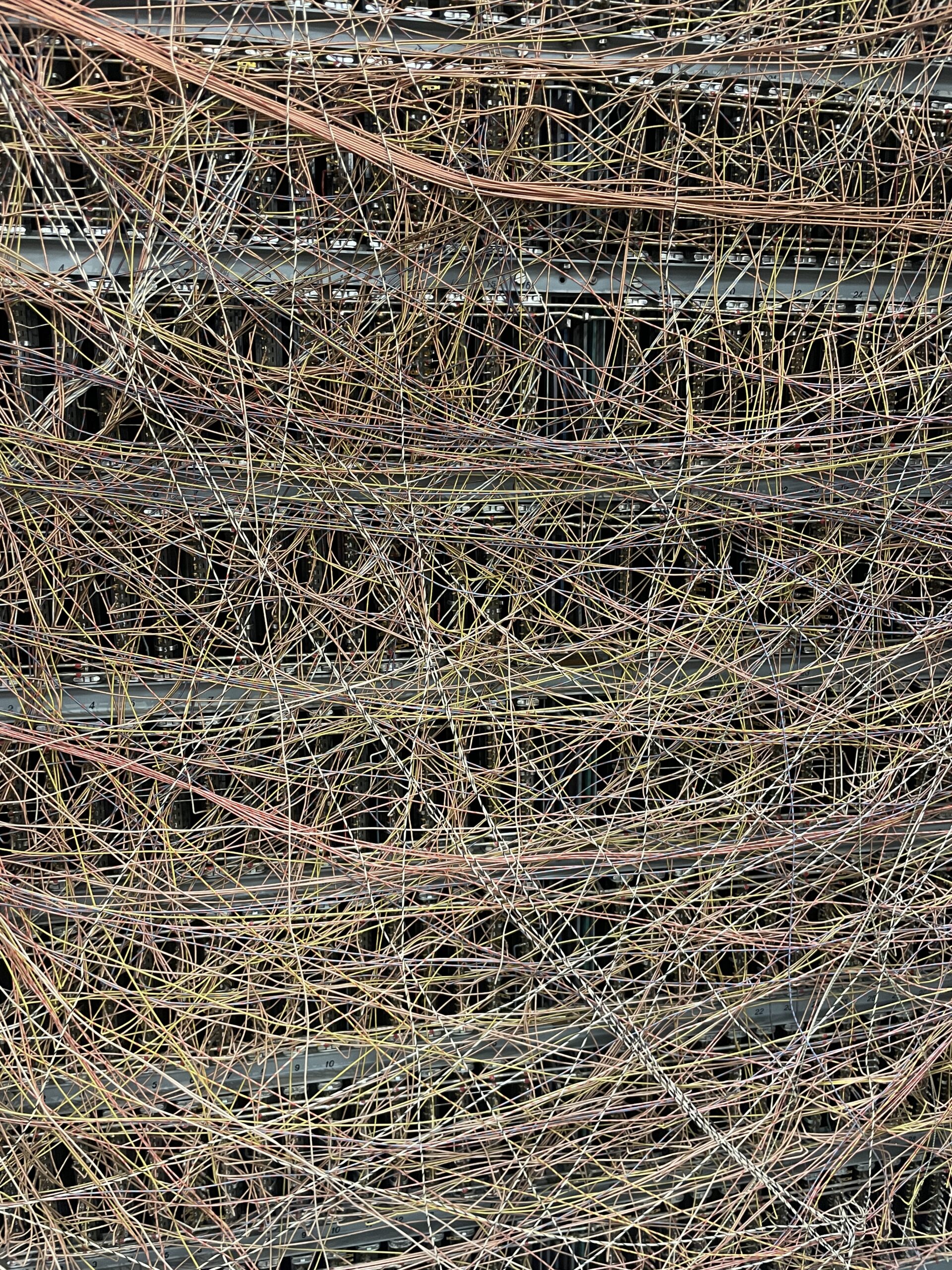
The Z23 only returned to FAU in 2009 and underwent complex restoration. “The search for errors never stops, but that’s precisely what makes it so appealing,” describes Aures when talking about working with the historic machine. Over the course of two and a half years, two staff members from the Computer Science department with the support of the Erlangen Regional Computing Center (RRZE) and a former Zuse engineer worked on restoring the machine, replacing components and readjusting the magnetic drum memory.
A history of technology you can touch and hear
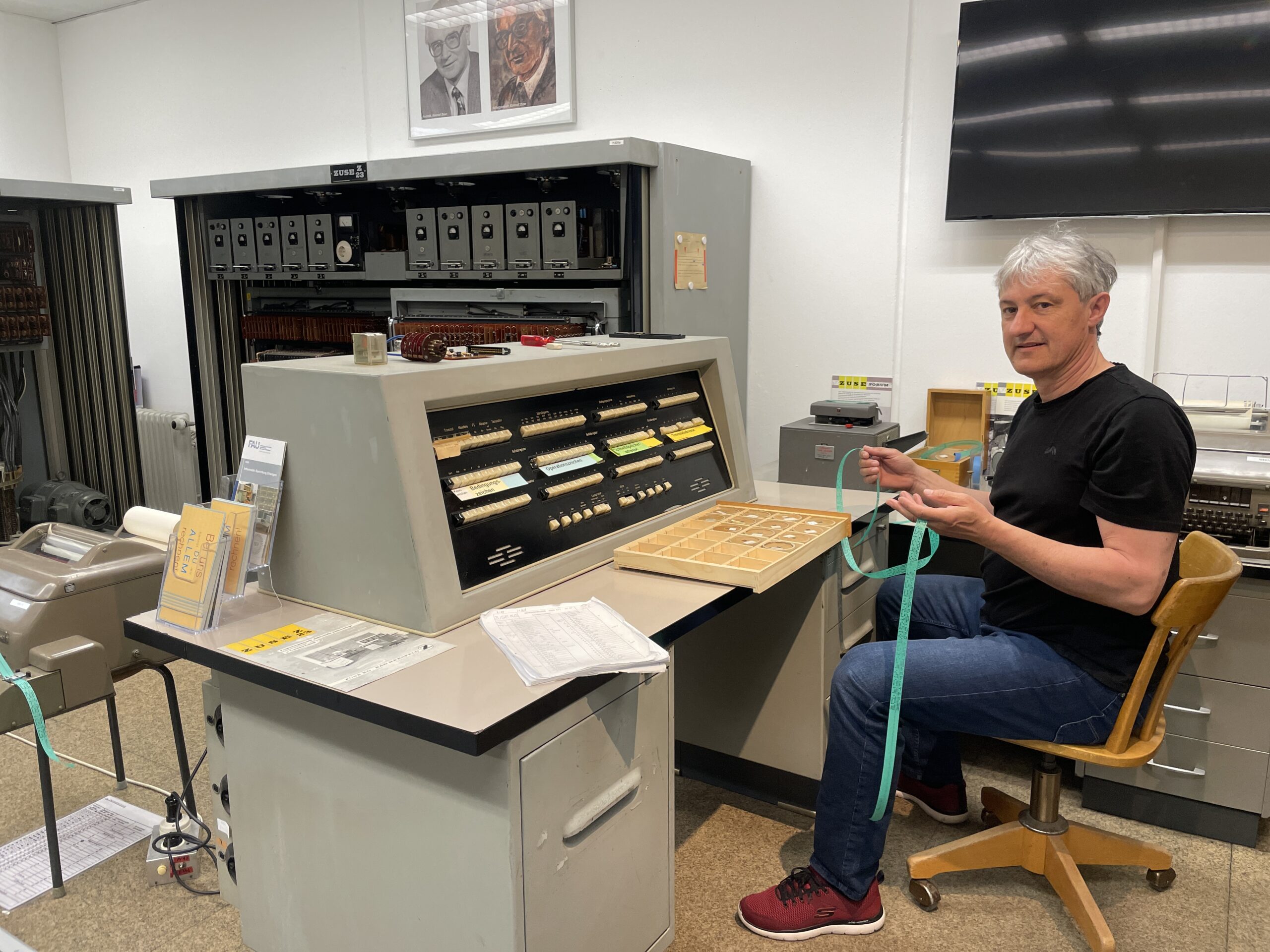
Today, the Z23 can again perform calculations and enables visitors to get a unique glimpse of a piece of computer science history. Visitors can watch how the machine works, listen to the characteristic clattering, and see the processes on the console. “You can experience how the machine works here with all your senses,” says Aures, “our Zuse can even make music, if you want to call the beeping and clattering that.”
Taking a look back at the past to understand the present
The Z3’s anniversary shows just how closely the development of modern computers is linked to their historical predecessors. From the relays of the Z3 to the transistors of the Z23, this progression highlights the foundations of today’s technology. “Those who would like to understand how computers work today should examine their origins.” The Computer Science Collection at FAU preserves this history and brings it to life.
Further information:
Edwin Aures
Chair of Computer Science 3 (Computer Architecture)