
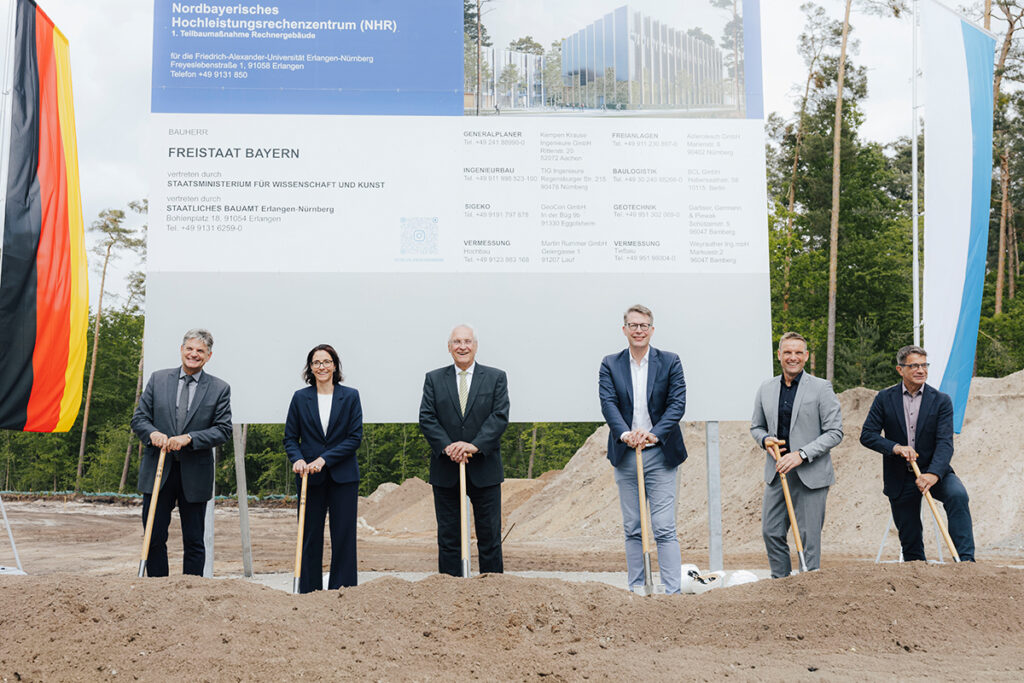
Groundbreaking ceremonies mark the start of construction work in Henkestrasse 42 and for the Erlangen National High-Performance Computing Center at FAU Campus Erlangen South.
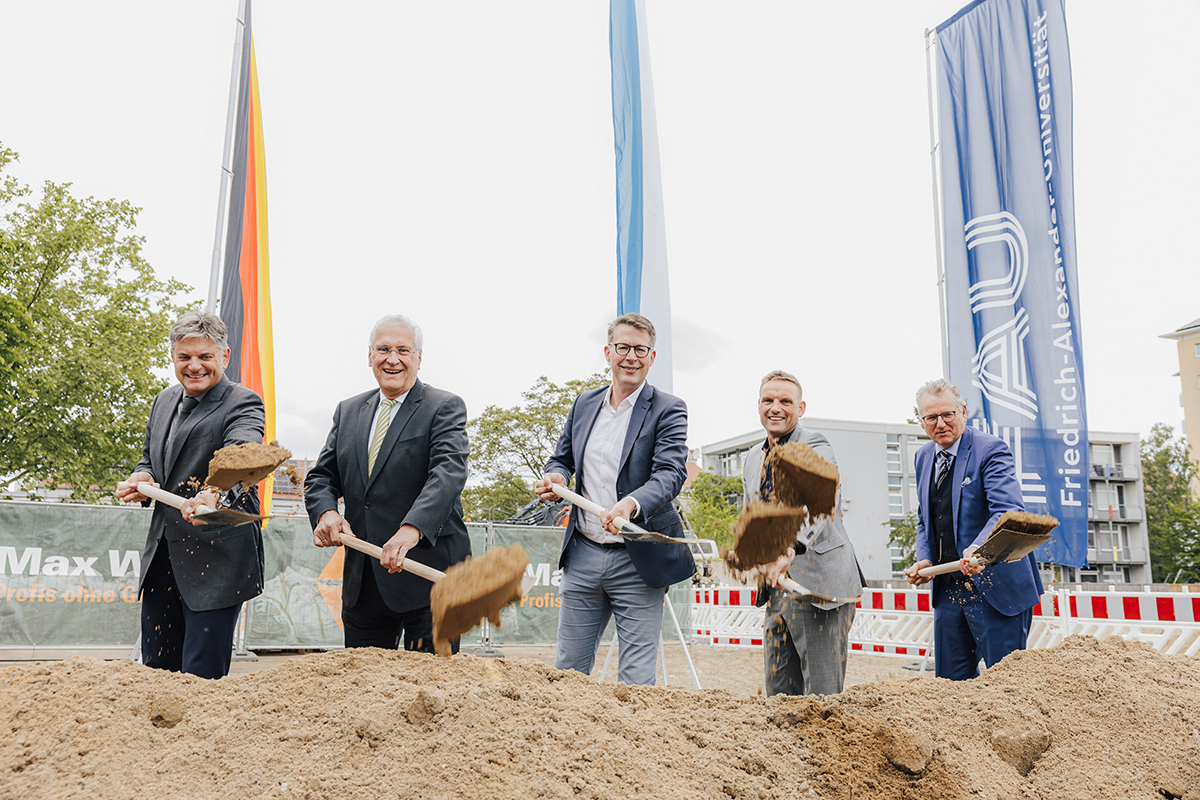
Two groundbreaking ceremonies on one day? Nothing could be simpler. The next phase of the comprehensive renovation of Friedrich-Alexander-Universität Erlangen-Nürnberg (FAU) is underway. With two groundbreaking ceremonies on one day, construction work at the teaching and research building on Henkestrasse 42 and at the Erlangen National High-Performance Computing Center on Nikolaus-Fiebiger-Strasse at FAU Campus Erlangen South has officially begun. Bavarian State Minister for Science and the Arts Markus Blume, Bavarian Interior Minister Joachim Herrmann, Mayor of Erlangen Jörg Volleth, and representatives from the University and the State Construction Office, were all on site and gave speeches during the festivities iattended by a large number of guests.
New building for innovative research and teaching
The day started with the groundbreaking ceremony at the new University building in Henkestrasse 42. In mid February, the State Construction Office Nuremberg began demolition of the old Organic Chemistry building, which was built in the 1960’s and housed two lecture halls as well as laboratories and offices. The new research and teaching building has more room and will house ten new lecture halls, the new Audimax, FAU’s teaching and research collections, the Experimental Theater as well as the Institute of Theater and Media Studies, the Institute of Classical Archaeology, and the Institute of Prehistory and Protohistory, on a total of 20,000 square meters of floor space.
In future, the building on Henkestrasse will not only be used for teaching and research, but will also be home to teaching and research collections, some of which will be accessible to the public. The Free State of Bavaria is investing more than 200 million euros in the project.
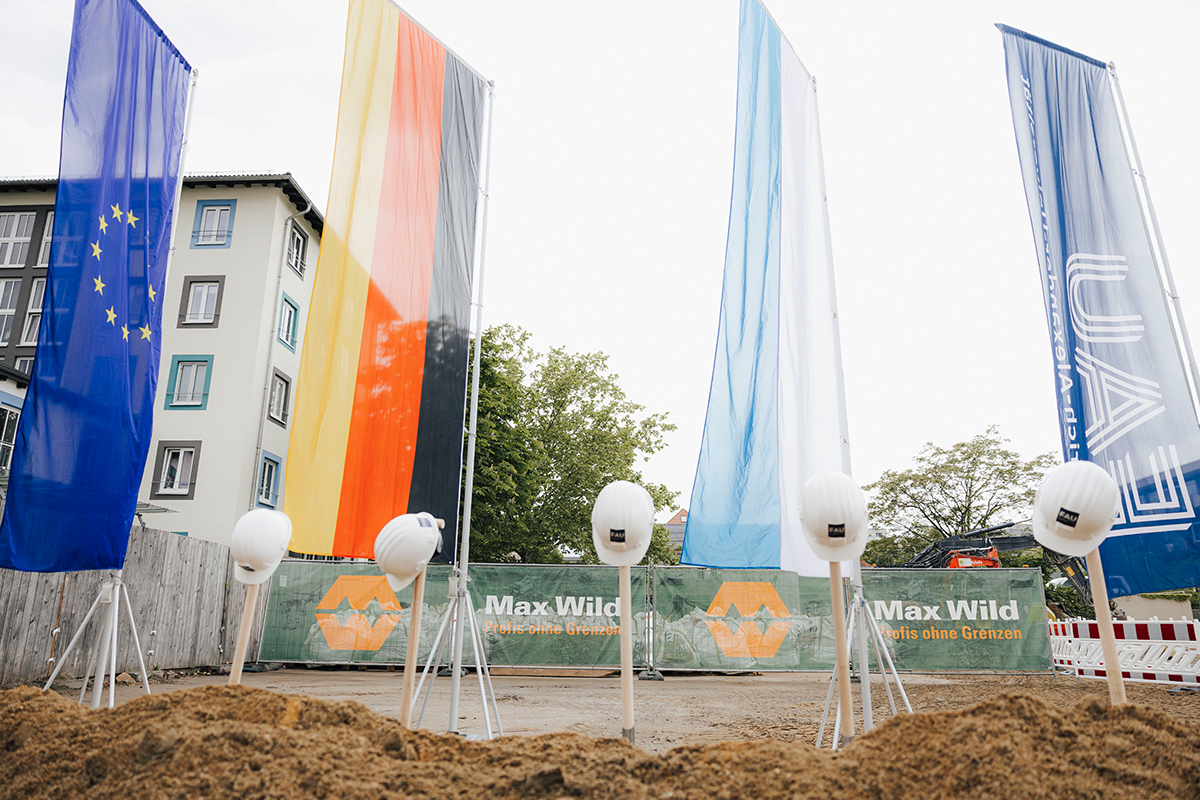
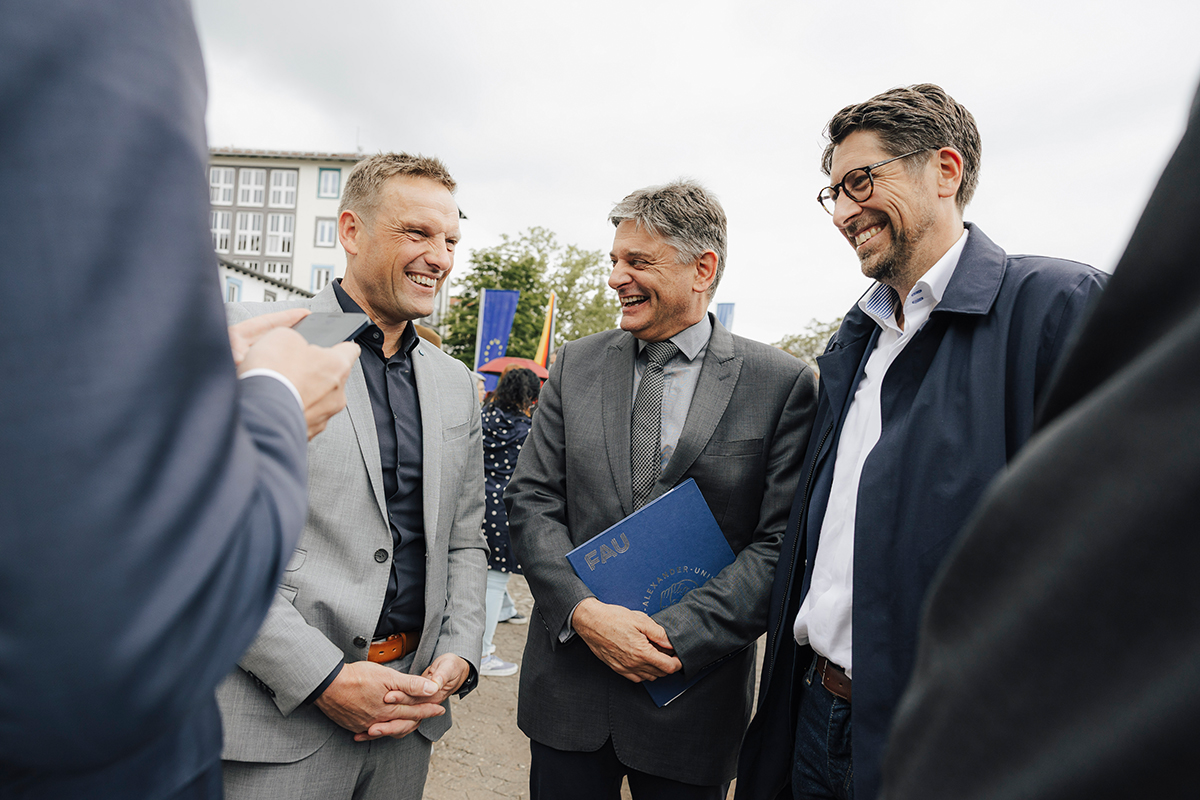
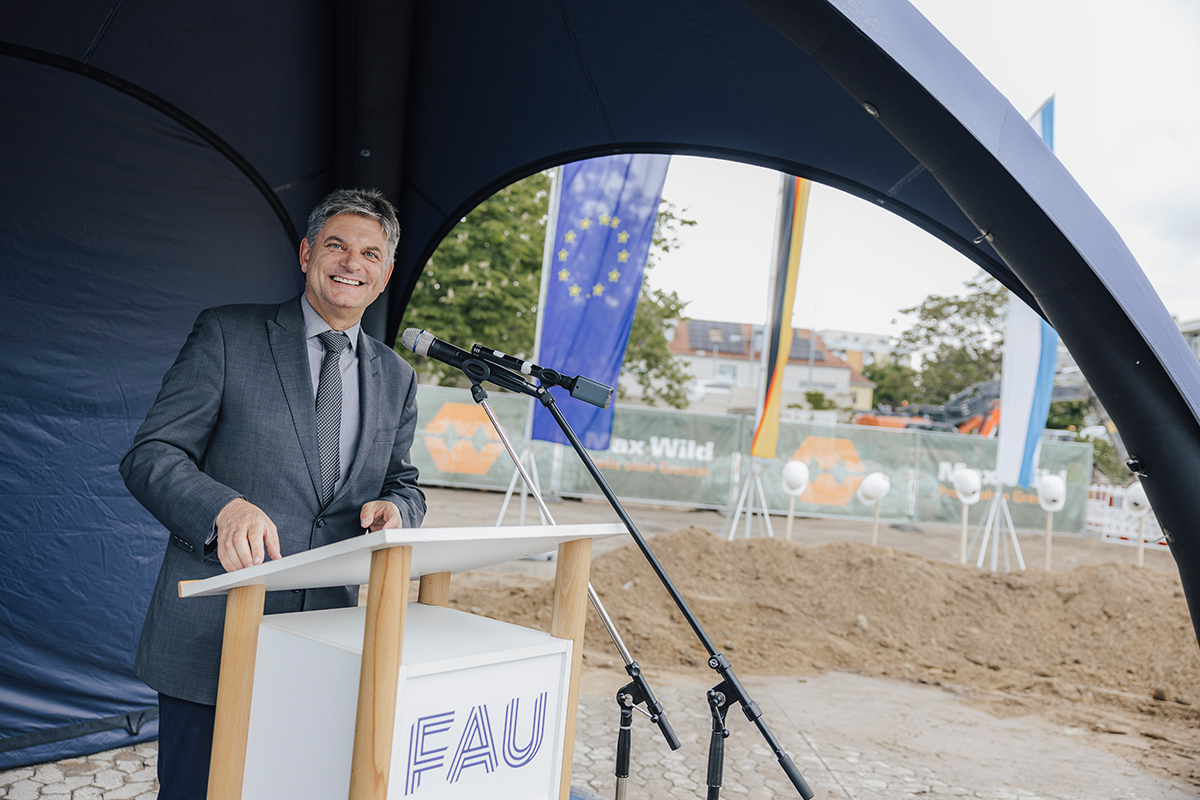
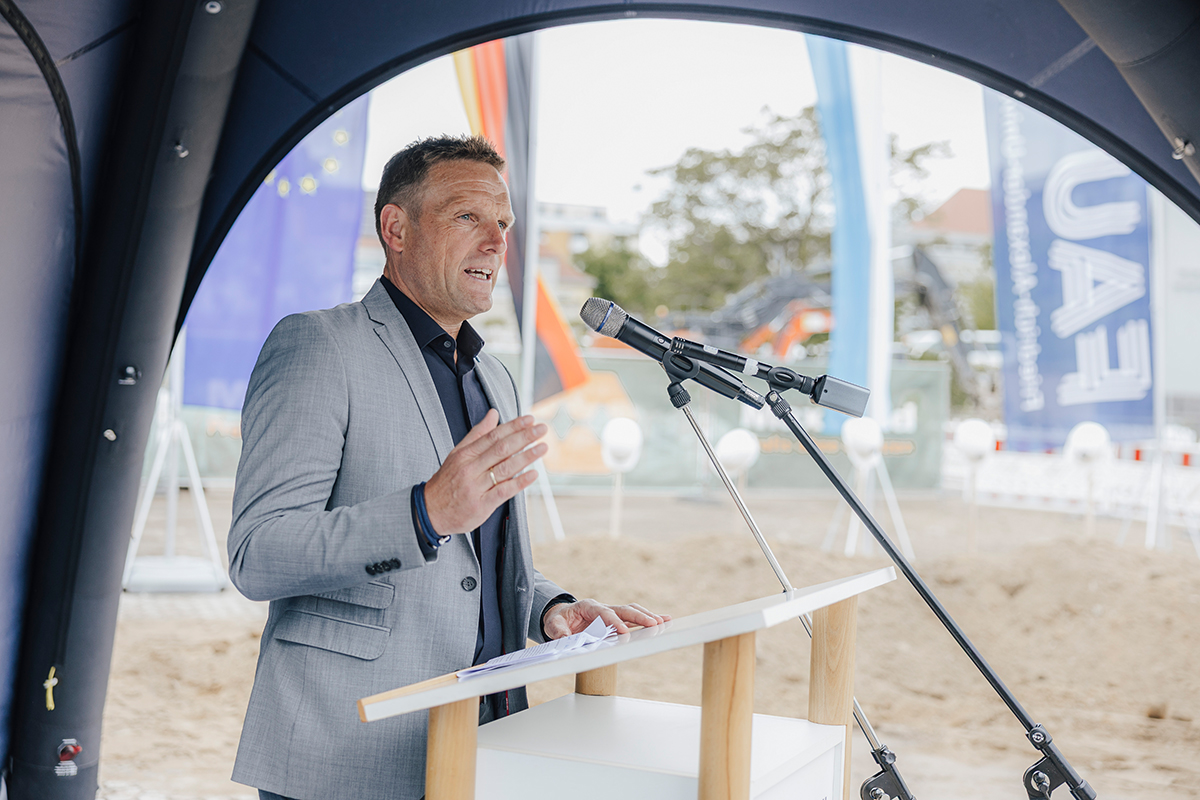
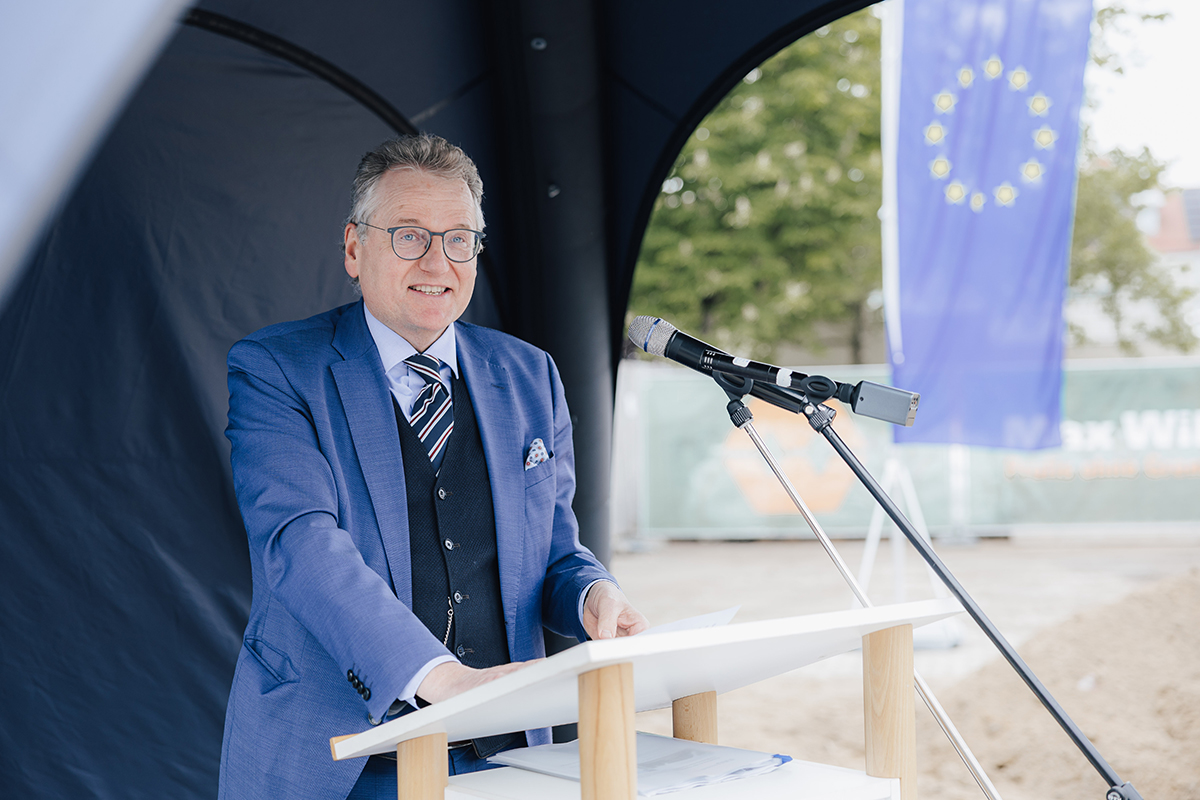
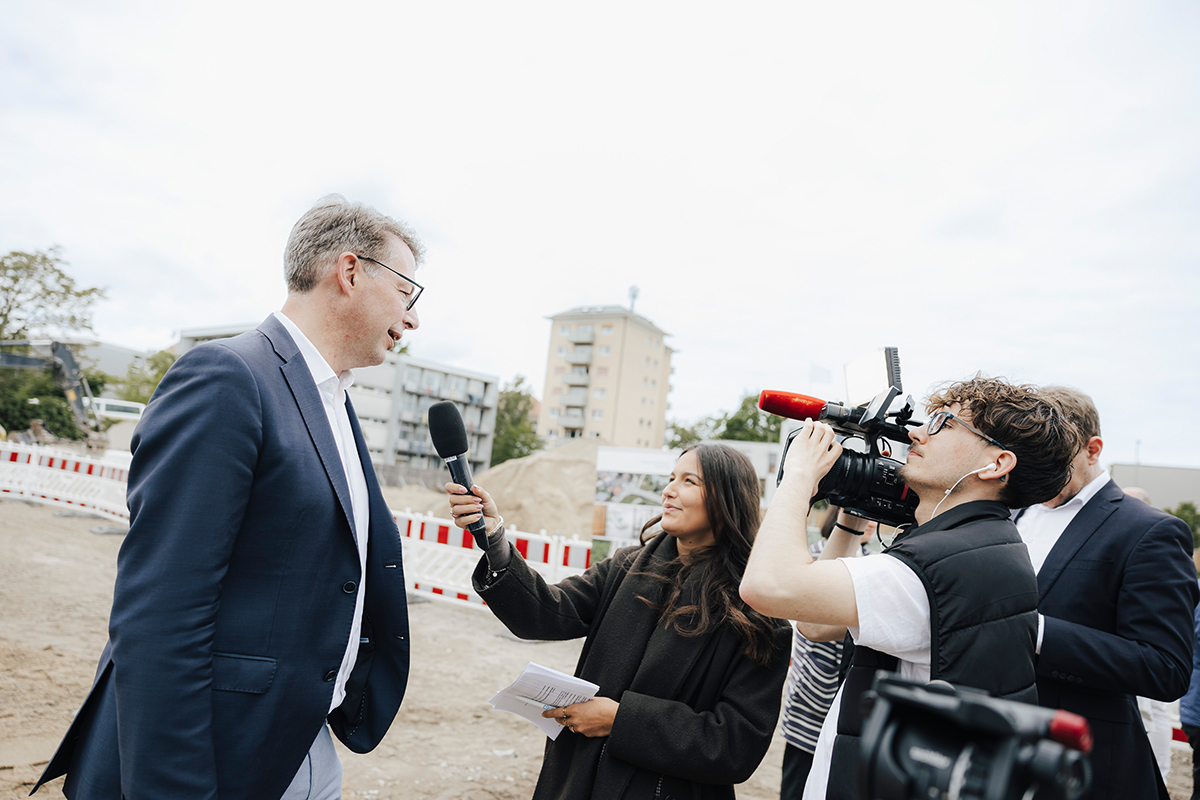
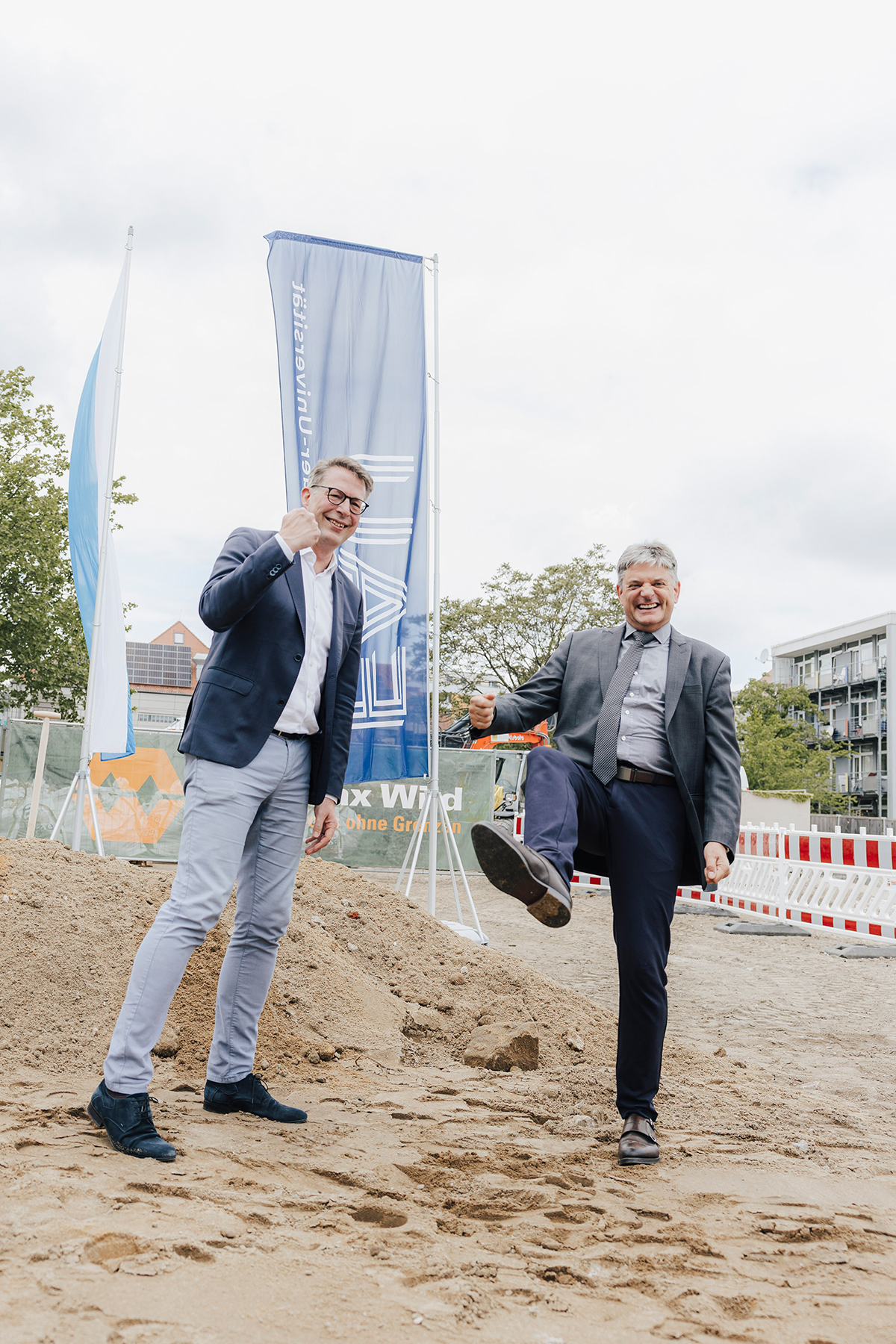
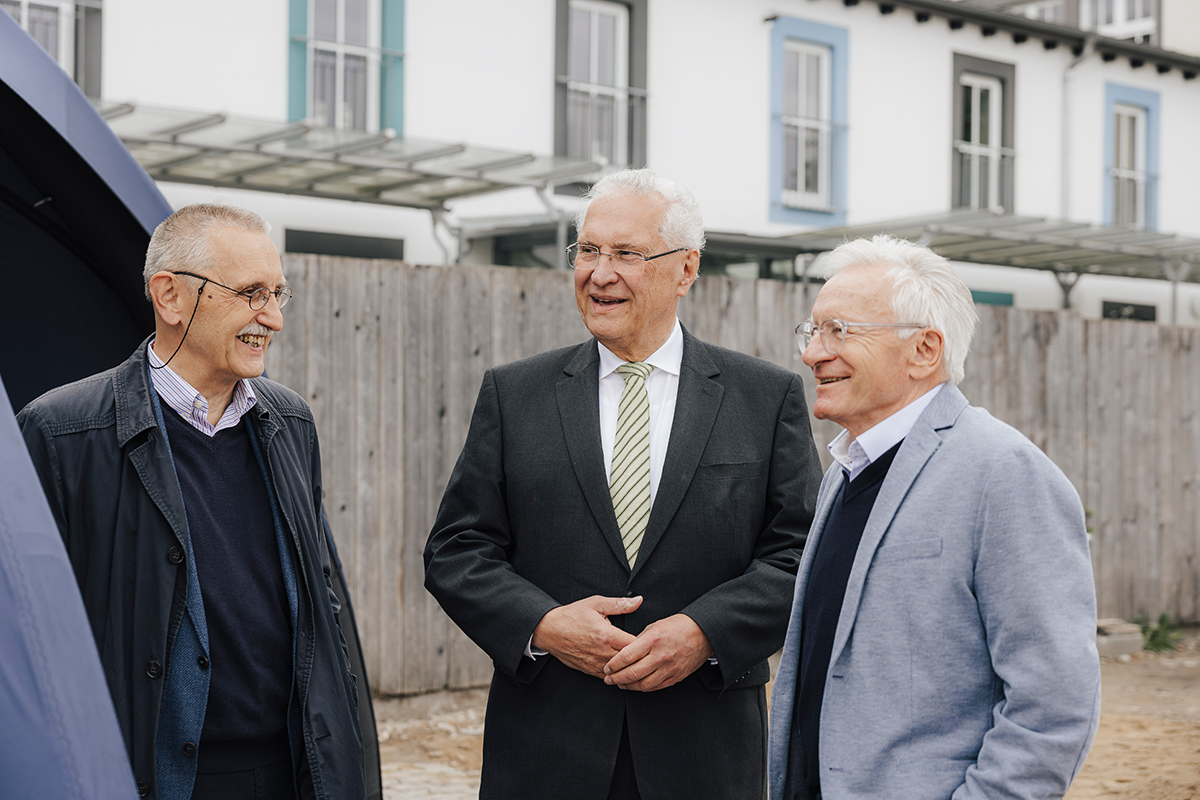
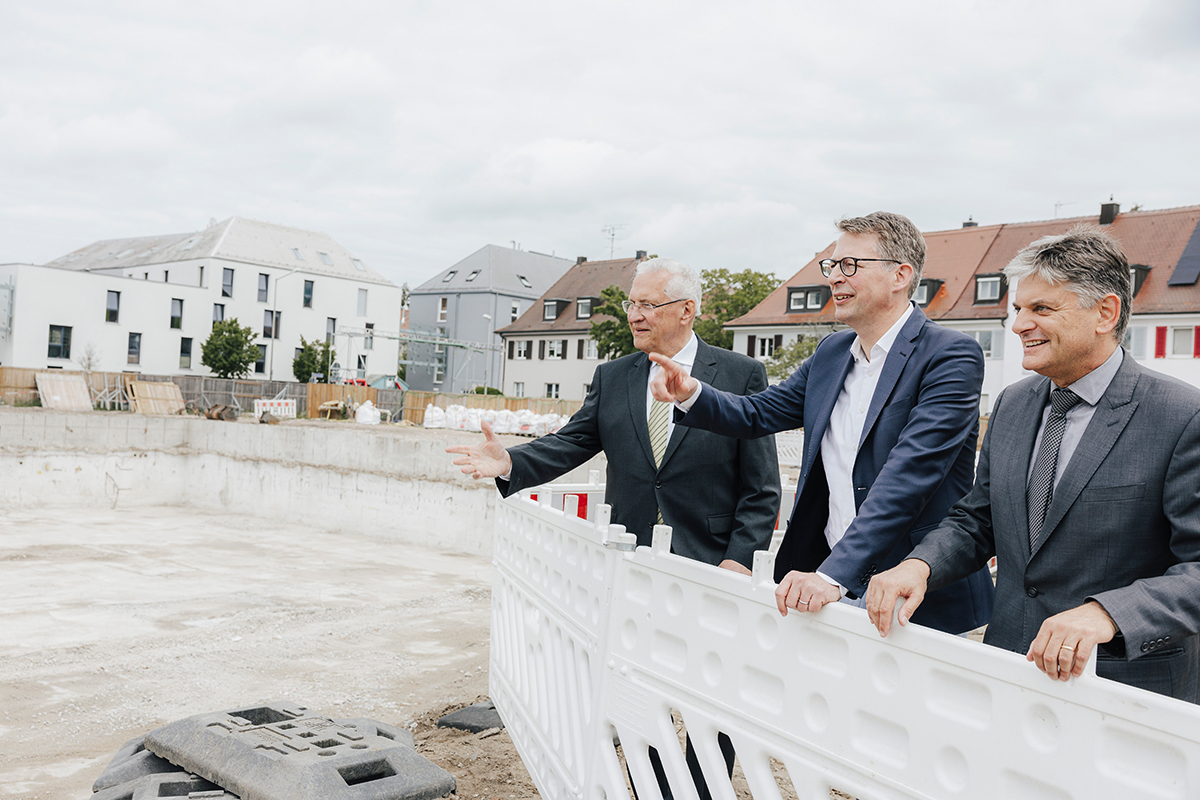
Impressions from the groundbreaking ceremony at Henkestraße 42:
A huge leap forward for FAU: Expanding computer infrastructure
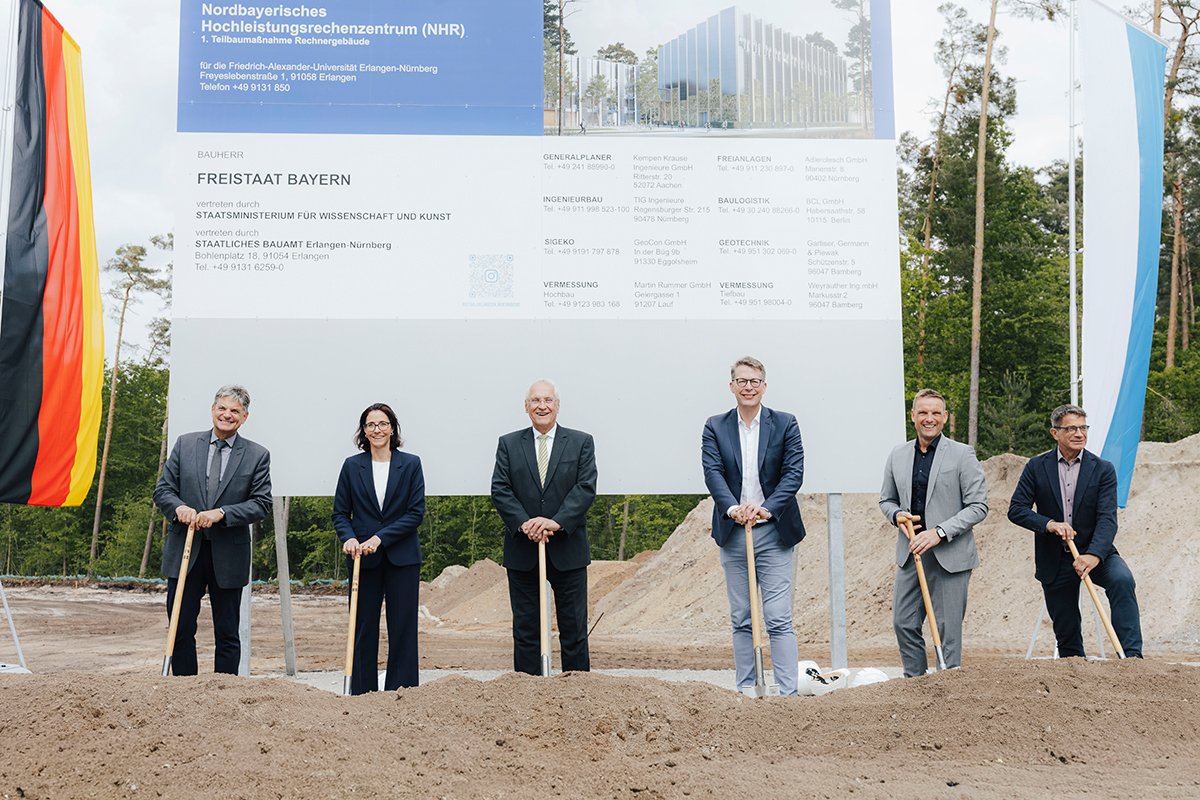
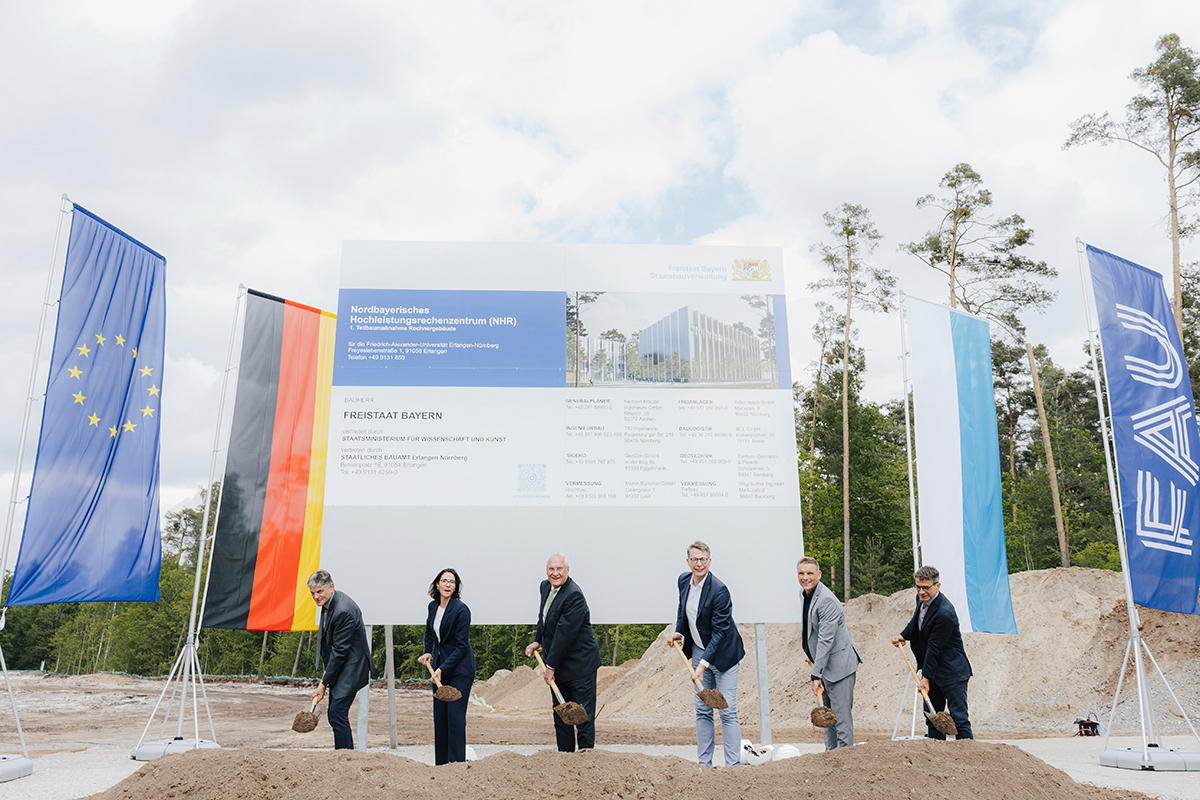
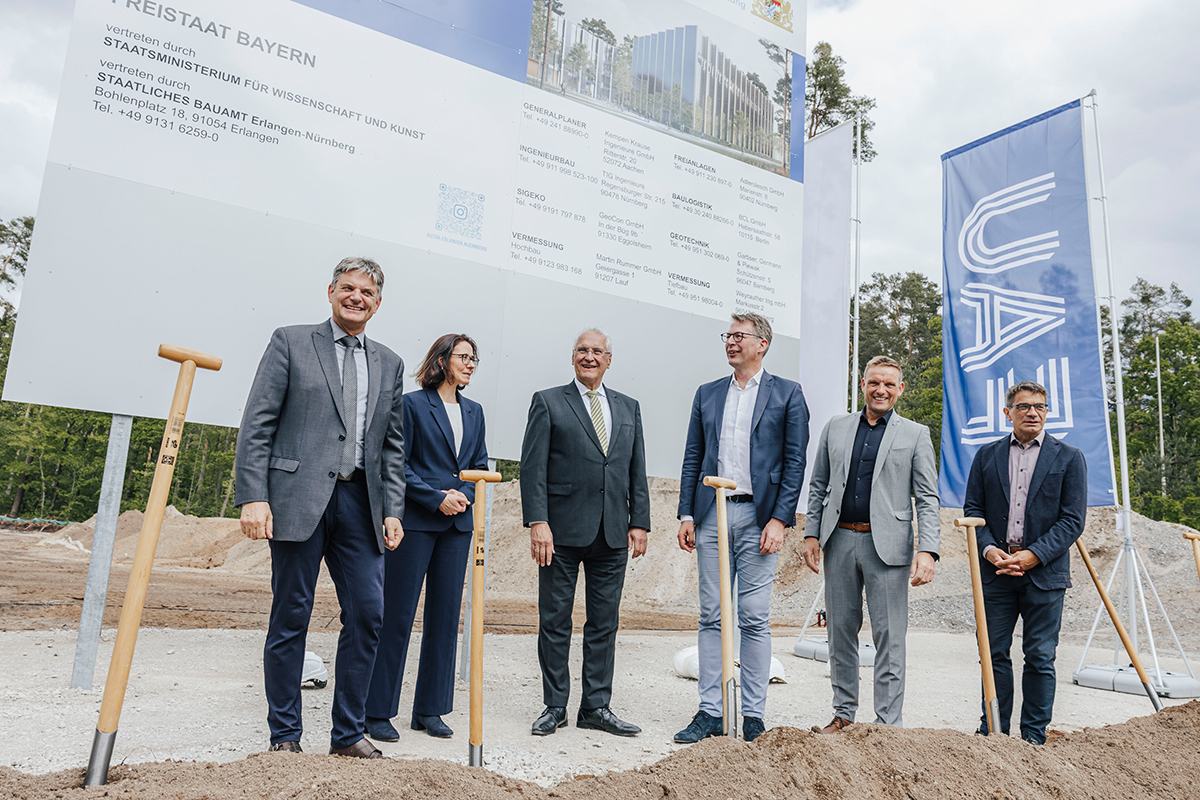
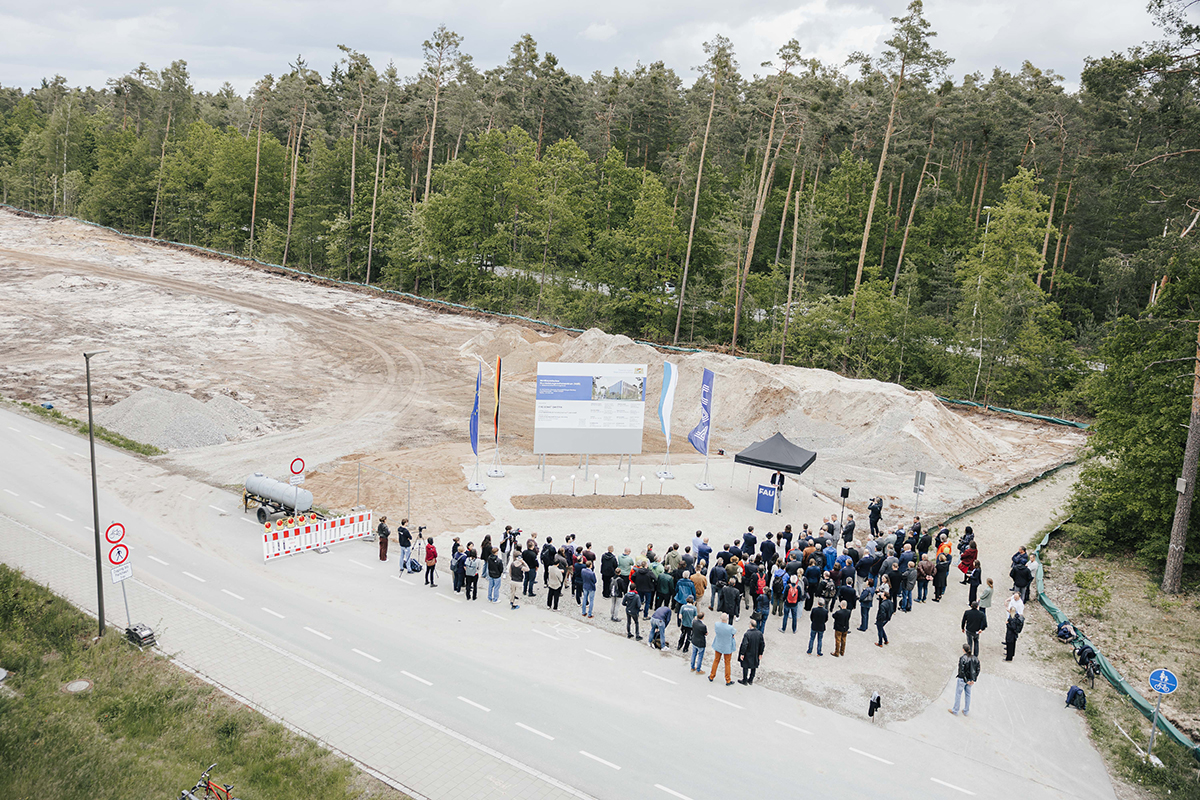
The second groundbreaking ceremony on this day marks the official beginning of construction work on the North Bavarian High-Performance Computing Center in Erlangen. In conjunction with Erlangen Regional Computing Center (RRZE) and in cooperation and consultation with the Leibniz Supercomputing Centre in Garching, the Erlangen National High-Performance Computing Center (NHR@FAU) will develop into a center of excellence and innovation for science and research in Northern Bavaria.
The Free State of Bavaria is investing around 224 million euros here in expanding IT infrastructure as part of the High-Tech Agenda Bavaria. The new building itself will comprise a computing center and offices.
Recently, the Free State of Bavaria invested 55 million euros in the expansion of AI computers at FAU: Over 1000 GPUs are being purchased in order to set up the largest AI computing infrastructure at any university in Germany and put it into operation at the Erlangen National High-Performance Computing Center.
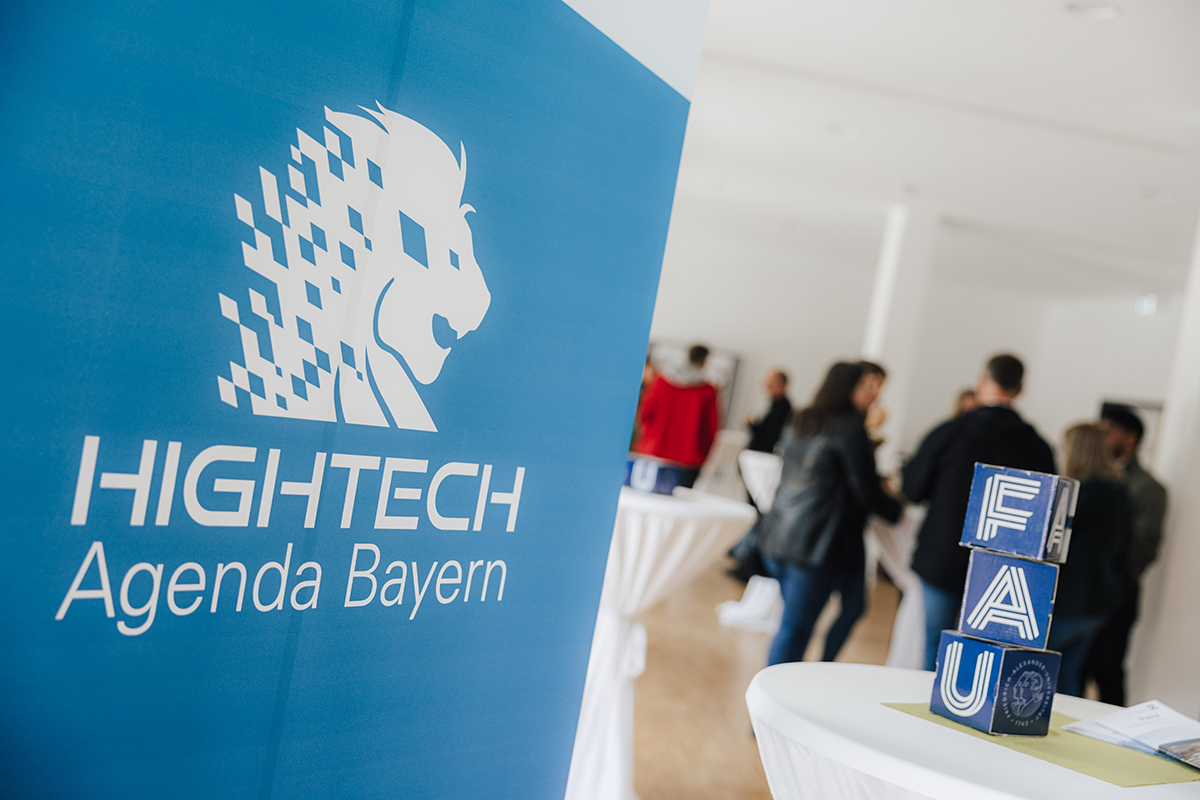
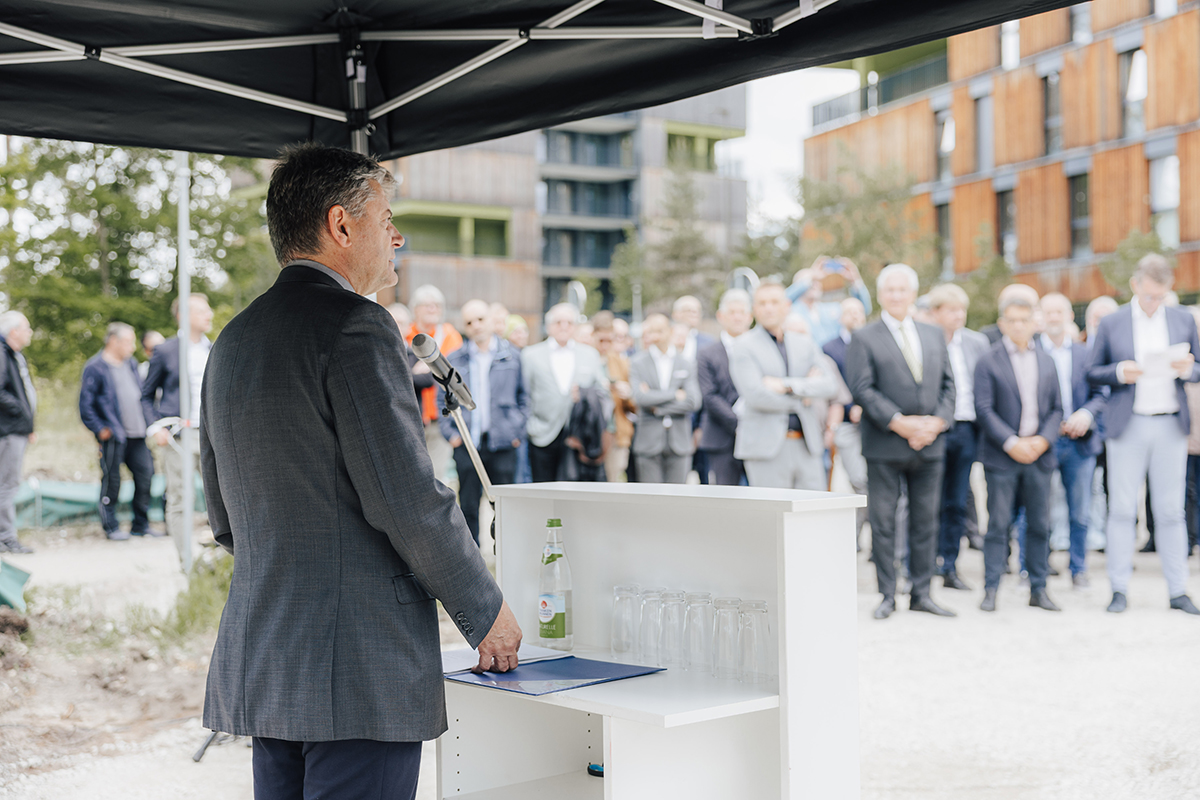
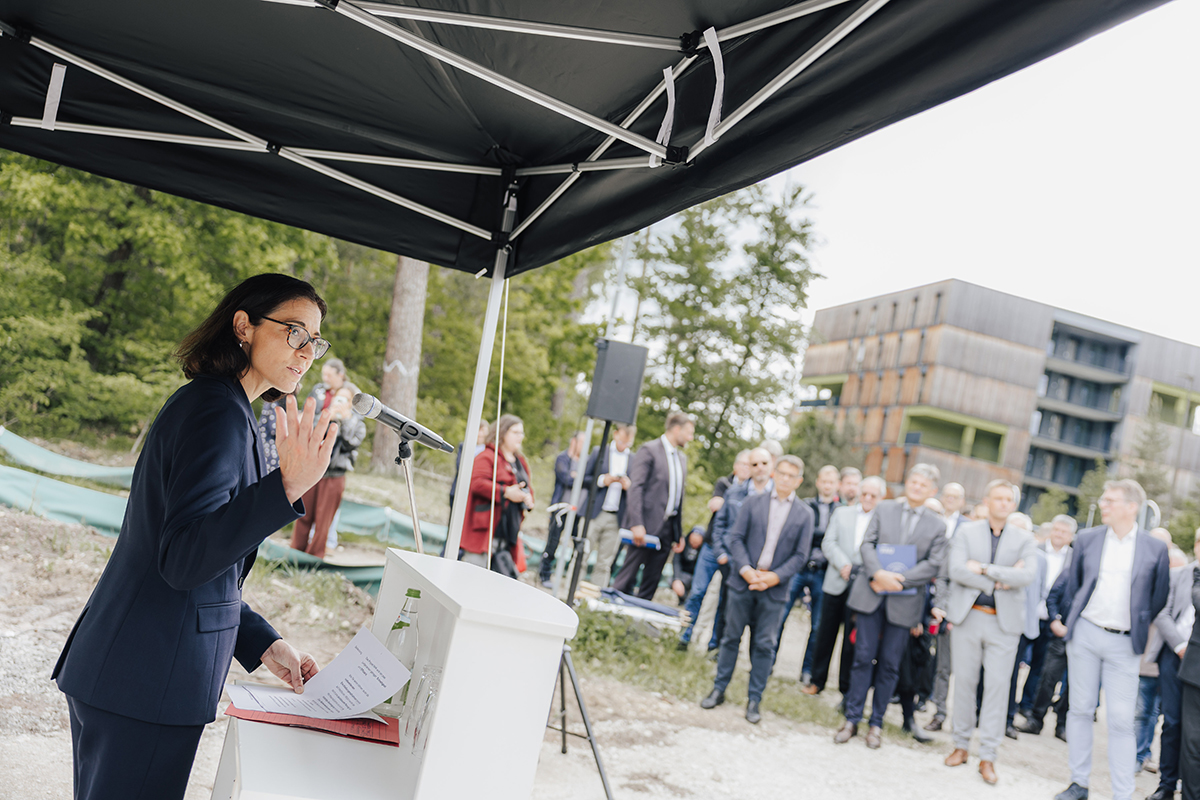
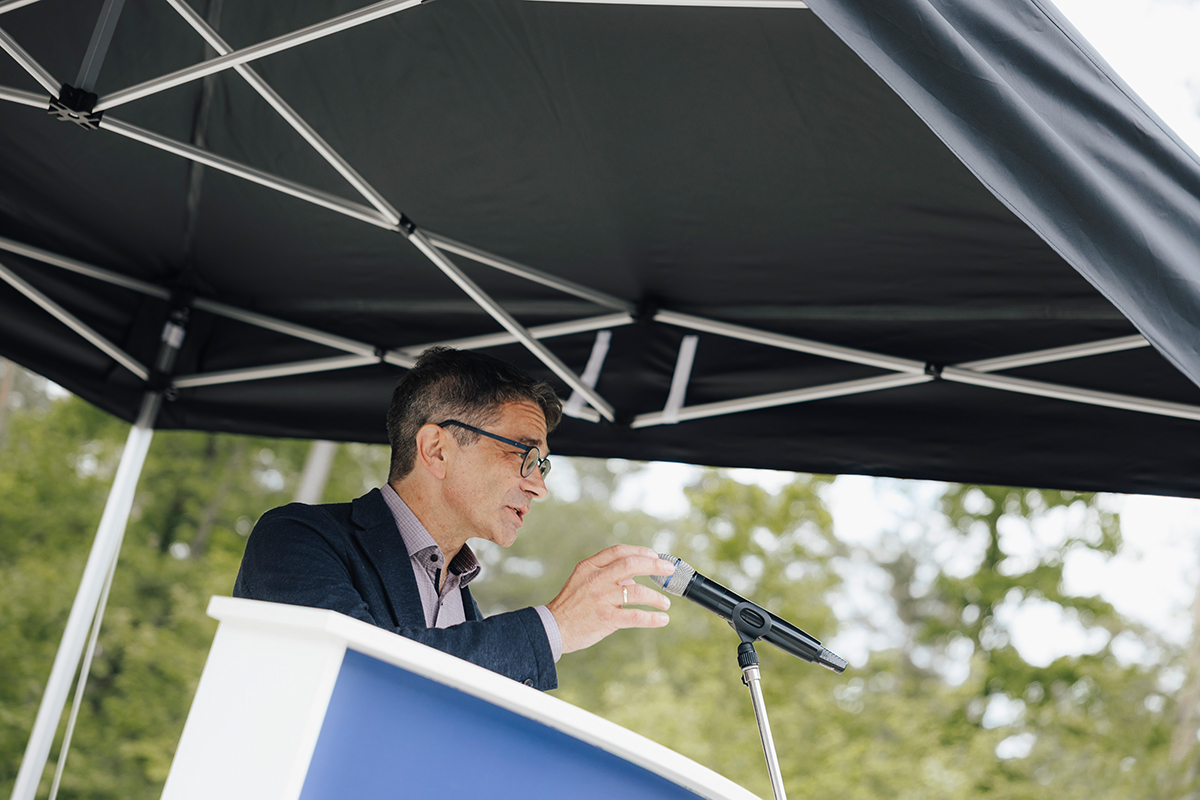
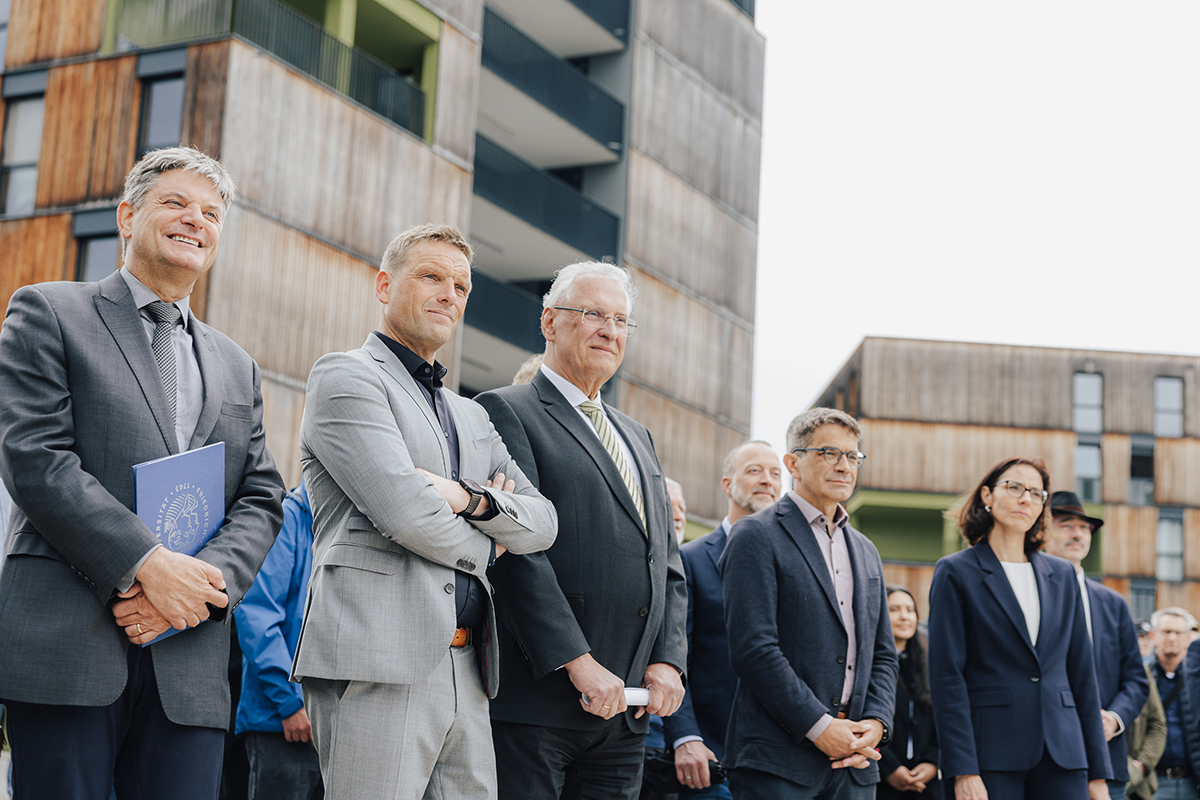
Impressions from the groundbreaking ceremony at NHR@FAU:
Opinions about the groundbreaking ceremonies:
Markus Blume, Bavarian State Minister of Science and the Arts: “Important events at FAU almost always come in twos – two construction projects, two ministers. This is proof of the pace, drive and team spirit at FAU. Today we are celebrating the groundbreaking ceremonies for two cornerstone projects of our major construction work campaign at FAU: the lecture hall complex and the computing center. The new lecture hall complex will become the University’s gateway into the city and FAU’s architectural calling card on the “axis of knowledge”. On around 9,600 square meters of usable floor space, we are constructing a transparent and inviting building housing the Audimax, lecture theaters and experimental spaces, making it a haven for teaching and learning. We are investing around 269 million euros in a modern educational building and meeting place of the future.”
While referring to the groundbreaking ceremony for the North Bavarian High-Performance Computing Center, Blume said: “This is the starting point for a new era in AI at FAU, in the region and in the whole of Bavaria. In one of the most high-performance university computing centers in Germany, we are investing more than 220 million euros to set up the largest AI computing infrastructure at any university in the Federal Republic. Artificial intelligence speaks Franconian. That was clear to everyone. But Franconia can also do artificial intelligence – in the future more than ever before.”
Bavarian Interior Minister Joachim Herrmann: “I am very pleased about both today’s groundbreaking ceremonies that will drive FAU forward as one of Germany’s top-performing universities. The new building in Henkestraße 42 will become the future heart of the city center, a place where the University and the community can come together. And with the start of construction work on the high-performance computing center, we are laying the foundation for digitalization, innovation and academic excellence. It is a driving force and a magnet for Erlangen as a center of research and a catalyst for world-class engineering. With these investments, we are advancing research in the region and FAU’s position as a world-leader in science and research. This is money well-invested in the future of the region and beyond.”
Jörg Volleth, Mayor of Erlangen: “NHR@FAU is a flagship project of nationwide significance for high-performance computing, artificial intelligence and data-driven research. Today’s groundbreaking ceremony strengthens Erlangen as a leading location for research and innovation and will provide the best conditions for top-level research in Bavaria and the whole of Germany. The new lecture hall complex in Henkestrasse 42 will provide urgently needed modern lecture hall facilities and spaces for events. In addition, the building will form an important part of the “axis of knowledge” between the Himbeerpalast building and the Kollegienhaus while providing huge benefits in terms of urban planning in Erlangen city center.”
Tamara Ochsenkühn, Head of Department for university construction projects in Erlangen: “The North Bavarian High-Performance Computing Center will set new standards in efficiency and speed. The use of highly-efficient equipment will optimize energy requirements in comparison to existing computing centers and minimize CO₂ emissions. When combined with the planned use of waste heat, we could cut CO2 emissions by up to 16,500 t, which is equivalent to the average annual requirements of around 5,500 households.”
Andreas Eisgruber, Director of the State Construction Office Nuremberg: “Thanks to the dedication of all those involved, by 2031, Henkestrasse 42 will become a meeting place for members of all faculties and an architectural highlight in the center of Erlangen.”
Prof. Dr. Joachim Hornegger, FAU President: “With the new buildings in Henkestrasse and at FAU Campus Erlangen South, we are actively shaping the future of FAU. The new lecture hall complex will create modern spaces for learning, meeting and interdisciplinary exchanges; places where knowledge is generated and where people can meet to share and develop ideas. At the same time, we are strategically reinforcing our leading position in science with the Erlangen National High-Performance Computing Center (NHR). High-performance computing is a central driver of innovation today. With the NHR, we are creating the infrastructure that will accelerate scientific breakthroughs and further expand world-class research. Both projects stand for our FAU: Innovative, networked and geared to the future. They create the perfect conditions for bringing top-level research, excellent teaching and transfer even closer together and for taking knowledge out into the community effectively.”
Prof. Dr. Gerhard Wellein, Director of NHR@FAU: “The North Bavarian High-Performance Computing Center will provide modern, powerful and energy-efficient infrastructure for research that will create the ideal conditions for reinventing research in the interplay between AI simulation and large volumes of data.”
Further information:
FAU Press Office
presse@fau.de