
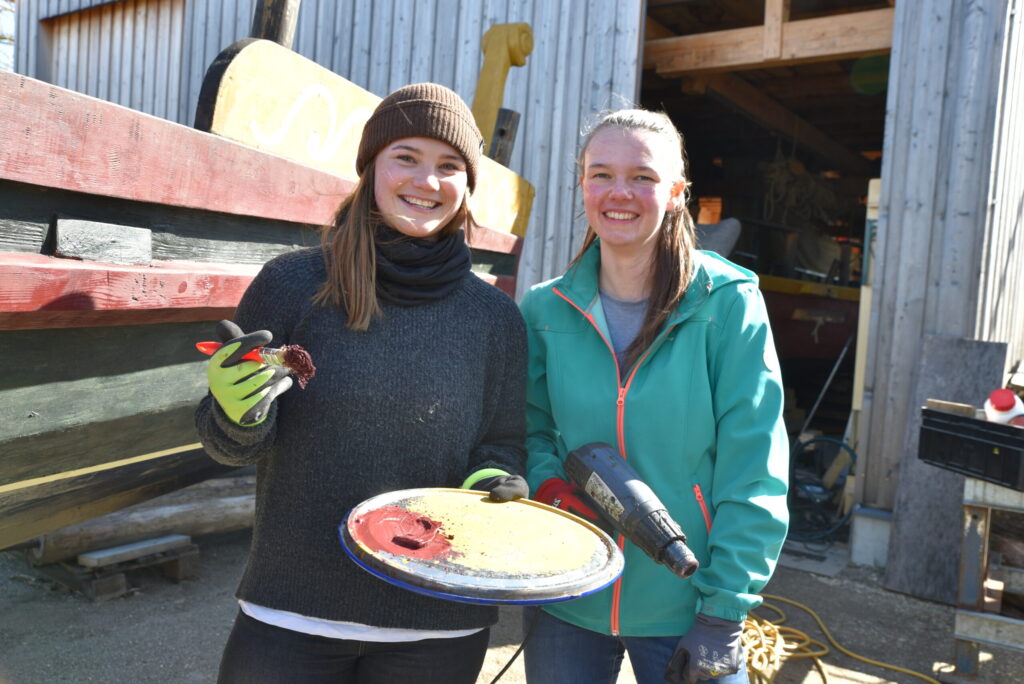
Students and researchers from the Chemistry Department help with painting the Roman boats – a call for more volunteers
Winter is over, and it is time for a spring clean. The Roman center Schlungenhof is no exception. There, the Roman boats from Friedrich-Alexander-Universität Erlangen-Nürnberg (FAU) are waiting for a new coat of paint. Painting the boats not only makes them look impressive, it also serves practical purposes such as preservation, protection and camouflage. Students studying for a teaching degree in Chemistry have been given a hands-on introduction to encaustic painting by painting the F.A.N. under the guidance of FAU chemist Dr. Markus Speck and project leader Prof. Dr. Boris Dreyer, learning about possible pitfalls and the tricks of the trade.
Since the project relocated from Erlangen to Gunzenhausen five years ago, students and volunteers have been involved in various new projects in the workshop and boatyard on the bank of the Altmühlsee lake, working for instance on various Roman chariots, two other Roman boats and ancient artillery. They are also involved in maintenance work on the older reconstructions, including the F.A.N. The ship has been in constant use since 2018: One voyage down the Danube to the Black Sea, regattas with other Roman boats in Germany, many practical and material tests, and voyages for the general public. That all leaves its mark and requires ongoing maintenance. Project leader Prof. Dr. Boris Dreyer not only receives help from volunteers, but also from students and researchers from a wide variety of disciplines, for instance from the Chemistry Department.
Practical historical research
Recently, students studying for a teaching degree in Chemistry helped with maintenance work on the F.A.N. and applied a new coat of paint using a heat gun – an arduous task. When asked why they chose to get involved, Jule and Katharina, who are both studying for a teaching degree in Chemistry, replied: “We seized the opportunity to do something outside of our normal curriculum. It was also a chance to learn something unusual.” That apart, Jule and Katharina are also both interested in history. They are particularly fascinated by the fact that FAU reconstructs ancient Roman boats as a way of discovering which techniques and technologies the people at that time used. “This gives us more of an insight into life at that time,” they explain. Both students took part in a seminar offered by Dr. Marcus Speck, research associate at the Chair of Organic Chemistry II.
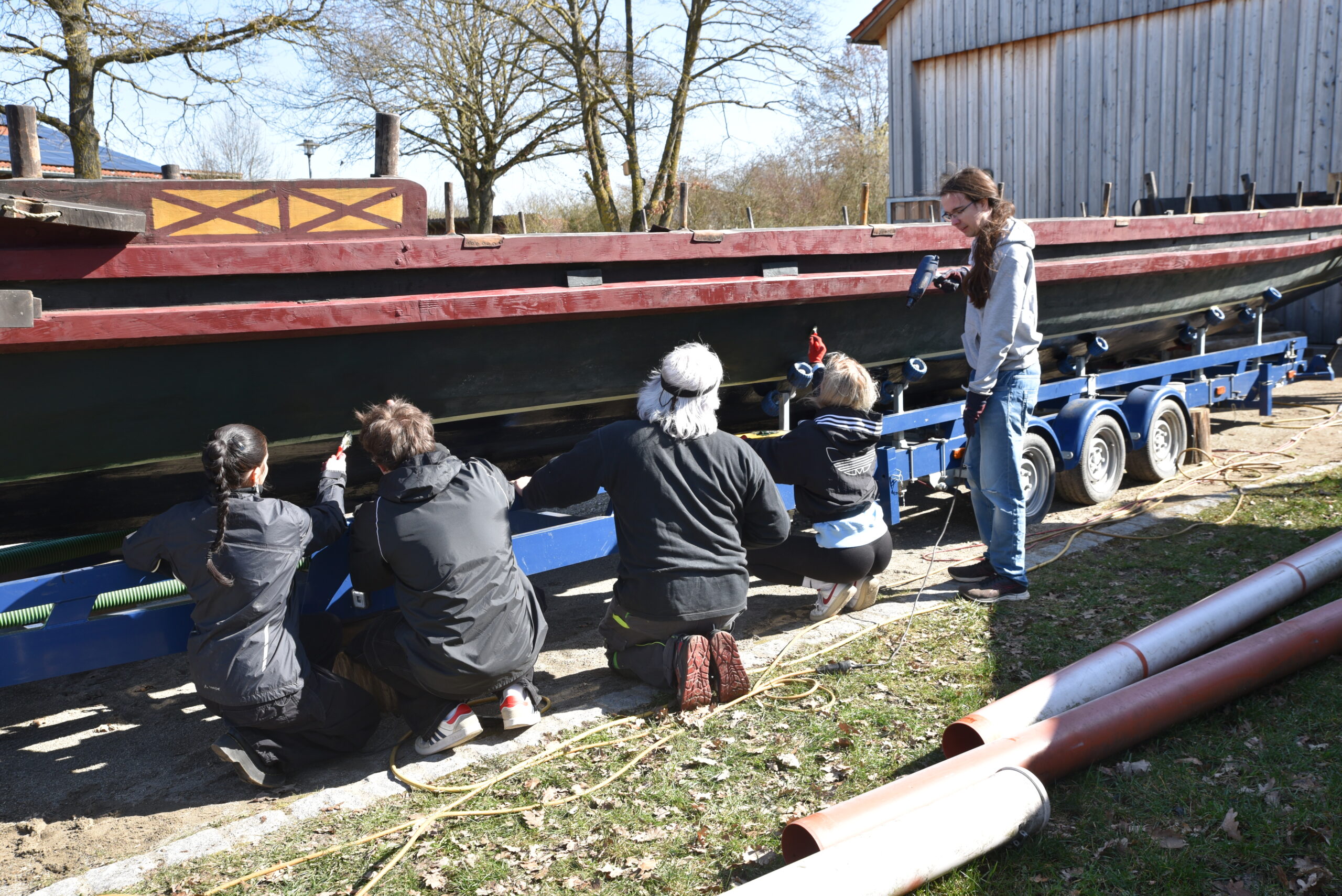
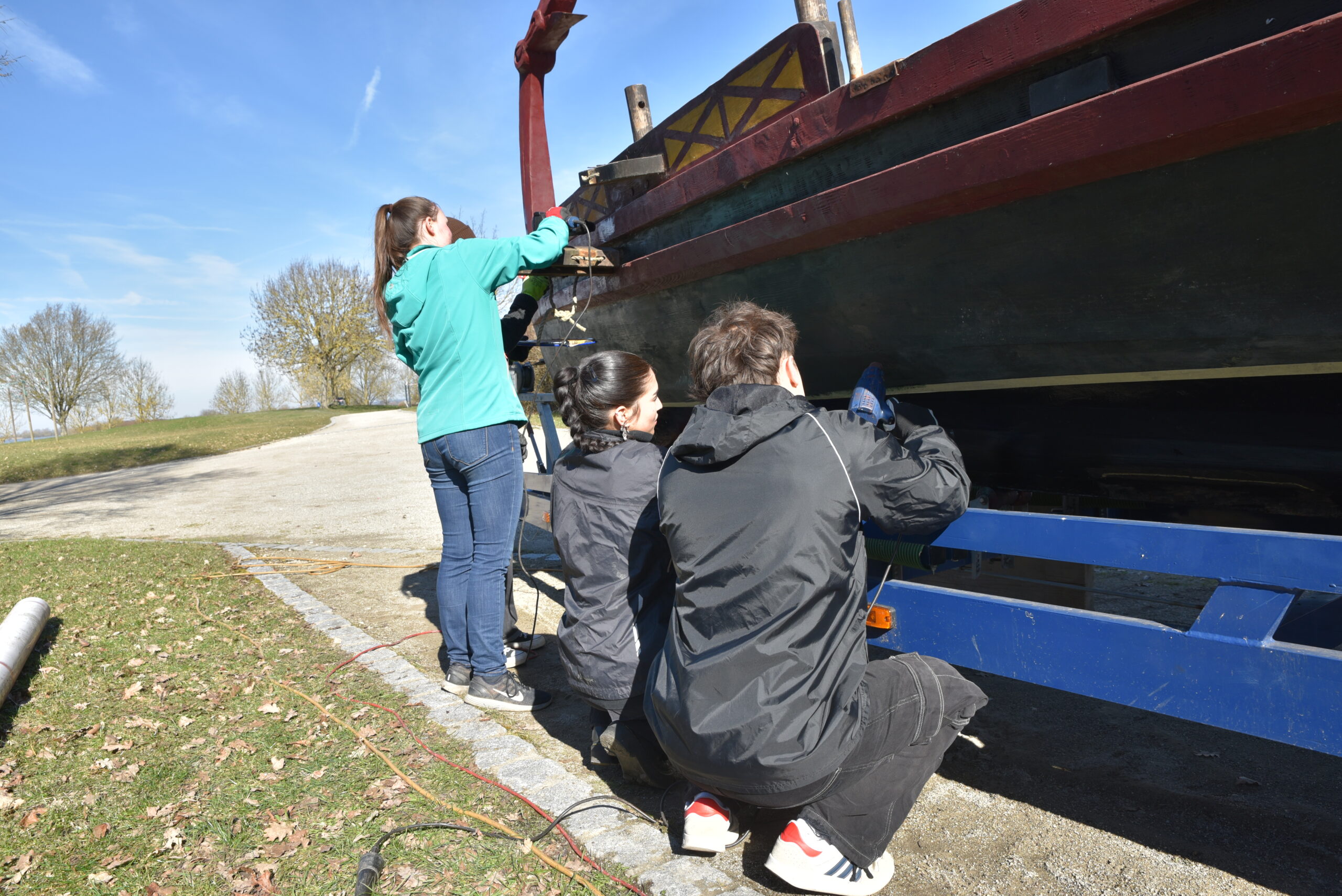
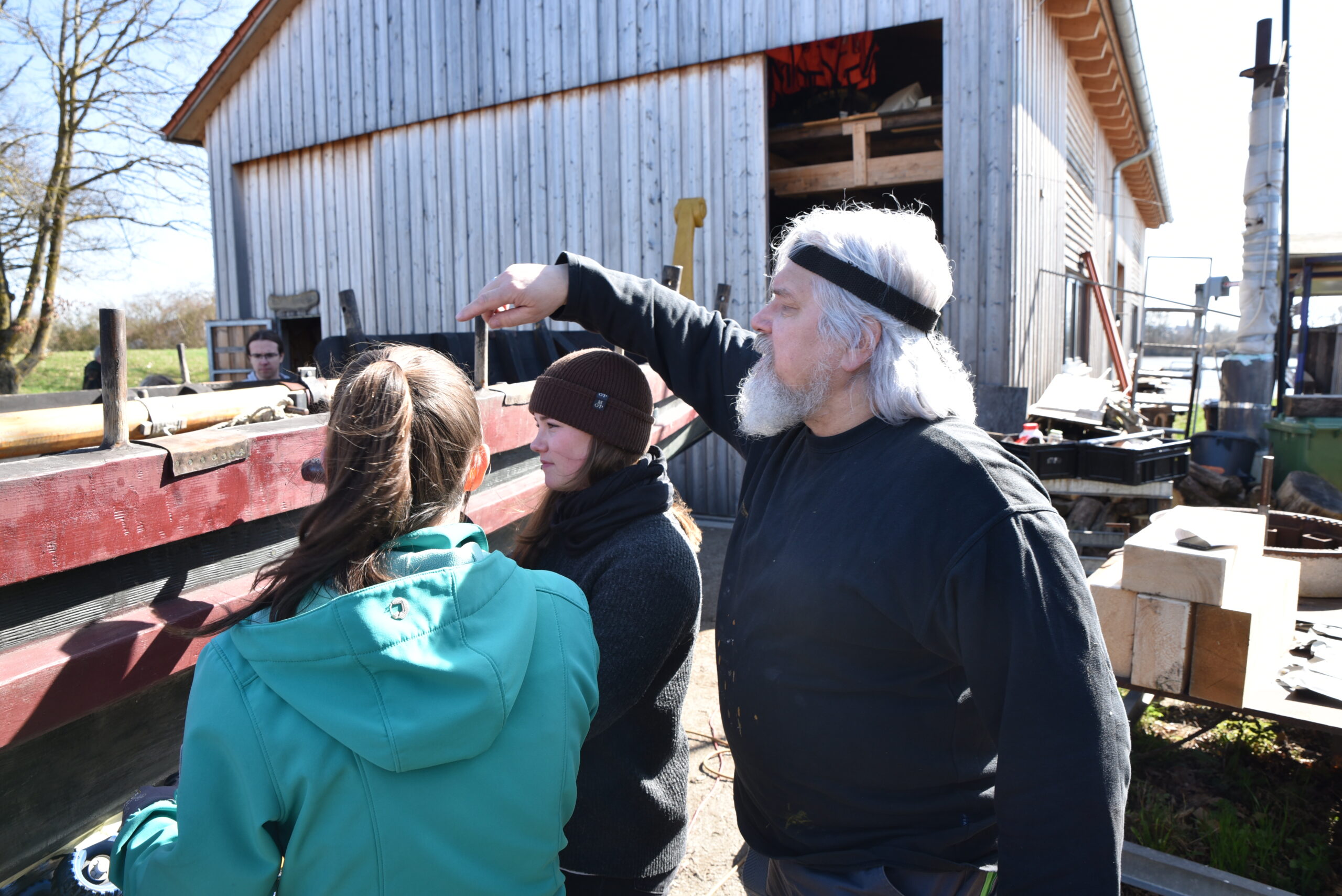
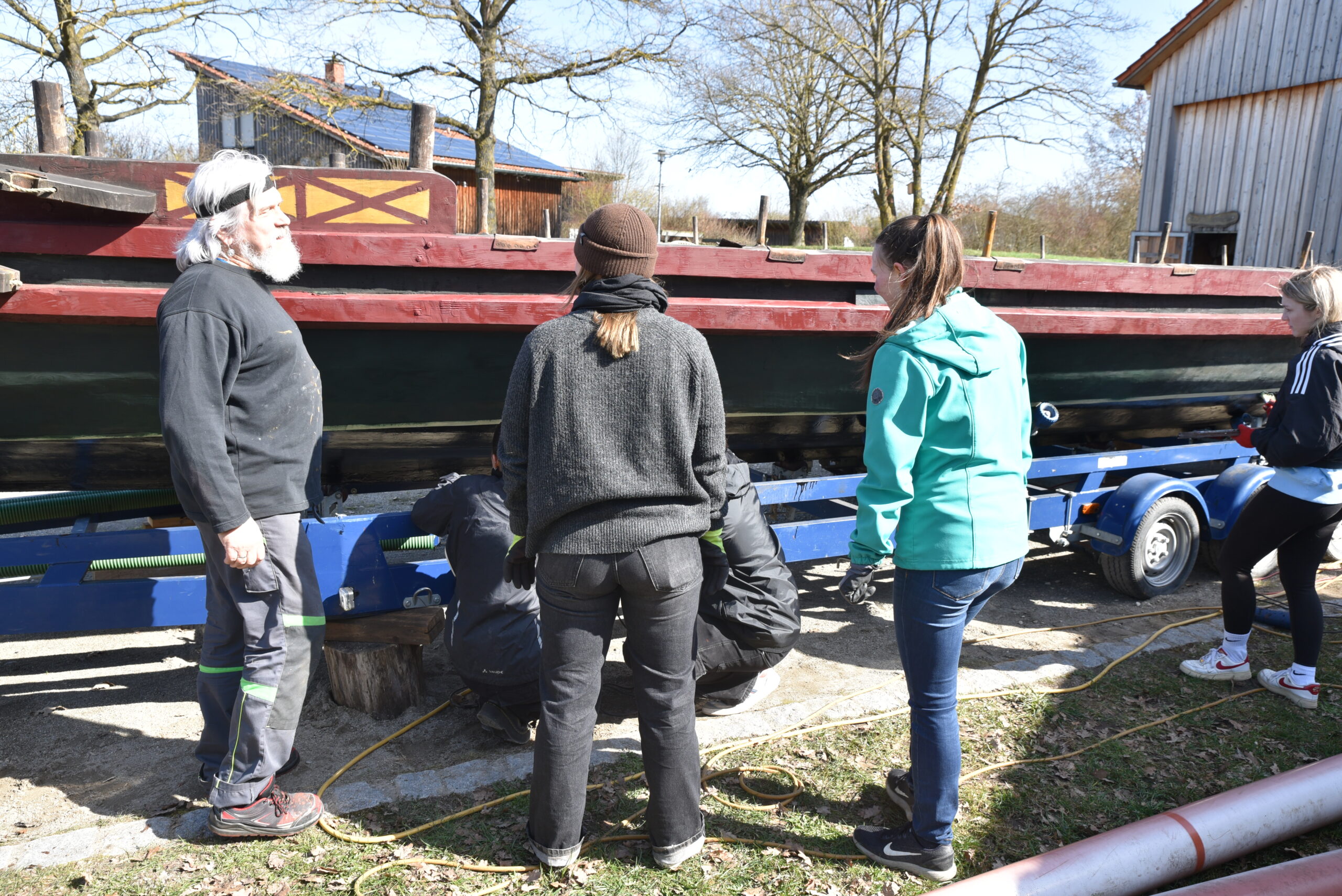
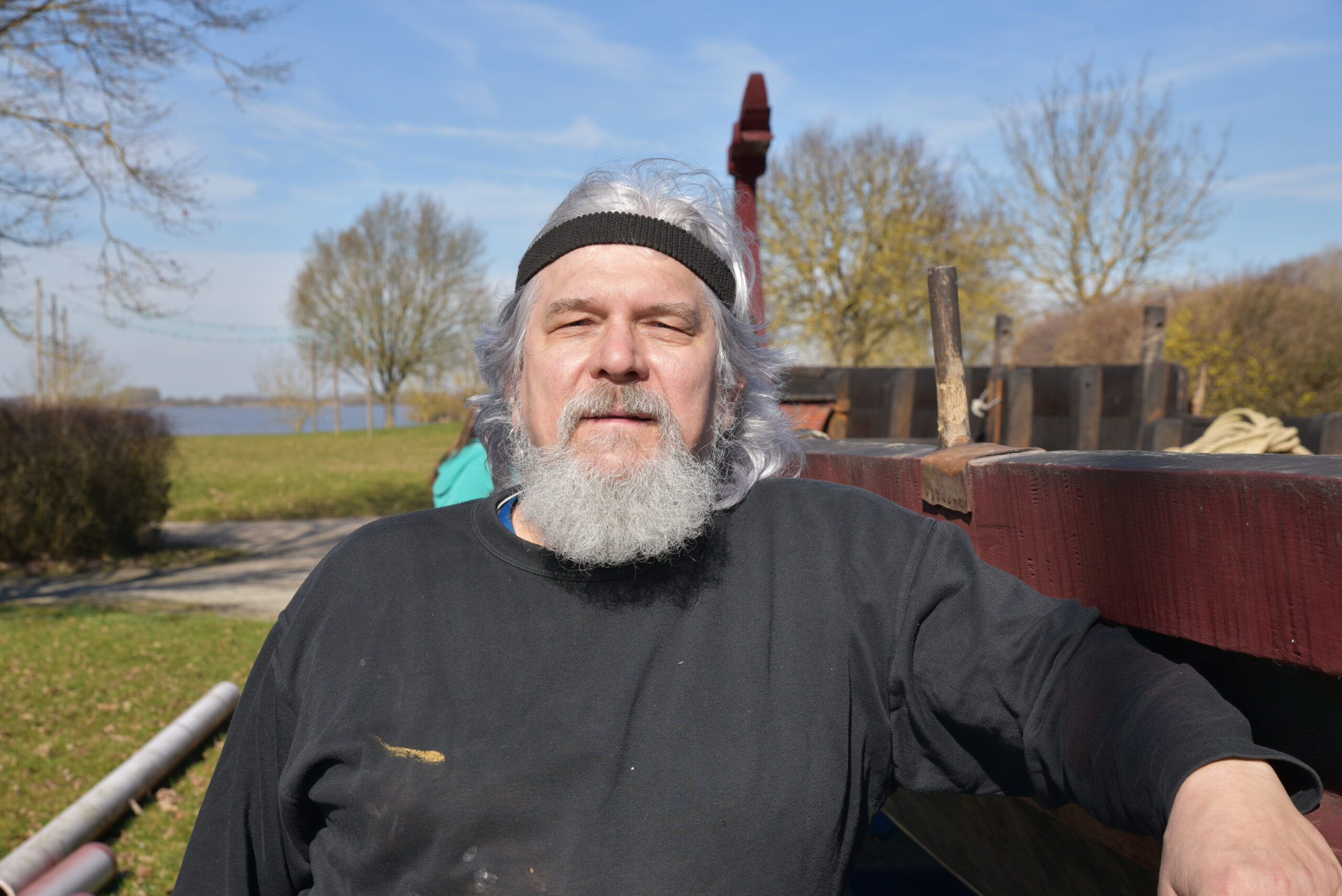
He is also driven to participate in the project thanks to his interest in history. For more than five years now, he has assisted ancient historian Prof. Dr. Boris Dreyer in reconstructing ancient technologies as authentically as possible and subjecting them to comprehensive practical tests, initiated by FAU professor Boris Dreyer and referred to as “practical turns”. “I wanted to scientifically investigate what the historical sources tell us about paints and painting,” explains Dr. Marcus Speck. In the meantime, a number of scientific articles have been published, and more than ten theses of great scientific value written by students at the Chair of Organic Chemistry I. Dr. Markus Speck is particularly fascinated by which techniques the people in those days used to build and paint boats such as these and what efforts are required today to reach a similar standard.
Uncovering the tricks of the trade
One area he focuses on covers the methods used to paint the boats. In contrast to the other Roman boat reconstructions in Germany, the FAU boats are painted using a painting technique that was also used in ancient times. Encaustic painting involves mixing pigments and wax to make paint that is then heated and applied to a base coat of linseed oil with a paintbrush. “The boat was first painted in 2018 using encaustic paint based on turpentine. Turpentine is found in resin from pine trees,” explains Dr. Marcus Speck. However, this poses two problems: In order to obtain large quantities of turpentine, people at the time would need to have been able to use distillation, but this procedure was only invented by the Arabs in the 6th century CE. “That apart, our first experiment using paint based on turpentine barely stood up to heat and melted when the sun shone on it,” the chemist explains.
Further research is required into the composition of paint used in ancient times. The main source of information on painting techniques is the Roman author Pliny the Elder, who lived in the first century CE and wrote “Natural History”, an encyclopedia running to several volumes. In it, he describes how encaustic paint is mixed using Punic wax. However, it remains unclear what exactly this wax is. Finally, Dr. Marcus Speck solved the problem by using purified beeswax. “It is safe to assume that this was also used in ancient times,” he explains. “One advantage over the unauthentic turpentine is clear: using modified beeswax allows the paint to withstand temperatures that are approximately 20 degrees higher.”
He and Prof. Dr. Boris Dreyer are also keen to discover why boats were painted the way they were. The colors used for the F.A.N., predominantly dark yellow and green and a reddish brown, may have been useful for camouflage and to launch surprise attacks. “The wild vegetation along the banks of the Danube and Altmühl rivers would be perfect for hiding boats painted like this,” explains project leader Prof. Dr. Boris Dreyer. “When the boat emerged from its hiding place and revealed itself, this would catch any possible enemies unawares.”*
* Using perception as a strategy: Camouflage, surprise, and the moment of shock related to perception
The most dangerous enemy of the F.A.N. is very small, however: fungi. “The paint acts as a preservative and protects the boat from wind, water and sun, as described by Pliny,” explains Dr. Marcus Speck. “It does not protect it from fungi, however, and occasionally we have no choice but to repair whole sections of wood.”
Volunteers wanted! Who would like to help?
Boris Dreyer and Marcus Speck are always looking for volunteers to help with this ongoing maintenance work. “Ancient boats like this were used for perhaps five years. The F.A.N. is now already over seven years old,” Boris Dreyer explains. “Regular maintenance work is essential to make this possible. We need a lot of volunteers. Students from all disciplines are welcome, as is anyone who is interested in getting involved in the project, whether they belong to the university or not.” Prof. Dr. Dreyer and his team also need help with the other projects, such as the Roman and Celtic wagons, artillery reconstructions or the other two FAU Roman boats. Dr. Marcus Speck will continue his research into ancient painting techniques in the organic chemistry laboratories. Anyone who is interested in getting involved can contact Prof. Dr. Boris Dreyer or Dr. Marcus Speck directly.
Further information:
Prof. Dr. Boris Dreyer
Professorship for Ancient History
Address
Contact
Dr. Marcus Speck
Chair of Organic Chemistry II