
FAU researchers identify conceptual weaknesses in established methods
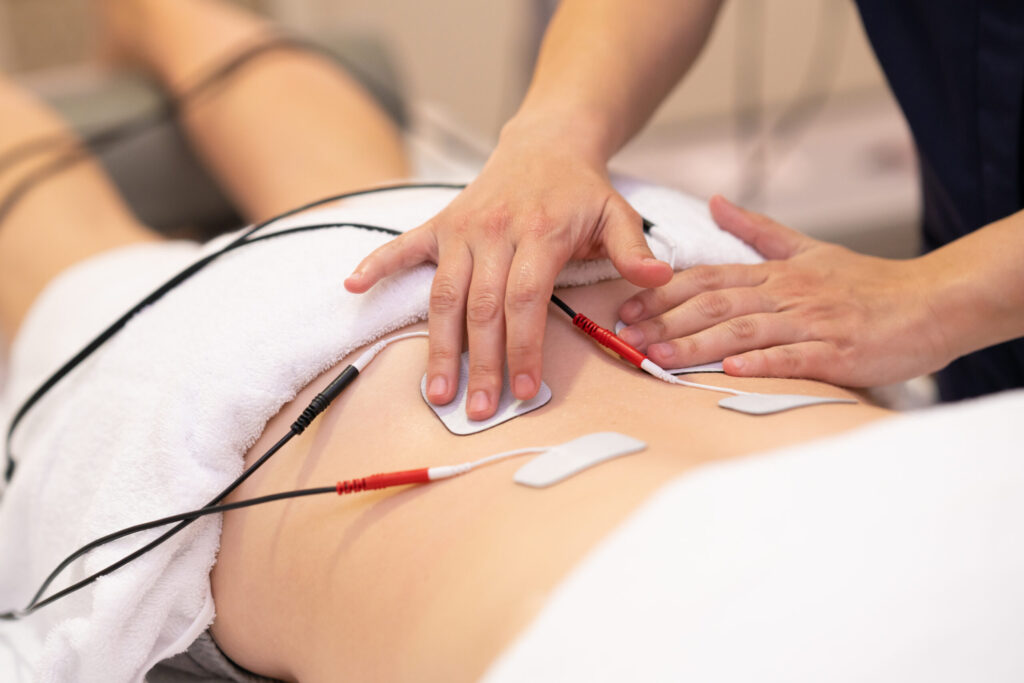
Electrical stimulation of the spinal cord, such as following a spinal cord injury, has made great strides in recent years. However, high-frequency stimulation pulses, which are used in many current applications, appear less efficient at activating those nerve fibers that are believed to contribute decisively to therapeutic effects. This is the conclusion of a study conducted by an international team with the participation of Friedrich-Alexander-Universität Erlangen-Nürnberg (FAU). Through electrophysiological examinations in humans as well as highly detailed computational models of the human body, the researchers were able to make visible which neural structures are activated by the stimulation. The results, which were published in the journal Nature Biomedical Engineering, are intended to contribute to improving medical technology applications*.
An injury to the spinal cord is usually irreversible. Nevertheless, chronically paralyzed individuals can relearn motor functions through intensive training and medical technology support. A breakthrough was achieved in this regard by invasive spinal cord stimulation. “Initially, stimulators were guided very close to the nerve roots in order to selectively activate neuronal populations,” explains Prof. Dr. Andreas Rowald, holder of the Chair of Digital Health at FAU. “This procedure is not only an invasive medical intervention, it is also associated with an enormous technological effort.”
For these reasons, a promising alternative has been developed in recent years: stimulation via electrodes placed on the skin above the spinal cord. Clinical studies have shown that people with spinal cord injury can also partially regain motor functions through the non-invasive procedure. “This work has led to the emergence of the first clinical medical devices in Europe and the United States,” explains Rowald. “We have, however, established that there is little well-founded knowledge about why these products work at all and how they should be applied in a targeted manner.”

“Over the past years, we have successively created digital twins of the human body, into which all available data on biophysical processes flow.”
FAU Professor Andreas Rowald, Chair of Digital Health
Digital twin supplements clinical investigations
To close this knowledge gap, a research team from FAU, the Medical University of Vienna, and Washington University in St. Louis (USA) conducted a study that combines investigations in humans with computer simulations of the human body. In the evidence-based part of the study, 28 healthy subjects were tested to determine which nerve and muscle activations are triggered by non-invasive electrostimulation. “In addition to various peripheral nerve stimulations on the arms and legs, the experiments focused in particular on the area of the cervical and lumbar spine,” says Andreas Rowald. “These are the typical focal points in spinal cord injuries.”
The clinical activation patterns were compared with high-resolution computer simulations. The Institute of Medical Informatics, Biometrics and Epidemiology at FAU as well as the Department of Artificial Intelligence in Biomedical Engineering (AIBE) possess a globally unique expertise in this field. “Over the past years, we have successively created digital twins of the human body, into which all available data on biophysical processes flow,” explains Rowald. “The models allow insight into processes that cannot be directly observed experimentally in humans.” The modeling ranges from the macroscopic current flow through the body to the microscopic modulation of individual ion channels on neuronal membranes. In this way, the researchers can precisely predict how nerves respond to electrical stimuli of different stimulation parameters and where electrodes must be placed so that the current triggers targeted responses in the nervous system.
Applications often not sustainable
The results of the study suggest that established methods of non-invasive electrostimulation have conceptual weaknesses. The researchers view with particular skepticism the widespread use of high-frequency, ultrashort pulses. “What is decisive for the treatment outcome is which response pathway of the nervous system is targeted,” says Rowald. “We distinguish here between motor and somatosensory stimulation – the former runs from the central nervous system into the muscle, the latter from the muscle into the central nervous system.” It is known that durable learning outcomes are achieved in particular with somatosensory stimulation. Yet precisely this pathway is less activated by short pulses than by longer waveforms. Rowald: “High-frequency pulses are probably used because they tend to cause less pain. However, for effective stimulation one requires considerably higher currents than with longer pulses, so that the supposed advantage is likely negated.”
The researchers advocate for fundamentally reconsidering the use of high-frequency pulses in non-invasive electrostimulation. “The approach is promising, the idea behind it sound,” says Andreas Rowald. “What is decisive, however, is not simply to trigger muscle responses, but to exhaust the full potential for restoring motor function after paralysis – especially since both product development and medical therapy are complex and cost a great deal of money.” A fundamental understanding of the mechanisms of action of electrical stimulation is, incidentally, valuable not only in spinal cord injuries, but also, for example, in the treatment of multiple sclerosis or neurological disorders of the brain.
* DOI: https://doi.org/10.1038/s41551-026-01684-w
“Fundamental limitations of kilohertz-frequency carriers in afferent fiber recruitment with transcutaneous spinal cord stimulation”
Further information:
Prof. Dr. Andreas Rowald
Professorship for Digital Health