
• Skip navigation
  • Skip to navigation
  • Skip to the bottom
Simulate organization breadcrumb open Simulate organization breadcrumb close
Friedrich-Alexander-Universität Erlangen-Nürnberg
Suche öffnen
  • Deutsch
  • StudOn
  • Campo
  • FAUdir
  • Career
  • Uniklinikum
  • University Library
Friedrich-Alexander-Universität Erlangen-Nürnberg
Navigation Navigation close
  • FAU
    • News
    • Welcome to FAU
    • Strategy and objectives
    • History and remembrance
    • Campus locations at FAU
    • Site development at FAU
    • Organisation and committees
    • Legal regulations
    • Finding your way around: contacts and directions
    • Faculties and organisational units
      • Faculties
      • Universitätsklinikum Erlangen
      • Central institutions
      • Collaboration and partnerships
    FAU
  • People
    • Students
    • Employees
    • Researchers
    • Alumni
    • Working at FAU
      • Jobs at FAU
      • Professorships
      • Energy technology and technical building services
      • Vocational training at FAU
      • Training and career development at FAU
    • Gender/Diversity/Family
    • New at FAU/Onboarding/Incoming
    • Offboarding/Outgoing
    People
  • Education
    • Student orientation
    • Degree programs on offer
    • Application and enrollment
      • Application and enrolment for internationals
    • Advice and services
    • Study organisation
      • Tips for getting started at FAU
      • Semester dates
      • Re-registration and semester contribution
      • Degree programme and examination regulations (Link to our German website)
    • International
      • Information for international applicants
      • Going abroad
    • Student life
    • Teaching at FAU
    Education
  • Research
    • Research profile
      • Research priorities at FAU
      • FAU Profile Centers
      • FAU Research Centers
      • Research projects and partnerships
      • Rankings
    • Responsible research
    • Collaborative research
      • EU collaborative projects
      • DFG projects
      • Federal projects
      • Collaborative research in Bavaria
    • Outstanding individual research
      • Gottfried Wilhelm Leibniz Prize
      • Alexander von Humboldt Professorship
      • ERC grants
      • Heinz Maier-Leibnitz Prize
    • Research projects and partnerships
    • Welcome Center for International Researchers
    • Early Career Support
      • Doctoral degrees at FAU
      • Service for Young Academics
    • Services for researchers
      • Advice for third-party funded projects
      • Publications
      • Research information system
      • Science communication
      • FAUconnect
    Research
  • Outreach
    • Events
    • Inventions and patents
      • Intellectual property (IP) policy of FAU
      • Service for inventors
    • Innovation and start-ups
      • Partnerships and collaborations
      • Innovation platforms and networks
      • Consulting services for start-ups
    • Professional development
    • Donations
      • FAU Innovation Fund
      • Deutschlandstipendium (Germany Scholarship)
    • FAU for companies and organisations
    • Science for citizens
    • FAU Shop
    • Press Office
    Outreach
  1. Home
  2. Early Career Support
  3. Completing a doctoral degree at FAU
  4. Publishing

Publishing

In page navigation: Early Career Support
  • Completing a doctoral degree at FAU
    • Publishing
    • International doctoral candidates
    • Bi-national doctoral degrees
    • Financing your doctoral degree
    • Conflict advice and important points of contact at FAU
    • General FAQs
  • Structured doctoral programs
  • After completing your doctoral degree
  • For supervisors and mentors
  • Seminars and events
  • Networks
  • About us

Publishing

Publishing the doctoral thesis

All doctoral theses completed as part of a doctoral research project at FAU must include an affiliation to the University (please refer to the General Doctoral Regulations (RPromO) of FAU).

According to the Regulations for safeguarding good scientific practice and dealing with scientific misconduct at FAU, individual AND third-party preparatory work must be fully and correctly cited. This of course also applies to results, content or figures from the individual’s own preparatory work/publications which are used in doctoral theses. In principle, these should be referenced or cited in just the same way as work from other scientists or scholars in accordance with the standards applicable to the subject in question. Helpful information about avoiding self-plagiarism can be found in the information sheet from the Graduate Center.


Contribution towards printing costs

Often, publication entails considerable costs for doctoral candidates that are not easy to find funding for. The reason that is often cited for the contribution towards printing costs is that the publications are aimed at a very specialist audience and the target group is therefore very small. This means that sales will be more difficult and it will not be possible to cover the full price of production through sales. The author is therefore expected to cover these costs by paying towards printing. This provides greater security for publishers when publishing academic texts.

Doctoral degrees that were completed without funding have the most difficulties in finding funding to cover their contribution towards printing costs.

Some third-party funding providers who fund projects also provide funding for publishing the results and the payments towards printing costs that are incurred as a result. We would recommend contacting your funding provider directly. Funding for payments towards printing costs is also available from certain scholarships or research training groups. The DFG only provides funding for doctoral theses in particularly justified exceptional cases. More information is available in the DFG’s guidelines on publication grants.


Some foundations provide funding for publications in certain subjects:

  • Geschwister Boehringer Ingelheim Stiftung für Geisteswissenschaften (humanities)
  • Franz-und-Eva-Rutzen-Stiftung zur Förderung von Wissenschaft und Forschung auf dem Gebiet der Archäologie (archaeology)
  • Arbeitskreis Wirtschaft und Recht (Handels-, Gesellschafts-, Wirtschafts- und Arbeitsrecht) (trade, corporate, commercial and labor law)
  • Ilse und Dr. Alexander Mayer Stiftung

You can also search for foundations that provide funding to cover publication costs in the Deutsches Stiftungszentrum database.

It is also worth looking at our website for funding databases.


A few publishing houses also offer a payment towards printing costs, but it may be linked to certain conditions (although this is not always the case).

  • VDK-Foerderfonds

The Barbara Budrich publishing house organizes a competition for doctoral theses every two years. The entries are evaluated by a panel of specialists and selected theses are then published free of charge by Verlag Barbara Budrich in its “promotion” series.


Options for publication

The RPromO sets out various possibilities for publishing theses. In addition to publishing the thesis in this way, it is of course extremely desirable for the results to be published in international scientific journals or other publications. Ideally, this should happen whilst you are still working on your doctoral thesis. There are a number of options available to you for dealing with these “pre-prints” as they are known in your doctoral thesis in accordance with the applicable subject or faculty doctoral regulations (FPromO).

If you want to publish your results or have them protected by patent after completing your doctoral degree, it is recommended that you refrain from publishing your doctoral thesis straightaway. This is possible either by making the most of the deadlines stipulated in the doctoral regulations or by applying for an embargo notice for the publication of the doctoral thesis.

Further information is available in an information sheet from the Graduate Center.

Publishing your doctoral thesis electronically may be one alternative. If the doctoral regulations for your subject permit this option, you should take a look at OPEN FAU where you will find information on online publication at the University.

Please be sure to refer to the University Library website.

For grants towards publishing articles in open-access journals, please read the information on the relevant website. It is also important to check the quality criteria for open access publishers beforehand.

In addition to electronic publication on OPEN FAU as mentioned above, FAU University Press offers the possibility of having your publication printed in book form through its publishing service. FAU University Press provides support during all stages of the publication process, which is discussed in detail with the author, and commissions a print-on demand service, enabling small print runs to be produced at low cost.

Since April 2024, you can also choose to submit your doctoral thesis in an unformatted format, for example in the original A4 format, and have it converted automatically into the corporate design of the FAU University Press using the new SciFlow Publish production workflow. Please note the criteria that have to be met for this workflow.

Further information on the publication process and who to contact is available on the FAU University Press website.

Doctoral theses graded “summa cum laude” can also be published in the series “FAU Forschungen”. The decision is taken by the Academic Advisory Board of FAU University Press. Doctoral theses and other theses can also be published in the “FAU Studien” series. All that is required is the recommendation of the relevant Chair.

Print-on-demand means that only small print runs are produced. Larger quantities are published subsequently if necessary. This avoids generating high costs for the publisher and uncertainty regarding sales, meaning that the books can be published at a much more reasonable cost. Generally, doctoral candidates are not expected to contribute towards printing costs in this instance.

Faculty doctoral regulations may stipulate certain restrictions, for example regarding the minimum number of copies, or the period in which further copies can be printed.

  • List of selected print-on-demand services

VG Wort is a copyright collective – a group of authors and publishers which engages in collective rights management. Its main task is to ensure that authors and publishers receive the best possible revenue from those required to pay fees and to pass this revenue on to those who are entitled to it with the least possible administrative work. It sets fixed fees for authors whose works can be used by third parties (e.g. through library loan).


Affiliation Guidelines

The link between publications and their authors with FAU is a decisive factor for many (international) rankings. Publications can only be assigned to the relevant databases at FAU if they are correctly affiliated.

Information and FAU guidelines on affiliation

Articles

If you are planning to publish an article in English, the Language Service can provide support with translating or editing your work. The costs involved depend on the subject and scope of the text and are charged at an hourly rate according to the actual time required. Please contact the Language Service for a quote.
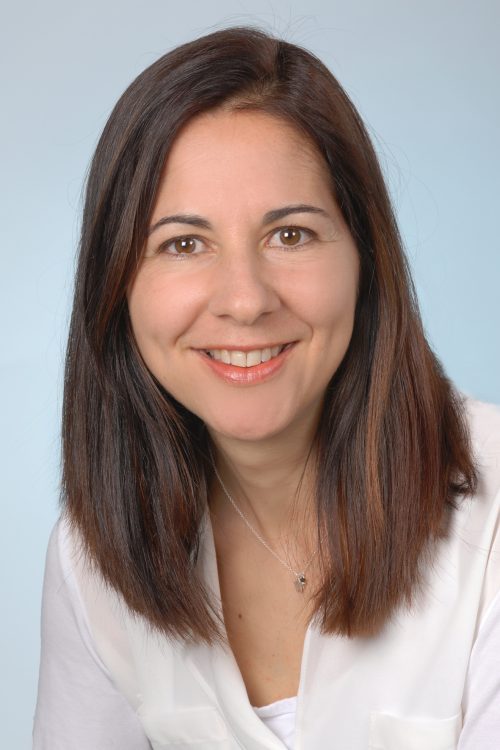
FAU Language Service

Contact for English editing services.

Susanne Jäckle (Bild: Anne Schamberger)

Susanne Jäckle

Language Centre

Administrative staff

Contact

  • Email: susanne.jaeckle@fau.de
  • Phone: +49 9131 85 -29227


  • Contact
  • Press Office
  • Intranet
  • What to do in an emergency
  • Reporting errors
  • Imprint
  • Privacy
  • Accessibility
  • Instagram
  • TikTok
  • Bluesky
  • Mastodon
  • YouTube
  • Facebook
  • Xing
  • LinkedIn
  • FAU Community
  • Threads
Up