
Taimering mammoth was likely butchered by hunters and gatherers
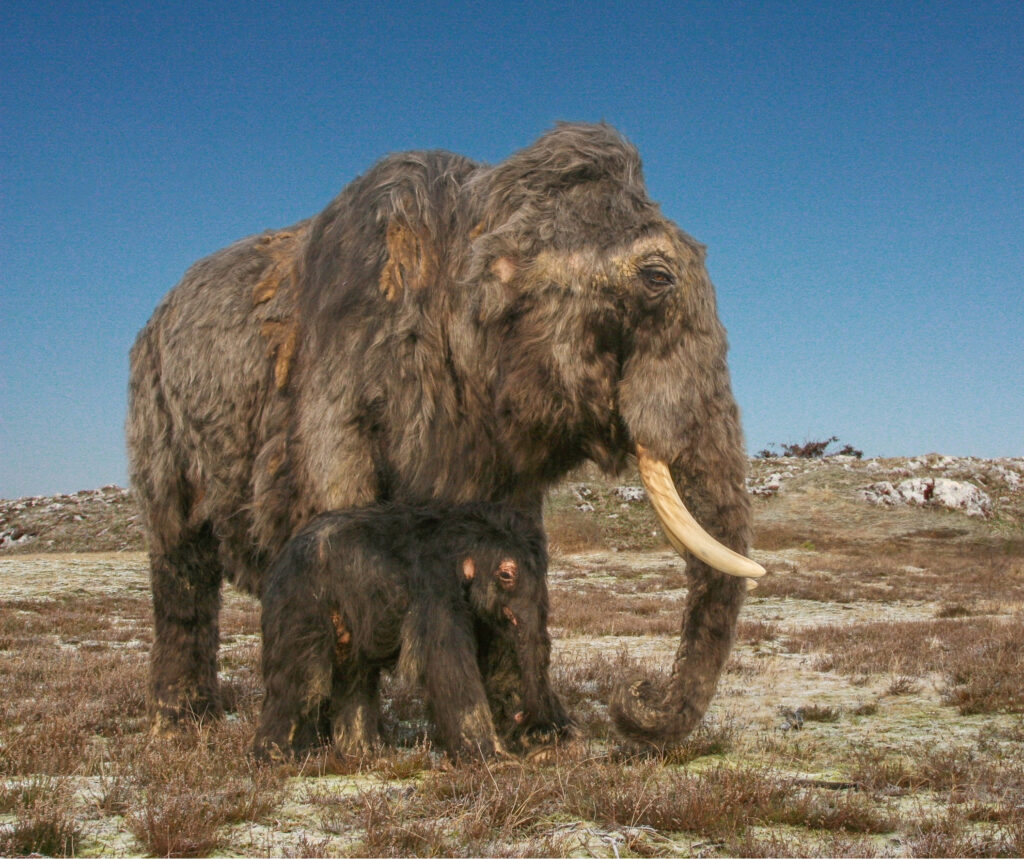
New findings on the woolly mammoth from Taimering: The approximately 25,000-year-old skeleton of a woolly mammoth, discovered in 2020 near Regensburg, provides new insights into life during the last Ice Age. An interdisciplinary team, which also included researchers from Friedrich-Alexander-Universität Erlangen-Nürnberg (FAU), found that the animal died during the coldest phase of the Würm Glaciation and was subsequently preserved in a glacial pond. Pollen analyses and radiocarbon dating allow scientists to reconstruct the environmental conditions at that time. Cut marks on several ribs of the mammoth suggest that Paleolithic humans butchered the carcass. The researchers have now published their findings in the Journal of Archaeological Science.
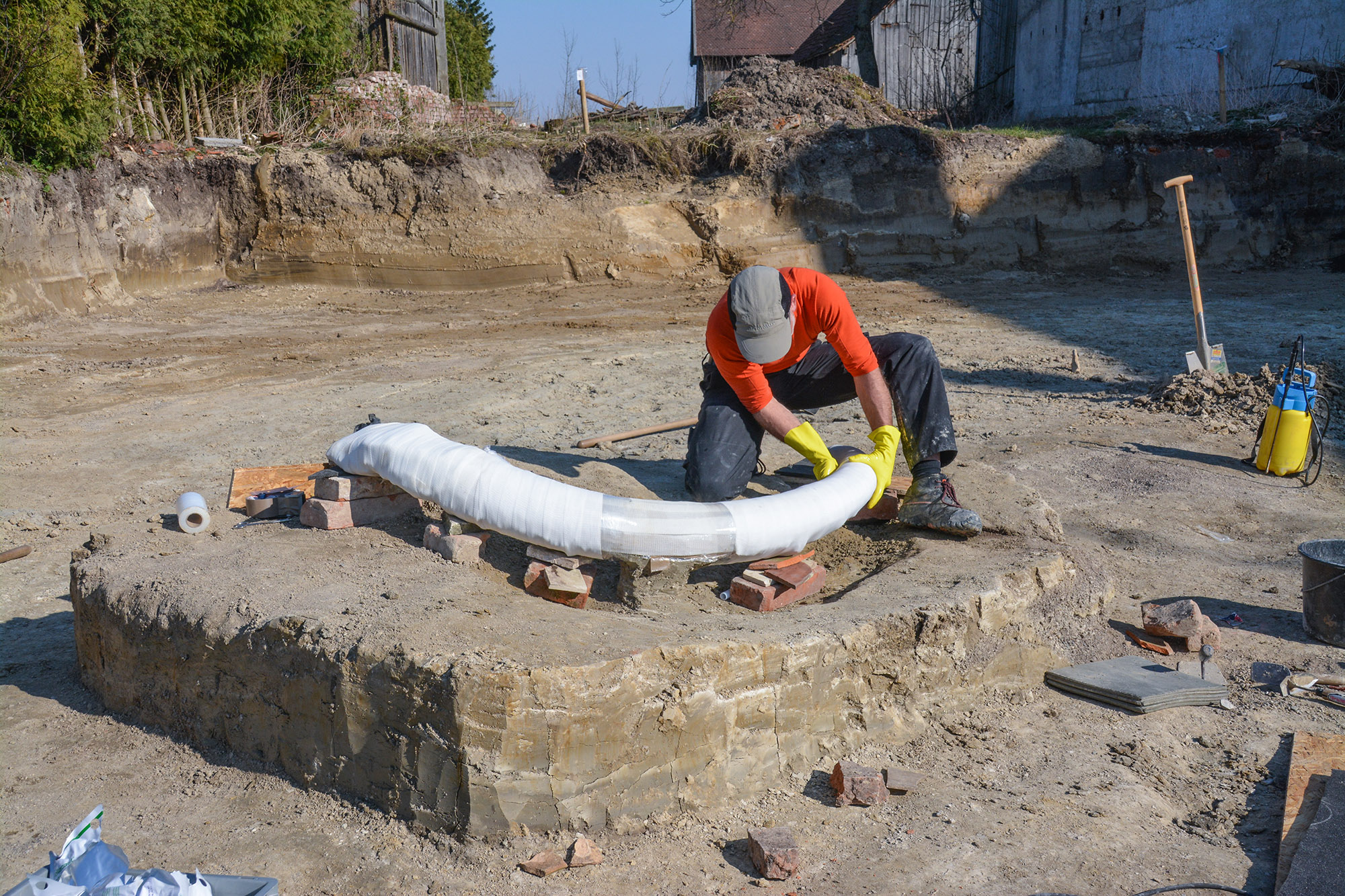
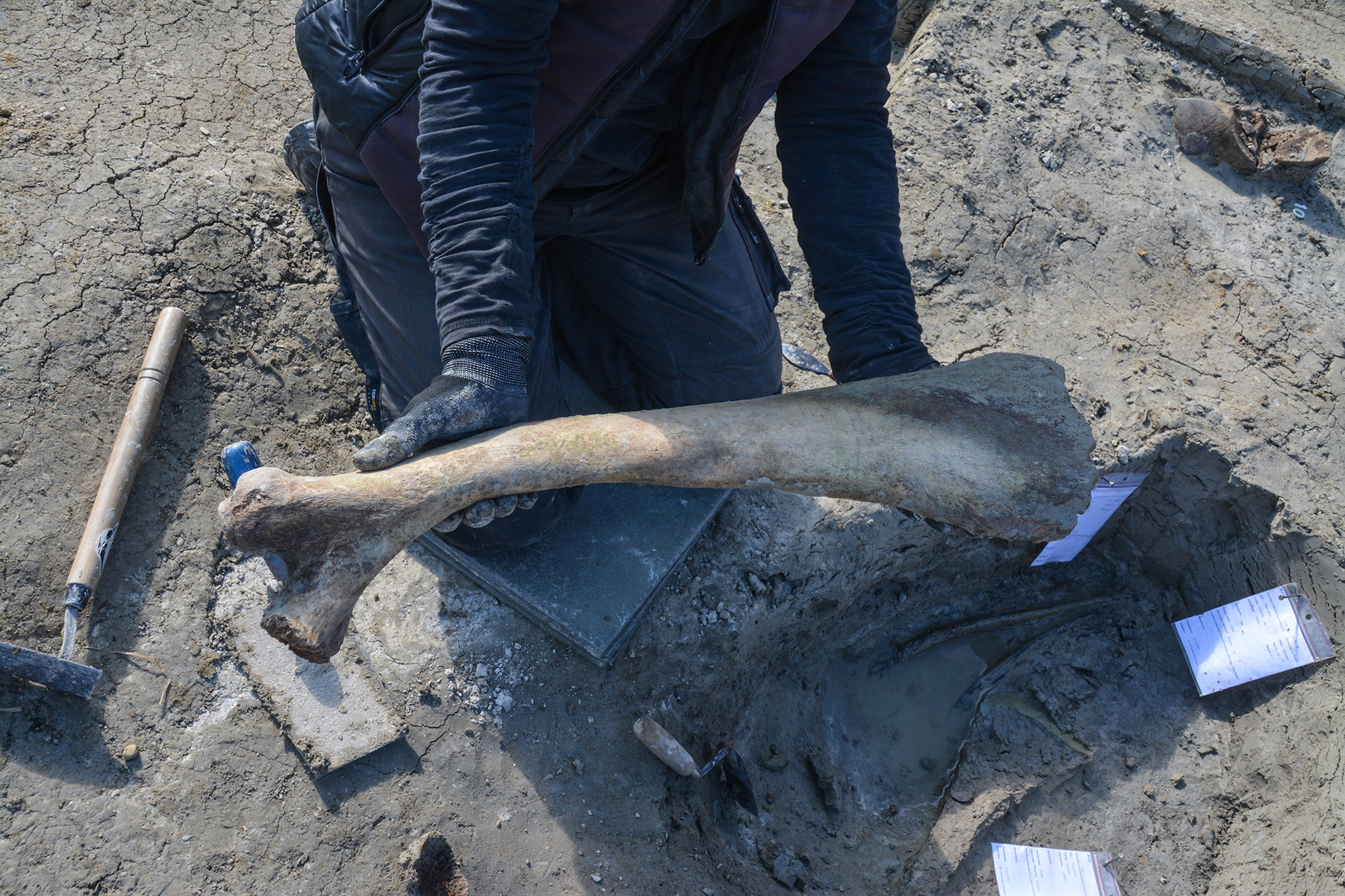
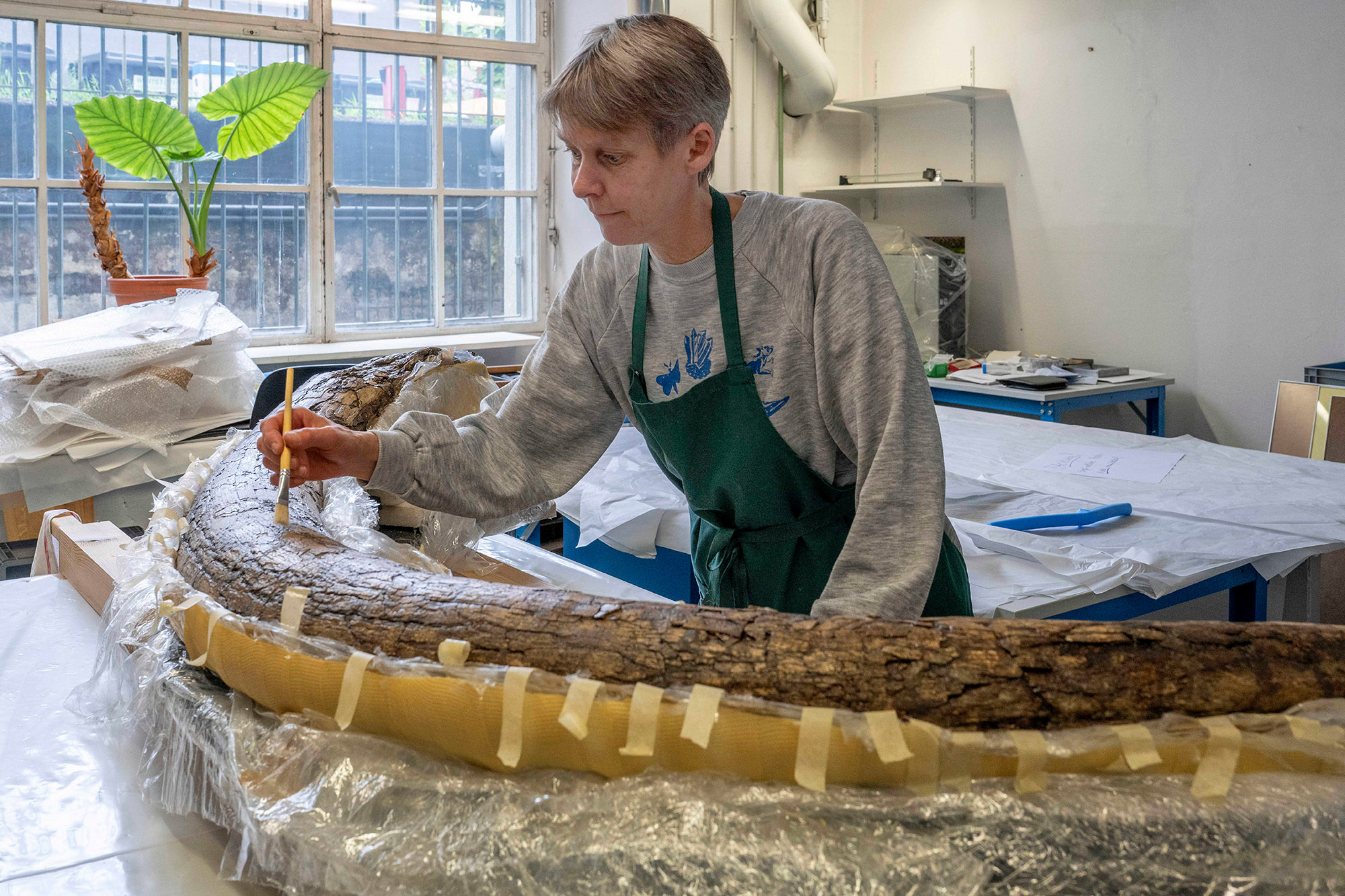
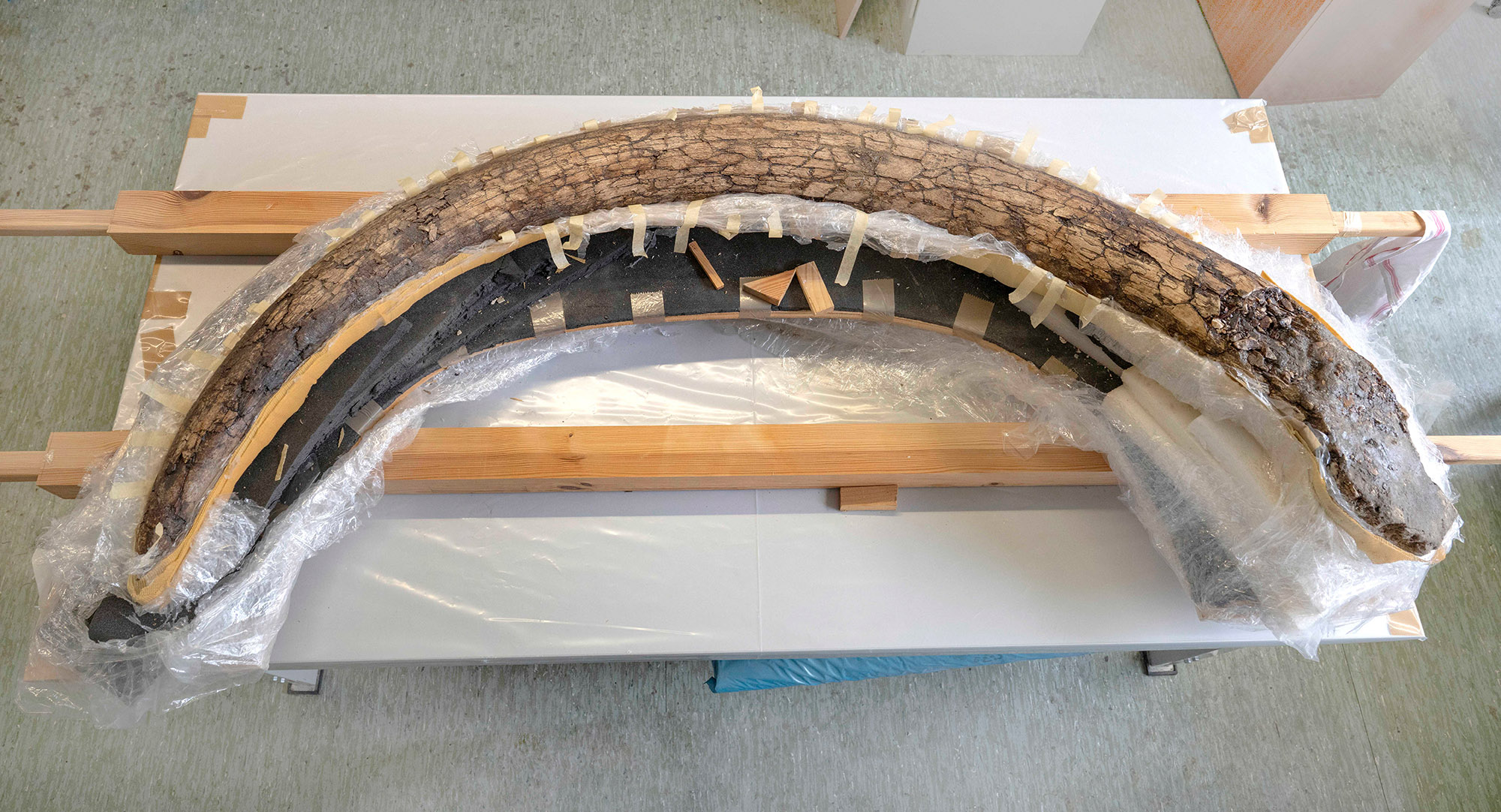
Six years ago, during construction work in Taimering near Regensburg, employees of the Bavarian State Office for the Preservation of Historical Monuments (BLfD) discovered a nearly 2.5-meter-long, spiral tusk, which belonged to a woolly mammoth, Mammuthus primigenius. Nearby, the archaeologists also found over 70 additional bones and bone fragments, primarily those of the ribcage as well as the front and hind foot bones. Most of the major limb bones of the large mammal are missing. “The mammoth’s tusk and bones were exceptionally well preserved due to their millennia-long conservation in the wetland soil,” says Dr. Christoph Steinmann, deputy head of the Department of Archaeological Heritage Preservation for Lower Bavaria/Upper Palatinate at the BLfD. After its recovery, the find was prepared at the Bavarian State Collections of Natural History (SNSB), and further scientific investigations were coordinated from there.
Juvenile mammoth lived at least 25,000 years ago
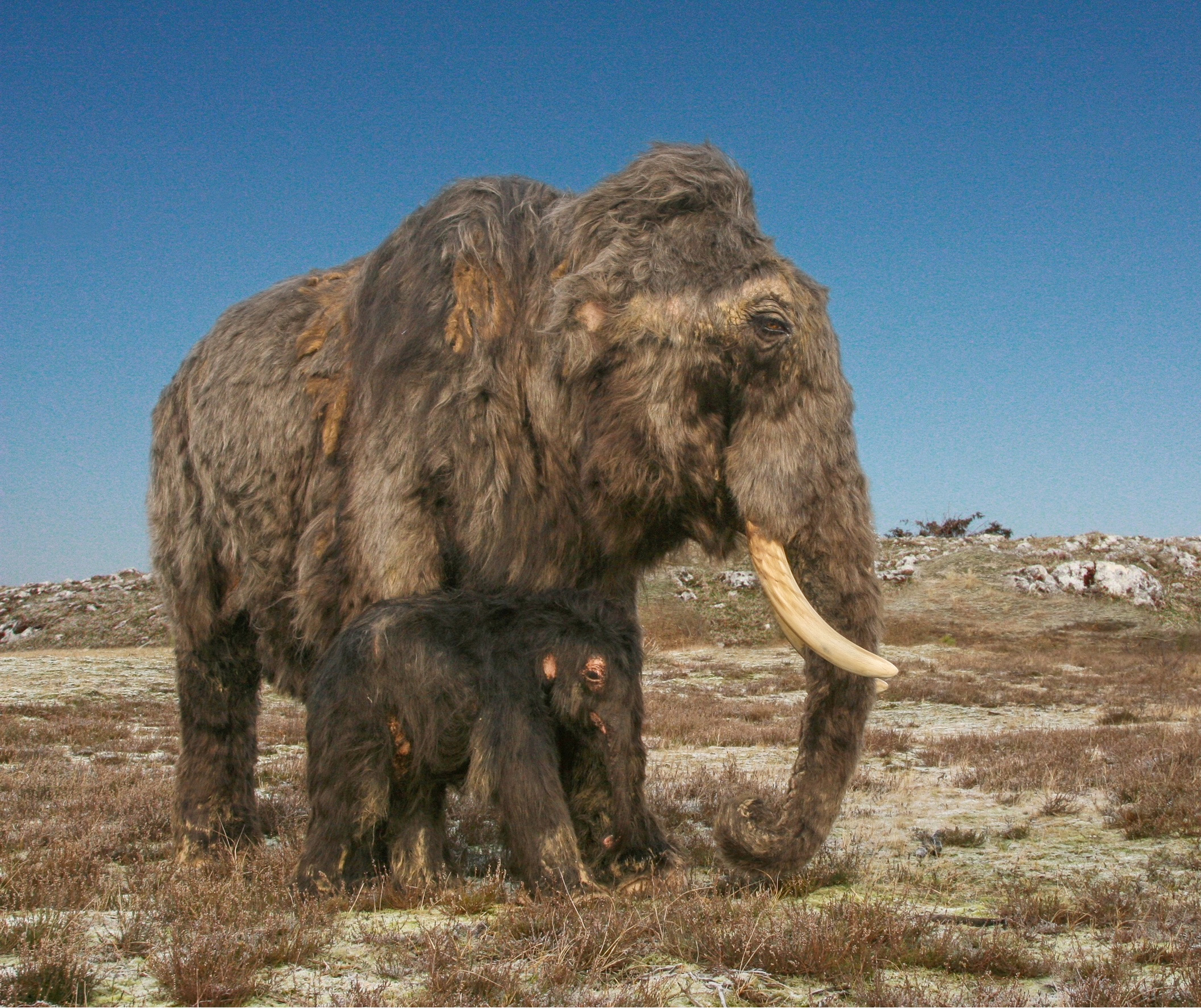
The paleontological assessment revealed that all bones as well as the tusk belong to a single very large but not yet fully grown individual with a shoulder height of approximately three meters. The Taimering woolly mammoth likely died directly at or at least near its discovery site. The bone surfaces, which have been preserved intact down to the finest detail, rule out both prolonged transport by water and scavenging by predators. Researchers say that the animal was embedded in the sediments of a pond or slow-flowing tributary of the prehistoric Danube during the Ice Age. Radiocarbon dating indicates that the bones are between 27,000 and 25,000 years old.
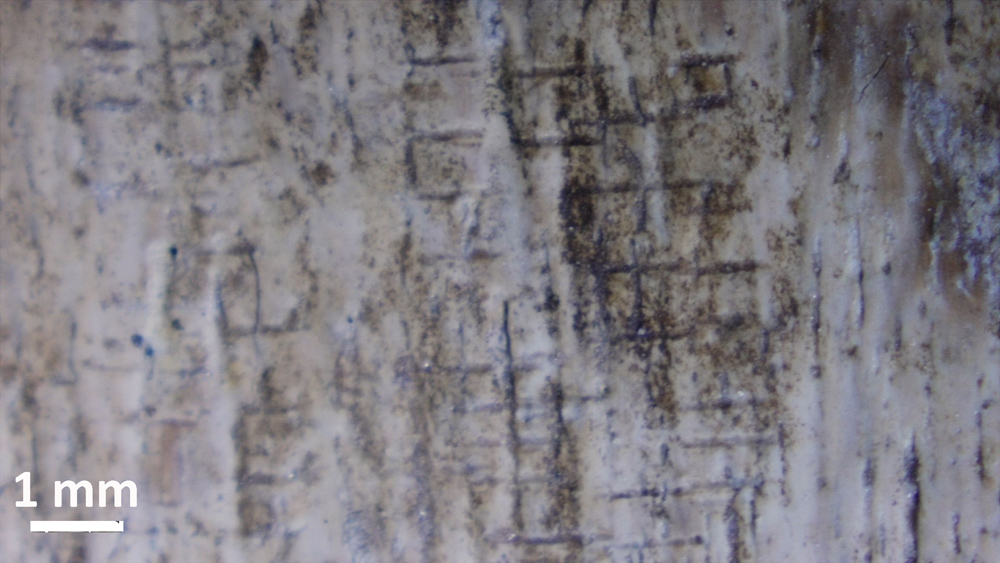
Unusual markings on the surface turned out to be cut marks and provide clear evidence of human activity. Numerous indentations were found exclusively on the ribs – made by Paleolithic hunters and gatherers who butchered the animal. One of the broad rib bones was even used as a cutting board. Whether the mammoth was killed by humans or was already dead when they processed the carcass remains unclear, according to lead author PD Dr. Kerstin Pasda from the Institute of Prehistory and Early History at Friedrich-Alexander-Universität Erlangen-Nürnberg (FAU), who studied the mammoth’s bones to look for signs of human activity.

Meager fare in the treeless steppe
Pollen analyses by Dr. Philipp Stojakowits at the University of Augsburg reveal much to the researchers about the environment in which the mammoth lived and died. They indicate a herbaceous, tundra-like steppe vegetation with scattered dwarf shrubs. The “mammoth steppe” was a vast treeless ecosystem in Eurasia (in today’s Europe between the Scandinavian ice sheet and the southern glaciers of the Alps) during the peak of the last glacial period, approximately 30,000 to 20,000 years ago. Its nutrient-rich herbs and dwarf shrubs nourished a variety of large mammals, including the Taimering mammoth.
“The discovery is exceptional in many respects: For one, skeletal remains of mammoths are extremely rare in our latitudes. We are familiar with finds primarily from further eastern regions of Eurasia,” says PD Dr. Gertrud Rößner, paleontologist at the Bavarian State Collections of Natural History. “On the other hand, there is virtually no evidence of human activity in this region from the peak phase of the glacial period. Due to climate change, hunter-gatherer communities in Europe retreated southward and eastward,” add archaeology professors Andreas Maier from the University of Cologne and Prof. Dr. Thorsten Uthmeier from FAU.
Further information:
Original publications: A cold case from the Last Glacial Maximum: A partial woolly mammoth skeleton from southern Germany (Danube Valley, Germany)
- Part 1: Traces of human activity and archaeological context
- Part 2: Fossil discovery, sedimentology, and paleoenvironment
Contact:
PD Dr. Kerstin Pasda
Institute of Prehistory and Early History, FAU
k.pasda@mail.de
PD Dr. Christoph Mayr
Institute of Geography, FAU
christoph.mayr@fau.de
- File Name
- Taimeringer_Mammut_Rekonstruktion_Bakker_Schwerdt_Rosendahl
- File Size
- 1 MB
- File Type
- JPEG
- File Name
- Bergung_Stoßezahn_Taimeringer_MammutBLfD
- File Size
- 982 KB
- File Type
- JPEG
- File Name
- Recovery_Rib_Taimering_Mammoth_BLfD
- File Size
- 1 MB
- File Type
- JPEG
- File Name
- Preparation_Tusk_Taimering_Mammoth_SNSB
- File Size
- 705 KB
- File Type
- JPEG
- File Name
- Preparation of the Taimering woolly mammoth’s tusk SNSB
- File Size
- 582 KB
- File Type
- JPEG
- File Name
- Discovery_site_Taimering_woolly_mammoth_BLfD
- File Size
- 709 KB
- File Type
- JPEG