
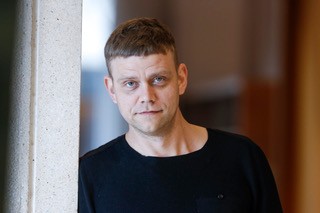
FAU researcher examines how universities implement inclusion and equity in practice
Diversity, Equity and Inclusion – or DEI: Many universities commit to these values. But how do they manifest in everyday university life? This question is being explored by researchers in the UnJust:Uni project at Friedrich-Alexander-Universität Erlangen-Nürnberg (FAU). It is part of SFB 1750 [in:just], the first education sciences Collaborative Research Center funded by the German Research Foundation (DFG). The research network is coordinated by Goethe University Frankfurt am Main and will receive a total of 14 million euros in funding for a duration of three years and nine months. Approximately 250,000 euros are allocated to FAU.
At what levels and with what strategies do universities enable or limit inclusion, recognition, and justice?
Prof. Dr. Nicolas Engel, Chair of Education focusing on Organizational Education at FAU is investigating this in collaboration with Prof. Dr. Vera Moser (GU Frankfurt/Main), Prof. Dr. Justin Powell (University of Luxembourg), and Prof. Dr. David Baker (Penn State University). His project UnJust Universities is part of the first education sciences Collaborative Research Center (CRC) in:just (Inclusion, Recognition, Justice), which is dedicated to the question of how justice and participation in educational and upbringing systems are normatively framed, enacted, and experienced.
When inclusion and excellence collide
The tension between inclusion and performance orientation is one of Nicolas Engel’s central research topics. “Excellence means: You want the best of the best. This is strongly linked to competitive pressure and privileges,” explains Engels. “At the same time, universities claim to value diversity and inclusion. What does it actually mean to conceptualize excellence under the premise of inclusion, and vice versa?” This frequently gives rise to norm conflicts. Organizations present themselves externally as diverse and inclusive, while simultaneously being oriented toward excellence: How are these differing demands addressed and processed, and how does this manifest in everyday teaching and research? And what do the target groups of DEI programs actually experience?
An international comparison
UnJust:Uni compares four universities: FAU, Goethe University Frankfurt, the University of Luxembourg, and Penn State University in the USA. The researchers deliberately chose contrasting universities. “We are not searching for the better system,” emphasizes Nicolas Engel, “but rather we want to understand how and under what conditions diversity and inclusion are initiated within programs and practiced institutionally at the chosen locations, what experiences are associated with them, what problems arise, and how solutions are found.” Each research team first analyzes its own university in a deep dive before the findings are synthesized collectively.
“No one has systematically examined to date how normative claims of inclusion and justice translate into practice and what challenges organizations have to overcome in the process.”
Prof. Dr. Nicolas Engel
Top down and bottom up research
Methodologically, the project works from two directions. In top down research, the team analyzes documents and conducts expert interviews to determine what DEI structures exist at the universities, where they come from, and what goals are associated with them. Bottom up research involves accompanying students from marginalized groups in their daily university life through participant observation to consider experience and relevance.
The project conducts basic research in this area. “We know relatively little about the organizational conditions of educational processes of inclusion, particularly at universities. No one has systematically examined to date how normative claims of inclusion and justice translate into practice and what challenges organizations will have to overcome in the process,” explains Nicolas Engel. The project aims to close this gap.
Part of the first education sciences Collaborative Research Center
Nicolas Engel also views the project as a societal mandate: “Universities, as historically evolved sites of societal self-enlightenment, are linked to democratic ideals. At the same time, they are places where mechanisms of discrimination and the structural prerequisites of group-based misanthropy do not disappear. When it comes to fostering a resilient democracy, universities play a crucial role, and precisely for this reason, we must examine this contradiction to better understand this role.”
Further information:
More on the research projects of Prof. Dr. Nicolas Engel at FAU: Engel’s research projects
Contact:
Prof. Dr. Nicolas Engel
Chair of Education focusing on Organizational Education
nicolas.engel@fau.de