
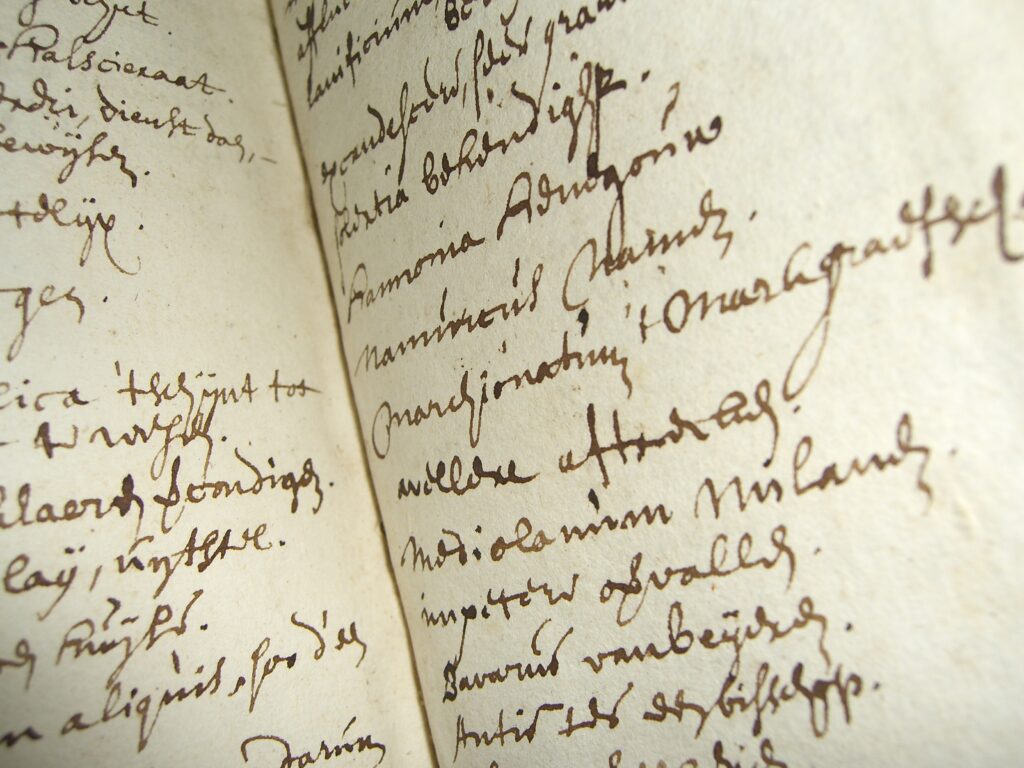
FAU Medieval Studies develops new methods for analyzing literary figures
The German Research Foundation (DFG) and the Austrian Science Fund (FWF) are funding a research project at Friedrich-Alexander-Universität Erlangen-Nürnberg (FAU) under the international Weave Program. The project aims to use digital methods to systematically analyze literary figures in medieval texts.
The three-year research project is led by Prof. Dr. Friedrich Michael Dimpel (FAU) together with Dr. Nora Ketschick (University of Stuttgart) and Dr. Katharina Zeppezauer-Wachauer (University of Salzburg). The German Research Foundation (DFG) and the Austrian Science Fund (FWF) are providing approximately €560,000 in funds for the project. The research team is aiming to use AI and machine learning to improve the accuracy with which computers identify figures in medieval texts.
“We humans immediately know who is being referred to when a text first mentions ‘Parzival,’ then ‘the knight,’ or simply ‘he’… So far, this has proved tricky for computers.”Prof. Dr. Friedrich Michael Dimpel
“We humans immediately know who is being referred to when a text first mentions ‘Parzival,’ then ‘the knight,’ or simply ‘he,’” explains Prof. Dr. Friedrich Michael Dimpel from the Chair of Medieval German Literature at FAU. “So far, this has proved tricky for computers.” However, it is precisely these references that are the prerequisite for using digital methods to systematically analyze literary figures.
Digitally mapping figures in medieval texts
Digital methods will then be used to map how characters relate to themes, traits, value judgments, and concepts of meaning. To do this, the research team links these contextual references to the conceptual system of the Middle High German Concept Database (MHDBDB), which will be further developed in the project. This creates the foundation for new digital analyses of medieval literature.
The new methods are intended to enable digital analyses to determine for the first time
- which themes are particularly frequently associated with specific figures,
- how female and male figures are depicted,
- or whether terms like “honor,” “knightly combat,” or “communication” tend to be used in a more positive or more negative way with respect to a particular figure.
How can researchers use the developed data and methods?
The developed data and methods will be published and made permanently available to the research community. Figure references will be integrated into the Middle High German Concept Database. In addition, guidelines will be created to enable other researchers to access and analyze further texts. In this way, the project will establish a foundation for further studies on medieval literature.
Contact
Prof. Dr. Friedrich Michael Dimpel
Faculty of Humanities, Social Sciences, and Theology