
Publication by FAU researcher receives design award
Can a scientific book be beautiful? The “Library of Artistic Print on Demand” by Annette Gilbert and Andreas Bülhoff answers this question with ease. The 720-page catalog has just been named one of the 25 “most beautiful German books of 2026” by Stiftung Buchkunst. Prof. Dr. Annette Gilbert of Friedrich-Alexander-Universität Erlangen-Nürnberg (FAU) is delighted about this award in the “Scientific Books, Technical Books, Textbooks” category. The adjunct professor at the Chair of Modern German Literature with a Systematic Focus explains what the book is about and what makes it so special.
Prof. Gilbert, Stiftung Buchkunst has honored your book “Library of Artistic Print on Demand” as one of the “most beautiful German books of 2026.” What is the book about?
In “Library of Artistic Print on Demand,” we examine a production method that has revolutionized the world of books: print on demand, or PoD for short. Since the mid-1990s, digital printing has continuously improved, and since around 2005, online platforms like BoD, Kindle Direct Publishing, Blurb, or Lulu have existed, allowing virtually anyone to create and publish a book worldwide with just a few clicks. Completely without a publisher and without a budget. Printing only occurs on demand, meaning when an actual order is placed. This was initially celebrated as the democratization of book production, and accordingly, a great deal was published at that time. Many artists have also enthusiastically embraced this new form of self-publishing, which made many things possible that were previously unthinkable, such as Michael Mandiberg’s “Print Wikipedia,” a printed version of the entire Wikipedia in 7,473 volumes. Of course, PoD platforms also have their own interests and rules, creating new dependencies. The quality of the books and the service provided by the platforms often left much to be desired, which is why I prefer to refer to them as “poorly made books.” More and more artists who use PoD are now criticizing this and reflecting on it in their works. Our book presents this movement, for which we have selected 244 relevant artistic publications.
How did you find the 244 works that you present in the “Library of Artistic Print on Demand”?
The book is based on a research project funded by the German Research Foundation. For three years, we intensively studied subversive publishing practices in the post-digital age, where print-on-demand is one of the most fascinating contemporary phenomena. So we wanted to map this field as broadly as possible. We compiled projects from around the world and established a collection. The printed copies are now housed in the Bavarian State Library, but the collection is also available online via our web archive apod.li –and our catalog now systematically compiles everything, presents the 244 works, and contextualizes the entire phenomenon historically.
Your book received the award in the category “Scientific Books, Technical Books, Textbooks” – a field not typically known for elaborate design. What makes the design of your book special in your view?
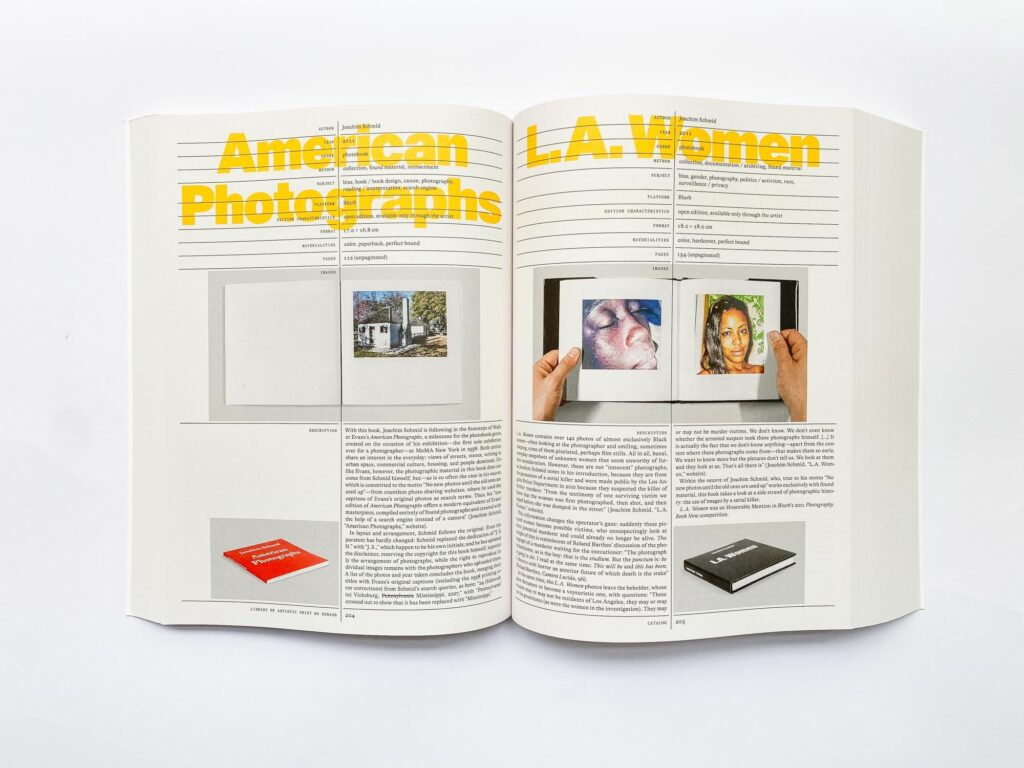
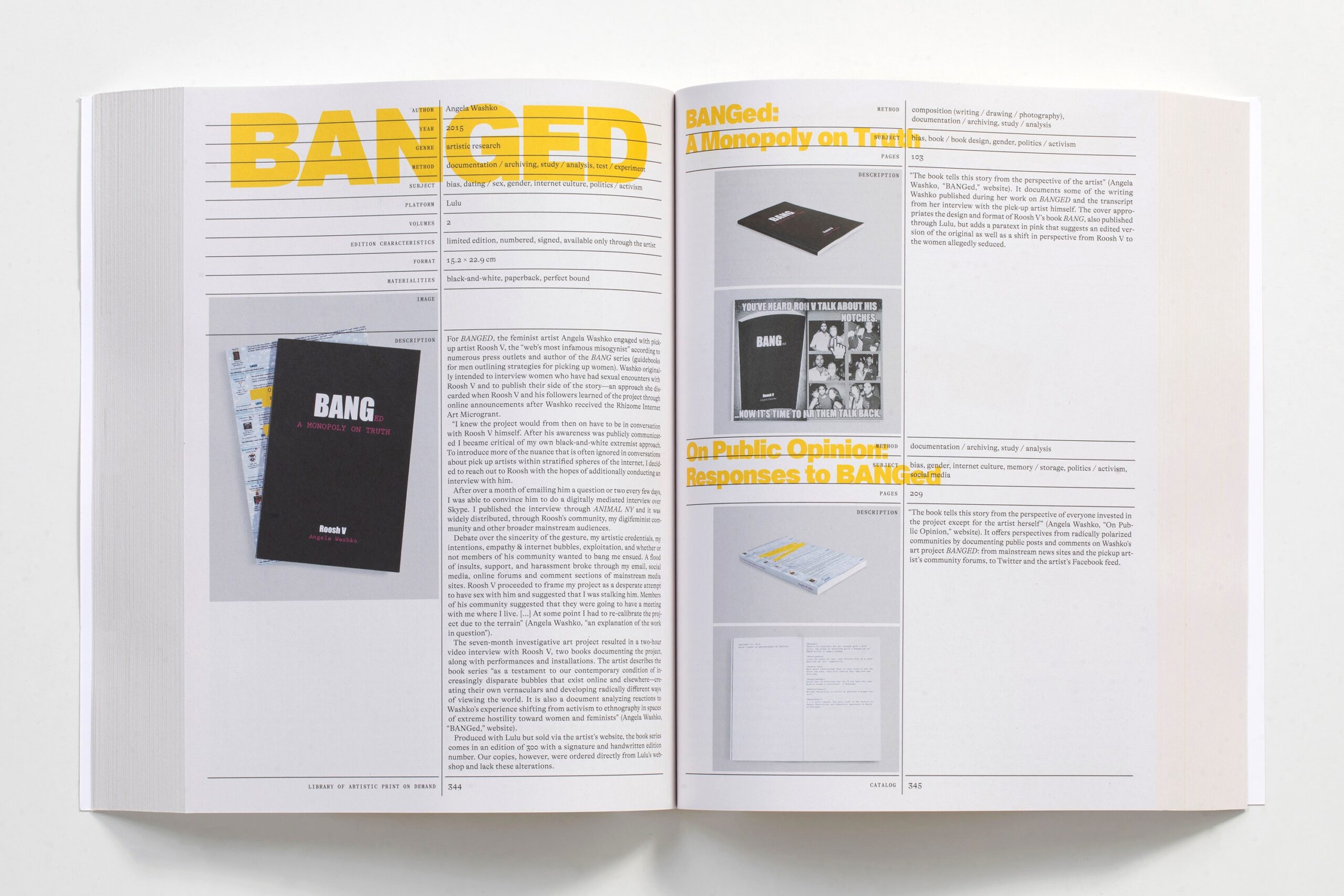
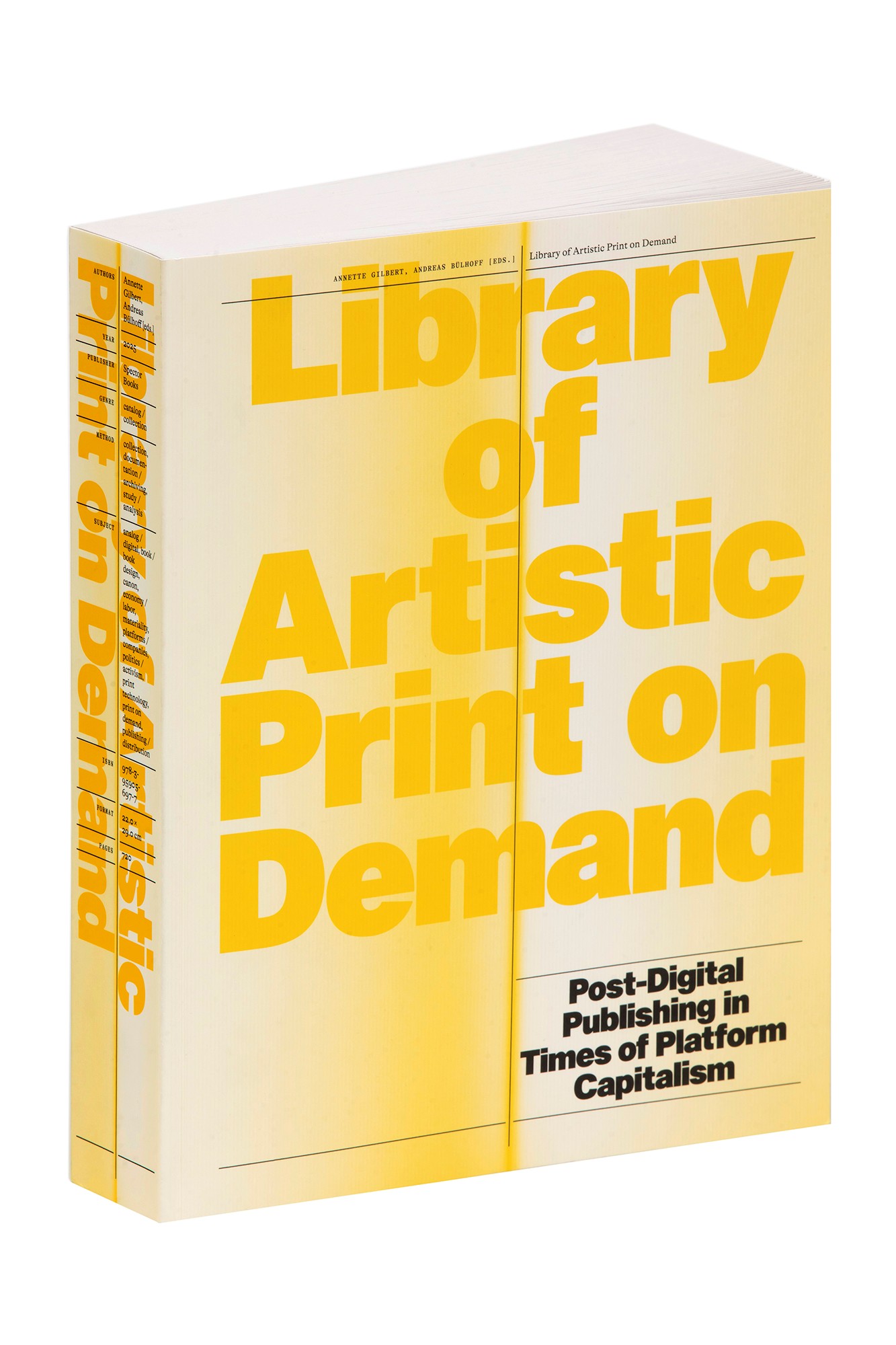
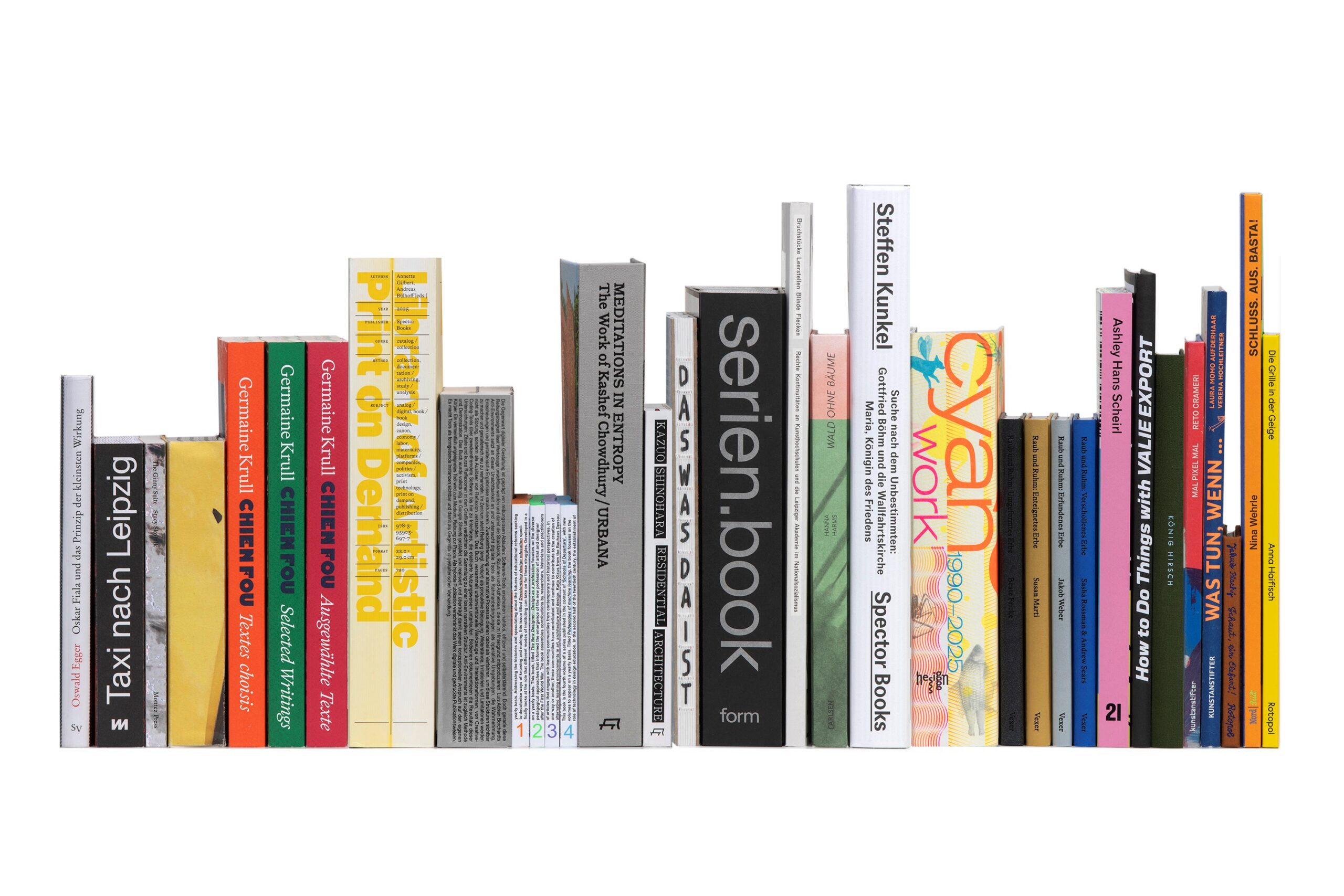
The jury of the Stiftung Buchkunst explicitly praised our catalog as a beautiful, tactile object and for its design that is appropriate to the content. These two aspects were particularly important to us. We also spent a long time with the publisher searching for the right paper. We wanted it to be particularly light so that, despite its 720 pages, you don’t end up holding a heavy “brick” in your hands. The striking yellow creates a luminous, inviting entrance. In the interior, all chapter openers and the titles of the 244 publications are rendered in large yellow letters that appear to float legibly above the bibliographic details. The other central design element is a grid system that runs throughout the book, taming the abundance of text and information. Each project is presented according to the same schema: bibliographic metadata, topic, method, keyword, description. The jury members particularly liked this grid because, despite its rigidity, it remains playful and allows for a great deal of freedom in handling different materials within this structure. Our thanks for this go to Lyosha Kritsouk, who designed the book.
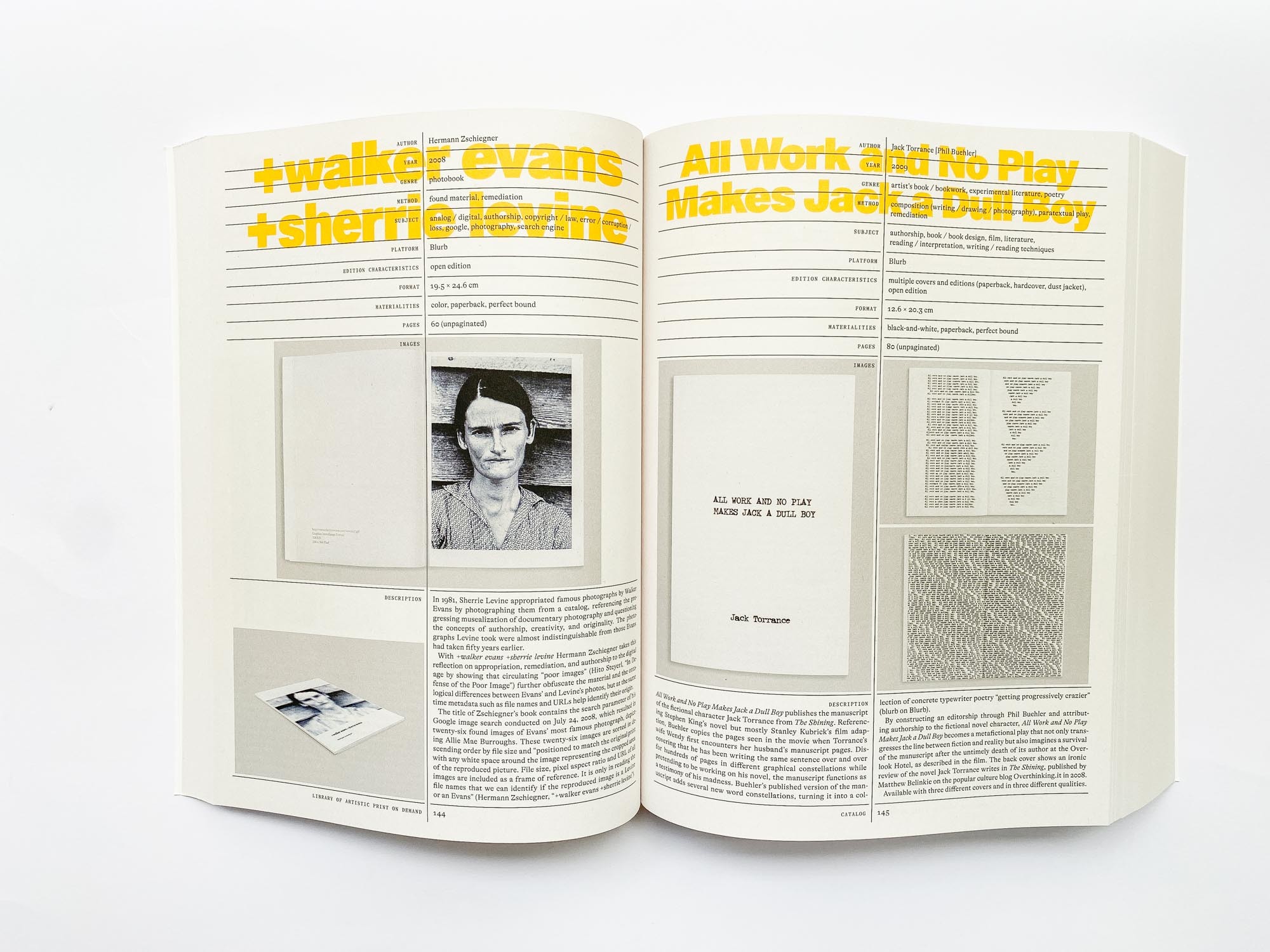
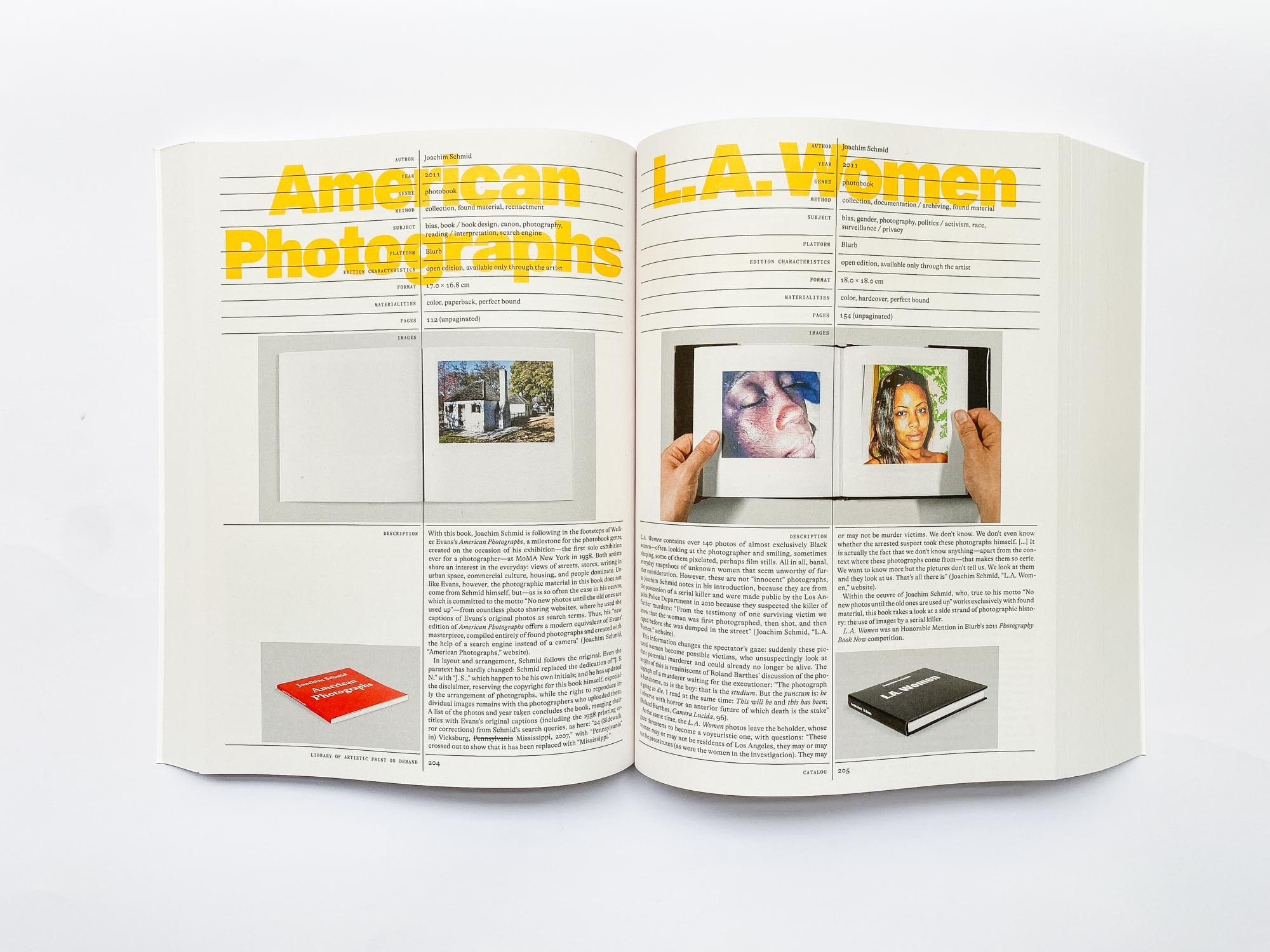
In the “Library of Artistic Print on Demand,” you describe PoD books as “analog-digital hybrids.” Can you explain this with an example?
The strict distinction between analog and digital makes little sense in the post-digital age and even less so with Print on Demand. After all, the PoD book is a true blend of both: it is created as a digital file, produced via digital printing, and in the end, an analog book emerges. That’s why we refer to them as “analog-digital hybrids.” This interplay between analog and digital enables artistic concepts that were previously unimaginable and it’s precisely these kinds of works we deliberately sought out. Works that don’t just use the printing process and PoD platform offerings but rethink them medially and artistically. One artist, Jasper Otto Eisenecker, for example, intensively engaged with a platform’s terms of use and outsmarted them with his “Camouflaged Book.” His book deliberately contains content that a platform would not accept, but it is so well hidden that the platform doesn’t notice: only every other letter is printed, while the omitted letters appear on the reverse side, so the full text can only be read when the page is held up to the light. For the platform’s automated verification algorithm, the PDF produces nothing but nonsense.
In this context, they also refer to artistic interventions in “platform capitalism.” What do you mean?
Many artists critically engage in their works with the fact that print on demand promises freedom but creates new dependencies. After all, platforms naturally operate on economic principles, follow their own business logic, dictate pricing structures, develop distribution mechanisms, impose layout requirements, review content with algorithms, and delete books and accounts. Our earlier example shows how an algorithm can be artistically subverted. Another work in our book, Jean Keller’s “Black Book,” is an attempt to turn the platform’s economic principle against itself: The publication consists entirely of black pages because printing ink is the most expensive component, yet it does not appear in the platform’s pricing calculations. Similarly, Holly Melgard’s “Black Friday” is designed to be purchased during typical discount promotions to inflict the greatest possible financial loss on the platform. Both works demonstrate that the grandiose promises of platforms should indeed be critically examined. However, the artists also pay a price for this: of the 244 works we present in our Library, at least one-third are no longer available today. In some cases, the platform has simply deleted the account for trumped-up reasons – there’s no way to appeal – and in others, the book is no longer available because the platform changed the format or paper.
Your book also brings together around 25 essays by international authors. What criteria did you use to compile these voices?
It remains a niche topic, and it was important to us to bring together the scattered perspectives on it in one place. The contributors are accordingly diverse: Scientists, artists, and also educators who use print-on-demand in academia so that students can make their work directly accessible to the public. Overall, the selection of contributions is just as diverse as the works we have compiled ourselves.
You published your book with Spector Books. How do you position this publisher, and how did the collaboration shape the project?
Spector Books is highly respected internationally and known for its artistically ambitious and conceptually sophisticated books – the publisher itself has already received multiple awards, including the Gutenberg Prize. They are also regularly successful in the “most beautiful German books” competition with multiple titles. The intersection of art, theory, design, and society, as well as the publisher’s clear political stance, is very important to me, but so is the constant reflection on what a book is and can be: Each publication becomes a place of encounter and productive engagement for them, as they themselves once put it, it arises against the backdrop of what has already been produced, it is work on the present, and a message sent into an unknown future. That aligns with my own approach.
You have been researching experimental writing and publication formats for years. How has your perspective on the book as a medium changed through this project and what are you currently working on?
My current research project again focuses on marginalized, subversive forms of publishing, this time on pirate prints from around 1968, which were widely circulated in the Federal Republic of Germany at the time. I am interested in how this came about, what motivations were behind it, what networks emerged, and how it can be classified legally and ethically.
The Stiftung Buchkunst has selected the 25 “most beautiful German books of 2026.” Two juries reviewed 600 submitted works and awarded five books each in the categories “General Literature,” “Scientific Books, Technical Books, Textbooks,” “Guides, Nonfiction,” “Art Books, Photography Books, Exhibition Catalogs,” and “Children’s Books, Young Adult Books.” The evaluation covered various criteria – from haptics and production to page layout, font, and typography, as well as the book as an object with front cover, spine, and back cover.
“Library of Artistic Print on Demand” by Annette Gilbert and Andreas Bülhoff was published by Spector Books in Leipzig and designed by Lyosha Kritsouk. The catalog has 720 pages, presents 244 selected artistic titles, and retails for €48 in bookstores. The collection is available online at https://apod.li
Contact
Prof. Dr. Annette Gilbert
Chair of Modern German Literature with a Systematic Focus