
With over 270 degree programs, FAU is among the 15 largest and leading universities for research in Germany. Over 6,000 employees and more than 39,000 students promote a culture of innovation, diversity and passion.
Get to know our newly-appointed professors who are driving forward research with their fresh ideas and creative approaches. Find out more about the people behind our research projects and their career paths, visions, and motivation for a successful academic future.
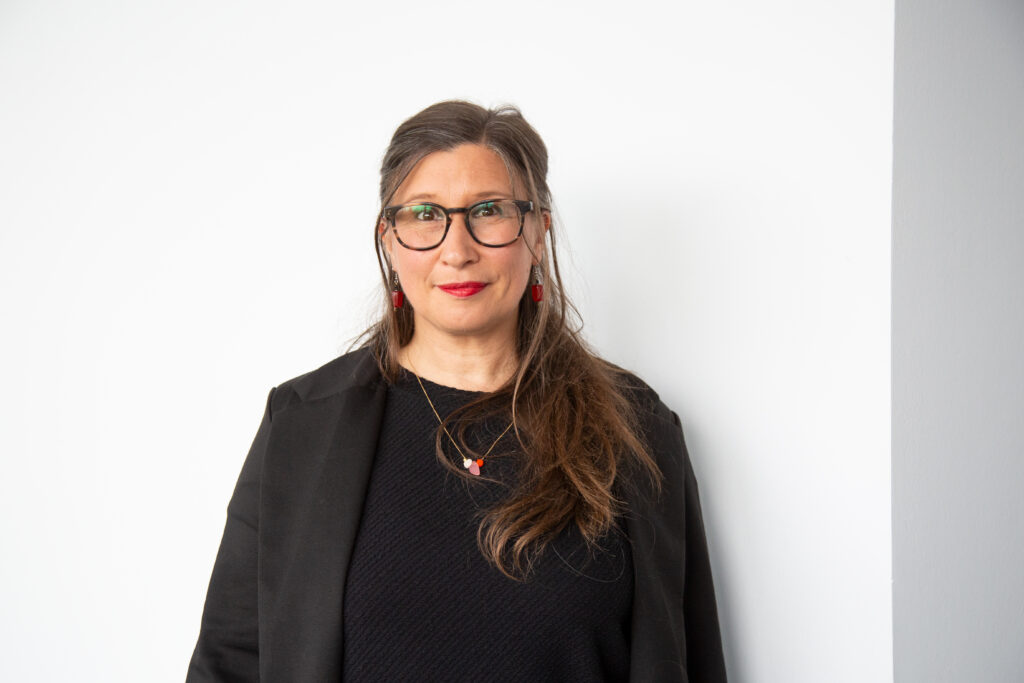
Prof. Dr. Miriam Österreich – modern art history in the global context
Prof. Miriam Österreich has always dreamed of visiting the Getty Research Institute in Los Angeles and reading “Ulysses” from James Joyce to the end.
What is your main area of research?
The title of the professorship matches my focus perfectly, as I have worked on transculturally entangled histories of modern art and on conceptions of modernity from the perspective of critical global studies for many years now. My focus lies in particular on Latin American art history, and I am currently completing a book on Mexican indigenism in the 20th century. I am also extremely interested in issues surrounding complex cultural heritage and the aesthetic premises inherent in cultural objects that are historically fraught and contested in discourse.
Why these topics exactly?
I am especially interested in the relations and interactions between the established canon of art history and positions that have been previously overlooked. It becomes evident time and time again that art is deeply entwined in political and social contexts that also provide a hierarchical definition of what is recognized as art and what is not. Questioning these structures and observing which amazing works become visible is always thrilling. I am particularly interested in Latin America, where pre-colonial, colonial and post-colonial ideas of art overlap and give rise to new connections and the arts unite influences from global entanglements with Europe, North America, Asia and Africa.
Where were you before coming to FAU?
I have been Professor of Design Theory/Gender Studies at the University of the Arts Berlin since 2021. Most recently, however, I have conducted research and taught art history as an interim professor at the University of Hamburg, focusing on Latin America and critical heritage.
Where did you study and what subjects?
First of all, I studied art history and Romance studies in Heidelberg, before spending two semesters abroad in Havana, Cuba and Valencia, Spain. Those were amazing experiences and I try to encourage students to do the same. After completing my undergraduate degree, I transferred to Freie Universität Berlin, where I studied art history and Romance studies, and took Ancient American studies as a minor subject.
Which events and activities would you like to take part in in Erlangen and the surroundings?
I very much look forward to getting to know the collections at the Germanisches Nationalmuseum in Nuremberg better, to meeting my new colleagues and to having those familiar with Erlangen share their favorite locations with me (I have already discovered one: the fantastic bakery Laibgarde). I am also looking forward to visiting the next Comic Salon with my daughters, who are great manga and comic enthusiasts. And I definitely want to get out hiking in Franconian Switzerland!
What’s your most useful tool as a professor?
As an art historian, it is very important to take a close look, so with that being the case, I would say that my glasses are my most important tool.
What did you want to be when you were growing up?
I always wanted to have my own café with home-baked cakes out in the countryside – that would still be my second choice of profession.
Do you have a role model? If so, did they influence your academic or professional career?
My role models are all the female researchers and colleagues who have gone before me and who are working alongside me now, who have contributed to shaping research with their ambition, knowledge and wisdom and have fought for so much without which I would never have been able to pursue my profession as a professor of art history.
Have you got any hidden talents?
My hobby is not a secret, and maybe not anything particularly special, but I love rowing and I am currently doing an examination to become a coxswain.
Is there something you’ve always wanted to do?
I have always wanted to travel to the Bienal de São Paulo, to finish reading James Joyce’s “Ulysses”, and to complete a research stay at the Getty Research Institute in Los Angeles.